


Black money: SIT asks agencies to share data on ongoing case

June 29, 2014

New Delhi, Jun 29: The Special Investigation Team (SIT) on black money has sought details of all major cases of tax evasion and criminal financial fraud being probed by various investigative agencies which are mandated to keep a check on such instances.
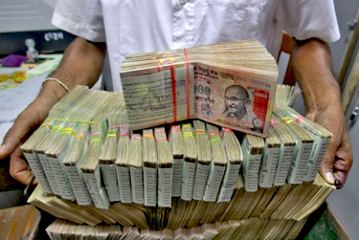
Black moneySources said that the SIT headed by retired Supreme Court Justice M B Shah has asked the 11 departments on its panel to furnish fine details of these cases and the status of their probes, including any problems being faced by investigators in taking the cases forward for prosecution or penalty.

The member departments/agencies of SIT are the Department of Revenue (under the Ministry of Finance), RBI, Intelligence Bureau, Enforcement Directorate, CBI, Income Tax department, Narcotics Control Bureau, Directorate of Revenue Intelligence, Financial Intelligence Unit, Research and Analysis Wing and the Foreign Tax and Tax Research wing under the Central Board of Direct Taxes (CBDT).

The sources said the SIT has asked for the data in order to understand the trends and magnitude of the menace of black money and generation of illegal funds in the country, which is done through a variety of ways like evasion of taxes and duties, flouting of foreign exchange laws, creation of disproportionate assets, creation of 'benami' properties within the country and outside and laundering of wealth obtained through illegal and corrupt means.

The departments, they said, are in the process of submitting these details in the stipulated format to SIT and these will be taken up during the next meeting of the panel, expected to take place some time next month.

RBI has recently directed all banks and financial institutions to provide the information and documents sought by the high-profile panel.

The SIT, formed upon the directions of Supreme Court, had its first meeting earlier this month here at the North Block office of the Finance Ministry.

The high-level team has also decided to look into the contentious issue of secrecy clauses in India's tax treaties with Switzerland and other countries.

Retired apex court judge Arijit Pasayat is the Vice Chairman of the SIT while top officials of the 11 high-profile agencies and departments are its members.

After the first meeting of the SIT, the government had said the detailed modalities of proceeding further with the Supreme Court mandate were discussed and the road map decided.

The SIT's mandate, as notified, requires it to go into "all issues relating to matters concerning and arising from unaccounted monies of Hasan Ali Khan and Kashinath Tapariah".

Pune-based Khan, a stud farm owner, was arrested by Enforcement Directorate in connection with money laundering and tax evasion cases. Tapariah is his aide.

The other tasks of SIT include all investigations already started and pending or awaiting to be initiated with respect to any other known instances of the stashing away of unaccounted cash in foreign bank accounts by Indians or other entities operating in India.

The panel has also been empowered "to further investigate even where charge-sheets have been previously filed and SIT may register further cases and conduct appropriate investigations and initiate proceedings for the purpose of bringing back unaccounted monies unlawfully kept in bank accounts abroad."

The SIT will also keep the apex court informed about all major developments by filing periodic status reports in this regard, the government notification had said.

Comments

Add new comment

  • Coastaldigest.com reserves the right to delete or block any comments.
  • Coastaldigset.com is not responsible for its readers’ comments.
  • Comments that are abusive, incendiary or irrelevant are strictly prohibited.
  • Please use a genuine email ID and provide your name to avoid reject.
News Network
June 17,2020

New Delhi, Jun 17: Police Surender Jeet Kaur, Assistant Commissioner of Delhi Police Surender Jeet Kaur, has held herself responsible for the death of her husband Charan Jeet Singh, who succumbed to Covid at a hospital in Delhi.

“My husband didn’t step out of the house when the lockdown started, but I went out daily because of my job… I will never be able to forgive myself,” Kaur on Tuesday, a day after losing her husband.

54-year-old Singh, a resident of Lajpat Nagar and a businessman, is survived by his wife and their 26-year-old son who lives in Canada.

Kaur, 57, ACP (Crimes Against Women) in the South-East district of the Delhi Police, is also ACP (Covid Cell) of the district. On May 20, five days after Kaur tested positive for the virus, her husband Singh tested positive, followed by the ACP’s 80-year-old father on May 24.

All of them had symptoms and while Kaur and Singh were admitted to Indraprastha Apollo hospital, her father was admitted to Max hospital in Saket. On May 26, Kaur returned home after recovering from the virus.

Kaur said, “I last spoke to my husband on May 22 night, when we were both admitted in the hospital in different wards. The doctor called me and said that my husband needs to be put on ventilator support. I had a video call with my husband. He was breathless and told me that his oxygen level was dropping. He showed me the monitor, the doctors in the room, and then said he was having trouble speaking and that he would send me WhatsApp messages.”

A day after he passed away, Kaur recalled the messages that Singh sent her just before being put on ventilator support. “He started sending me details of our finances, accounts… I told him to stop and asked him why he was telling me all this. He said I needed to know… Maybe he feared he wouldn’t come back. I prayed every day, at temples, mosques, churches and gurdwaras for him. I am devastated that he’s gone. We were to move to Canada to live with our son in 2023 after my retirement. We had so many plans.”

Kaur’s brother Maninder Ahluwalia said the hospital tried plasma therapy but Singh didn’t respond to the treatment. “He had diabetes and high BP, but those were always under control. We were hopeful,” he said.

The couple’s son joined on video call from Canada to watch his father’s last journey from the ambulance to the entrance of the crematorium. “My son couldn’t attend his father’s last rites because there are no flights… It’s so unfortunate,” said Kaur.

Friends and family remember Singh as a “jolly, disciplined and brave man”, while Kaur said he was the “perfect partner”. She said, “When I was an SHO-rank officer, I would work for 36 hours straight some days, and he would handle the house and our son who was growing up. I would miss family functions and important occasions but he would always go and make up for my absence. I was able to do this job for decades because of his support.”

On Tuesday afternoon, Singh was cremated in the presence of close family and members of the police fraternity. “The DCP and the Joint CP called me daily to enquire about my husband, other police officers too. I am grateful for their support. They didn’t let me feel alone for a single day,” said Kaur.

Comments

Add new comment

  • Coastaldigest.com reserves the right to delete or block any comments.
  • Coastaldigset.com is not responsible for its readers’ comments.
  • Comments that are abusive, incendiary or irrelevant are strictly prohibited.
  • Please use a genuine email ID and provide your name to avoid reject.
News Network
January 24,2020

New Delhi, Jan 24: Under attack for doling out subsidies, Delhi Chief Minister Arvind Kejriwal on Friday said freebies in limited dose are good for the economy as they make more money available to the poor and boosts demand.

Opposition parties have been attacking the AAP-led Delhi government for giving "freebies" ahead of polls after it announced schemes like free bus rides for women and 200 units of free electricity.

"Freebies, in limited dose, are good for economy. It makes more money available to poor, hence boosts demand. However, it should be done in such limits so that no extra taxes have to be imposed and it does not lead to budget deficits," Kejriwal said in a tweet.

Slamming the BJP, Kejriwal said he is happy that the people of Delhi have forced the Saffron party to ask for votes on the basis of CCTVs, schools and unauthorised colonies.

Reacting to a tweet of the BJP Delhi in which Home Minister Amit Shah had asked how many schools have been constructed and cameras installed by the AAP government, Kejriwal said he is happy that Shah saw some CCTV cameras as earlier he had claimed that he could not find a single one.

"I am happy you saw some CCTV cameras. A few days back you said there was not a single camera. Take out some time we will show you our schools also. I am extremely happy that the people of Delhi have changed the politics by which the BJP has to ask for votes on CCTV, schools and raw colonies here," he said in a tweet.

Responding to Shah's allegation that he could not find WiFi in Delhi as promised by Kejriwal and that his battery drained out in the process, the Delhi chief minister said along with free WiFi they have also made arrangement for free charging points.

Comments

Add new comment

  • Coastaldigest.com reserves the right to delete or block any comments.
  • Coastaldigset.com is not responsible for its readers’ comments.
  • Comments that are abusive, incendiary or irrelevant are strictly prohibited.
  • Please use a genuine email ID and provide your name to avoid reject.
Agencies
June 15,2020

New Delhi, Jun 15: Average temperature of India experienced a rise of 0.7 degree Celsius, along with decline in rainfall, significant increase in frequency of very severe cyclonic storms and droughts in over a decade due to human activities, the Ministry of Earth Sciences in its research report said.

The contentions were made in a report issued by the ministry on the impact of climate change. It will be published by Union Minister Harsh Vardhan on June 19.

According to the report, "Since the middle of the twentieth century, India witnessed rise in temperature; decrease in monsoon; rise in extreme temperature and rainfall, droughts, and sea levels; and increase intensity of severe cyclones.

The report, prepared by researchers of the Centre for Climate Change Research, a cell under The Ministry's Indian Institute of Tropical Meteorology, Pune, further stated that there is compelling scientific evidence that human activities have influenced these changes in regional climate.

India's average temperature has risen by around 0.7 degrees Celsius during 1901-2018, it said, adding that the rise is largely on account of GHG-induced warming and partially offset by forcing due to anthropogenic aerosols.

It states that the average temperature over India is projected to rise by 4.4 degrees Celsius, while the intensity of heat waves is likely to increase by 3-4 times by the end of the century.

In the 30-year period between 1986 and 2015, temperatures of the warmest day and the coldest night of the year have risen by about 0.63 degrees Celsius and 0.4 degree Celsius.

According to the report, by the end of the century, the temperatures of the warmest day and the coldest night are projected to rise by approximately 4.7 degrees Celsius and 5.5 degrees Celsius, respectively.

Alarmingly, sea surface temperature of the tropical Indian Ocean has also risen by one degrees Celsius on average during 1951-2015.

"The frequency of very severe cyclonic storms during the post-monsoon season has increased significantly (+1 event per decade) during the last two decades (2000-2018)," it added.

This came in the backdrop of Cyclone 'Amphan' and 'Nisarga' which made landfalls on May 20 and June 3 and killed several people, flattened villages, and destroyed farms.

"This is the first-ever climate change assessment report for India. This report will be very useful for policy makers, researchers, social scientists, economists, and students," said M. Rajeevan, secretary, the Ministry of Earth Sciences.

Besides this, the report also highlighted various other unnerving data on climate change in the country. Both the frequency and extent of droughts have increased significantly during 1951-2016.

The overall decrease of seasonal "summer monsoon rainfall" during the last 6-7 decades has led to an increased propensity for droughts over India.

"In particular, areas over central India, southwest coast, southern peninsula and north-eastern India have experienced more than 2 droughts per decade, on average, during this period. The area affected by drought has also increased by 1.3 per cent per decade over the same period."

The Hindu Kush Himalayas (HKH) also experienced a temperature rise of about 1.3 degree Celsius during 1951-2014.

Several areas of the Himalayas have experienced a declining trend in snowfall and also retreat of glaciers in recent decades. By the end of the twenty-first century, its annual mean surface temperature is projected to increase by about 5.2 degree Celsius.

The summer monsoon precipitation from June to September over India has also declined by around 6 per cent from 1951 to 2015, with notable decreases over the Indo-Gangetic Plains and the Western Ghats, the report further states.

Comments

Add new comment

  • Coastaldigest.com reserves the right to delete or block any comments.
  • Coastaldigset.com is not responsible for its readers’ comments.
  • Comments that are abusive, incendiary or irrelevant are strictly prohibited.
  • Please use a genuine email ID and provide your name to avoid reject.