


Police check for passport may take just 8 days in future

February 21, 2016

The humble passport is creating its own little revolution in governance in India. Like the landline telephone of yore, the acquisition of a passport signalled a rise in social status a few decades ago because you had jumped through several hoops to get it.passport
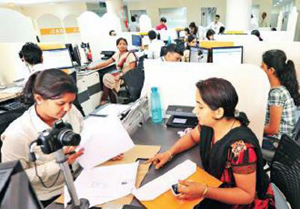
Over the past few years, Indians have found it easier to get a new passport or have one renewed at computerised seva kendras, which have taken some of the tension out of the exercise, and serve 50,000 people a day. The passport, like the Aadhar card, is writing its own governance script, and government departments are adapting to keep up.

By the end of 2015, 6.33 crore Indian citizens possessed valid passports, up from 5.19 crore in 2013. This week, the ministry of external affairs (MEA) expanded its footprint with a passport kendra in Arunachal Pradesh. "We now cover the entire country," says Muktesh Pardeshi, chief passport officer.

Appointed India's next ambassador to Mexico, Pardeshi has helmed the MEA's passport campaign for the past five years. Having spruced up the front end of the passport service system by tying up with TCS and boosting manpower, Pardeshi says they are now tackling the back end. The weakest link here is police verification, but it is also the most critical component of the passport issuance process.

We all know how tough that can get — a deadly cocktail of inefficiency and corruption. Last year, MEA and states held a brainstorming session to fix this. In the past months, technology, coercion and political push has succeeded in integrating 683 of 731 police districts in India with the passport system online.

This means police verification documents travel from passport offices to the police stations electronically, and return the same way. Police stations can no longer say, "document kho gaya" or no one was available to carry the papers. An e-trail shows how long the police station sat on it. This is very different from the days when you pleaded with the police station, or looked for someone who could "influence" them and found yourself funding a lot of "chai-paani" along the way.

Directors general of police in all the states have been provided with electronic dashboards to track progress, and pull up errant officials. In 2015, this brought the time taken for verification down to 34 days from 49 in 2013 despite the fact that passport applications shot by 40% across the country. This year, it is expected to come down to eight days. "We will soon bring J&K and Nagaland police districts within this ambit," Pardeshi said.

The revolution has been most visible in Uttar Pradesh. Over the past couple of years that the new system has been in practice, UP has jumped from issuing 6.5 lakh passports to 13 lakh passports a year. In 2015, UP, Tamil Nadu, Maharashtra and Kerala issued more than 10 lakh passports each. At the five-lakh-mark are West Bengal, Telangana, Gujarat, Karnataka and Punjab, while the highest growth was seen in Assam, Meghalaya, Manipur and Tripura.

MEA has reduced the categories of passports that need pre-police verification, and is aiming for post-verification for the bulk of Indian citizens. So, if you submit your Aadhaar, voter and PAN cards and a signed affidavit, you can pick up your passport and travel, and get verified after you return.

By August 2015, MEA had completely integrated the Aadhaar database with the passport system. This has taken the passport issuance process closer to a biometric verification.
MEA is also pushing for the early rollout of the crime and criminal tracking and networking system (CCTNS), which will be able to verify if you have a criminal record.

But police verification can never be done away with, so the MEA has developed an app for the police. Constables will receive their assignments on the app, which is GPS-enabled, and they can take photographs, scan documents and mail them to their bosses.
Commissioners are equipped to assign services and check the verification before reverting to the RPO. The app is connected to an online SMS system which seeks instant citizen feedback, keeping policemen on their toes. Seems like it's time for everyone to fly.

Comments

Mohammed
 - 
Monday, 22 Feb 2016

Really sad that Inside passport office in Bangalore, they started imposing fines on poor people. The Last Counter officials dont know to talk Hindi, English, or Kannada in Bangalore Passport Office. They can talk only in Tamil. Recently My Relative who was labour was fined for Rs.5000/- & reason was untold. The lady officer who fined him was not ready to tell reason at all.
Really sad there is nobody inside the passport office to help poor people who want to go out of country for their livelihood. The first two counters inside the bangalore office are from TCS. The last counter is Ministry official who are so old, who cant even operate the computers perfectly. The ministry is misusing our Tax funds in wrong manner. The poor people are fined for no reason.

Add new comment

  • Coastaldigest.com reserves the right to delete or block any comments.
  • Coastaldigset.com is not responsible for its readers’ comments.
  • Comments that are abusive, incendiary or irrelevant are strictly prohibited.
  • Please use a genuine email ID and provide your name to avoid reject.
coastaldigest.com news network
July 29,2020

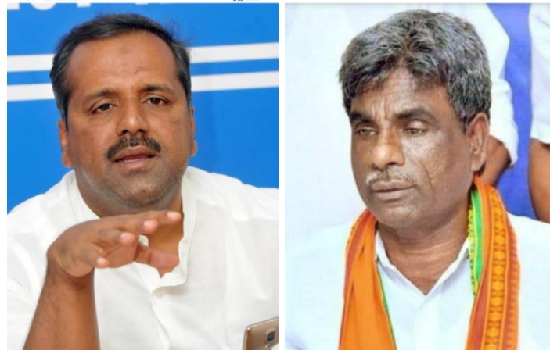
Mangaluru, July 29: Justifying the transfer of Dakshina Kannada deputy commissioner Sindhu B Rupesh, district in-charge minister Kota Shrinivas Poojari has accused Mangaluru MLA U T Khader of politicizing the issue. 

The IAS officer was transferred by the Karnataka government on July 28, a day after a saffron activist issued a death threat against her on social media after she warned of legal action against the miscreants who attack cattle traders.

Condemning the development, Mr Khader had tweeted that the state government has punished the deputy commissioner instead of punishing the culprit, who issued death threat.

Responding to Mr Khader’s tweet, Mr Poojari said that the transfer of the officer was on administrative ground. “It is unfortunate that Khader politicized a transfer carried out by the government on administrative ground. This is not Khader’s time to protect any accused,” tweeted Mr Poojari. 

It is worth mentioning here that Mr Khader was the district in-charge minister of Dakshina Kannada before Mr Poojari taking over the position. 

Meanwhile, police has arrested a person in connection with the death threat against the IAS officer.

Comments

Add new comment

  • Coastaldigest.com reserves the right to delete or block any comments.
  • Coastaldigset.com is not responsible for its readers’ comments.
  • Comments that are abusive, incendiary or irrelevant are strictly prohibited.
  • Please use a genuine email ID and provide your name to avoid reject.
News Network
July 3,2020

Bengaluru, Jul 3: The Karnataka government is allowing select asymptomatic and mildly symptomatic Covid-19 patients to recuperate at home as part of home isolation guidelines, an official said on Friday.

"Only those who are asymptomatic or mildly symptomatic shall be allowed to be in isolation at home," said a health official, highlighting that such patients should be properly oriented on home isolation.

However, before home isolation, a health team will visit the patient's house and assess its suitability for executing home isolation.

Similarly, the patient should be provided with a tele-consultation link for initial triage, daily follow up and during the entire home isolation time.

For a daily update, the patient isolated at home should give a report on his health status to the physician or health authorities.

"The home isolation shall be with the knowledge of the family members, neighbours, treating physician and local health authorities," said the official.

Though home isolation is allowed, it is not a blanket permission for all asymptomatic and mildly symptomatic cases in Karnataka to avail.

"Such cases should have the requisite facility at their residence for self-isolation and also for quarantining the family contacts. A care giver should be available to provide care on 24x7 basis," said the official.

Likewise, the caregiver should also have a regular communication link between him and the hospital during the home isolation.

No patient above 50 years will be allowed to avail home isolation.

"If the patient has the following comorbidities: hypertension, diabetes, obesity, thyroid disease, they shall be well managed and under good clinical control as assessed by medical officer," he said.

However, patients with comorbidities such as kidney diseases, dialysis, heart diseases, stroke, tuberculosis, cancer and HIV cannot avail home isolation.

Likewise, immunity compromised patients and those on steroids also cannot be on home isolation.

Though pregnant women are not allowed to avail this facility, lactating women are allowed after due instruction and assessment.

The Health Department has also issued several other guidelines and protocols for a patient choosing home isolation.

Comments

Add new comment

  • Coastaldigest.com reserves the right to delete or block any comments.
  • Coastaldigset.com is not responsible for its readers’ comments.
  • Comments that are abusive, incendiary or irrelevant are strictly prohibited.
  • Please use a genuine email ID and provide your name to avoid reject.
coastaldigest.com news network
February 25,2020

The Post Graduate Department of English, St. Agnes College (Autonomous) organized COSMOPOETICA – a Two-Day International Poets Conference, transcending the boundaries of language and bringing together scholars from English, Hindi and Kannada languages. The key-note speaker was Dr Hima Urmila Shetty and the Panel of Experts included Maggie Harris, a Commonwealth short stories award winning poet of Broadstairs, Kent; Dr Kathryn Hummel, a visiting professor at IIT Hyderabad; Prof Raj Rao, acclaimed poet and novelist, former HOD of English, Savithribai Phule University; Lata Chouhan from Bangalore; Vijay Tiwari from Ahmedabad; Dr. Nagaveni Manchi, an acclaimed Poet and Professor, Govt College, Carstreet and Ms. Chandrakala Nandavara, former Principal of Ganapati PU College.

Dr Sr Jeswina A.C., the Principal; Dr Sr Maria Roopa A.C. the Superior and Dr Sr Vinora A.C., graced the occasion.

Dr Geralyn Pinto, the Staff Convenor; Dr Malini Hebbar, the HOD and Ananya Sneha the student Convenor organised the Conference.

The highlight of the Conference was the Poetry Workshop, Slam Poetry Competition in three languages and paper presentations on various aspects of poetry.

Overall the conference drew together poets and academicians to discuss poetry as a genre and practice with ignited minds.

Comments

Add new comment

  • Coastaldigest.com reserves the right to delete or block any comments.
  • Coastaldigset.com is not responsible for its readers’ comments.
  • Comments that are abusive, incendiary or irrelevant are strictly prohibited.
  • Please use a genuine email ID and provide your name to avoid reject.