


Police check for passport may take just 8 days in future

February 21, 2016

The humble passport is creating its own little revolution in governance in India. Like the landline telephone of yore, the acquisition of a passport signalled a rise in social status a few decades ago because you had jumped through several hoops to get it.passport
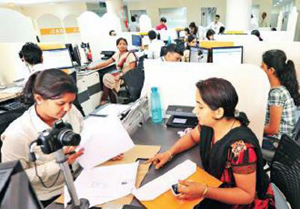
Over the past few years, Indians have found it easier to get a new passport or have one renewed at computerised seva kendras, which have taken some of the tension out of the exercise, and serve 50,000 people a day. The passport, like the Aadhar card, is writing its own governance script, and government departments are adapting to keep up.

By the end of 2015, 6.33 crore Indian citizens possessed valid passports, up from 5.19 crore in 2013. This week, the ministry of external affairs (MEA) expanded its footprint with a passport kendra in Arunachal Pradesh. "We now cover the entire country," says Muktesh Pardeshi, chief passport officer.

Appointed India's next ambassador to Mexico, Pardeshi has helmed the MEA's passport campaign for the past five years. Having spruced up the front end of the passport service system by tying up with TCS and boosting manpower, Pardeshi says they are now tackling the back end. The weakest link here is police verification, but it is also the most critical component of the passport issuance process.

We all know how tough that can get — a deadly cocktail of inefficiency and corruption. Last year, MEA and states held a brainstorming session to fix this. In the past months, technology, coercion and political push has succeeded in integrating 683 of 731 police districts in India with the passport system online.

This means police verification documents travel from passport offices to the police stations electronically, and return the same way. Police stations can no longer say, "document kho gaya" or no one was available to carry the papers. An e-trail shows how long the police station sat on it. This is very different from the days when you pleaded with the police station, or looked for someone who could "influence" them and found yourself funding a lot of "chai-paani" along the way.

Directors general of police in all the states have been provided with electronic dashboards to track progress, and pull up errant officials. In 2015, this brought the time taken for verification down to 34 days from 49 in 2013 despite the fact that passport applications shot by 40% across the country. This year, it is expected to come down to eight days. "We will soon bring J&K and Nagaland police districts within this ambit," Pardeshi said.

The revolution has been most visible in Uttar Pradesh. Over the past couple of years that the new system has been in practice, UP has jumped from issuing 6.5 lakh passports to 13 lakh passports a year. In 2015, UP, Tamil Nadu, Maharashtra and Kerala issued more than 10 lakh passports each. At the five-lakh-mark are West Bengal, Telangana, Gujarat, Karnataka and Punjab, while the highest growth was seen in Assam, Meghalaya, Manipur and Tripura.

MEA has reduced the categories of passports that need pre-police verification, and is aiming for post-verification for the bulk of Indian citizens. So, if you submit your Aadhaar, voter and PAN cards and a signed affidavit, you can pick up your passport and travel, and get verified after you return.

By August 2015, MEA had completely integrated the Aadhaar database with the passport system. This has taken the passport issuance process closer to a biometric verification.
MEA is also pushing for the early rollout of the crime and criminal tracking and networking system (CCTNS), which will be able to verify if you have a criminal record.

But police verification can never be done away with, so the MEA has developed an app for the police. Constables will receive their assignments on the app, which is GPS-enabled, and they can take photographs, scan documents and mail them to their bosses.
Commissioners are equipped to assign services and check the verification before reverting to the RPO. The app is connected to an online SMS system which seeks instant citizen feedback, keeping policemen on their toes. Seems like it's time for everyone to fly.

Comments

Mohammed
 - 
Monday, 22 Feb 2016

Really sad that Inside passport office in Bangalore, they started imposing fines on poor people. The Last Counter officials dont know to talk Hindi, English, or Kannada in Bangalore Passport Office. They can talk only in Tamil. Recently My Relative who was labour was fined for Rs.5000/- & reason was untold. The lady officer who fined him was not ready to tell reason at all.
Really sad there is nobody inside the passport office to help poor people who want to go out of country for their livelihood. The first two counters inside the bangalore office are from TCS. The last counter is Ministry official who are so old, who cant even operate the computers perfectly. The ministry is misusing our Tax funds in wrong manner. The poor people are fined for no reason.

Add new comment

  • Coastaldigest.com reserves the right to delete or block any comments.
  • Coastaldigset.com is not responsible for its readers’ comments.
  • Comments that are abusive, incendiary or irrelevant are strictly prohibited.
  • Please use a genuine email ID and provide your name to avoid reject.
News Network
January 23,2020

Mangaluru, Jan 23: Members of the Social Democratic Party of India (SDPI) on Thursday held a protest against the Karnataka government, accusing it of shielding Aditya Rao, the main accused of planting an improvised explosive device (IED) at the Mangaluru airport on January 20.

Meanwhile, the Judicial Magistrate First Class (JMFC) Court has sent the accused Aditya Rao to 10 days police custody.

Earlier on Wednesday, the Bengaluru Police said that the procedure is being followed to hand-over to the Mangaluru Police a suspect who surrendered before it two days after planting an improvised explosive device (IED) at the Mangaluru International Airport.

The IED was later defused in an open field by the personnel of the bomb disposal squad.

Comments

Add new comment

  • Coastaldigest.com reserves the right to delete or block any comments.
  • Coastaldigset.com is not responsible for its readers’ comments.
  • Comments that are abusive, incendiary or irrelevant are strictly prohibited.
  • Please use a genuine email ID and provide your name to avoid reject.
Ram Puniyani
June 29,2020

In Minneapolis, US an African American, George Floyd lost his life as the white policeman, Derek Chauvin, caught hold of him and put his knee on his neck. This is a technique developed by Israel police. For nine long minutes the knee of the while policeman was on the neck of George, who kept shouting, I can’t breathe.

Following this gruesome murder America erupted with protests, ‘Black lives matter’. The protestors were not just African Americans but also a large section of whites. Within US one police Chief apologized for the act of this. In a touching gesture of apology the police force came on its knees. This had reverberations in different parts of the World.

The act was the outcome of the remnants of the racial hatred against blacks by the whites. It is the hatred and the perceptions which are the roots of such acts of violence. What was also touching that the state of democracy in US is so deep that even the police apologized, the nation, whites and blacks, stood up as a sensitive collective against this violence.

US is not the only country where the brutal acts of violence torment the marginalized sections of society. In India there is a list of dalits, minorities and adivasis who are regularly subjected to such acts. But the reaction is very different. We have witnessed the case of Tabrez Ansari, who was tied to the pole by the mob and beaten ruthlessly. When he was taken to police station, police took enough time to take him to hospital and Tabrez died.

Mohsin Sheikh, a Pune techie was murdered by Hindu Rashtra Sena mob, the day Modi came to power in 2014. Afrazul was killed by Shambhulal Regar, videotaped the act released on social media. Regar believed that Muslims are indulging in love Jihad, so deserve such a fate. Mohammad Akhlaq is one among many names who were mob lynched on the issue of beef cow. The list can fill pages after pages.

Recently a young dalit boy was shot dead for the crime of entering a temple. In Una four dalits were stripped above waste and beaten mercilessly. Commenting on this act the Union Minister Ramvilas Paswan commented that it is a minor incident. Again the list of atrocities against dalits is long enough. The question is what Paswan is saying is the typical response to such gruesome murders and tortures. In US loss of one black life, created the democratic and humane response. In India there is a general silence in response to these atrocities. Some times after a good lapse of time, the Prime Minister will utter, ‘Mother Bharati has lost a son’. Most of the time victim is blamed. Some social groups raise their voice in some fora but by and large the deafening silence from the country is the norm.

India is regarded as the largest democracy. Democracy is the rule of law, and the ground on which the injustices are opposed. In America though the present President is insensitive person, but its institutions and processes of democratic articulations are strong. The institutions have deepened their roots and though prejudices may be guiding the actions of some of the officers like the killer of George, there are also police officers who can tell their President to shut up if he has nothing meaningful to say on the issue. The prejudices against Blacks may be prevalent and deep in character, still there are large average sections of society, who on the principles of ‘Black lives matter’. There are large sections of vocal population who can protest the violation of basic norms of democracy and humanism.

In India by contrast there are multiple reasons as to why the lives of Tabrez Ansari, Mohammad Akhlaq, Una dalit victims and their likes don’t matter. Though we claim that we are a democracy, insensitivity to injustices is on the rise. The strong propaganda against the people from margins has become so vicious during last few decades that any violence against them has become sort of a new normal. The large populace, though disturbed by such brutalities, is also fed the strong dose of biases against the victims. The communal forces have a great command over effective section of media and large section of social media, which generates Hate against these disadvantaged groups, thereby the response is muted, if at all.

As such also the process of deepening of our democracy has been weak. Democracy is a dynamic process; it’s not a fixed entity. Decades ago workers and dalits could protest for their rights. Now even if peasants make strong protests, dominant media presents it as blocking of traffic! How the roots of democracy are eroded and are visible in the form where the criticism of the ruling dispensation is labelled as anti National..

Our institutions have been eroded over a period of time, and these institutions coming to the rescue of the marginalized sections have been now become unthinkable. The outreach of communal, divisive ideology, the ideology which looks down on minorities, dalits and Adivasis has risen by leaps and bounds.

The democracy in India is gradually being turned in to a hollow shell, the rule of law being converted in to rule of an ideology, which does not have faith in Indian Constitution, which looks down upon pluralism and diversity of this country, which is more concerned for the privileges of the upper caste, rich and affluent. The crux of the matter is the weak nature of democracy, which was on way to become strong, but from decades of 1980s, as emotive issues took over, the strength of democracy started dwindling, and that’s when the murders of the types of George Floyd, become passé. One does complement the deeper roots of American democracy and its ability to protect the democratic institutions, which is not the case in India, where protests of the type, which were witnessed after George Floyd’s murder may be unthinkable, at least in the present times. 

Comments

Add new comment

  • Coastaldigest.com reserves the right to delete or block any comments.
  • Coastaldigset.com is not responsible for its readers’ comments.
  • Comments that are abusive, incendiary or irrelevant are strictly prohibited.
  • Please use a genuine email ID and provide your name to avoid reject.
News Network
May 5,2020

Mangaluru, May 5: As many as 7,119 labourers, who were stranded in Dakshina Kannada district, were sent to their native places in buses operated by KSRTC’s Mangaluru and Puttur divisions.

After the announcement of lockdown, the stranded labourers were provided shelter in various halls, Town Hall and government hostels in the district.

The stranded labourers from Kuloor, Panjimogaru, Panambur, Baikampady, Yeyyadi, Mulki, Ullal, Bunder, Hoige Bazar and from taluk centres, who wished to take up farming activities in their villages, were sent back in KSRTC and private buses. As many as 266 buses were engaged for ferrying the labourers.

The labourers underwent health check-up prior to their departure to their native villages, Deputy Commissioner Sindhu B Rupesh said.

Comments

Add new comment

  • Coastaldigest.com reserves the right to delete or block any comments.
  • Coastaldigset.com is not responsible for its readers’ comments.
  • Comments that are abusive, incendiary or irrelevant are strictly prohibited.
  • Please use a genuine email ID and provide your name to avoid reject.