


Police check for passport may take just 8 days in future

February 21, 2016

The humble passport is creating its own little revolution in governance in India. Like the landline telephone of yore, the acquisition of a passport signalled a rise in social status a few decades ago because you had jumped through several hoops to get it.passport
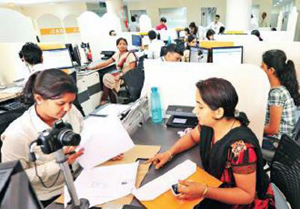
Over the past few years, Indians have found it easier to get a new passport or have one renewed at computerised seva kendras, which have taken some of the tension out of the exercise, and serve 50,000 people a day. The passport, like the Aadhar card, is writing its own governance script, and government departments are adapting to keep up.

By the end of 2015, 6.33 crore Indian citizens possessed valid passports, up from 5.19 crore in 2013. This week, the ministry of external affairs (MEA) expanded its footprint with a passport kendra in Arunachal Pradesh. "We now cover the entire country," says Muktesh Pardeshi, chief passport officer.

Appointed India's next ambassador to Mexico, Pardeshi has helmed the MEA's passport campaign for the past five years. Having spruced up the front end of the passport service system by tying up with TCS and boosting manpower, Pardeshi says they are now tackling the back end. The weakest link here is police verification, but it is also the most critical component of the passport issuance process.

We all know how tough that can get — a deadly cocktail of inefficiency and corruption. Last year, MEA and states held a brainstorming session to fix this. In the past months, technology, coercion and political push has succeeded in integrating 683 of 731 police districts in India with the passport system online.

This means police verification documents travel from passport offices to the police stations electronically, and return the same way. Police stations can no longer say, "document kho gaya" or no one was available to carry the papers. An e-trail shows how long the police station sat on it. This is very different from the days when you pleaded with the police station, or looked for someone who could "influence" them and found yourself funding a lot of "chai-paani" along the way.

Directors general of police in all the states have been provided with electronic dashboards to track progress, and pull up errant officials. In 2015, this brought the time taken for verification down to 34 days from 49 in 2013 despite the fact that passport applications shot by 40% across the country. This year, it is expected to come down to eight days. "We will soon bring J&K and Nagaland police districts within this ambit," Pardeshi said.

The revolution has been most visible in Uttar Pradesh. Over the past couple of years that the new system has been in practice, UP has jumped from issuing 6.5 lakh passports to 13 lakh passports a year. In 2015, UP, Tamil Nadu, Maharashtra and Kerala issued more than 10 lakh passports each. At the five-lakh-mark are West Bengal, Telangana, Gujarat, Karnataka and Punjab, while the highest growth was seen in Assam, Meghalaya, Manipur and Tripura.

MEA has reduced the categories of passports that need pre-police verification, and is aiming for post-verification for the bulk of Indian citizens. So, if you submit your Aadhaar, voter and PAN cards and a signed affidavit, you can pick up your passport and travel, and get verified after you return.

By August 2015, MEA had completely integrated the Aadhaar database with the passport system. This has taken the passport issuance process closer to a biometric verification.
MEA is also pushing for the early rollout of the crime and criminal tracking and networking system (CCTNS), which will be able to verify if you have a criminal record.

But police verification can never be done away with, so the MEA has developed an app for the police. Constables will receive their assignments on the app, which is GPS-enabled, and they can take photographs, scan documents and mail them to their bosses.
Commissioners are equipped to assign services and check the verification before reverting to the RPO. The app is connected to an online SMS system which seeks instant citizen feedback, keeping policemen on their toes. Seems like it's time for everyone to fly.

Comments

Mohammed
 - 
Monday, 22 Feb 2016

Really sad that Inside passport office in Bangalore, they started imposing fines on poor people. The Last Counter officials dont know to talk Hindi, English, or Kannada in Bangalore Passport Office. They can talk only in Tamil. Recently My Relative who was labour was fined for Rs.5000/- & reason was untold. The lady officer who fined him was not ready to tell reason at all.
Really sad there is nobody inside the passport office to help poor people who want to go out of country for their livelihood. The first two counters inside the bangalore office are from TCS. The last counter is Ministry official who are so old, who cant even operate the computers perfectly. The ministry is misusing our Tax funds in wrong manner. The poor people are fined for no reason.

Add new comment

  • Coastaldigest.com reserves the right to delete or block any comments.
  • Coastaldigset.com is not responsible for its readers’ comments.
  • Comments that are abusive, incendiary or irrelevant are strictly prohibited.
  • Please use a genuine email ID and provide your name to avoid reject.
coastaldigest.com news network
June 27,2020

Mangaluru, June 27: The district health authorities are likely to conduct mass random testing for Covid-19 in Ullal town on the outskirts of the city in the wake of detection of several new coronavirus positive cases there in past couple few days.  

An elderly woman from Azad Nagar in Ullal was died of coronavirus earlier this week. Many others including a couple of policemen also tested positive for the deadly virus in vicinity.

Following this, local elected representatives including MLA U T Khader and religious leaders of Ullal held a meeting regarding taking steps to control the spread of the virus. In the meeting Mr Khader suggested the authorities to conduct random testing in Ullal town. 

Apart from Azad Nagar, covid-19 cases have surfaced in Kodi, Bangera Lane and in the surroundings of police station and Sahara Hospital triggering panic among people. Hence, the authorities are like to conduct random testing of auto rickshaw drivers, fishermen, street vendors among others. 

Meanwhile, several mosques in Ullal have reportedly decided to suspend congregational prayers temporarily.

Comments

Add new comment

  • Coastaldigest.com reserves the right to delete or block any comments.
  • Coastaldigset.com is not responsible for its readers’ comments.
  • Comments that are abusive, incendiary or irrelevant are strictly prohibited.
  • Please use a genuine email ID and provide your name to avoid reject.
News Network
July 4,2020

Bengaluru, Jul 4: Amid the rising COVID-19 cases in the state, the Karnataka COVID-19 Task Force has decided to set up booth-level committees across the state including 8,800 here for effective monitoring and surveillance.

The task force also released detailed guidelines for home isolation for asymptomatic cases including 17 days ''home isolation'' for patients below 50 years of age. It also warned of legal action against those health workers for disrespect to the bodies.

Briefing reporters after the meeting on Friday, Medical Education Minister Dr K Sudhakar said the local management will be strengthened for effective monitoring and surveillance of COVID-19 cases. "There will be booth-level task force committees throughout the state right from the village to Bengaluru.

These task force committees will act at the ultra local level. The task force will act as a structural and functional unit of COVID-19 dealing with monitoring, surveillance, checking of all the ILI cases, ambulances and hospitals," he added.

He also said the committees will comprise one member each from the Health department, police department, municipalities or Panchayat, volunteers, valveman. The committee will have five to six members.

The principal secretary in the Village Development and Panchayat Raj department L K Ateeq has been appointed as the nodal officer to manage the task force in the rural areas whereas in the urban areas, the Urban Development secretary, the municipal administration directors and the municipal commissioner will form the local task force.

"In Bengaluru alone 8,800 teams will be formed, which will be coterminous with the 8,800 booths in the city. They will provide the real-time data. They will be imparted training," the minister added. Noting that there were about 8,800 electoral booths in Bengaluru city and each booth will have a task force committee, he said a nodal officer has been appointed to oversee this.

The state level task force also came out with a slew of conditions. As far as home isolation is concerned, it would apply for patients who are below 50 years and have no symptoms of any other disease, and their homes should have a toilet and have an attendant.

He also said home isolation duration has been increased from 14 to 17 days. "People should not get fever in the next three days after completing 14 days, else they will be quarantined for another seven days. If they don''t get fever then they will be freed to perform their personal activities," Sudhakar said.

Those who are above 50 years and have comorbidities, will be treated at the COVID care centres only and they will be under medical supervision and be subjected to regular tests. The state is also making arrangements for telecommunication for those who are asymptomatic but wish to speak to a doctor.

It was also decided to have at least two ambulances in each of the 198 wards of Bengaluru. The minister said the additional commissioner of police (traffic) will be the nodal officer to coordinate the movement of ambulances. The task force has also appointed a nodal officer to manage the hospitals based on the availability of beds and ventilators. The officer will provide real time information about beds.

"We want to make sure that no one has to run from one hospital to another," Sudhakar said. On the cremation of the bodies, Sudhakar said guidelines have been issued on how to handle bodies at mortuaries, taking them in the ambulances, human treatment to the deceased while performing the last rites and fumigation of the bed. "Legal action will be taken against those who treat bodies in an inhuman way," Sudhakar said.

The state-level task force has also decided to arrange for test reports within 24 hours. It has also been decided to increase the testing capacity from the existing 15,000 a day to 25,000. In view of the spurt in COVID-19 cases, the task force also recommended antigen tests in crowded areas to check whether there was community spread.

To a question on closing down the border, the minister said there is no question of lockdown. "We cannot hide from this disease. It is not a solution. We have to live with it now, yet maintain a distance from it," he added. Sudhakar, who is a doctor himself, said COVID-19 is not as deadly a virus as those he had seen in the past and asked people not to be scared of it.

Comments

Add new comment

  • Coastaldigest.com reserves the right to delete or block any comments.
  • Coastaldigset.com is not responsible for its readers’ comments.
  • Comments that are abusive, incendiary or irrelevant are strictly prohibited.
  • Please use a genuine email ID and provide your name to avoid reject.
News Network
April 23,2020

Riyadh, Apr 22: In an extraordinary initiative, the government of the Kingdom of Saudi Arabia has decided to facilitate the travel of expatriates who have an exit and reentry visa or final exit visa to return to their countries.

This is in line with the order of Custodian of the Two Holy Mosques King Salman, according to the Saudi Press Agency.

According to the initiative, called “Auda” (return), expatriates can apply seeking permission for travel to their countries through the Absher portal of the ministry.

Announcing this, Saudi's Ministry of Interior said that the initiative will be implemented in cooperation with a number of relevant government agencies.

Requests for travel from expatriates will be received and approved in coordination with the relevant authorities to complete their travel procedures on board international flights.

As per the initiative, a text message will be sent to the beneficiary stating the travel date, ticket number and reservation details, and by which the beneficiary can obtain his travel ticket and complete the travel procedures.

Clarifying the procedures for the travel, the ministry said that the applicant shall select the icon (Auda) after visiting the Absher portal and fill the following fields: iqama (residency permit) number, date of birth, mobile number, departure city and airport of arrival.

It is not mandatory for the expatriate to have his own Absher account for availing of the service, the ministry said, adding that this facility is to enable expatriates to benefit from this initiative.

The departure will be through the following airports: King Khalid International Airport in Riyadh, King Abdulaziz International Airport in Jeddah, Prince Muhammad International Airport in Madinah, and King Fahd International Airport in Dammam.

Those expatriates who are outside these cities can benefit from the service through entering airport of departure after completion of their travel procedures in sufficient period of time.

Comments

Add new comment

  • Coastaldigest.com reserves the right to delete or block any comments.
  • Coastaldigset.com is not responsible for its readers’ comments.
  • Comments that are abusive, incendiary or irrelevant are strictly prohibited.
  • Please use a genuine email ID and provide your name to avoid reject.