


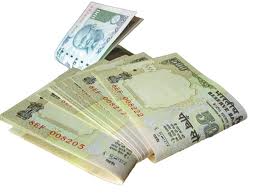
Currency notes issued before to 2005 to be withdrawn

January 22, 2014

New Delhi, Jan 22: The Reserve Bank of India (RBI) on Wednesday decided to withdraw all currency notes issued prior to 2005, including Rs 500 and Rs 1,000 denominations, after March 31 in a move apparently aimed at curbing black money and fake currencies.

currency

"After March 31, 2014, it (RBI) will completely withdraw from circulation all bank notes issued prior to 2005. From April 1, 2014, the public will be required to approach banks for exchanging these notes," the RBI said in a statement.

The public can easily distinguish the currency notes issued before 2005 as they do not have the year of printing on reverse side. The year of printing in a small font is visible at the middle of the bottom row in notes issued after 2005.

Asking people not to panic and cooperate in the withdrawal process, the RBI said old notes will continue to be legal and can be exchanged in any bank after April 1.

"From April 1, 2014, the public will be required to approach banks for exchanging these notes. Banks will provide exchange facility for these notes until further communication," the RBI said.

From July 1, 2014, persons seeking exchange of more than 10 pieces of Rs 500 and Rs 1,000 notes will have to furnish proof of identity and residence to the bank.

Although the RBI did not give any reason for withdrawal of pre-2005 currency notes, the move is expected to unearth black money held in cash.

As the new currency notes have added security features, they would help in curbing the menace of fake currency.

At present, currency notes in denominations of Rs 5, Rs 10, Rs 20, Rs 50, Rs 100, Rs 500 and Rs 1,000 are issued.

Comments

Add new comment

  • Coastaldigest.com reserves the right to delete or block any comments.
  • Coastaldigset.com is not responsible for its readers’ comments.
  • Comments that are abusive, incendiary or irrelevant are strictly prohibited.
  • Please use a genuine email ID and provide your name to avoid reject.
News Network
May 3,2020

New Delhi, May 3: The Indian Council of Medical Research (ICMR) has crossed over one million RT-PCR tests for COVID-19 on Saturday evening marking a big landmark, ICMR officials said.

"We have tested about 10,40000 tests till Saturday evening. In a few days, we have increased our testing capacity. ICMR has been doing more than 70,000 tests in the last two consecutive days," he said.

On Saturday, ICMR released that a total of 976363 samples have been tested till date. From May 1 till evening on Saturday, 1,37,346 tests were done.

The top three states which are doing vigorous testing includes--Maharashtra, Tamil Nadu and Rajasthan. As on date, these three states have conducted more than one lakh test respectively.

However, Andhra Pradesh, Uttar Pradesh, Karnataka and Delhi still need to ramp up their testing capacity.

ICMR has always emphasised that the confirmatory test for diagnosis of COVID-19 infection is RT-PCR test of the throat and/or nasal swab, which detects virus at an early stage. Recently, Dr GS Toteja, Additional Director General of ICMR had said that to contain coronavirus infection, RT-PCR tests must be continued vigorously as the principal diagnostic tests.

RT-PCR tests are now available in 310 government laboratories and 111 private set up across the country.

On Friday, the Centre informed that ICMR has ordered 21.35 lakh diagnostic kits. As on date, India has reported about 37,776 confirmed coronavirus cases and 1223 deaths.

Comments

Add new comment

  • Coastaldigest.com reserves the right to delete or block any comments.
  • Coastaldigset.com is not responsible for its readers’ comments.
  • Comments that are abusive, incendiary or irrelevant are strictly prohibited.
  • Please use a genuine email ID and provide your name to avoid reject.
News Network
March 23,2020

Mangaluru, Mar 23: In its efforts to contain the outbreak of COVID-19, the district administration has ordered that all shops and establishments selling essential commodities to remain open only between 0600 hrs and 1200 hrs from Tuesday till March 31.

Dakshina Kannada Deputy Commissioner Sindhu B Rupesh, in a press release here, announced that autorickshaws and taxis should not ferry passengers and should be utilised only during emergencies and for transportation of essential commodities among others.

Ms Sindhu has also ordered shutting down industries. Only those industries involved in the production of essential commodities, medicines, medical instruments, medicine, fuel, farm produce among others had been exempted, Please log in to get detailed story.

Comments

Add new comment

  • Coastaldigest.com reserves the right to delete or block any comments.
  • Coastaldigset.com is not responsible for its readers’ comments.
  • Comments that are abusive, incendiary or irrelevant are strictly prohibited.
  • Please use a genuine email ID and provide your name to avoid reject.
News Network
March 5,2020

Mangaluru, Mar 5: Chairman of Karnataka Christian Development Committee (CDC) Joylus DSouza on Thursday welcomed the allocation of a Rs 200-crore grant in the state budget for the development of the Christian community.

In his message to the Chief Minister B S Yediyurappa released to the media, DSouza said, "Christians in Karnataka welcome with gratitude the announcement of Rs 200-crore allocation for the community in the budget for fiscal 2020-21."

In 2011-12 fiscal also, Yediyurappa as Chief Minister had allocated a grant of Rs 50 crore for the community for the first time in the history of the state, he said.

The grant of Rs 200 crore this year shows Yediyurappas concern for the Christians.

I congratulate and offer my sincere gratitude on behalf of the Christian community of the state to Yediyurappa, DSouza said.

Comments

Add new comment

  • Coastaldigest.com reserves the right to delete or block any comments.
  • Coastaldigset.com is not responsible for its readers’ comments.
  • Comments that are abusive, incendiary or irrelevant are strictly prohibited.
  • Please use a genuine email ID and provide your name to avoid reject.