


Tipu Sultan’s legacy continues to endure

[email protected] (The Hindu)
May 5, 2015

Mysuru, May 5: The death of Tipu Sultan on May 4, 1799, brought to close a fascinating chapter in Indian history; but his legacy continues to endure notwithstanding the controversy surrounding him in the present times.
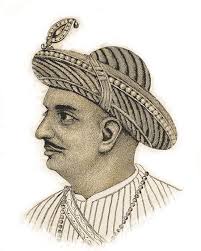
tipuThough it has been 216 years since the death of Tipu Sultan, historians are unanimous in pointing out that his initiatives in the socio-economic fields have continued to endure, though these were fast fading from public memory.

The expansion of sericulture in the Mysuru region has been credited to Tipu Sultan. The Mysore Gazetteer notes that Tipu secured the know-how from Bengal and introduced mulberry cultivation in 21 centres. In what could be described as a step to encourage local industry, he banned the export of cotton to ensure that local weavers were not denied the raw material.

The introduction of sugarcane on a large scale has also been attributed to Tipu Sultan for which he secured the assistance of Chinese experts, according to the Gazetteer, which notes that quality sugar and candy were produced with their assistance.

During the pause between the various wars he fought, Tipu Sultan took some reformatory measures including a ban on alcohol. Cattle being closely linked to agriculture, Tipu Sultan encouraged livestock breeding. Hallikar and Amrit Mahal breeds are believed to be products of this initiative.

Rocket technology

Modern day historians also credit Hyder Ali and Tipu Sultan with an elementary knowledge of missile or rocket technology, which is considered to be the prototype of present-day missiles and rockets. They were put to full use during the wars with the British. Some of these have been preserved at the Royal Artillery Museum in England. The paintings at Dariya Daulat, the summer palace of Tipu Sultan at Srirangapatana, are a clear indicator of the use of these missiles in wars.

A courtyard within the ruins of the Srirangapatana Fort was identified by archaeologists as the possible spot from where the missiles were launched. Scientists from DRDO have also visited the spot on many occasions in a bid to ensure better maintenance. Plans for a ‘missile museum’ are yet to materialise.

Rally, tributes mark death anniversary

Rallies were held and tributes offered to mark the 216th death anniversary of eighteenth-c entury warrior king Tipu Sultan in Mysuru and his erstwhile capital Srirangapatna near here on Monday.

While Congress leaders gathered at the office of the Mysuru City (District) Congress Committee on Sayyaji Rao Road in the morning and garlanded the portrait of Tipu Sultan on his ‘Shaheed Diwas’, large number of people paid tributes to Tipu Sultan at Srirangapatna.

Rallyists led by Kannada protagonist Vatal Nagaraj, who arrived in Srirangapatna from Bengaluru, offered floral tributes at the site near the northern fringe of the fort, where Tipu’s body was found in 1799, and Gumbaz, where his mortal remains are buried. Activists of the Kannada Chaluvali Vatal Paksha (KCVP) from Bengaluru accompanied Mr. Nagaraj, who made stop-overs at Ramanagaram and Mandya enroute to Srirangapatna to address the public.

Mr. Nagaraj said the commitment of Tipu Sultan, known as the Tiger of Mysore, was so strong for his land that he even pledged his children for the sake of the country and its people. “A statue of Tipu should be built in front of Parliament. I will speak to the Lok Sabha Speaker and leaders of other political parties in this regard,” he said.

Mr. Nagaraj also demanded that the road leading to Devanahalli, Tipu’s birthplace, be named after him. He also urged the State Government to build a memorial for Tipu Sultan on 500 acres of land in Bengaluru.

Comments

Sandra
 - 
Friday, 4 Mar 2016

Thanks for finally writing about >Tipu Sultan’s legacy continues to endure

Add new comment

  • Coastaldigest.com reserves the right to delete or block any comments.
  • Coastaldigset.com is not responsible for its readers’ comments.
  • Comments that are abusive, incendiary or irrelevant are strictly prohibited.
  • Please use a genuine email ID and provide your name to avoid reject.
News Network
June 3,2020

Bengaluru, Jun 3: Lack of awareness on rail travel norms led to a tense situation on a Karnataka train as a female passenger was forced to disembark midway after her fellow passengers raised a hue and cry on seeing her knuckle stamped, mistaking it for a quarantine stamp, an official said on Tuesday.

"Many passengers on the train with the woman raised a hue and cry on seeing her stamped and complained to the TTE. She was later disembarked at Tumkur," a South Western Railway (SWR) zone official said.

The woman was travelling from Bengaluru to Belagavi as a transit passenger. Her status as such a passenger was stamped on her knuckle.

However, after some time, her fellow passengers observed her stamped hand and misunderstood that she was violating the quarantine norms.

Without realising that she was just a transit passenger who will be quarantined on reaching her destination, they created pandemonium and complained to the travelling ticket inspector.

"Following the public pressure, she was forcibly disembarked in Tumkur station," said the official.

Incidentally, the railways allows transit passengers to travel.

The official said the TTE would not have been aware of the rules and must have yielded to the passengers' pressure.

Later, the woman was allowed to board another train and reach her destination, the official said.

Comments

Add new comment

  • Coastaldigest.com reserves the right to delete or block any comments.
  • Coastaldigset.com is not responsible for its readers’ comments.
  • Comments that are abusive, incendiary or irrelevant are strictly prohibited.
  • Please use a genuine email ID and provide your name to avoid reject.
coastaldigest.com news network
July 18,2020

Udupi, Jul 18: Noted multi-lingual scholar Dr Uliyar Padmanabha Upadhyaya passed away last night at a private hospital in Manipal. The 88-year-old was survived by a son and a daughter.

His wife Susheela Uadhyaya, who was also a multi-lingual scholar, had passed away in January 2014 at the age of 77. The duo had compiled the six-volume Tulu Lexicon. Its first volume was published in 1988 and the last volume in 1997.

Son of Sitaram Upadhyaya, who was a scholar in the court of the Raja of Travancore, Dr Padmanabha was born on April 10, 1932 at Uliyar in Majur Village near Kaup in Udupi district. 

The Upadhyaya couple had conducted serious research work in linguistics and folk culture and produced a number of books-some of them jointly, some individually and some in collaboration with others. 

Dr Padmanabha had acquired three Master of Arts degrees in Sanskrit, Kannada and Linguistics from Madras, Kerala and Pune Universities, Vidwan in Hindi and PhD in Linguistics from the Pune University for his thesis titled “A Comparative Study of Kannada Dialects”.

He was a visiting Professor at the Universities of London and Paris. He knew Hindi, Kannada, Tulu, Malayalam, Tamil, English, French and Olof, the language of Senegal in Africa.

His works include Nanjanagudu Kannada (Vokkaliga Dialect), Coorg Kannada, Kuruba - A Dravidian Language, Kannada - A Phonetic Language, Malayalam Language and Literature (with Ms. Susheela), Effect of Bilingualism on Bidar Kannada, Coimbatore Tamil, Kannada as Spoken by Different Population Groups in Mysore City, Dravidian and Negro African: Ethno Linguistic Study (with Ms. Susheela), Conversational Kannada, Coastal Karnataka and Bhuta Worship: Aspects of a Ritualistic Theatre (with Ms. Susheela).

Also Read: Eminent linguist Dr Susheela P Upadhyaya no more

Comments

Add new comment

  • Coastaldigest.com reserves the right to delete or block any comments.
  • Coastaldigset.com is not responsible for its readers’ comments.
  • Comments that are abusive, incendiary or irrelevant are strictly prohibited.
  • Please use a genuine email ID and provide your name to avoid reject.
News Network
April 29,2020

Mangaluru, Apr 29: District in-charge Minister Kota Srinivas Poojary on Wednesday inaugurated a mobile fever clinic to cure COVID-19 patients.

Karnataka State Road Transport Corporation (KSRTC) has converted one of its buses into a clinic in Mangaluru to treat COVID-19 patients.

The mobile fever clinic has a bed for the patient and a cabin for the doctor. There is also a seating facility, medicine box, wash-basin, sanitizer, soap oil, a separate water facility, and fans.

Comments

Add new comment

  • Coastaldigest.com reserves the right to delete or block any comments.
  • Coastaldigset.com is not responsible for its readers’ comments.
  • Comments that are abusive, incendiary or irrelevant are strictly prohibited.
  • Please use a genuine email ID and provide your name to avoid reject.