


Tipu Sultan’s legacy continues to endure

[email protected] (The Hindu)
May 5, 2015

Mysuru, May 5: The death of Tipu Sultan on May 4, 1799, brought to close a fascinating chapter in Indian history; but his legacy continues to endure notwithstanding the controversy surrounding him in the present times.
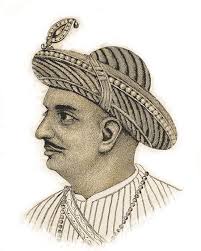
tipuThough it has been 216 years since the death of Tipu Sultan, historians are unanimous in pointing out that his initiatives in the socio-economic fields have continued to endure, though these were fast fading from public memory.

The expansion of sericulture in the Mysuru region has been credited to Tipu Sultan. The Mysore Gazetteer notes that Tipu secured the know-how from Bengal and introduced mulberry cultivation in 21 centres. In what could be described as a step to encourage local industry, he banned the export of cotton to ensure that local weavers were not denied the raw material.

The introduction of sugarcane on a large scale has also been attributed to Tipu Sultan for which he secured the assistance of Chinese experts, according to the Gazetteer, which notes that quality sugar and candy were produced with their assistance.

During the pause between the various wars he fought, Tipu Sultan took some reformatory measures including a ban on alcohol. Cattle being closely linked to agriculture, Tipu Sultan encouraged livestock breeding. Hallikar and Amrit Mahal breeds are believed to be products of this initiative.

Rocket technology

Modern day historians also credit Hyder Ali and Tipu Sultan with an elementary knowledge of missile or rocket technology, which is considered to be the prototype of present-day missiles and rockets. They were put to full use during the wars with the British. Some of these have been preserved at the Royal Artillery Museum in England. The paintings at Dariya Daulat, the summer palace of Tipu Sultan at Srirangapatana, are a clear indicator of the use of these missiles in wars.

A courtyard within the ruins of the Srirangapatana Fort was identified by archaeologists as the possible spot from where the missiles were launched. Scientists from DRDO have also visited the spot on many occasions in a bid to ensure better maintenance. Plans for a ‘missile museum’ are yet to materialise.

Rally, tributes mark death anniversary

Rallies were held and tributes offered to mark the 216th death anniversary of eighteenth-c entury warrior king Tipu Sultan in Mysuru and his erstwhile capital Srirangapatna near here on Monday.

While Congress leaders gathered at the office of the Mysuru City (District) Congress Committee on Sayyaji Rao Road in the morning and garlanded the portrait of Tipu Sultan on his ‘Shaheed Diwas’, large number of people paid tributes to Tipu Sultan at Srirangapatna.

Rallyists led by Kannada protagonist Vatal Nagaraj, who arrived in Srirangapatna from Bengaluru, offered floral tributes at the site near the northern fringe of the fort, where Tipu’s body was found in 1799, and Gumbaz, where his mortal remains are buried. Activists of the Kannada Chaluvali Vatal Paksha (KCVP) from Bengaluru accompanied Mr. Nagaraj, who made stop-overs at Ramanagaram and Mandya enroute to Srirangapatna to address the public.

Mr. Nagaraj said the commitment of Tipu Sultan, known as the Tiger of Mysore, was so strong for his land that he even pledged his children for the sake of the country and its people. “A statue of Tipu should be built in front of Parliament. I will speak to the Lok Sabha Speaker and leaders of other political parties in this regard,” he said.

Mr. Nagaraj also demanded that the road leading to Devanahalli, Tipu’s birthplace, be named after him. He also urged the State Government to build a memorial for Tipu Sultan on 500 acres of land in Bengaluru.

Comments

Sandra
 - 
Friday, 4 Mar 2016

Thanks for finally writing about >Tipu Sultan’s legacy continues to endure

Add new comment

  • Coastaldigest.com reserves the right to delete or block any comments.
  • Coastaldigset.com is not responsible for its readers’ comments.
  • Comments that are abusive, incendiary or irrelevant are strictly prohibited.
  • Please use a genuine email ID and provide your name to avoid reject.
coastaldigest.com news network
February 14,2020

Bengaluru, Feb 14: In a major embarrassment to the police, the Karnataka High Court has termed as illegal the prohibitory orders imposed under Section 144 of CrPC by the City Police Commissioner in December 2019 in the light of the anti-Citizenship Amendment Act (CAA) protests in Bengaluru.

The orders were passed “without application of mind” and without following due procedures, the court noted. Giving reasons for upholding the arguments of the petitioners that there was no application of mind by the Police Commissioner (Bhaskar Rao) before imposing restrictions, a division bench of the High Court said he had not recorded the reasons, except reproducing the contents of letters addressed to him by the Deputy Commissioners of Police (DCPs). 

The state government had contended that prohibitory orders were passed based on reports submitted by the DCPs who expressed apprehension about anti-social elements creating law and order problems and damaging public property by taking advantage of the anti-CAA protests.  

The High Court bench said the Police Commissioner should have conducted inquiry as stated by the Supreme Court to check the reasons cited by the DCPs who submitted identical reports. Except for this, there were no facts laid out by the Police Commissioner, the court said.

“There is complete absence of reasons. If the order indicated that the Police Commissioner was satisfied by the apprehension of DCPs, it would have been another matter,” it said.  

“The apex court has held that it must record the reasons for imposition of restrictions and there has to be a formation of opinion by the district magistrate. Only then can  the extraordinary powers conferred on the district magistrate can be exercised. This procedure was not followed. Hence, exercise of power under Section 144 by the commissioner, as district magistrate, was not at all legal”, the bench said. 

“We hold that the order dated December 18, 2019 is illegal and cannot stand judicial scrutiny in terms of the apex court’s orders in the Ramlila Maidan case and Anuradha Bhasin case,” the HC bench said while upholding the arguments of Prof Ravivarma Kumar, who appeared for some of the petitioners.   

Partly allowing a batch of public interest petitions questioning the imposition of prohibitory orders and cancelling the permission granted for protesters in the city, the bench of Chief Justice Abhay Shreeniwas Oka and Justice Hemant Chandangoudar observed that, unfortunately, in the present case, there was no indication of application of mind in passing prohibitory orders.

The bench said the observation was confined to this order only and it cannot be applicable in general. If there is a similar situation (necessitating imposition of restrictions), the state is not helpless, the court said.

Comments

Add new comment

  • Coastaldigest.com reserves the right to delete or block any comments.
  • Coastaldigset.com is not responsible for its readers’ comments.
  • Comments that are abusive, incendiary or irrelevant are strictly prohibited.
  • Please use a genuine email ID and provide your name to avoid reject.
News Network
March 31,2020

Bengaluru, Mar 31: Bengaluru Central Crime Branch on Tuesday seized as many as 1,000 fake N95 masks amid the ongoing coronavirus pandemic.

However, the police are yet to make arrests in the case.

Investigation in the case is underway and more details in this regard are awaited.

Recently, Noida Sub-Divisional Magistrate with a team from the Health department busted a fake sanitiser and mask factory.

Notably, the Central government recently had brought masks and hand sanitisers under the Essential Commodities Act up to June 30 as the novel coronavirus pandemic led to shortages and black marketing of these items.

Any person found guilty under the Act may be punished with imprisonment up to seven years or fine or both and can be detained for a maximum of six months.

Comments

Add new comment

  • Coastaldigest.com reserves the right to delete or block any comments.
  • Coastaldigset.com is not responsible for its readers’ comments.
  • Comments that are abusive, incendiary or irrelevant are strictly prohibited.
  • Please use a genuine email ID and provide your name to avoid reject.
News Network
January 23,2020

Bengaluru, Jan 23: Karnataka government on Thursday notified the much-hyped anti-superstition law that aims to prevent and eradicate "inhuman evil practices".

According to Social Welfare principal Secretary G Kumar Naik, the state social welfare department has issued a gazette notification and The Karnataka Prevention and Eradication of Inhuman Evil Practices and Black Magic Act, 2017, that intends to protect the common people against "evil" and "sinister" practices, shall come into force with effect from January 4 2020, the government notification issued earlier this month read.

The act seeks to combat and eradicate such inhuman practices propagated and performed in the name of "black magic" by conmen with the sinister motive of exploiting the common people, thereby destroying the social fabric of the society.

Comments

Add new comment

  • Coastaldigest.com reserves the right to delete or block any comments.
  • Coastaldigset.com is not responsible for its readers’ comments.
  • Comments that are abusive, incendiary or irrelevant are strictly prohibited.
  • Please use a genuine email ID and provide your name to avoid reject.