


Udupi: Dalits stage protest against SP Annamalai, SI Rafeeq

[email protected] (CD Network)
March 10, 2016

Udupi, Mar 10: A group of activists of Dalit Hitarakshana Samiti staged a protest in front of the Clock Tower here demanding suspension of the sub-inspector attached to Hiriyadka police station for assaulting two youths. The protesters also raised slogans against Superintendent of Police K. Annamalai.
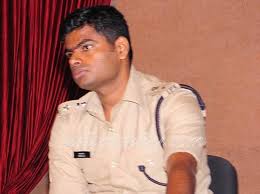
annaspAddressing the protesters, Dejappa Karkera, convener of the samiti, said that on February 20, when the zilla panchayat elections were going on, the sub-inspector attached to Hiriyadka police station, M. Rafeeq, resorted to a lathi-charge to disperse a mob near Munduje Government Higher Primary School.

Kiran, belonging to the Koraga community, a Scheduled Tribe, was working in the house of Sadananda Shetty. He was just watching the events from within Mr. Shetty's compound. But Mr. Rafik dragged him out and thrashed him. As a result of the thrashing, Kiran's hand was fractured and he was admitted to the district government hospital. Though Mr. Karkera complained to SP Annamalai about Mr. Rafeeq's behaviour, Mr. Annamalai defended Mr. Rafik.

On February 22, Mr. Rafeeq stopped K. Sudarshan, another youth belonging to the Scheduled Castes, who was riding his motorcycle near Guddeangady and assaulted him for not wearing his helmet. Here too, Mr. Sudarshan could have been warned. Later, Mr. Sudarshan too was admitted to the government hospital for treatment.

The samiti had also not been given permission to stage a protest outside the SP office on Wednesday. “The government should not only suspend both Mr. Rafeeq and Mr. Annamalai, but also provide adequate compensation to both Mr. Kiran and Mr. Sudarshan.

“If no action is taken in 10 days, we will intensify our agitation,” Mr. Karkera said.

Meanwhile, in a press release issued here, Mr. Annamalai denied the charges made by Mr. Karkera. Mr. Rafik had to disperse the crowd as they were within 100 metres of the polling station. He had visited Mr. Kiran in the hospital. A case had been registered against Mr. Rafik and was being enquired by Kundapur Circle Police Inspector.

Mr. Sudarshan was driving recklessly on his motorcycle and speaking on a mobile telephone. The issue related to Mr. Sudarshan was being enquired by Udupi Circle Police Inspector.

There was a case against Mr. Karkera at Hiriyadka police station being probed by Mr. Rafeeq. Mr. Karkera was trying to mislead the people. He was protesting against Mr. Annamalai because he had not been given permission to stage dharna in front of the SP office, the release added.

Comments

A. Mangalore
 - 
Thursday, 10 Mar 2016

Good that Inspector stopped him while recklessly bike riding and using mobile phone , otherwise he would have dead and killed someone else. First he should thank Inspector.
If he is Dalit means he can do whatever he want??

Annamalai is a such person who does not talk anything unless he is hundred percent sure.

Mohammed
 - 
Thursday, 10 Mar 2016

Ibraheem Hussain Udupi, WHY NO COMMENTS. I THINK YOU DO NOT HAVE THE HOROSCOPE OF THESE PEOPLE. YOU ARE A VERY GOOD HISTORIAN.

Social worker
 - 
Thursday, 10 Mar 2016

mr rikaz ur right , rss chaddis are doing like that ...

Rikaz
 - 
Thursday, 10 Mar 2016

Bajrangis and RSS??? and Muslim SI....SI Mr. Rafeeq is doing good job up there...RSS knows tricks to remove him....using dalits....brahmin trick...

Add new comment

  • Coastaldigest.com reserves the right to delete or block any comments.
  • Coastaldigset.com is not responsible for its readers’ comments.
  • Comments that are abusive, incendiary or irrelevant are strictly prohibited.
  • Please use a genuine email ID and provide your name to avoid reject.
News Network
April 25,2020

Mandya, Apr 25: An FIR was registered against JD(S) MLC KT Srikante Gowda, his son, and three others for protesting against coronavirus testing of journalists in Karnataka's Mandya city on Saturday.

According to the police, JD(S) MLC KT Srikante Gowda, his son Krishik Gowda, Chandrakala Aythu, Jagadish, and Raju have been named as accused in the FIR filed at Mandya West police station.

The FIR has been registered under several sections of the Indian Penal Code (IPC) and Disaster Management Act including unlawful assembly, rioting, wrongful restraint, voluntarily causing hurt, negligent act likely to spread infection of a deadly disease, etc.

Gowda, along with a group of locals, had created a ruckus objecting to the coronavirus testing of journalists at Ambedkar Bhawan in Mandya here earlier today.

Police said that a journalists' association had filed a written complaint seeking the registration of an FIR in the matter.

As per an order by the state health department, medical professionals were conducting health tests of journalists at Ambedkar Bhawan in Mandya when Gowda along with some locals started protesting, officials said.

Further actions are being taken, police said.

Comments

Add new comment

  • Coastaldigest.com reserves the right to delete or block any comments.
  • Coastaldigset.com is not responsible for its readers’ comments.
  • Comments that are abusive, incendiary or irrelevant are strictly prohibited.
  • Please use a genuine email ID and provide your name to avoid reject.
News Network
February 19,2020

Dubai, Feb 19: A 25-year-old Indian engineer allegedly fell to his death from a residential apartment in Dubai, according to a media report.

Sabeel Rahman, from Kerala who has been living in Dubai since 2018, fell off the building near his work site, The Khaleej Times quoted a social worker as saying.

Naseer Vatanapally, the social worker, is assisting the family to repatriate his mortal remains back home to Thirur in Malappuram district, the report said.

"The case is a bit unusual. We''re not sure why he went to the building near his worksite," said Naseer Vatanapally.

"His family is unaware of any issues he may have faced. He had asked his brother to collect a new mobile phone he had purchased online - which they received. He had no reason to take his life," he added.

Rahman was the youngest of four siblings. The devastated family is awaiting details from the Rashidiya Police Station. "Following legal procedures, we will repatriate his body back home," he said.

Comments

Add new comment

  • Coastaldigest.com reserves the right to delete or block any comments.
  • Coastaldigset.com is not responsible for its readers’ comments.
  • Comments that are abusive, incendiary or irrelevant are strictly prohibited.
  • Please use a genuine email ID and provide your name to avoid reject.
Agencies
May 8,2020

Washington D.C., May 8: The prime time for brain development in a child's life is the first year, where the infant spends most of the time asleep. It is the time when neural connections form and sensory memories are encoded.

However, when sleep is disrupted, as occurs more often among children with autism, brain development may be affected, too.

New research led by the University of Washington finds that sleep problems in a baby's first 12 months may not only precede an autism diagnosis but also may be associated with altered growth trajectory in a key part of the brain, the hippocampus.

The study, which was published in the American Journal of Psychiatry, researchers report that in a sample of more than 400 taken of 6- to 12-month-old infants, those who were later diagnosed with autism were more likely to have had difficulty falling asleep.

It also states that this sleep difficulty was associated with altered growth trajectories in the hippocampus.

"The hippocampus is critical for learning and memory, and changes in the size of the hippocampus have been associated with poor sleep in adults and older children.

As many as 80 per cent of the children with autism spectrum disorder have sleep problems," said Annette Estes, director of the UW Autism Center and senior author of the study.

"In our clinical experience, parents have a lot of concerns about their children's sleep, and in our work on early autism intervention, we observed that sleep problems were holding children and families back," added Estes, who is also a UW professor of speech and hearing sciences.

"It could be that altered sleep is part-and-parcel of autism for some children. One clue is that behavioural interventions to improve sleep don't work for all children with autism, even when their parents are doing everything just right. This suggests that there may be a biological component to sleep problems for some children with autism," said Estes.

To consider links among sleep, brain development, and autism, researchers at the IBIS Network looked at MRI scans of 432 infants, surveyed parents about sleep patterns, and measured cognitive functioning using a standardized assessment.

At the outset of the study, infants were classified according to their risk for developing autism: Those who were at higher risk of developing autism -- about two-thirds of the study sample -- had an older sibling who had already been diagnosed.

Infant siblings of children with autism have a 20 per cent chance of developing autism spectrum disorder -- a much higher risk than children in the general population.

In the current study, 127 of the 432 infants were identified as "low risk" at the time the MRI scans were taken because they had no family history of autism.

They later evaluated all the participants at 24 months of age to determine whether they had developed autism. Of the roughly 300 children originally considered "high familial risk," 71 were diagnosed with autism spectrum disorder at that age.

Problems with sleep were more common among the infants later diagnosed with an autism spectrum disorder, as were larger hippocampi. No other subcortical brain structures were affected, including the amygdala, which is responsible for certain emotions and aspects of memory, or the thalamus, a signal transmitter from the spinal cord to the cerebral cortex.

The authors note that while parents reported more sleep difficulties among infants who developed autism compared to those who did not, the differences were very subtle and only observed when looking at group averages across hundreds of infants.

Sleep patterns in the first years of life change rapidly as infants transition from sleeping around the clock to a more adult-like sleep/wake cycle. Until further research is completed, Estes said, it is not possible to interpret challenges with sleep as an early sign of increased risk for autism.

Comments

Add new comment

  • Coastaldigest.com reserves the right to delete or block any comments.
  • Coastaldigset.com is not responsible for its readers’ comments.
  • Comments that are abusive, incendiary or irrelevant are strictly prohibited.
  • Please use a genuine email ID and provide your name to avoid reject.