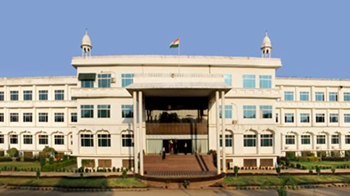
4 Kashmiri students beaten up in Mewar University over beef rumours

March 16, 2016

New Delhi, Mar 16: A mob beat up four Kashmiri students at a private university in Rajasthan over rumours that they were cooking beef inside their hostel rooms in a campus that is vegetarian by policy.

beefruThe incident led to scuffles with Kashmiri students at Mewar University in Chittorgarh. There are around 800 Kashmiri students on campus.

“Some mischief mongers spread rumours that the students were cooking beef. But prima facie it didn't look like beef. We have sent it for forensic testing just to be sure,” Chittorgarh superintendent of police Prasanna Khamesara said.

Some Hindu religious groups protested outside the campus and shouted slogans against the institute's administration but the police arrived soon after.

The incident comes days after reports that Kolkata police wrote to city college authorities, asking for details of Kashmiri students enrolled there.

The Mewar University administration said the issue was “blown out of proportion” by fringe elements.

“We have students from all over the country…from 23 states. It is like a mini India. Sometimes, these small scuffles happen because people are from different socio-cultural backgrounds,” University media liaison officer Harish Gurnani said.

Comments

Clear
 - 
Thursday, 17 Mar 2016

Mr. Bopanna Saudi is a Kingdom so the rules and regulation of king should be followed, India is republic country a democrartic country. our constitution doesnot stop from eating beef. This is the self interest of politicians.

Bopanna
 - 
Wednesday, 16 Mar 2016

will you allow a Hindu to eat pork in Saudi ? Then why try to eat beef in Hindustan ?

Curious
 - 
Wednesday, 16 Mar 2016

what ;;; sending gravy to forensic test? send beja of that goondas to us we will make beja fry. Its Time for muslims to stay united from kashmir to kanyakumari, any one is touched its like they are touching all muslims in india.

SK
 - 
Wednesday, 16 Mar 2016

The hooligans do not have any other work...... Use AK - 47 at the right time, all dogs will wag their tails.....

saleem
 - 
Wednesday, 16 Mar 2016

this is called Intolerance... we have the rights to eat whatever we want to eat in this freedom country.

Mootharapathi
 - 
Wednesday, 16 Mar 2016

As KASHMIR Not in INDIA

we INDIANS are double standards.......we treat KSHMIRI Indians as NON INDIANS....but we claim KASHMIR is is an integral part of INDIA

first clear your stand in Hindu scripture as it is allowed to have Beef....and same time you deny the truth ...what happened to innocent Hindus ....is they blindly follow RSS idealogy

Add new comment

  • Coastaldigest.com reserves the right to delete or block any comments.
  • Coastaldigset.com is not responsible for its readers’ comments.
  • Comments that are abusive, incendiary or irrelevant are strictly prohibited.
  • Please use a genuine email ID and provide your name to avoid reject.
News Network
May 31,2020

Bengaluru, May 31: Karnataka government on Sunday issued guidelines, which will come into force from June 1 and continue till June 30.

According to the new guidelines, religious places and places of worship for the public, hotels, restaurants and other hospitality services, and shopping malls will be permitted to open from June 8.

Union Ministry of Home Affairs (MHA) on Saturday announced new guidelines for phased re-opening of "all activities outside containment zones for the next one month beginning June 1.

In an order, Karnataka government said that phased re-opening of areas outside the containment zones, all activities will be permitted, except the following, which will be allowed, with the stipulation of following Standard Operating Procedures (SOPs) to be prescribed by the Ministry of Health and Family Welfare (MoHFW).

PHASE I

The activities will be allowed with effect from June 8 at religious places/places of worship for public, hotels, restaurants, and other hospitality services, shopping malls.

PHASE II

For the opening of schools, colleges, educational/training/ coaching institutions, the State government will hold consultations at the institution level with parents and other stakeholders. Based on the feedback, a decision on the re-opening of these institutions will be taken in the month of July.

PHASE III

Based on the assessment of the situation, dates for re-starting activities will be decided -- international air travel of passengers, except as permitted by MHA, Metro Rail, cinema halls, gymnasiums, swimming pools, entertainment parks, theatres, bars and auditoriums, assembly halls and similar places, social/political/spoils/ entertainment/academic/cultural/religious functions and other large congregations.

The State government said that it will follow the MHA's national directives for the coronavirus management, including compulsory use of face masks and social distancing norms.

"Face coverings are compulsory in public places, workplaces and during transport. Individuals must maintain a minimum distance of 6 feet in public places. Shops will ensure physical distancing among customers and will not allow more than 5 persons at a time," read the directives issued by the MHA.

In the order, State government has said that night curfew will continue to remain in force on the movement of individuals for all non-essential activities outside containment zones till June 30.

Lockdown limited to Containment Zones

* Lockdown shall continue to remain in force in the Containment Zones till June 30.

* Containment Zones will be demarcated by the district authorities after taking into consideration the guidelines of Department of Health and Family Welfare, Government of Karnataka.

* In the Containment Zones, only essential activities shall be allowed. There shall be strict perimeter control to ensure that there is no movement of people in or out of these zones, except for medical emergencies and for maintaining a supply of essential goods and services.

* In the Containment Zones, there shall be intensive contact tracing, house-to-house surveillance, and other clinical interventions, as required. Guidelines of the Department of Health and Family Welfare, Government of Karnataka shall be taken into consideration for the above purpose.

* District authorities/BBMP authorities may also identify buffer zones outside the Containment Zones, where new cases are more likely to occur. Within the buffer zones, restrictions, as considered necessary, may be put in place by the District authorities.

Movement of persons, goods

* There shall be no restriction on inter-State and intra-State movement of persons and goods. No separate permission/approval/e-permit will be required for such movements.

* Based on reasons of public health and assessment of the prevalence of Covid-19 in various States separate orders will be issued by the Health and Family Welfare Department regarding the inter-state movement of persons to Karnataka.

* Movement by passenger trains and Shramik special trains; domestic passenger air travel; movement of Indian Nationals stranded outside the country and of specified persons to travel abroad; evacuation of foreign nationals; and sign-on and sign-off of Indian seafarers will continue to be regulated as per SOPs issued.

The State Government in its guidelines advised persons above 65 years of age, persons with co-morbidities, pregnant women, and children below the age of 10 years, to stay at home, except for essential and health purposes.

Guidelines for Aarogya Setu App

* Aarogya Setu enables early identification of potential risk of infection, and thus acts as a shield for individuals and the community.

* With a view to ensuring safety in offices and workplaces, employers on best effort basis should ensure that Aarogya Sew is installed by all employees having compatible mobile phones.

* District authorities and BBMP Authorities may advise individuals to install the Aarogya Setu application on compatible mobile phones and regularly update their health status on the app. This will facilitate timely provision of medical attention to those individuals who are at risk.

Union Ministry of Home Affairs (MHA) on Saturday said that lockdown will continue in containment zones till June 30 and only essential activities will be allowed in those areas.

"Lockdown shall continue to remain in force in the containment zones till 30 June. In the containment zones, only essential activities shall be allowed. There shall be strict perimeter control to ensure that there is no movement of people in or out of these zones, except for medical emergencies and for maintaining the supply of essential goods and services. In the containment zones, there shall be intensive contact tracing, house-to-house surveillance, and other clinical interventions, as required," MHA said in its guidelines for #Unlock1.

It also issued new guidelines for phased re-opening of "all activities outside containment zones for the next one month beginning June 1."


Comments

Add new comment

  • Coastaldigest.com reserves the right to delete or block any comments.
  • Coastaldigset.com is not responsible for its readers’ comments.
  • Comments that are abusive, incendiary or irrelevant are strictly prohibited.
  • Please use a genuine email ID and provide your name to avoid reject.
News Network
July 3,2020

New Delhi, Jul 3: Accredited Social Health Activists (ASHAs) in Karnataka have emerged as a "crucial pillar in the state's success" in combating Covid-19, the Union Health Ministry said on Friday.

Acknowledging and praising their work, the ministry said they have been actively participating in household surveys in the state, screening inter-state passengers, migrant workers and others in the community for symptoms of the infection,

“Around 42,000 ASHAs have emerged as a crucial pillar in the state's success” in combating Covid-19, the ministry said.

"Recognizing the increased vulnerability of certain population groups to Covid-19, in a one-time survey to identify households with the elderly, persons with co-morbidities, and immune-compromised individuals, about 1.59 crore households were covered," the ministry said in a statement.

ASHAs regularly monitor such high-risk groups in their area with a periodicity of follow-up visits varying from once a day in the containment zones to once every 15 days in other areas, it said.

They also visit the houses of persons complaining influenza-like-illness (ILI) symptoms and severe acute respiratory infections (SARI), besides high-risk individuals who have called the state health department helpline numbers, the ministry said.

ASHAs are a part of the Rural Task Force, headed by Panchayat Development Officer (PDO) at the Gram Panchayat level, for addressing public grievances on both Covid-19 and non-Covid-19 related services.

ASHAs are trained female community health activists selected from the village itself and accountable to it. They are trained to work as an interface between the community and the public health system.

In the urban areas too, they have been at the forefront of dissemination of various awareness activities in fever clinics and swab collection centres in urban areas.

They have also actively screened cases of ILI and SARI in urban areas. They are also part of the screening teams at international and interstate check-posts.

Karnataka has reported 272 Covid-19 deaths and 18,016 cases, according to the health ministry data updated at 8 AM.

Comments

Add new comment

  • Coastaldigest.com reserves the right to delete or block any comments.
  • Coastaldigset.com is not responsible for its readers’ comments.
  • Comments that are abusive, incendiary or irrelevant are strictly prohibited.
  • Please use a genuine email ID and provide your name to avoid reject.
News Network
January 21,2020

Bengaluru, Jan 21: A private hospital in Bengaluru, the capital of Karnataka, on Tuesday claimed that it has successfully performed a live liver transplant on a Jehovah's Witness from Nigeria, by not using blood or blood products, in order to protect the patient's religious beliefs.

It is said that Jehovah's Witnesses are followers of a Christian faith that prohibits the use of blood or blood products during their treatment. Gehojadak (37), a Jehovah's Witness follower, had developed decompensated liver disease and visited more than three countries seeking treatment over the last four years but was turned away by most doctors due to the highly risky nature of surgery, Aster CMI Hospital said.

The surgery was challenging compared to a normal liver transplant because in order to protect the patient's religious beliefs, the medical team could not use blood or blood products (Fresh frozen plasma, Cryoprecipitate, Platelets etc), it said in a release, adding that very few such surgeries have been successfully conducted worldwide.

The patient's brother was the donor, the hospital said, adding, without a liver transplant, Gehojadak's chances of survival were less than 10 per cent over the next two years. A team of liver specialists from the Hospital thoroughly reviewed the patient's medical history before recommending a bloodless liver transplant and charted out a feasible pathway to make the surgery a success.

"This transplant was especially challenging as we did not have the safety net (of using blood) even if the patient's life was at risk due to their advance directive. We have performed other non-transplant liver surgeries in Jehovah's Witnesses and this gave us the confidence to take on Gehojadak's transplant," Dr Rajiv Lochan, Consultant Liver Transplant Surgeon, said.

The critical surgery took a 12-hour period to complete where two teams of specialists with close to 25 doctors including anaesthetists, intensivists worked in absolute sync with each other and Gehojadak finally received a life-saving liver transplant, the Hospital said. In a period of two weeks, the patient and his brother were fit enough to go home and were discharged from the hospital.

"Even if their haemoglobin levels dropped to life-threatening levels, the patients were clear that they would not accept a blood transfusion. Keeping the limitations in mind, the most effective treatment path was planned, and we spent close to two months preparing the patients for surgery," Arun V, Consultant Anesthesiologist said. The hospital arranged customised artificial products like synthetic drug molecules, to conduct a bloodless liver transplant, he added.

Comments

Add new comment

  • Coastaldigest.com reserves the right to delete or block any comments.
  • Coastaldigset.com is not responsible for its readers’ comments.
  • Comments that are abusive, incendiary or irrelevant are strictly prohibited.
  • Please use a genuine email ID and provide your name to avoid reject.