


Siddu writes to Sonia, Rahul defending his move to form separate ACB

March 23, 2016

Bengaluru, Mar 23: Under fire over forming a separate Anti-Corruption Bureau, Karnataka Chief Minister Siddarmaiah has written to his party top brass Sonia Gandhi and Rahul Gandhi defending the move, even as he rejected the Opposition demand for ACB withdrawal in the Assembly on Tuesday.
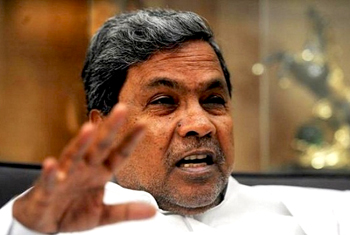
siddaSiddarmaiah has "assured" Congress President Sonia Gandhi that what has been done in Karnataka is in tune with the pattern prevailing in at least 12 other important states, officials in CM's office said.

"It is the endeavour of our Government to give more attention and focus to fighting corruption in the system. In view of that, ACB has been set up and I am confident that this will deliver better results than what is happening at present," a part of the letter shared with media read.

Siddaramaiah has also written similar letters to Congress Vice President Rahul Gandhi, General Secretary Digvijay Singh, and Leader of the party in Lok Sabha Mallikarjuna Kharge.

In the Assembly, Siddaramaiah maintained that there was no "mala fide" intention to shield the corrupt or to weaken the Lokayukta through the constitution of ACB.

Replying after BJP and JDS called off their dharna in the well of the House demanding withdrawal of ACB, he said he was willing to discuss with the opposition ways to strengthen Lokayukta. Countering the BJP attack, Siddaramaiah said the police wing in the Lokayukta would also continue and a similar system prevailed in 15 states.

"There is no mala fide intention behind our decision. Nor are we trying to shield anyone," he said.

Refusing to step back, he said, "There is no question of withdrawing the ACB."

Leader of the Opposition Jagadish Shettar (BJP) said the ACB should be withdrawn "at any cost" and his party would take the fight to outside the House and announced withdrawal of their protest to facilitate smooth functioning to discuss other "burning" issues like drought situation in the state.

Opposition BJP and JD(S) have accused government of "destabilising" Karnataka Lokayukta by creating ACB, and have demanded its immediate withdrawal.

Meanwhile, BJP state President Prahlad Joshi has also written to Sonia Gandhi requesting her to advise the Karnataka government against creating ACB and instead make Lokayukta stronger.

Comments

IBRAHIM.HUSSAIN
 - 
Wednesday, 23 Mar 2016

Lokayukta is a one of the corrupt institution which cannot be denied as per the recent incidents ofJustice Bhasker Rao & son, and Justice Madi.
May be Siddaramayya wanted more transparency in administration and right to punish the government corrupt officials, the only way to appointing ACB department. Those talking about this move and agitating, Gujarat have the same ACB and lokayukta is toothless tiger in Gujarat.

Add new comment

  • Coastaldigest.com reserves the right to delete or block any comments.
  • Coastaldigset.com is not responsible for its readers’ comments.
  • Comments that are abusive, incendiary or irrelevant are strictly prohibited.
  • Please use a genuine email ID and provide your name to avoid reject.
News Network
May 7,2020

Bengaluru, May 7: A 55-year old woman from Davanagere became the 30th COVID-19 related fatality in Karnataka, where a total number of infections has crossed 700-mark, with eight new positive cases being confirmed, the health department said on Thursday.

The deceased woman was a known case of diabetes and hypertension, she was admitted with a complaint of Severe Acute Respiratory Infection (SARI) and was on a ventilator, the department said in its mid-day situation update.

She died today at a designated hospital in Davanagere, it said.

"Eight new positive cases have been reported from last evening to this noon...

Till date 701 COVID-19 positive cases have been confirmed. This includes 30 deaths and 363 discharges," the update said.

The eight new cases reported include three from Davangere, indulging the deceased patient; also three from Kalaburagi, and one each from Hirebagewadi in Belagavi district and Bengaluru urban.

While four cases are contacts of patients earlier tested positive, three are with the history of Influenza-Like Illness (ILI) and one is a SARI case.

Five among eight new cases are women and three are men.

Comments

Add new comment

  • Coastaldigest.com reserves the right to delete or block any comments.
  • Coastaldigset.com is not responsible for its readers’ comments.
  • Comments that are abusive, incendiary or irrelevant are strictly prohibited.
  • Please use a genuine email ID and provide your name to avoid reject.
News Network
February 18,2020

Bengaluru, Feb 18: Veteran actress Kishori Ballal, 82, best known for playing Kaveri Amma in Ashutosh Gowariker’s Swades, passed away on Tuesday. She was suffering from age-related health issues and breathed her last at a Bengaluru hospital.

Kishori, who hailed from Mangaluru, made her debut in Kannada film 'Evalentha Hendathi' in 1960.

In a career spanning five decades, she went on to act in movies like Hani Hani, Kahi and Suryakanthi. A Bharatnatyam exponent, she was also a part of Hindi films like Lafangey Parindey, Ek Alag Mausam and Gair Kanooni.

Kishori Ballal played the role of Kaveri Amma, the nanny of Shah Rukh Khan (Mohan Bhargav) in Swades.

Comments

Add new comment

  • Coastaldigest.com reserves the right to delete or block any comments.
  • Coastaldigset.com is not responsible for its readers’ comments.
  • Comments that are abusive, incendiary or irrelevant are strictly prohibited.
  • Please use a genuine email ID and provide your name to avoid reject.
Agencies
May 8,2020

Washington D.C., May 8: The prime time for brain development in a child's life is the first year, where the infant spends most of the time asleep. It is the time when neural connections form and sensory memories are encoded.

However, when sleep is disrupted, as occurs more often among children with autism, brain development may be affected, too.

New research led by the University of Washington finds that sleep problems in a baby's first 12 months may not only precede an autism diagnosis but also may be associated with altered growth trajectory in a key part of the brain, the hippocampus.

The study, which was published in the American Journal of Psychiatry, researchers report that in a sample of more than 400 taken of 6- to 12-month-old infants, those who were later diagnosed with autism were more likely to have had difficulty falling asleep.

It also states that this sleep difficulty was associated with altered growth trajectories in the hippocampus.

"The hippocampus is critical for learning and memory, and changes in the size of the hippocampus have been associated with poor sleep in adults and older children.

As many as 80 per cent of the children with autism spectrum disorder have sleep problems," said Annette Estes, director of the UW Autism Center and senior author of the study.

"In our clinical experience, parents have a lot of concerns about their children's sleep, and in our work on early autism intervention, we observed that sleep problems were holding children and families back," added Estes, who is also a UW professor of speech and hearing sciences.

"It could be that altered sleep is part-and-parcel of autism for some children. One clue is that behavioural interventions to improve sleep don't work for all children with autism, even when their parents are doing everything just right. This suggests that there may be a biological component to sleep problems for some children with autism," said Estes.

To consider links among sleep, brain development, and autism, researchers at the IBIS Network looked at MRI scans of 432 infants, surveyed parents about sleep patterns, and measured cognitive functioning using a standardized assessment.

At the outset of the study, infants were classified according to their risk for developing autism: Those who were at higher risk of developing autism -- about two-thirds of the study sample -- had an older sibling who had already been diagnosed.

Infant siblings of children with autism have a 20 per cent chance of developing autism spectrum disorder -- a much higher risk than children in the general population.

In the current study, 127 of the 432 infants were identified as "low risk" at the time the MRI scans were taken because they had no family history of autism.

They later evaluated all the participants at 24 months of age to determine whether they had developed autism. Of the roughly 300 children originally considered "high familial risk," 71 were diagnosed with autism spectrum disorder at that age.

Problems with sleep were more common among the infants later diagnosed with an autism spectrum disorder, as were larger hippocampi. No other subcortical brain structures were affected, including the amygdala, which is responsible for certain emotions and aspects of memory, or the thalamus, a signal transmitter from the spinal cord to the cerebral cortex.

The authors note that while parents reported more sleep difficulties among infants who developed autism compared to those who did not, the differences were very subtle and only observed when looking at group averages across hundreds of infants.

Sleep patterns in the first years of life change rapidly as infants transition from sleeping around the clock to a more adult-like sleep/wake cycle. Until further research is completed, Estes said, it is not possible to interpret challenges with sleep as an early sign of increased risk for autism.

Comments

Add new comment

  • Coastaldigest.com reserves the right to delete or block any comments.
  • Coastaldigset.com is not responsible for its readers’ comments.
  • Comments that are abusive, incendiary or irrelevant are strictly prohibited.
  • Please use a genuine email ID and provide your name to avoid reject.