


President's rule imposed in Uttarakhand

March 27, 2016

New Delhi, Mar 27: Uttarakhand was today brought under President's rule by the Centre on grounds of "breakdown of governance" in a controversial decision which comes in the wake of a political crisis triggered by a rebellion in the ruling Congress.president
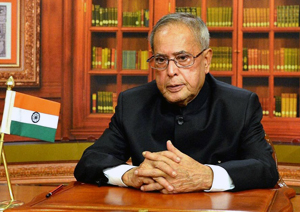
President Pranab Mukherjee signed the proclamation under Art 356 of the Constitution dismissing the Congress government headed by Harish Rawat and placing the Assembly under suspended animation this morning on the recommendation of the Union Cabinet.
The Cabinet had held an emergency meeting here last night presided over by Prime Minister Narendra Modi, who had cut short a visit to Assam to return to the capital for the purpose.

The Cabinet considered several reports received from Governor K K Paul, who had described the political situation as volatile and expressed apprehensions over possible pandemonium during the scheduled trial of strength in the state Assembly tomorrow.

Finance Minister Arun Jaitley is believed to have briefed the President late last night explaining the rationale for the Cabinet's recommendation.

The dismissal of the Rawat government now renders tomorrow's confidence vote infructuous.

It also came amidst reports that Speaker Govind Singh Kunjwal had disqualified 9 rebel Congress MLAs that would have enabled Rawat to sail through in the trust vote.

The Congress denounced the decision calling it a "murder of democracy" and said it showed that BJP did not believe in democracy.

The political crisis in the state arose after the controversial circumstances in which the Appropriation Bill was declared passed in the Assembly by the Speaker with the BJP and the rebel Congress claiming that a division of votes pressed by them was not allowed.

They alleged that the Bill was defeated in the voice vote by a majority of the members present but the Speaker did not test it in a proper division of votes.

The opposition claimed that it had a majority of 35 MLAs, including 9 rebels, in the House that day out of 67 MLAs present. The BJP said the 35 MLAs had written to the Speaker in advance that they would be voting against the bill but the Speaker had refused to take it into his consideration.

Last night, the Union Cabinet met amidst reports that the Speaker had disqualified the rebel Congress MLAs that would would have helped the beleaguered government.

Apprehending imposition of President's rule, the Congress had attacked the BJP saying it was resorting to the extreme step as its earlier moves had failed.

Comments

Abdullah
 - 
Sunday, 27 Mar 2016

The president Pranab Mukerjee working as a RSS agent.

Add new comment

  • Coastaldigest.com reserves the right to delete or block any comments.
  • Coastaldigset.com is not responsible for its readers’ comments.
  • Comments that are abusive, incendiary or irrelevant are strictly prohibited.
  • Please use a genuine email ID and provide your name to avoid reject.
News Network
June 12,2020

Jun 12: There have been complaints of non-availability of beds or denial of treatment to coronavirus patients in the national capital despite nearly 70 per cent of beds in five designated hospitals run by the Delhi government lying vacant, with experts attributing it to people''s aversion towards state-run facilities.

As per the latest information shared on the Delhi Corona app on Thursday afternoon, more than 3,000 beds are lying vacant in these five dedicated COVID-19 hospitals that have a total capacity of 4,344 beds.

However, almost all beds at several big private hospitals are shown to be occupied.

Families of many COVID-19 patients, confirmed or suspected, have alleged in the past few weeks that they have been denied admission at many facilities or have not been able to get a bed for their kin.

Medical and public health experts feel it may be because of the image associated with government hospitals, related to infrastructure and hygiene conditions, and perhaps shortage of staff.

According to the latest data available on Delhi Corona app on Thursday afternoon, a total of 9,444 beds are available in private facilities and hospitals run by the central and Delhi governments. Out of these, 4,371 are vacant.

The app shows that beds are available at Delhi government-run hospitals dedicated for COVID-19 treatment such as LNJP Hospital (1,219), GTB Hospital (1,314), Rajiv Gandhi Super Speciality Hospital or RGSSH (242).

However, almost all beds at several big private hospitals are shown to be occupied.

At LNJP Hospital, there are a total of 2,000 beds, out of these 781 are occupied. GTB Hospital has total 1,500 beds, only 186 of which are occupied. Even at RGSSH, 258 of the 500 beds are occupied.

Beds are available at other dedicated COVID-19 facilities in the national capital too, according to the app. Deep Chand Bandhu Hospital has 94 unoccupied beds out of a total 176 and Satyawadi Raja Harishchandra Hospital has 145 vacant beds out of a total 168.

This makes a total of 4,344 COVID-19 beds at these five dedicated Delhi government hospitals, out of which 3,014 or 69.38 per cent are vacant.

A senior doctor at the RGSSH said, "We are only admitting very serious COVID-19 patients in the hospital. Those with mild symptoms, or asymptomatic ones, are either being home quarantined or being sent to COVID Care Centres. Our beds are on stand-by also to accommodate serious patients in case there is a sudden rush."

Delhi Heath Minster Satyendar Jain had recently said that some private hospitals could have been denying admission, but the Delhi government-run hospitals have not denied beds to any needy COVID-19 patient.

He had also said that main private hospitals are almost full to their capacity in terms of number of COVID-19 beds.

According to the app, at prominent private hospitals like Indraprastha Apollo, Max Hospital in Shalimar Bagh, Fortis Hospital in Shalimar Bagh, BL Kapur Hospital are fully occupied.

Max Hospital in Saket has a total of 200 beds for COVID-19 patients, and only one is vacant.

On June 9, the Delhi government had directed 22 private hospitals in the national capital to dedicate a total of 2,015 extra beds for treatment of coronavirus patients, revising its earlier allocation limit of 20 per cent.

Lawyer and public heath activist Ashok Agarwal said infrastructure and hygiene are two main factors, and people still want to "avoid government facilities".

"I know of cases, where people were willing to be on waiting list of private hospitals but did not go to a government hospital, even though beds were available," he said.

Even those who went to a government hospital for COVID-19 treatment, complained of "dirty toilets, and these being used by multiple patients", Agarwal said.

"Also, as the cases erupted successively over the months, many people got scared and were in two minds to go to a government hospital, as admitted patients were making allegations in videos and on social media about lack of proper services. Besides, there is shortage of medical staff at various facilities, and each patient needs to be attended to," he argued.

Delhi government hospitals and private facilities were directed to prominently display information about the availability of beds on a flex board at their main gates.

Delhi Lt Governor Anil Baijal on Wednesday ordered Delhi hospitals to display the availability of COVID and non-COVID beds, charges for rooms or beds along with contact details on a LED board outside the hospital.

Max Hospital sources said they were already displaying the status of beds on LED screens near their reception area even before the government order.

A spokesperson from Fortis Hospital said, "We are in the process of arranging to put up the displays as per the prescribed format."

Delhi recorded 1,501 fresh coronavirus cases on Wednesday, taking the COVID-19 tally in the city to over 32,000, and the death toll due to the disease mounted to 984, authorities said.

Comments

Add new comment

  • Coastaldigest.com reserves the right to delete or block any comments.
  • Coastaldigset.com is not responsible for its readers’ comments.
  • Comments that are abusive, incendiary or irrelevant are strictly prohibited.
  • Please use a genuine email ID and provide your name to avoid reject.
News Network
February 14,2020

Feb 14: R K Pachauri, a former chief of The Energy and Resources Institute, passed away on Thursday after a prolonged cardiac ailment, TERI Director General Ajay Mathur said.

He was 79.

"It is with immense sadness that we announce the passing away of R K Pachauri, the founder Director of TERI. The entire TERI family stands with the family of Dr Pachauri in this hour of grief," Mathur said in a statement issued by the TERI.

"TERI is what it is because of Dr Pachauri's untiring perseverance. He played a pivotal role in growing this institution, and making it a premier global organisation in the sustainability space," said Mathur, who succeeded Pachauri at TERI in 2015. Pachauri was admitted to Escorts Heart Institute in the national capital where he underwent open heart surgery and was put on life support on Tuesday, sources said.

In the statement issued by TERI, its Chairman Nitin Desai hailed Pachauri's contribution to global sustainable development as "unparalleled".

Comments

Add new comment

  • Coastaldigest.com reserves the right to delete or block any comments.
  • Coastaldigset.com is not responsible for its readers’ comments.
  • Comments that are abusive, incendiary or irrelevant are strictly prohibited.
  • Please use a genuine email ID and provide your name to avoid reject.
News Network
April 16,2020

United Nations, Apr 16: WHO chief Tedros Adhanom Ghebreyesus has welcomed the world health body's cooperation with India to leverage strategies that helped the country win its war against polio into the response to COVID-19 outbreak, saying such joint efforts will help defeat the pandemic.

The World Health Organization (WHO) has said it will work with India's Ministry of Health and Family Welfare to leverage the strategies that helped the country eradicate polio to fight the pandemic.

Migrants who returned to UP and Bihar were hurriedly housed in schools and panchayat buildings, which were turned into quarantine centres. However, unhygienic conditions and people running away have proved to be a problem

The WHO's national polio surveillance network will be engaged to strengthen COVID-19 surveillance and its field staff will continue to support immunization and elimination of tuberculosis and other diseases.

“Great news: @MoHFW_INDIA & @WHOSEARO initiated a systematic engagement of @WHO's national polio surveillance network, and other field staff, for India's #COVID19 response, tapping into the best practices & resources that helped win its war against polio,” the WHO director-general tweeted, referring to India's Ministry of Health and Family Welfare and World Health Organization Regional Office for South-East Asia.

According to the Johns Hopkins University data, over 2 million people are infected by the virus and more than 136,000 people have died of the disease globally.

Ghebreyesus expressed gratitude to Health and Family Welfare Minister Harsh Vardhan “for his leadership and collaboration” with WHO. “Through these joint efforts we can defeat the #coronavirus and save lives. Together!”

India eliminated polio in 2014.
According to a WHO press release, Vardhan said in New Delhi that “time and again the Government of India and WHO together have shown our ability, competence and prowess to the whole world. With our combined meticulous work, done with full sincerity and dedication, we were able to get rid of polio.”

“All of you in the field – IDSP (Integrated Disease Surveillance Project), state rapid response teams and WHO - are our ‘surveillance corona warriors'. With your joint efforts we can defeat the coronavirus and save lives,” Vardhan added.

WHO South-East Asia Regional Director Poonam Khetrapal Singh said the National Polio Surveillance Project (WHO-NPSP) played a critical role in strengthening surveillance for polio that generated useful, timely and accurate data to guide policies, strategies and interventions until transmission of the poliovirus was interrupted in the country,” adding that the other WHO field staff involved with elimination of tuberculosis and neglected tropical diseases and hypertension control initiative were also significant resources.

Singh added that “it is now time to use all your experience, knowledge and skills, with the same rigor and discipline that you showed while monitoring polio activities, to support districts with surveillance, contact tracing and containment activities.”

The WHO release said strengths of the NPSP team – surveillance, data management, monitoring and supervision, and responding to local situations and challenges – will be utilized to supplement efforts of National Centre for Disease Control, IDSP and Indian Council of Medical Research to strengthen COVID-19 surveillance.

The NPSP team will also support in sharing information and best practices and help states and districts calibrate their response based on transmission scenarios and local capacities.

The WHO field staff will continue to support immunization and surveillance and elimination of Tuberculosis and Neglected Tropical Diseases, Singh said, adding, “disease outbreaks can negatively impact progress in a range of areas, from maternal and child mortality to vaccine-preventable diseases and other treatable conditions. India had been making stupendous progress in these areas and we cannot afford for India's remarkable progress to be set back or reversed.”

Comments

Add new comment

  • Coastaldigest.com reserves the right to delete or block any comments.
  • Coastaldigset.com is not responsible for its readers’ comments.
  • Comments that are abusive, incendiary or irrelevant are strictly prohibited.
  • Please use a genuine email ID and provide your name to avoid reject.