


Stay away from Puttur temple festivities: High Court tells AB Ibrahim

[email protected] (CD Network)
March 31, 2016

Bengaluru, Mar 30: The Karnataka High Court today directed the state government to reprint the invitation card for a festival at Puttur temple after it admitted the error of printing the name of Dakshina Kannada Deputy Commissioner A B Ibrahims name, in violation of Hindu Religious and Charitable Endowments Act.
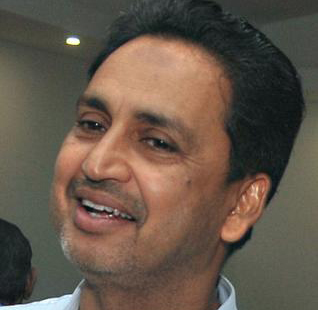
abibrahimA division bench, comprising Chief Justice Subhro Kamal Mukherjee and Justice Ravi Malimath, passed the order, saying that "in order to avoid any controversy and confusion between the devotees and the Deputy Commissioner, the court directs the government to reprint the invitation of the annual festival."

The bench said that as per Section seven of the Hindu Religious and Charitable Endowments Act, a non-Hindu cannot participate in any such function or event.

"Ibrahim is a non-Hindu and he practises a religion which does not allow idol worship," it added." The court also directs Ibrahim not to participate in any such event in future," the bench said.

A group of devotees of Puttur Mahalingeshwara temple, who had filed the petition, had pointed out that the inclusion of the name of Ibrahim was against the Endowment Act of the government.

Contrary to the earlier stand of defending inclusion of Ibrahim's name in the invitation card, the government admitted its error of doing so before the division bench.

Law and Parliamentary Affairs Minister T B Jayachandra had defended the government's stand by saying that Ibrahim has done nothing wrong and acted in his capacity as the Deputy Commissioner as per the Muzrai Department's rules.

The controversy had created political ripples when Vishwa Hindu Parishad and Bajrang Dal raised objections over the inclusion of Ibrahim's name in the invitation card.

The 10-day festival is held from April 17 every year in the temple at Puttur, 52 km from Manguluru, in which thousands of devotees from various parts of the state, participate.

Printing DC's name on invite was a mistake'

The State government told the High Court that it was a “mistake” to print the name of A.B. Ibrahim, on the invitation card of the annual festival of Puttur Mahalingeshwara temple.

Advocate-General Madhusudan R. Naik made this submission during the hearing on a PIL petition, filed by Mahathobara Sri Mahalingeshwara Devara Bhaktha Samiti, Puttur.

Also, the Advocate-General told a Division Bench, comprising Chief Justice Subhro Kamal Mukherjee and Justice Ravi Malimath, that “the DC concerned [Mr. Ibrahim] will not participate in any religious function of this particular temple.”

The petitioner had complained that Mr. Ibrahim's name was printed in violation of the provisions of the Karnataka Hindu Religious Institutions and Charitable Endowments Act 1997, which makes it mandatory that only officers professing Hindu faith could be given charge of Hindu religious institutions.

Comments

Fair talker
 - 
Thursday, 31 Mar 2016

For a silly matter, was it necessary to make such a big issue until knocking HC door.

Our people don't hesitate to waste time, efforts, resources.

when controversy was started the DC himself should have initiated to exclude his name.
Very unfortunate, such a silly matter can not be solved without HC intervention.

shabeer
 - 
Thursday, 31 Mar 2016

Allah Saved DC from sin.....

Ahmed
 - 
Thursday, 31 Mar 2016

Good decision by Honorable court. Court recognizes that DC is practicing a religion which does not allow idol worship and can not take part in Temple activities. Same way we should admit that we cannot even chant \Jai Mata Di\", or \"Jai Bharat Mata\" because it is idol praising. But, we have no problem in chanting Hindustan Zindabad, Bharath Ki Jai etc.,"

Shaan
 - 
Thursday, 31 Mar 2016

Good decision of honorable Karnataka high court, satya meva jayathe, finally won Law, satya and dharma.

Add new comment

  • Coastaldigest.com reserves the right to delete or block any comments.
  • Coastaldigset.com is not responsible for its readers’ comments.
  • Comments that are abusive, incendiary or irrelevant are strictly prohibited.
  • Please use a genuine email ID and provide your name to avoid reject.
News Network
March 1,2020

Bengaluru, Mar 1: A Bengaluru Court has extended the judicial custody of Amulya Leona, who raised 'Pakistan Zindabad' slogan at an anti-CAA rally in Bengaluru's Freedom Park on Feb 20, till March 5.

Amulya was sent to 14-day judicial custody for her actions in the presence of All India Majlis-e-Ittehad-ul-Muslimeen chief Asaduddin Owaisi.

A sedition case has been registered against Amulya.

According to the police, a suo moto case under Section 124A (sedition), 153A and B (promoting enmity between different groups and imputations, assertions prejudicial to national integration) have been registered against the girl.

Comments

Add new comment

  • Coastaldigest.com reserves the right to delete or block any comments.
  • Coastaldigset.com is not responsible for its readers’ comments.
  • Comments that are abusive, incendiary or irrelevant are strictly prohibited.
  • Please use a genuine email ID and provide your name to avoid reject.
News Network
February 9,2020

Bengaluru, Feb 9: A man in Karnataka fled just before his wedding after his parents cancelled the ceremony over a disagreement about the saree that the bride wore duiring a ritual.

BN Raghukumar, who belonged to a village near Karnataka's Hassan town, did not to show up at his wedding, acting on the directions of his parents. The incident took place on Wednesday.

"We have registered a cheating case against Raghukumar. He is absconding," Hassan Superintendent of Police Srinivas Gowda told news agency. The police have also registered a case against the groom's parents.

Raghukumar and BR Sangeetha fell in love a year ago and decided to get married with the consent of their respective families.

However, Raghukumar's parents asked Sangeetha to change her saree during some rituals as they were not happy with its quality.

Following this dispute, the groom's parents cancelled the wedding scheduled on Thursday and directed their son to run away.

Comments

Add new comment

  • Coastaldigest.com reserves the right to delete or block any comments.
  • Coastaldigset.com is not responsible for its readers’ comments.
  • Comments that are abusive, incendiary or irrelevant are strictly prohibited.
  • Please use a genuine email ID and provide your name to avoid reject.
Media Release
February 14,2020

Veteran journalist P. Sainath has said that the nation is in a crisis. And this crisis is not limited to just the rural area. It has become a national crisis at various areas such as agriculture, education, economy, job creation etc.

He was delivering the endowment lecture on the topic ‘Indian democracy at the post-liberalization and post-truth era’ at Media Manthan 2020 organized by the PG department of journalism and mass communication at St Aloysius College (Autonomous). 

Mr Sainath said that the many policies adopted in the 90s led to India becoming unusually unequal. Referring to the speech Ambedkar had made at the Constituent Assembly while handing over the draft of the Constitution, Mr Sainath said, “Ambedkar had warned about the weakness of Indian democracy that liberty without equality allows the supremacy of a few over the multitude. Liberty, equality and fraternity must be kept together as we cannot have one without the other.” 

Mr Sainath stated that the agrarian crisis was no longer about the loss of productivity, employment or about farmer suicide; it was a societal, civilizational crisis. Commenting on the lopsided policies such as cow-slaughter ban, he explained how cow slaughter ban had adversely affected many industries due to their interdependency. While Muslims who slaughtered cows were rendered helpless, the cattle traders who were mostly OBCs lost their earnings as the cattle prices crashed. An important industry like Kolhapur sandals industry in Maharashtra went bankrupt as a result of the cow slaughter ban in Maharashtra. He said the policymakers had no idea how the rural industries were interconnected. Demonetisation too devastated the rural economy as 98 percent of rural transactions happen through cash. 

Mr Sainath also spoke about the crisis of inequality which affects the Dalits and the Adivasis far more than anyone else as 90 percent of the rural households take home less than Rs 10,000/- per month. “Women are yet another group whose labour is never counted in the gross domestic product. Women and girls globally do unpaid work which amounts to about 12.5 billion working hours per year. Monetarily speaking, this is worth 10.8 trillion dollars,” Mr Sainath added. 

Speaking about the crisis of jobs Mr Sainath said that major companies were laying off employees just to create more profits for the investors and the adoption of artificial intelligence in the industry would further destroy millions of jobs.

Rector of St Aloysius College Institutions Fr Dionysius Vaz SJ, Principal Dr (Fr) Praveen Martis SJ, HOD of Journalism and Mass Communication department Dr (Fr) Melwyn Pinto SJ were present.

‘Veerappan and Vijay Mallya’s business models are interesting!’

Addressing the gathering during his endowment lecture on Friday, Mr Sainath made an interesting comment on the so called ‘revenue model’. “Whenever I visit IIMs and IITs for lectures on my PARI project, the students there ask me what my revenue model for my project is. I tell them that I do not have a revenue model. In fact, journalism does not begin with a revenue model. Gandhiji, Ambedkar, Bhagat Singh were all great journalists. But they did not have a revenue model,” Mr Sainath said.

On a lighter note, he said that the best revenue model that he liked was that of forest brigand Veerappan and liquor baron Vijay Mallya. “Veerappan ruled the forest for forty years and from the top ministers to the villagers he could dictate terms and liver royally. Similarly, Mallya’s revenue model was to steal the banks and run away abroad and live like a king,” Mr Sainath added.

Journalism is not and can never be a business. It is a calling, he opined. While newspaper can be a business, television can be a business, journalism per se cannot be reduced to a business. “Unfortunately today, journalists are recruited on a contract basis and they have no bargaining power; and there are no unions to fight for their cause. Hence, they are at the mercy of the corporate media houses for their survival and are made to write stories that cannot be called journalism,” Mr Sainath said.

Answering a question as to the pressures he faced as a journalist, he said that external pressures from the government or others could be very well handled. It is the internal pressures from once own media house that journalists find it difficult to manage.


Comments

Add new comment

  • Coastaldigest.com reserves the right to delete or block any comments.
  • Coastaldigset.com is not responsible for its readers’ comments.
  • Comments that are abusive, incendiary or irrelevant are strictly prohibited.
  • Please use a genuine email ID and provide your name to avoid reject.