


Stay away from Puttur temple festivities: High Court tells AB Ibrahim

[email protected] (CD Network)
March 31, 2016

Bengaluru, Mar 30: The Karnataka High Court today directed the state government to reprint the invitation card for a festival at Puttur temple after it admitted the error of printing the name of Dakshina Kannada Deputy Commissioner A B Ibrahims name, in violation of Hindu Religious and Charitable Endowments Act.
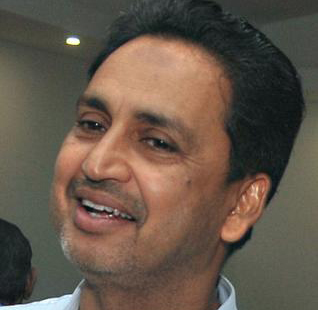
abibrahimA division bench, comprising Chief Justice Subhro Kamal Mukherjee and Justice Ravi Malimath, passed the order, saying that "in order to avoid any controversy and confusion between the devotees and the Deputy Commissioner, the court directs the government to reprint the invitation of the annual festival."

The bench said that as per Section seven of the Hindu Religious and Charitable Endowments Act, a non-Hindu cannot participate in any such function or event.

"Ibrahim is a non-Hindu and he practises a religion which does not allow idol worship," it added." The court also directs Ibrahim not to participate in any such event in future," the bench said.

A group of devotees of Puttur Mahalingeshwara temple, who had filed the petition, had pointed out that the inclusion of the name of Ibrahim was against the Endowment Act of the government.

Contrary to the earlier stand of defending inclusion of Ibrahim's name in the invitation card, the government admitted its error of doing so before the division bench.

Law and Parliamentary Affairs Minister T B Jayachandra had defended the government's stand by saying that Ibrahim has done nothing wrong and acted in his capacity as the Deputy Commissioner as per the Muzrai Department's rules.

The controversy had created political ripples when Vishwa Hindu Parishad and Bajrang Dal raised objections over the inclusion of Ibrahim's name in the invitation card.

The 10-day festival is held from April 17 every year in the temple at Puttur, 52 km from Manguluru, in which thousands of devotees from various parts of the state, participate.

Printing DC's name on invite was a mistake'

The State government told the High Court that it was a “mistake” to print the name of A.B. Ibrahim, on the invitation card of the annual festival of Puttur Mahalingeshwara temple.

Advocate-General Madhusudan R. Naik made this submission during the hearing on a PIL petition, filed by Mahathobara Sri Mahalingeshwara Devara Bhaktha Samiti, Puttur.

Also, the Advocate-General told a Division Bench, comprising Chief Justice Subhro Kamal Mukherjee and Justice Ravi Malimath, that “the DC concerned [Mr. Ibrahim] will not participate in any religious function of this particular temple.”

The petitioner had complained that Mr. Ibrahim's name was printed in violation of the provisions of the Karnataka Hindu Religious Institutions and Charitable Endowments Act 1997, which makes it mandatory that only officers professing Hindu faith could be given charge of Hindu religious institutions.

Comments

Fair talker
 - 
Thursday, 31 Mar 2016

For a silly matter, was it necessary to make such a big issue until knocking HC door.

Our people don't hesitate to waste time, efforts, resources.

when controversy was started the DC himself should have initiated to exclude his name.
Very unfortunate, such a silly matter can not be solved without HC intervention.

shabeer
 - 
Thursday, 31 Mar 2016

Allah Saved DC from sin.....

Ahmed
 - 
Thursday, 31 Mar 2016

Good decision by Honorable court. Court recognizes that DC is practicing a religion which does not allow idol worship and can not take part in Temple activities. Same way we should admit that we cannot even chant \Jai Mata Di\", or \"Jai Bharat Mata\" because it is idol praising. But, we have no problem in chanting Hindustan Zindabad, Bharath Ki Jai etc.,"

Shaan
 - 
Thursday, 31 Mar 2016

Good decision of honorable Karnataka high court, satya meva jayathe, finally won Law, satya and dharma.

Add new comment

  • Coastaldigest.com reserves the right to delete or block any comments.
  • Coastaldigset.com is not responsible for its readers’ comments.
  • Comments that are abusive, incendiary or irrelevant are strictly prohibited.
  • Please use a genuine email ID and provide your name to avoid reject.
Agencies
February 20,2020

India ranked 77th on a sustainability index that takes into account per capita carbon emissions and ability of children in a nation to live healthy lives and secures 131st spot on a flourishing ranking that measures the best chance at survival and well-being for children, according to a UN-backed report.

The report was released on Wednesday by a commission of over 40 child and adolescent health experts from around the world. It was commissioned by the World Health Organization (WHO), UN Children's Fund (UNICEF) and The Lancet medical journal.

In the report assessing the capacity of 180 countries to ensure that their youngsters can survive and thrive, India ranks 77th on the Sustainability Index and 131 on the Flourishing Index, it said.

Flourishing is the geometric mean of Surviving and Thriving. For Surviving, the authors selected maternal survival, survival in children younger than 5 years old, suicide, access to maternal and child health services, basic hygiene and sanitation, and lack of extreme poverty.

For Thriving, the domains were educational achievement, growth and nutrition, reproductive freedom, and protection from violence.

Under the Sustainability Index, the authors noted that promoting today's national conditions for children to survive and thrive must not come at the cost of eroding future global conditions for children's ability to flourish.

The Sustainability Index ranks countries on excess carbon emissions compared with the 2030 target. This provides a convenient and available proxy for a country's contribution to sustainability in future.

The report noted that under realistic assumptions about possible trajectories towards sustainable greenhouse gas emissions, models predict that global carbon emissions need to be reduced from 39·7 giga­ tonnes to 22·8 gigatonnes per year by 2030 to maintain even a 66 per cent chance of keeping global warming below 1·5°C.

It said that the world's survival depended on children being able to flourish, but no country is doing enough to give them a sustainable future.

"No country in the world is currently providing the conditions we need to support every child to grow up and have a healthy future," said Anthony Costello, Professor of Global Health and Sustainability at University College London, one of the lead authors of the report.

"Especially, they're under immediate threat from climate change and from commercial marketing, which has grown hugely in the last decade," said Costello – former WHO Director of Mother, Child and Adolescent health.

Norway leads the table for survival, health, education and nutrition rates - followed by South Korea and the Netherlands. Central African Republic, Chad and Somalia come at the bottom.

However, when taking into account per capita CO2 emissions, these top countries trail behind, with Norway 156th, the Republic of Korea 166th and the Netherlands 160th.

Each of the three emits 210 per cent more CO2 per capita than their 2030 target, the data shows, while the US, Australia, and Saudi Arabia are among the 10 worst emitters. The lowest emitters are Burundi, Chad and Somalia.

According to the report, the only countries on track to beat CO2 emission per capita targets by 2030, while also performing fairly – within the top 70 – on child flourishing measures are: Albania, Armenia, Grenada, Jordan, Moldova, Sri Lanka, Tunisia, Uruguay and Vietnam.

"More than 2 billion people live in countries where development is hampered by humanitarian crises, conflicts, and natural disasters, problems increasingly linked with climate change," said Minister Awa Coll-Seck from Senegal, Co-Chair of the commission.

The report also highlights the distinct threat posed to children from harmful marketing.

Evidence suggests that children in some countries see as many as 30,000 advertisements on television alone in a single year, while youth exposure to vaping (e-cigarettes) advertisements increased by more than 250 per cent in the US over two years, reaching more than 24 million young people.

Studies in Australia, Canada, Mexico, New Zealand and the US – among many others – have shown that self-regulation has not hampered commercial ability to advertise to children.

Children's exposure to commercial marketing of junk food and sugary beverages is associated with purchase of unhealthy foods and overweight and obesity, linking predatory marketing to the alarming rise in childhood obesity, it said.

The number of obese children and adolescents increased from 11 million in 1975 to 124 million in 2016 – an 11-fold increase, with dire individual and societal costs, the report said.

To protect children, the authors call for a new global movement driven by and for children.

Specific recommendations include stopping CO2 emissions with the utmost urgency, to ensure children have a future on this planet; placing children and adolescents at the centre of global efforts to achieve sustainable development, the report said.

New policies and investment in all sectors to work towards child health and rights; incorporating children's voices into policy decisions and tightening national regulation of harmful commercial marketing, supported by a new Optional Protocol to the UN Convention on the Rights of the Child, it said.

Comments

Add new comment

  • Coastaldigest.com reserves the right to delete or block any comments.
  • Coastaldigset.com is not responsible for its readers’ comments.
  • Comments that are abusive, incendiary or irrelevant are strictly prohibited.
  • Please use a genuine email ID and provide your name to avoid reject.
Agencies
June 17,2020

Riyadh, Jun 17: Saudi Arabia is expected to scale back or call off this year's hajj pilgrimage for the first time in its modern history, observers say, a perilous decision as coronavirus cases spike.

Muslim nations are pressing Riyadh to give its much-delayed decision on whether the annual ritual will go ahead as scheduled in late July.

But as the kingdom negotiates a call fraught with political and economic risks in a tinderbox region, time is running out to organise logistics for one of the world's largest mass gatherings.

A full-scale hajj, which last year drew about 2.5 million pilgrims, appears increasingly unlikely after authorities advised Muslims in late March to defer preparations due to the fast-spreading disease.

"It's a toss-up between holding a nominal hajj and scrapping it entirely," a South Asian official in contact with Saudi hajj authorities said.

A Saudi official said: "The decision will soon be made and announced."

Indonesia, the world's most populous Muslim nation, withdrew from the pilgrimage this month after pressing Riyadh for clarity, with a minister calling it a "very bitter and difficult decision".

Malaysia, Senegal and Singapore followed suit with similar announcements.

Many other countries with Muslim populations -- from Egypt and Morocco to Turkey, Lebanon and Bulgaria -- have said they are still awaiting Riyadh's decision.

In countries like France, faith leaders have urged Muslims to "postpone" their pilgrimage plans until next year due to the prevailing risks.

The hajj, a must for able-bodied Muslims at least once in their lifetime, represents a major potential source of contagion as it packs millions of pilgrims into congested religious sites.

But any decision to limit or cancel the event risks annoying Muslim hardliners for whom religion trumps health concerns.

It could also trigger renewed scrutiny of the Saudi custodianship of Islam's holiest sites -- the kingdom's most powerful source of political legitimacy.

A series of deadly disasters over the years, including a 2015 stampede that killed up to 2,300 worshippers, has prompted criticism of the kingdom's management of the hajj.

"Saudi Arabia is caught between the devil and the deep blue sea," Umar Karim, a visiting fellow at the Royal United Services Institute in London, told AFP.

"The delay in announcing its decision shows it understands the political consequences of cancelling the hajj or reducing its scale."

"Buying time"

The kingdom is "buying time" as it treads cautiously, the South Asian official said.

"At the last minute if Saudi says 'we are ready to do a full hajj', (logistically) many countries will not be in a position" to participate, he said.

Amid an ongoing suspension of international flights, a reduced hajj with only local residents is a likely scenario, the official added.

A decision to cancel the hajj would be a first since the kingdom was founded in 1932.

Saudi Arabia managed to hold the pilgrimage during previous outbreaks of Ebola and MERS.

But it is struggling to contain the virus amid a serious spike in daily cases and deaths since authorities began easing a nationwide lockdown in late May.

In Saudi hospitals, sources say intensive care beds are fast filling up and a growing number of health workers are contracting the virus as the total number of cases has topped 130,000. Deaths surpassed 1,000 on Monday.

To counter the spike, authorities this month tightened lockdown restrictions in the city of Jeddah, gateway to the pilgrimage city of Mecca.

"Heartbroken"

"The hajj is the most important spiritual journey in the life of any Muslim, but if Saudi Arabia proceeds in this scenario it will not only exert pressure on its own health system," said Yasmine Farouk from the Carnegie Endowment for International Peace.

"It could also be widely held responsible for fanning the pandemic."

A cancelled or watered-down hajj would represent a major loss of revenue for the kingdom, which is already reeling from the twin shocks of the virus-induced slowdown and a plunge in oil prices.

The smaller year-round umrah pilgrimage was already suspended in March.

Together, they add $12 billion to the Saudi economy every year, according to government figures.

A negative decision would likely disappoint millions of Muslim pilgrims around the world who often invest their life savings and endure long waiting lists to make the trip.

"I can't help but be heartbroken -- I've been waiting for years," Indonesian civil servant Ria Taurisnawati, 37, told AFP as she sobbed.

"All my preparations were done, the clothes were ready and I got the necessary vaccination. But God has another plan."

Comments

Add new comment

  • Coastaldigest.com reserves the right to delete or block any comments.
  • Coastaldigset.com is not responsible for its readers’ comments.
  • Comments that are abusive, incendiary or irrelevant are strictly prohibited.
  • Please use a genuine email ID and provide your name to avoid reject.
News Network
June 29,2020

Bengaluru, Jun 29: The results of second pre-university and the Secondary School Leaving Certificate examination results will be out by July last week and August first week, Karnataka Primary and Secondary Education Minister S Suresh Kumar said on Monday.

Instead of giving general promotion to the 10th and 12th standard students as the Central Board of Secondary Education and other states have done, the Karnataka government decided to hold the examination defying the coronavirus scare.

"We are trying to get the SSLC results out by the first week of August.The PUC results will be out in the last week of July," the minister told reporters in Bengaluru.

Amid reports of schools increasing the school fees ignoring the government's direction, the minister said he has got reports that 1,150 schools have increased their fees of which action has been taken against 450 schools.

"We have directed all the schools not to increase the fees in view of the coronavirus scare.

It is a peculiar year.Humanity says no one should increase fees.

We have set up a helpline. If we come across such practices, we will initiate action," Kumar said.

He said an officer has been entrusted to look into the complaints against schools.

Speaking about online classes for kindergarten students, the minister said such classes are not allowed.

The schools can hold talks with parents twice a week about grooming their children.

Kumar said a decision on opening kindergarten schools will be taken after July 5.

He, however, conceded that most parents are unwilling to send their children to school.

The government is gathering the opinion of parents based on which a decision would be taken, he added.

Regarding education to students from Class one to Class 10, Kumar said the Centre has given guidelines, which will be followed.

The state has formed an expert committee to recommend guidelines on education to children from Class I to Class six.

"Once the committee report comes, we will formulate regulations," Kumar added.

Comments

Add new comment

  • Coastaldigest.com reserves the right to delete or block any comments.
  • Coastaldigset.com is not responsible for its readers’ comments.
  • Comments that are abusive, incendiary or irrelevant are strictly prohibited.
  • Please use a genuine email ID and provide your name to avoid reject.