


Rise in kidney ailments overload dialysis units

December 16, 2015

Bengalur, Dec 16: The rising number of kidney ailments, due to the increasing cases of non-communicable diseases, has posed a serious challenge to the government. The limited dialysis facilities are witnessing an overload.
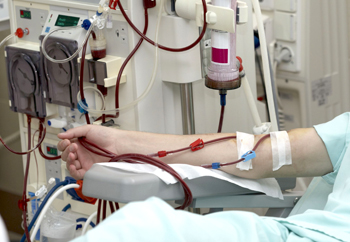
kidneyAt least two lakh people undergo dialysis in the State. Speaking to media persons, Dr Keshavamurthy R, director, Institute of Nephro Urology, said that with non-communicable diseases such as diabetes on the rise, those with kidney ailments are seen in good numbers.

The Institute sees a patient overload most of the time. With 25 units in place, 60 to 65 people undergo dialysis every day, while a good number are asked to await their turn. “No matter how many units are started, they are occupied because patients are seen in growing numbers,” he said.

This Institute sees patients from West Bengal and Odisha as well. “The diagnosis is done and we put them on dialysis.

Later, they are sent back to their respective places unless their condition is serious as a very small number can be treated completely or can undergo a transplant. The rest have to be on dialysis for life,” he said.

Institute expansion

The autonomous institute will undergo expansion soon. A proposal has been sent to the government for construction of a four-storey building on a plot behind the present premises. With this, 45 more beds will be added. If approved, the construction will begin in the next six months.

PPP model

If infrastructure is one challenge, inadequate manpower is another. For a dialysis centre to be functional, at least one nephrologist, a technician and nurses trained in dialysis are a must.

However, with not enough specialists on hand, the department of health and family welfare and that of medical education have resorted to training general physicians to carry out the procedure. One doctor from each taluk is undergoing training by turns at the Institute of Nephro Urology to be able to go back and run dialysis units.

Meanwhile, Dr G Vamadev, director, department of health and family welfare, said that they had sought a report from all districts on the number of dialysis units available and the want of manpower.

“There is a proposal to start dialysis units on a public-private partnership model. The government will provide the infrastructure necessary, while the other party will run the centre with manpower and consumables,” he said.

Comments

Add new comment

  • Coastaldigest.com reserves the right to delete or block any comments.
  • Coastaldigset.com is not responsible for its readers’ comments.
  • Comments that are abusive, incendiary or irrelevant are strictly prohibited.
  • Please use a genuine email ID and provide your name to avoid reject.
News Network
February 16,2020

Mangaluru, Feb 16: An elderly woman from Tamil Nadu was on Saturday reunited with her daughter and son after 14 years at the Mangaluru's White Doves destitute home.

"Mary only knew her name when she came here 10 years ago. Recently, she told us about her home town," Corrine Rusquinha, founder of White Doves told media.
Mary had gone missing 14 years ago from her hometown Kortampet in Tamil Nadu.

"Ten years ago, she was spotted by Mangaluru police who brought her to White Doves home late one evening. Initially, she could only speak Tamil, so it was presumed she was from Tamil Nadu. She was on psychiatric treatment," Rusquinha said.

A few days back, a visiting priest at the White Doves home spoke to Mary in Tamil and asked about her hometown.

"Surprisingly, she could recall the name of her hometown, following which the visiting priest contacted the pastor at Kortampet. Mary's family, including her daughter Gnana Anthony, who is a paramedic student in Coimbatore, was informed about Mary," she said.

Soon after, Gnana and her elder brother came to Mangaluru to take their mother back to their home.

Mary's husband Jhonson, who worked as a cook, had died within a year of losing his wife.

Comments

Add new comment

  • Coastaldigest.com reserves the right to delete or block any comments.
  • Coastaldigset.com is not responsible for its readers’ comments.
  • Comments that are abusive, incendiary or irrelevant are strictly prohibited.
  • Please use a genuine email ID and provide your name to avoid reject.
News Network
April 18,2020

Bengaluru, Apr 18: The Karnataka government has managed to get the contact details of nine out of 10 foreign nationals who had visited Jubilant Life Sciences, a pharmaceutical company in Mysuru district's Nanjangud which has been declared a coronavirus hotspot, State minister S Suresh Kumar said on Saturday.

As many as 66 people have tested positive for COVID-19 in Nanjangud.

While investigating the source of virus in what is now known as 'Nanjangud cluster', the Mysuru administration could get information that 10 foreign nationals had visited this town, Kumar told reporters.

Soon the External Affairs Ministry's help was sought which managed to track nine of them, Kumar said, adding that the MEA contacted its embassies in China, Germany, Japan and the USA to track these persons.

"Out of 10, they could contact nine and got details. All of them have said that they were all healthy and they did not have any symptoms.

Hence, they did not feel the need to undergo COVID-19 tests," the minister said.

He opined that many people do not show the symptoms but they could be carriers of the virus.

Coronavirus India update: State-wise total number of confirmed cases, deaths on April 18

"It all depends on the person's immunity," Kumar explained.

A foreign national from Germany who had visited Nanjangud could not be reached as her contact details were not available.

Comments

Add new comment

  • Coastaldigest.com reserves the right to delete or block any comments.
  • Coastaldigset.com is not responsible for its readers’ comments.
  • Comments that are abusive, incendiary or irrelevant are strictly prohibited.
  • Please use a genuine email ID and provide your name to avoid reject.
News Network
January 21,2020

Bengaluru, Jan 21: A private hospital in Bengaluru, the capital of Karnataka, on Tuesday claimed that it has successfully performed a live liver transplant on a Jehovah's Witness from Nigeria, by not using blood or blood products, in order to protect the patient's religious beliefs.

It is said that Jehovah's Witnesses are followers of a Christian faith that prohibits the use of blood or blood products during their treatment. Gehojadak (37), a Jehovah's Witness follower, had developed decompensated liver disease and visited more than three countries seeking treatment over the last four years but was turned away by most doctors due to the highly risky nature of surgery, Aster CMI Hospital said.

The surgery was challenging compared to a normal liver transplant because in order to protect the patient's religious beliefs, the medical team could not use blood or blood products (Fresh frozen plasma, Cryoprecipitate, Platelets etc), it said in a release, adding that very few such surgeries have been successfully conducted worldwide.

The patient's brother was the donor, the hospital said, adding, without a liver transplant, Gehojadak's chances of survival were less than 10 per cent over the next two years. A team of liver specialists from the Hospital thoroughly reviewed the patient's medical history before recommending a bloodless liver transplant and charted out a feasible pathway to make the surgery a success.

"This transplant was especially challenging as we did not have the safety net (of using blood) even if the patient's life was at risk due to their advance directive. We have performed other non-transplant liver surgeries in Jehovah's Witnesses and this gave us the confidence to take on Gehojadak's transplant," Dr Rajiv Lochan, Consultant Liver Transplant Surgeon, said.

The critical surgery took a 12-hour period to complete where two teams of specialists with close to 25 doctors including anaesthetists, intensivists worked in absolute sync with each other and Gehojadak finally received a life-saving liver transplant, the Hospital said. In a period of two weeks, the patient and his brother were fit enough to go home and were discharged from the hospital.

"Even if their haemoglobin levels dropped to life-threatening levels, the patients were clear that they would not accept a blood transfusion. Keeping the limitations in mind, the most effective treatment path was planned, and we spent close to two months preparing the patients for surgery," Arun V, Consultant Anesthesiologist said. The hospital arranged customised artificial products like synthetic drug molecules, to conduct a bloodless liver transplant, he added.

Comments

Add new comment

  • Coastaldigest.com reserves the right to delete or block any comments.
  • Coastaldigset.com is not responsible for its readers’ comments.
  • Comments that are abusive, incendiary or irrelevant are strictly prohibited.
  • Please use a genuine email ID and provide your name to avoid reject.