Belthangady: Two suspected saffron activists held for cattle trafficking

[email protected] (CD Network)
April 14, 2016

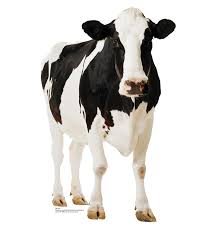
cowMangaluru, Apr 14: Two suspected Hindutva activists were arrested for illegal cattle trafficking in Belthangady taluk of Dakshina Kannada district.

The arrested are Pradeep and Krishnappa, both residents of Indabettu village in Belthangady. According to sources, both of them had close ties with saffron groups.

It is learnt that they were illegally transporting a cow to a slaughter house on Thursday on board a mini goods van.

Acting on a tip off, a team of local police intercepted the vehicle and arrested the duo.

The vehicle and cow also were seized by the police. The arrested duo was produced before a court.

Comments

Ahmed
 - 
Friday, 15 Apr 2016

Hang them from a tree as they did in Jharkhand for two cattle traders.

Kushwanth Bhat
 - 
Thursday, 14 Apr 2016

Bap Ray Bap Whats happening. where are Master Narean. and Blaster Bhatta Kalladka????? is it that's your plan you Criminal Goonda Gang leaders where is your Moral Baffoon police??? very good your goons now counting steel bars in jail,

Satyameva jayate
 - 
Thursday, 14 Apr 2016

Pimps....stealing and selling their mothers..... And say Bharat Mata ki jai..next they will steal bharath Mata and sell......

Add new comment

  • Coastaldigest.com reserves the right to delete or block any comments.
  • Coastaldigset.com is not responsible for its readers’ comments.
  • Comments that are abusive, incendiary or irrelevant are strictly prohibited.
  • Please use a genuine email ID and provide your name to avoid reject.
News Network
June 29,2020

Bengaluru, June 29: The Karnataka government on Monday issued guidelines to conduct online classes for all students of ICSE, CBSE and SSLC under the directions of the High Court.

According to the guidelines, for the kindergarten students, online classes can be held 30 minutes a week and students in classes 1-5 will have online classes for 30-45 minutes divided into two periods for three alternate days every week.

For students in classes 6-8, the online classes will be for 30-45 minutes divided into two periods for five days every week while students in classes 9 and 10 can have the virtual classes for 30-45 minutes divided into four periods for five days a week.

Earlier, the state government barred online classes for the kids from LKG to class 5.

Minister for primary and secondary education S Suresh Kumar had said that online classes cannot be held for the kids from LKG to class V.

Comments

Add new comment

  • Coastaldigest.com reserves the right to delete or block any comments.
  • Coastaldigset.com is not responsible for its readers’ comments.
  • Comments that are abusive, incendiary or irrelevant are strictly prohibited.
  • Please use a genuine email ID and provide your name to avoid reject.
News Network
July 26,2020

Mangaluru, Jul 26: Karnataka government has initiated steps to provide insurance cover for priests and others working in temples coming under the Endowment Department -- a move that will benefit 50,000 people and their families.

Speaking to media here on Saturday evening, Minister for Endowment Kota Srinivas Poojary said there is a need to implement the decision at the earliest to provide relief to the priests and families of employees working in temples.

Department officials have been directed to include employees of state-owned temples under the Pradhan Mantri Jeevan Jyothi Bima scheme and also enrol them under State Bank of India’s group personal accident insurance policy at the earliest. The Central insurance scheme will provide Rs 2 lakh cover to family members in case of death due to accidents.

Comments

Add new comment

  • Coastaldigest.com reserves the right to delete or block any comments.
  • Coastaldigset.com is not responsible for its readers’ comments.
  • Comments that are abusive, incendiary or irrelevant are strictly prohibited.
  • Please use a genuine email ID and provide your name to avoid reject.
News Network
April 2,2020

The current physical distancing guidelines provided by the World Health Organisation (WHO) and by the US Centers for Disease Control and Prevention (CDC) may not be adequate to curb the coronavirus spread, according to a research which says the gas cloud from a cough or sneeze may help virus particles travel up to 8 metres. The research, published in the Journal of the American Medical Association, noted that the the current guidelines issued by the WHO and CDC are based on outdated models from the 1930s of how gas clouds from a cough, sneeze, or exhalation spread.

Study author, MIT associate professor Lydia Bourouiba, warned that droplets of all sizes can travel 23 to 27 feet, or 7-8 metres, carrying the pathogen.

According to Bourouiba, the current guidelines are based on "arbitrary" assumptions of droplet size, "overly simplified", and "may limit the effectiveness of the proposed interventions" against the deadly pandemic.

 She explained that the old guidelines assume droplets to be one of two categories, small or large, taking short-range semi-ballistic trajectories when a person exhales, coughs, or sneezes.

However based on more recent discoveries, the MIT scientist said, sneezes and coughs are made of a puff cloud that carries ambient air, transporting within it clusters of droplets of a wide range of sizes.

Bourouiba warned that this puff cloud, with ambient air entrapped in it, can offer the droplets moisture and warmth that can prevent it from evaporation in the outer environment.

"The locally moist and warm atmosphere within the turbulent gas cloud allows the contained droplets to evade evaporation for much longer than occurs with isolated droplets," she said.

"Under these conditions, the lifetime of a droplet could be considerably extended by a factor of up to 1000, from a fraction of a second to minutes," the researcher explained in the study.

The MIT scientist, who has researched the dynamics of coughs and sneezes for years, added that these droplets settle along the trajectory of a cough or sneeze contaminating surfaces, with their residues staying suspended in the air for hours.

"Even when maximum containment policies were enforced, the rapid international spread of COVID-19 suggests that using arbitrary droplet size cutoffs may not accurately reflect what actually occurs with respiratory emissions, possibly contributing to the ineffectiveness of some procedures used to limit the spread of respiratory disease," Bourouiba wrote in the study


Comments

Add new comment

  • Coastaldigest.com reserves the right to delete or block any comments.
  • Coastaldigset.com is not responsible for its readers’ comments.
  • Comments that are abusive, incendiary or irrelevant are strictly prohibited.
  • Please use a genuine email ID and provide your name to avoid reject.