Mishap inside Mangaluru Airport claims life of CISF personnel Aslam Khan

[email protected] (CD Network)
April 25, 2016

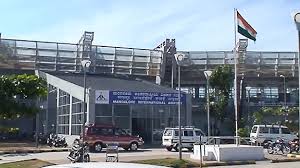
airportMangaluru, Apr 25: A security personnel died in an accident while patrolling on a motorbike inside Mangaluru International Airport on Sunday.

The deceased has been identified as Aslam Khan, a constable of Central Industrial Security Force (CISF) deployed at the Airport. A native of Chhattisgarh, he was staying in Bajpe, near here.

According to Airport sources, Khan lost control over his motorbike and fell into a pit while riding between new and old runways at the Airport.

A critically injured Khan was immediately rushed to a private hospital in Mangaluru after preliminary treatment. However, doctors pronounced him brought dead.

CISF deputy commandant Amit Kumar and other officers visited his house and expressed condolences.

Comments

Siddique
 - 
Sunday, 8 May 2016

Name kaise Chenge kar diya wo mere chchu the or unka name aslam alam tha or wo bihar se the how its ......

Rameez Raza
 - 
Wednesday, 27 Apr 2016

depatment ne bola ye accident hai .however body pe es scratch ase he nhi aa raha jo lage ki accident hai .. saar pe chot lage aisa laag raha jaise kise ne piche se saar pe mara or saar me hole sa ho gaya .. ungaliyo pe nishan aise jaise unko koe lohe ya lakri se mara ho and wo hath se bacha rahe ho .. body ki roknte khare the jaise ki wo kise se daar gaye ho .. hatho n bach me scratch aise jaise aunko khech ki gadhe me gira diya ho.. jis jahag se body mele waha khun ke ek v daag nhi .. saar me chot waha lage jo helmet se cover hota hai .. helmet gere mene bt wo tute nhi .. agar bike over control hue to helmet tut jana chahea .. its seems its not an accident .. its something else..

Tanveer Anwar
 - 
Monday, 25 Apr 2016

however it may happened but it is not a good thing for his family

Rameez Raza
 - 
Monday, 25 Apr 2016

he aslam alam .. he is from bihar .. we are still waiting for his body .. and he was my uncle who is no more ...please pray for him

Rameez Raza
 - 
Monday, 25 Apr 2016

he was my uncle . he was on duty .. and he belong from bihar .... :'(

Rameez Raza
 - 
Monday, 25 Apr 2016

he was my uncle .. and he is from bihar ..

Rikaz
 - 
Monday, 25 Apr 2016

tragic incident....

Inna lillahi wa inna ilahi wa rajioon!

Kiran Rao
 - 
Monday, 25 Apr 2016

Ohh horrible incident, RIP .

Noufal
 - 
Monday, 25 Apr 2016

very sad incident, he is from chhattisgarh, heartfelt condolence to his family, RIP.

Add new comment

  • Coastaldigest.com reserves the right to delete or block any comments.
  • Coastaldigset.com is not responsible for its readers’ comments.
  • Comments that are abusive, incendiary or irrelevant are strictly prohibited.
  • Please use a genuine email ID and provide your name to avoid reject.
Wafa Sultana
April 4,2020

Over the last couple of days when the world was occupied with unifying efforts to fight the deadly Covid19 pandemic, sections of Indian media provided viewers a familiar scapegoat – the Indian Muslims – who are often stereotyped as a community being constantly at loggerheads with the citizenry and the State. Biased media channels were quick to resort to blaming the entire Muslim community for the spread of the disease in the country, thanks to an ill-timed Tablighi Jamaat gathering at its international headquarters in Delhi’s Nizamuddin. Unsurprisingly, the opprobrium was also marked by a sudden spike in WhatsApp forwards of videos with people wearing skullcaps licking spoons and performing Sufi breathing rituals, suggesting some sort of wild conspiracy on the part of the community to spread the virus.  Some media channels were quick to formulate, hypothesize and provide loose definitions of a newly discovered form of Jihad i.e. ‘Corona Jihad ’ thereby vilifying the Islamic faith and its followers.

While the investigation on the culpability of the organizers of the Nizamuddin event is still ongoing, there is enough information to suggest that the meeting was held before any lockdown was in force, and the problem began when there was no way of getting people out once the curfew was announced. Be that as it may, there is little doubt that organizing a meet of such a scale when there is a global pandemic smacks of gross misjudgment, and definitely the organizers should be held accountable if laws or public orders were defied. Attendees who attempt to defy quarantine measures must be dealt with strictly. However, what is alarming is that the focus and narrative have now shifted from the unfortunate event at Nizamuddin to the Tablighi Jamaat itself.

For those not familiar with the Tablighi Jamaat, the organization was founded in 1926 in Mewat by scholar Maulana Mohammad Ilyas. The Jamaat’s main objective was to get Muslim youth to learn and practice pristine Islam shorn of external influences. This is achieved through individuals dedicating time for moral and spiritual upliftment secluded from the rest of the world for a brief period of time. There is no formal membership process. More senior and experienced participants typically travel from one mosque to other delivering talks on religious topics, inviting local youth to attend and then volunteer for a spiritual retreat for a fixed number of days to a mosque in a nearby town or village to present the message to their co-religionists. Contrary to ongoing Islamophobic rhetoric, the movement does not actively proselytize. The focus is rather on getting Muslims to learn the teachings and practices of Islam.  This grassroots India-based movement has now grown to almost all countries with substantial Muslim populations. Its annual meets, or ‘ijtemas’ are among the largest Islamic congregations in the world after the annual Haj. One of the reasons for its popularity and wide network in the subcontinent and wordwide is the fact that it has eschewed the need for scholarly intervention, focusing on peer learning of fundamental beliefs and practice rather than high-falutin ideological debates. The Tablighi Jamaat also distinguishes itself from other Islamic movements through its strictly apolitical nature, with a focus on individual self-improvement rather than political mobilization. Hardships and difficulty in the world are expected to be face through ‘sabr’ (patience) and ‘dua’ (supplication),  than through quest for political power or influence. In terms of ideology, it is very much based on mainstream Sunni Islamic principles derived from the Deobandi school.

So, why is all this background important in the current context? While biased media entities have expectedly brought out their Islamophobic paraphernalia out for full display, more neutral commentators have tried to paint the Tablighi Jamaat as a fringe group and have tried to distance it from 'mainstream Muslims'. While the intent is no doubt innocent, this is a trap we must not fall into. This narrative, unfortunately, is also gaining ground due to apathy some Muslims have for the group, accusing it of being “disconnected from the realities of the world”. Unlike other Muslim organizations and movements, the Tablighi Jamat, by virtue of its political indifference, does not boast of high-profile advocates and savvy spokespersons who can defend it in mainstream or social media.  The use of adjectives such as 'outdated' and 'orthodox' by liberal columnists to describe the Jamaat feeds into the malignant attempt to change the narrative from the control of the spread of the pandemic due to the Nizamuddin gathering to 'raison d'etre' of the organization itself.

A large mainstream religious group like the Tablighi Jamaat with nearly a hundred-year history, normally considered to be peaceful, apolitical and minding its own business is now suddenly being villainized owing to unfortunate circumstances. Biased media reactions filled with disgust and hate seem to feed the Indian public conscience with a danngerous misconception - to be a nominal Muslim is okay but being a practicing one is not.  For those committed to the truth and fighting the spread of Islamophobia, the temptation to throw the entire Tablighi Jamaat under the bus must be resisted.

The writer is a lawyer and research scholar at Qatar University. Her research interests include Islamic law and politics.

Comments

zahoorahmed
 - 
Saturday, 4 Apr 2020

great article! provides a great perspective on tableeg jamat

Add new comment

  • Coastaldigest.com reserves the right to delete or block any comments.
  • Coastaldigset.com is not responsible for its readers’ comments.
  • Comments that are abusive, incendiary or irrelevant are strictly prohibited.
  • Please use a genuine email ID and provide your name to avoid reject.
News Network
August 4,2020

Bengaluru, Aug 4: Police barricades, yellow banners, walls with a fresh coat of paint and the sounds of bhajan mark parts of Ayodhya as the city awaits its big day Wednesday, when the first brick will be laid for the Ram temple.

Ayodhya is decked up for the bhoomi pujan that will be attended at the Ram Janmabhoomi by 175 people, who figure in a select guest list of seers and politicians topped by Prime Minister Narendra Modi.

Concerned over the spread of coronavirus, the authorities are encouraging others not to come to the temple town, asking them to mark the occasion by celebrating at their homes. The groundbreaking ceremony will be telecast live.

Roads leading to Ayodhya display hoardings with the picture of the proposed Ram temple and of Ram Lalla, the infant Ram, the deity now housed in a makeshift temple.

Around the town’s Hanumangarhi area – named after a well-known temple which Modi will visit on Wednesday – both police sirens and ‘bhajans’ in praise of Ram are heard.

Most of the shops in the locality wear a new look, with their fronts painted in bright yellow. A large number of policemen were deployed there on Tuesday. Some sat in the sweet shops, waiting for their next instructions.

Roads leading into the area are barricaded. Yards of yellow cloth and marigold garlands were being hung on poles.

Even on the day before the event, security checks on vehicles heading to Ayodhya begin from adjoining Barabanki district itself on the Lucknow-Ayodhya road. Policemen take down details, including mobile numbers of the travellers.

Senior Superintendent of Police Deepak Kumar said the focus of the force is on maintaining the Covid-19 protocol.

“So we are not going to allow any outsider to enter Ayodhya city,” he said. Prohibitory orders are also in force and not more than four people will be allowed to gather.

“The markets and shops will remain open but with strict adherence to the Covid protocol,” he said. Outsiders will be stopped from entering the city, but Ayodhya residents will be allowed in if they produce any identification document.

“We are also carrying out random checks on people living in Ayodhya to ensure that no outsiders are staying here,” he said.

The city’s temples and mosques will remain open, but no other religious event – except for the bhoomi pujan – will take place on Wednesday.

Pickets have been set up at sensitive points in the city.

Sub-inspector Ram Chandra Yadav and constables Avnish Kumar and Ankit Chaudhary man the Terhi Bazar Chauraha picket near the Ram Janmabhoomi site.

"We are here for the past some days, and were on duty on the Rakshabandhan day. Duty comes first and only after that come other things in life, like festivals," Yadav said.

Mayank Gupta, who runs a restaurant, was handing out food packets to policemen, his customers.

"For the last two months, I have been providing tiffin to them twice a day. There are around 100 policemen to whom I supply tiffin," Gupta said.


Comments

Add new comment

  • Coastaldigest.com reserves the right to delete or block any comments.
  • Coastaldigset.com is not responsible for its readers’ comments.
  • Comments that are abusive, incendiary or irrelevant are strictly prohibited.
  • Please use a genuine email ID and provide your name to avoid reject.
News Network
July 6,2020

Bengaluru, Jul 6: Karnataka government has revised quarantine norms according to which those entering the State from other states, including from Maharashtra, shall be placed in 14-days home quarantine.

Until now, the state government had issued that those returning from Maharashtra are to be placed under 7-day institutional quarantine followed by 7-day home quarantine.

A fresh state government order with the subject line "Regulation of movement of persons from other States to Karnataka" reads: "Whereas the State Government vide Order dated June 30, issued unlock 2 guidelines which permit reopening of more activities in a calibrated manner, in areas outside the Containment Zones, and to extend lockdown in Containment Zone upto July 31. The guidelines also permit unrestricted interstate movement of persons and goods adhering to the SOPs/ Guidelines issued by the Department of Health and Family Welfare and Department of Revenue (Disaster Management)".

Whereas, the Department of Health and Family Welfare issued revised SOP for the moment of persons from other State to Karnataka vide document dated June 8, this year, further, quarantine norms were modified vide Orders of even number dated June 15 and June 26.

"The quarantine norms are regularly reviewed and calibrated with the prevailing Unlock 2 guidelines and infusion of technology and community involvement to enforce the strict home quarantine. In light of the above, the quarantine norms issued vide Order dated June 26, has been further modified and is follows--Persons coming from other State to Karnataka, including Maharashtra shall be placed in 14-days Home Quarantine," the order read.

"The other conditions as specified in the Order dated June 15 and aforementioned SOP enclosed issued on June 8 by the Department of Health and Family Welfare shall continue to be in force until further orders," it added.

Comments

Add new comment

  • Coastaldigest.com reserves the right to delete or block any comments.
  • Coastaldigset.com is not responsible for its readers’ comments.
  • Comments that are abusive, incendiary or irrelevant are strictly prohibited.
  • Please use a genuine email ID and provide your name to avoid reject.