Poultry demand dips in Karnataka as people wary of bird flu

May 10, 2016

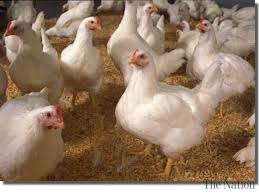
Bengaluru, May 10: The demand for poultry dropped slightly in Bengaluru on Monday, a day after thousands of chickens died of bird flu (H5N1) in Bidar district. Chicken eaters are taking precaution and asking sellers where the birds have been sourced from.
poulM Sheikh, who runs a poultry shop, said people had become cautious, though there was no drastic drop in sales. “People are enquiring about bird flu but we have few answers,” he said.

Nadir A, who works in a chicken store, said there was a slight decline in sales. “The sales are low in summer, but today was unusual,” he said but claimed that he wasn't aware of bird flu. Bhuvan, a resident, said he would better take precaution. “Even the last time when there was bird flu, I was cautious,” he said.

Doctors and poultry sellers, however, say there is no need to panic. H N Nagabhushan, general secretary, Karnataka Poultry Farmers' and Breeders' Association, said the current bird flu was noticed only in a layer poultry (egg production) farm in Humnabad taluk, Bidar, where poultry population was low. According to him, the government has started culling the birds and around 1.5 lakh chickens in one-kilometre radius of the farm would be culled.

Restrictions have been put on the movement of poultry, eggs and other input from the affected areas. Hence, there is no need to panic as the disease is localised, Nagabhushan said, adding that it was “perfectly safe” to consume chicken and egg across Karnataka.

Chickens sold in Bengaluru are sourced from Mysuru and bred on the outskirts of the city. They are not brought from other parts of Karnataka, he said. Poultry farmers have been advised to take appropriate bio-security measures and approach the Animal Husbandry Department for any assistance, he added.

Dr Mahesh P S, director of Central Poultry Development Organisation, said that whenever bird flu was reported, the chickens were being culled as per the standard procedure.

According to him, Indians were less likely to contract the H5N1 virus because of their distinct cooking culture. The virus dies at temperature above 60 degrees Celsius. Since the Indian food is cooked at a higher temperature and is even boiled, the virus likely dies down, he said. Outside of India, chicken and egg are eaten raw or half-cooked, increasing the chances of the virus spread, he added.

Comments

Swathi
 - 
Tuesday, 10 May 2016

in our place we eat chicken eveyday, no matter what will be.

Add new comment

  • Coastaldigest.com reserves the right to delete or block any comments.
  • Coastaldigset.com is not responsible for its readers’ comments.
  • Comments that are abusive, incendiary or irrelevant are strictly prohibited.
  • Please use a genuine email ID and provide your name to avoid reject.
Media Release
February 14,2020

Veteran journalist P. Sainath has said that the nation is in a crisis. And this crisis is not limited to just the rural area. It has become a national crisis at various areas such as agriculture, education, economy, job creation etc.

He was delivering the endowment lecture on the topic ‘Indian democracy at the post-liberalization and post-truth era’ at Media Manthan 2020 organized by the PG department of journalism and mass communication at St Aloysius College (Autonomous). 

Mr Sainath said that the many policies adopted in the 90s led to India becoming unusually unequal. Referring to the speech Ambedkar had made at the Constituent Assembly while handing over the draft of the Constitution, Mr Sainath said, “Ambedkar had warned about the weakness of Indian democracy that liberty without equality allows the supremacy of a few over the multitude. Liberty, equality and fraternity must be kept together as we cannot have one without the other.” 

Mr Sainath stated that the agrarian crisis was no longer about the loss of productivity, employment or about farmer suicide; it was a societal, civilizational crisis. Commenting on the lopsided policies such as cow-slaughter ban, he explained how cow slaughter ban had adversely affected many industries due to their interdependency. While Muslims who slaughtered cows were rendered helpless, the cattle traders who were mostly OBCs lost their earnings as the cattle prices crashed. An important industry like Kolhapur sandals industry in Maharashtra went bankrupt as a result of the cow slaughter ban in Maharashtra. He said the policymakers had no idea how the rural industries were interconnected. Demonetisation too devastated the rural economy as 98 percent of rural transactions happen through cash. 

Mr Sainath also spoke about the crisis of inequality which affects the Dalits and the Adivasis far more than anyone else as 90 percent of the rural households take home less than Rs 10,000/- per month. “Women are yet another group whose labour is never counted in the gross domestic product. Women and girls globally do unpaid work which amounts to about 12.5 billion working hours per year. Monetarily speaking, this is worth 10.8 trillion dollars,” Mr Sainath added. 

Speaking about the crisis of jobs Mr Sainath said that major companies were laying off employees just to create more profits for the investors and the adoption of artificial intelligence in the industry would further destroy millions of jobs.

Rector of St Aloysius College Institutions Fr Dionysius Vaz SJ, Principal Dr (Fr) Praveen Martis SJ, HOD of Journalism and Mass Communication department Dr (Fr) Melwyn Pinto SJ were present.

‘Veerappan and Vijay Mallya’s business models are interesting!’

Addressing the gathering during his endowment lecture on Friday, Mr Sainath made an interesting comment on the so called ‘revenue model’. “Whenever I visit IIMs and IITs for lectures on my PARI project, the students there ask me what my revenue model for my project is. I tell them that I do not have a revenue model. In fact, journalism does not begin with a revenue model. Gandhiji, Ambedkar, Bhagat Singh were all great journalists. But they did not have a revenue model,” Mr Sainath said.

On a lighter note, he said that the best revenue model that he liked was that of forest brigand Veerappan and liquor baron Vijay Mallya. “Veerappan ruled the forest for forty years and from the top ministers to the villagers he could dictate terms and liver royally. Similarly, Mallya’s revenue model was to steal the banks and run away abroad and live like a king,” Mr Sainath added.

Journalism is not and can never be a business. It is a calling, he opined. While newspaper can be a business, television can be a business, journalism per se cannot be reduced to a business. “Unfortunately today, journalists are recruited on a contract basis and they have no bargaining power; and there are no unions to fight for their cause. Hence, they are at the mercy of the corporate media houses for their survival and are made to write stories that cannot be called journalism,” Mr Sainath said.

Answering a question as to the pressures he faced as a journalist, he said that external pressures from the government or others could be very well handled. It is the internal pressures from once own media house that journalists find it difficult to manage.


Comments

Add new comment

  • Coastaldigest.com reserves the right to delete or block any comments.
  • Coastaldigset.com is not responsible for its readers’ comments.
  • Comments that are abusive, incendiary or irrelevant are strictly prohibited.
  • Please use a genuine email ID and provide your name to avoid reject.
News Network
February 12,2020

Kathmandu, Feb 12: Nepal has suspended the licence of a mountainous resort for three months due to poor security management and managerial weakness at the hotel where eight Indian tourists, including four minors, died of possible asphyxiation, according to media reports.

Kathmandu: Nepal has suspended the licence of a mountainous resort for three months due to poor security management and managerial weakness at the hotel where eight Indian tourists, including four minors, died of possible asphyxiation, according to media reports.

Tragedy struck a group of 15 tourists from Kerala when eight of them died on January 21 due to possible asphyxiation after they fell unconscious probably due to a gas leak from a heater in their room at a mountainous resort in Makwanpur district.

The tourists were airlifted to HAMS hospital here where they were pronounced dead on arrival. Makwanpur police said the victims might have fallen unconscious due to asphyxiation.

The Department of Tourism on Sunday imposed a ban on the operation of Daman-based Everest Panorama Resort for three months based on the report submitted by a probe committee formed to investigate the death of the Indian tourists from Kerala, the Kathmandu Post reported on Tuesday.

The department decided to shut down the resort as the report submitted by a probe committee pointed out poor security management and managerial weakness at the resort for the incident, it said.

The Ministry of Culture, Tourism and Civil Aviation had formed the probe committee under Surendra Thapa, the director of the Department of Tourism. After a field inspection, the committee had submitted its report a few days ago, pointing to the shortcomings of the resort.

During the investigation, the committee found the resort had not been following the recommended safety measures and was providing substandard services to its guests, The Himalayan Times reported.

Moreover, the committee discovered that the resort had not fulfilled the criteria set by DoT to be categorised a 'resort', it said.

Mira Acharya, director of DoT was quoted as saying by the report that the resort's operations have been halted as per Section 15 of Tourism Act-1979.

"If the resort owner wishes to resume services after three months of suspension, the resort should be upgraded as per the Hotel, Lodge, Restaurant, Bar and Tourist Guide Rules-1981 and also meet the criteria mentioned in a notice published in the Nepal Gazette under the title 'Hotel Classification and Criteria'," Acharya said.

She added that the resort would also have to undergo the Environment Impact Assessment to get the permission from DoT to resume operation.

Meanwhile, the resort management has said that they will work towards meeting the standards fixed by the department and run the resort efficiently.

"We will work towards meeting the standards fixed by the department and run the resort efficiently. We are saddened by the tragic incident. We will ensure that such incidents don't occur in the future,” said Sudesh Gautam, the operator of the resort was quoted as saying by the Kathmandu Post.

The group, after travelling to Pokhara -- a popular mountainous tourist destination -- was on their way back home and stayed at Everest Panorama Resort in Daman.

Those who were killed were Praveen Krishnan Nair, his wife Saranya Sasi and their three children and Ranjith Kumar Adatholath Punathil, his wife Indu Lakshmi Peethambaran Ragalatha and their son.

Everest Panorama Resort was established 28 years ago in Daman Simbhajyang area, a tourist destination in Bagmati Province. The tourist numbers, according to Thaha Hotel Association, have plunged after the tragic accident of January 27.

Comments

Add new comment

  • Coastaldigest.com reserves the right to delete or block any comments.
  • Coastaldigset.com is not responsible for its readers’ comments.
  • Comments that are abusive, incendiary or irrelevant are strictly prohibited.
  • Please use a genuine email ID and provide your name to avoid reject.
coastaldigest.com news network
August 3,2020

Manjeshwar, Aug 3: In a horrific incident, a man hacked four of his relatives to death at Bayar near Kaniala Gurukumeri in Manjeshwar taluk of Kasaragod district.

According to police, Udaya (40), a resident of Sudanbala, killed three of his maternal uncles and a maternal aunt who were staying together at a house at around 7:30 p.m. today. 

The deceased have been identified as Sadashiv (54), Vittal (52), Babu (50), and maternal Revati (58).

Locals caught him and handed him over to the police after tying his hands and legs. 

A preliminary investigation revealed that a familial clash led to the gruesome murder. A police team led by Kasargod DSP Balakrishnan are investigating the matter.

Comments

Add new comment

  • Coastaldigest.com reserves the right to delete or block any comments.
  • Coastaldigset.com is not responsible for its readers’ comments.
  • Comments that are abusive, incendiary or irrelevant are strictly prohibited.
  • Please use a genuine email ID and provide your name to avoid reject.