


IAS 2nd topper Kashmir's Khan turned failure into opportunity

May 10, 2016

Srinagar, May 10: He saw an opportunity in failure and today Athar Aamir-ul-Shafi Khan is all smiles after securing second rank in the prestigious civil services examination, 2015.
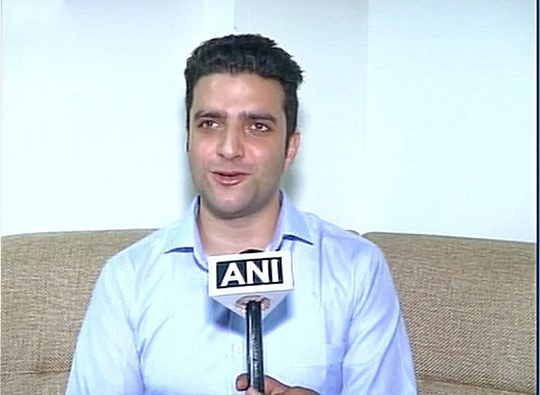
ias copy

23-year-old Khan made it to the coveted Indian Administrative Service (IAS) in his second attempt.

"I had appeared last year but my ranking was down and, therefore, I was offered Indian Railway Traffic Service (IRTS). I joined but IAS was my first love and I planned to to do both -- join the training and appear again."

Hailing from Devipora-Mattan village in Anantnag district, 60 km south of Srinagar, Khan, son of a school teacher, says he became interested in joining IAS after Shah Faesal from the Kashmir Valley topped civil services examination in 2009.

"I did not have a great exposure to coaching classes but I was confident that I can do it. Extensive reading and complete dedication made me realise my dream," he said.

Besides this, he said, he always wanted to be of use to the society by being "with the people" and doing something "for the people".

Khan, who did his 11th and 12th from prestigious Tyndale Biscoe School in Srinagar, said he had made it to the IIT but did not join as he was offered a B-Tech course when he wanted to pursue BE. "This also acted as a catalyst for me to appear for the civil services and I qualified last year.

"I met Mr Shah Faesal and took his advice on whether I should join the services. We had a long discussion and after that we arrived at a conclusion that I should join as well as appear again.

"So here I am....happy at the decision. I have already given IAS as my first choice and Jammu and Kashmir as my cadre preference. I believe that there is a lot of scope for me to do something for my people in the state," says Khan, who is at present undergoing training at Lucknow for IRTS.

Meanwhile, an elated Mohammed Shafi Khan, who teaches economics at the Government Higher Secondary school in Anantnag, has a steady stream of visitors coming to congratulate him on his son's success.

"I am a proud father today. The best moment in a father's life is when he is known by his children and today my son has given me this happiness," an excited Khan Sr said.

Expressing the hope that his son's success will inspire the young generation to try and make it big in life and not let failure overwhelm them, Khan said, "It gives me immense pleasure that my son did it against all odds. He was undergoing training at Lucknow for his IRTS and simultaneously he was preparing for the civil services exam again.

"His hard work has paid rich dividends. Allah has listened to our prayers," he said.

Comments

Aslam Sheikh
 - 
Wednesday, 11 May 2016

Congrats brother, May Allah bless you!!

Add new comment

  • Coastaldigest.com reserves the right to delete or block any comments.
  • Coastaldigset.com is not responsible for its readers’ comments.
  • Comments that are abusive, incendiary or irrelevant are strictly prohibited.
  • Please use a genuine email ID and provide your name to avoid reject.
Agencies
May 8,2020

Washington D.C., May 8: The prime time for brain development in a child's life is the first year, where the infant spends most of the time asleep. It is the time when neural connections form and sensory memories are encoded.

However, when sleep is disrupted, as occurs more often among children with autism, brain development may be affected, too.

New research led by the University of Washington finds that sleep problems in a baby's first 12 months may not only precede an autism diagnosis but also may be associated with altered growth trajectory in a key part of the brain, the hippocampus.

The study, which was published in the American Journal of Psychiatry, researchers report that in a sample of more than 400 taken of 6- to 12-month-old infants, those who were later diagnosed with autism were more likely to have had difficulty falling asleep.

It also states that this sleep difficulty was associated with altered growth trajectories in the hippocampus.

"The hippocampus is critical for learning and memory, and changes in the size of the hippocampus have been associated with poor sleep in adults and older children.

As many as 80 per cent of the children with autism spectrum disorder have sleep problems," said Annette Estes, director of the UW Autism Center and senior author of the study.

"In our clinical experience, parents have a lot of concerns about their children's sleep, and in our work on early autism intervention, we observed that sleep problems were holding children and families back," added Estes, who is also a UW professor of speech and hearing sciences.

"It could be that altered sleep is part-and-parcel of autism for some children. One clue is that behavioural interventions to improve sleep don't work for all children with autism, even when their parents are doing everything just right. This suggests that there may be a biological component to sleep problems for some children with autism," said Estes.

To consider links among sleep, brain development, and autism, researchers at the IBIS Network looked at MRI scans of 432 infants, surveyed parents about sleep patterns, and measured cognitive functioning using a standardized assessment.

At the outset of the study, infants were classified according to their risk for developing autism: Those who were at higher risk of developing autism -- about two-thirds of the study sample -- had an older sibling who had already been diagnosed.

Infant siblings of children with autism have a 20 per cent chance of developing autism spectrum disorder -- a much higher risk than children in the general population.

In the current study, 127 of the 432 infants were identified as "low risk" at the time the MRI scans were taken because they had no family history of autism.

They later evaluated all the participants at 24 months of age to determine whether they had developed autism. Of the roughly 300 children originally considered "high familial risk," 71 were diagnosed with autism spectrum disorder at that age.

Problems with sleep were more common among the infants later diagnosed with an autism spectrum disorder, as were larger hippocampi. No other subcortical brain structures were affected, including the amygdala, which is responsible for certain emotions and aspects of memory, or the thalamus, a signal transmitter from the spinal cord to the cerebral cortex.

The authors note that while parents reported more sleep difficulties among infants who developed autism compared to those who did not, the differences were very subtle and only observed when looking at group averages across hundreds of infants.

Sleep patterns in the first years of life change rapidly as infants transition from sleeping around the clock to a more adult-like sleep/wake cycle. Until further research is completed, Estes said, it is not possible to interpret challenges with sleep as an early sign of increased risk for autism.

Comments

Add new comment

  • Coastaldigest.com reserves the right to delete or block any comments.
  • Coastaldigset.com is not responsible for its readers’ comments.
  • Comments that are abusive, incendiary or irrelevant are strictly prohibited.
  • Please use a genuine email ID and provide your name to avoid reject.
coastaldigest.com news network
May 15,2020

Mangaluru, May 15: In a shocking development, five residents of Udupi district, who recently came from United Arab Emirates today tested positive for covid-19.

As many as 49 passengers among over 175 repatriates who were brought from Dubai to Mangaluru International Airport on May 12 were from Udupi district.

Hence they were quarantined in Udupi district and their throat swabs were sent for testing on the same day. Today, five of them obtained positive report. They were today shifted to TMA Pai covid-hospital from their hotel rooms.

Comments

Add new comment

  • Coastaldigest.com reserves the right to delete or block any comments.
  • Coastaldigset.com is not responsible for its readers’ comments.
  • Comments that are abusive, incendiary or irrelevant are strictly prohibited.
  • Please use a genuine email ID and provide your name to avoid reject.
News Network
July 6,2020

Tumuku, Jul 6: Senior Congress leader and Kunigal MLA Dr H D Ranganathm tested positive for COVID-19 on Monday.

The 48-year-old Congress legislature, a doctor by himself, was admitted to Manipal hospital and recovering, he said in a tweet.

Dr Ranganath said he took all precautions, yet could not save himself from the virus and advice people to not to take the contagion lightly.

Comments

Add new comment

  • Coastaldigest.com reserves the right to delete or block any comments.
  • Coastaldigset.com is not responsible for its readers’ comments.
  • Comments that are abusive, incendiary or irrelevant are strictly prohibited.
  • Please use a genuine email ID and provide your name to avoid reject.