


Saudi Arabia: Expats shocked by unfair sponsors’ tactics

May 19, 2016

Riyadh, May 19: Despite the many regulations put in place by the government with the aim of protecting expats, many continue to suffer at the hands of their Saudi sponsors and employers.
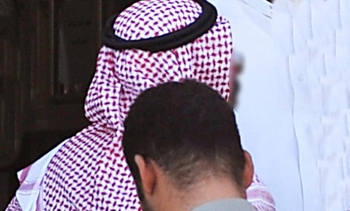
expatFor Ahmed Mahsoub, an Egyptian driver, the trouble started when he asked his sponsor, which happened to be an educational institute, for a salary certificate in order to buy a new car. As soon as he got the small family van, his sponsor asked him to use it to transport their students but he refused to do so since he had bought it for the use of his own family and not for work.

Mahsoub said they stopped him from working and suspended his salary until he handed over the car. One of his friends then advised him to lodge a complaint with the labor office.

Surprisingly, the labor office staff claimed that he would be deported because he had allegedly insulted some employees. Mahsoub noted that his current employers are not his original sponsor; therefore, he questioned how they could possibly force him to leave if he did not comply with their demands.

The case of Ahmad M., a Pakistani taxi driver, is equally shocking. He said that his sponsor asked him to pick up some luggage from the airport, but the flight with the luggage was delayed. Angered by the delay, his sponsor sent him an SMS containing information of a final exit visa for him.

He was deeply shocked and asked some friends to intervene in order to ask his sponsor to cancel the final exit visa. Despite all this, Ahmad says that the important issue here is that it is very easy for an employer to ruin someone’s life without considering that the person has a family to support.

A female expatriate, who requested anonymity, faced a similar ordeal. When she and her daughter who both worked for the same sponsor told the employer that they wanted to leave their positions and that they would continue working until a suitable replacement is found. However, the sponsor would not agree to this and instead told them that if they left, he would have the woman’s daughter deported.

Comments

Muthhu
 - 
Thursday, 19 May 2016

This is not What our Prophet peace be upon him taught us in ISLAM .....but unfortunately this is happening in his own birth place

S.A.
 - 
Thursday, 19 May 2016

Same thing happened with me. I have many years experience in saudi arabia but when I went to saudi on a new visa to a new sponsor I suffered a lot. He is a Syrian national doing business in saudi arabia. I went to labour court also but no use since he is having contacts with big shots. Whoever comes to work with him suffers a lot. I to india on a vacation but dod not go back to saudi. Now I can not go there for three years. His name is Abu Sulaiman of Sony Mobile in king fahd street in al khobar 11th cross. He calls himself an engineer but he is an uneducated person. He submitted false documents to become an aramco contractor.

Add new comment

  • Coastaldigest.com reserves the right to delete or block any comments.
  • Coastaldigset.com is not responsible for its readers’ comments.
  • Comments that are abusive, incendiary or irrelevant are strictly prohibited.
  • Please use a genuine email ID and provide your name to avoid reject.
Agencies
May 18,2020

Jeddah, May 18: Saudi Arabia’s Grand Mufti and head of the Council of Senior Scholars and the Department of Scientific Research and Ifta Sheikh Abdul Aziz Al Asheikh ruled that it is permissible to perform Eid Al-Fitr prayer at home under exceptional circumstances similar to the current pandemic situation. The prayer consists of two rakats with reciting more numbers of takbeer and without a sermon.

Speaking to Okaz/Saudi Gazette, he said that Zakat Al-Fitr could be distributed through charitable societies if they are reliable ones, with the condition that it should be distributed before the day of Eid. The Grand Mufti urged parents to bring joy and happiness to their children and their families by spending more on them.

Meanwhile, Sheikh Abdul Salam Abdullah Al-Sulaiman, member of the Council of Senior Scholars and the Standing Committee of Fatwa, said that Eid prayer could be performed individually or in congregation.

Speaking to Okaz/Saudi Gazette, he said that the worshiper will recite takbeer to start salat and then follow it with six more takbeer in the first rakat before reciting Fatiha loudly and then it is ideal to recite Surah Al-Qaf.

In the second rakat, there will be five takbeer after the takbeer at the start of the rakat before starting to recite Surah Fatiha and then Surah Al-Qamar, following the example of the Prophet (peace be upon him). It is also ideal to recite Surah Al-A’la and Al-Ghashiya instead of Al-Qaf and Al-Qamar in each rakat respectively.

Sheikh Al-Sulaiman also cited the example of Anas Bin Malik, a prominent companion of the Prophet (pbuh). When Anas (May Allah be pleased with him), was at his home in Zawiya, a place near Basra, he did not find any Eid congregation prayer and therefore he performed prayer along with his family members and his aide Abdullah Bin Abi Otba.

The scholar said that the time for Eid prayer begins after sunrise and the best time is after the sun rises by the height of one or two spears as agreed by most scholars. This means 15 or 30 minutes after sunrise and its time continues until the end of the time of the Duha prayer; that is before the Zuhr prayer begins.

The prayer is forbidden at the moment when the sun rises, and the majority of jurists, including the schools of thought of Shafi, Maliki, and Hanbali opposed prayer at sunrise and favored to perform the prayer only after the sun rises by the height of one or two spears in the sky.

Regarding the recitation of takbeer on the occasion of Eid Al-Fitr, Sheikh Al-Suleiman said that it should begin during the night of the Eid and continue until the beginning of the Eid prayer.

Comments

Add new comment

  • Coastaldigest.com reserves the right to delete or block any comments.
  • Coastaldigset.com is not responsible for its readers’ comments.
  • Comments that are abusive, incendiary or irrelevant are strictly prohibited.
  • Please use a genuine email ID and provide your name to avoid reject.
KT
May 18,2020

May 18: As the UAE authorities have asked all residents to avoid gatherings, it is clear that - for the first time - it's going to be a #StayHome Eid. But experts say that although it will be different, the celebration will be just as meaningful.

It is important to remember that the Eid prayer can be performed at home either individually or with family members under the sane roof, said Dr Mohammed Eyada Ayoub Alkobaisi, a Grand Mufti with the Islamic Affairs and Charitable Activities Department in Dubai.

Dr Alkobaisi said this prayer is a highly recommended Sunnah or practice urged by the Prophet Muhammad (Peace be upon him).

"Eid Prayer must be performed openly, unless we are prevented for an acceptable reason, such as fear for self, wellbeing, property, etc." Under the current circumstances, prayers can be offered from home, he said.

But what the faithful will likely miss is listening to the khutbah or the sermon of Eid with a crowd. The sight of people pouring out into the streets and coming together for prayer and worship would not be unfolding this time.

Dr Sheikh Mohamed Ashmawy, an Islamic researcher, said that in this time of Covid, doing away with several Eid traditions would be necessary for everyone's safety.

"The ban is is line with the ongoing preventive measures to curb the spread of Covid-19," he said.

However, it doesn't mean people can't celebrate and exchange heartfelt greetings, he added.

"We can greet each other remotely on the phone or via social media networks."

Islamic researcher Sheikh Mohamed Wasfi said audio-visual smart apps have made communication much easier, even bringing people closer than before.

"Of course, families and friends wish to hug, shake hands and see each other personally, but this will be a big risk these days," he said.

Sheikh Asadullah Del Mohamed, an imam, reminded that banquets, parties and visits are discouraged to avoid crowds and gathering.

Recently, 30 people from two families tested positive for the virus after breaking social distancing rules and holding a gathering.

Faithful's sentiments

Ibrahim Abdelkader, an Egyptian auditor, said that while it would be sad to spend Eid Al Fitr at home, he understood that it is for everyone's safety.

"Better to stay home than be sorry," said Ahmad Jamil, a Syrian resident.

Rashid Saeed, an Emirati national, said people are advised to just check on each other by phone or video and voice call apps.

"While Eid prayers is banned in congregation, it's not acceptable at all for some people to carelessly gather and exchange visits," he said.

Abdullah Al Saleh, an Emirati national, said he and all his relatives used to gather for breakfast after the Eid prayer - but this time, they are ready to do it in their own homes.

Mohamed Ibrahim, another Emirati, said he would surely miss seeing his kids happily prancing around with their new clothes and enjoying the outdoors like every year.

"But, I agree as it is for their health, safety and wellbeing," he said.

THINGS TO REMEMBER IN CELEBRATING EID THIS YEAR

>Perform the Eid prayer at home, individually or with family members living with you

>Exchange greetings with loved ones and friends via phone calls or online

>No hugs

>No handshakes

>No gatherings

>No visits to other homes

Comments

Add new comment

  • Coastaldigest.com reserves the right to delete or block any comments.
  • Coastaldigset.com is not responsible for its readers’ comments.
  • Comments that are abusive, incendiary or irrelevant are strictly prohibited.
  • Please use a genuine email ID and provide your name to avoid reject.
News Network
June 30,2020

Dubai, June 30: The United Arab Emirates is all set to reopen mosques and other places of worship at 30 per cent capacity from July 1.

However, Friday prayers will remain suspended in the country, said Saif Al Dhaheri, Spokesperson for the National Crisis & Emergency Management Authority (NCEMA) during a virtual press briefing on Monday.

The official said certain mosques in industrial areas, labor residential areas, shopping malls and public parks will remain closed until further notice.

He said health authorities already conducted Covid-19 tests for Imams and workers serving at the mosque to ensure health and safety of the worshippers.

Al Dhaheri also spelt out guidelines that worship centres have to follow to welcome worshippers.

A distance of three metres should be observed between each worshippers and no handshakes are allowed. Worshippers will have to perform ablutions at home. People should bring their own personal copies of Holy Quran or read from digital copies. It is also mandatory for all worshippers to download and activate contract tracing app AlHosn.

"We urge the public to cooperate by following precautionary measures including social distancing. Children under 12 years old, the elderly as well as individuals with chronic diseases should avoid going to mosques," said the official.

The UAE first announced the suspension of public prayers in all places of worship on March 16, which was extended until further notice on April 9.

As Khaleej Times reported, places of worship had been preparing to reopen since the last few weeks by sanitizing parking lots and outdoor areas, entrances, main prayer halls and ablution areas.

The spokesperson also announced that the Private and commercial boat trips and water sports will be allowed to operate at reduced capacity of 50 per cent but by following precautionary measures.

The total number of recovered cases of Coronavirus (Covid-19) in the UAE has reached 37,076 with 665 cases recovered today after receiving treatment. Since the beginning of June, UAE has had a daily recovery average of 660 cases, said Dr. Amna Al Shamsi, Spokesperson for the UAE government.

Guidelines

1. Maintain a distance of 3 metres between worshippers.

2. No handshakes allowed.

3. Ablutions must be performed at home.

4. To read the Holy Quran, worshippers must bring their own copies.

5. All worshippers must download and activate contact tracing app AlHosn

6. People in vulnerable categories like those with chronic diseases and the elderly must not visit the mosques.

Comments

Add new comment

  • Coastaldigest.com reserves the right to delete or block any comments.
  • Coastaldigset.com is not responsible for its readers’ comments.
  • Comments that are abusive, incendiary or irrelevant are strictly prohibited.
  • Please use a genuine email ID and provide your name to avoid reject.