Saudi Arabia: Expats shocked by unfair sponsors’ tactics

May 19, 2016

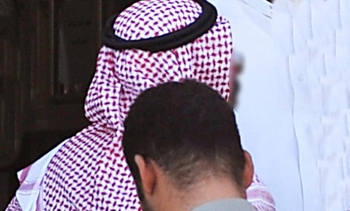
Riyadh, May 19: Despite the many regulations put in place by the government with the aim of protecting expats, many continue to suffer at the hands of their Saudi sponsors and employers.

expatFor Ahmed Mahsoub, an Egyptian driver, the trouble started when he asked his sponsor, which happened to be an educational institute, for a salary certificate in order to buy a new car. As soon as he got the small family van, his sponsor asked him to use it to transport their students but he refused to do so since he had bought it for the use of his own family and not for work.

Mahsoub said they stopped him from working and suspended his salary until he handed over the car. One of his friends then advised him to lodge a complaint with the labor office.

Surprisingly, the labor office staff claimed that he would be deported because he had allegedly insulted some employees. Mahsoub noted that his current employers are not his original sponsor; therefore, he questioned how they could possibly force him to leave if he did not comply with their demands.

The case of Ahmad M., a Pakistani taxi driver, is equally shocking. He said that his sponsor asked him to pick up some luggage from the airport, but the flight with the luggage was delayed. Angered by the delay, his sponsor sent him an SMS containing information of a final exit visa for him.

He was deeply shocked and asked some friends to intervene in order to ask his sponsor to cancel the final exit visa. Despite all this, Ahmad says that the important issue here is that it is very easy for an employer to ruin someone’s life without considering that the person has a family to support.

A female expatriate, who requested anonymity, faced a similar ordeal. When she and her daughter who both worked for the same sponsor told the employer that they wanted to leave their positions and that they would continue working until a suitable replacement is found. However, the sponsor would not agree to this and instead told them that if they left, he would have the woman’s daughter deported.

Comments

Muthhu
 - 
Thursday, 19 May 2016

This is not What our Prophet peace be upon him taught us in ISLAM .....but unfortunately this is happening in his own birth place

S.A.
 - 
Thursday, 19 May 2016

Same thing happened with me. I have many years experience in saudi arabia but when I went to saudi on a new visa to a new sponsor I suffered a lot. He is a Syrian national doing business in saudi arabia. I went to labour court also but no use since he is having contacts with big shots. Whoever comes to work with him suffers a lot. I to india on a vacation but dod not go back to saudi. Now I can not go there for three years. His name is Abu Sulaiman of Sony Mobile in king fahd street in al khobar 11th cross. He calls himself an engineer but he is an uneducated person. He submitted false documents to become an aramco contractor.

Add new comment

  • Coastaldigest.com reserves the right to delete or block any comments.
  • Coastaldigset.com is not responsible for its readers’ comments.
  • Comments that are abusive, incendiary or irrelevant are strictly prohibited.
  • Please use a genuine email ID and provide your name to avoid reject.
Agencies
July 31,2020

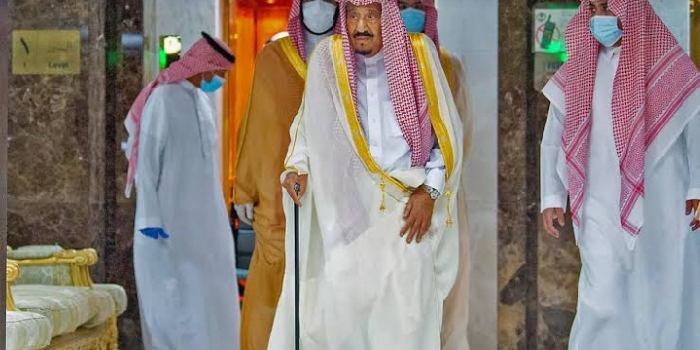
Makkah, Jul 31: Organising this year's scaled-down hajj required "double efforts" by Saudi authorities amid the coronavirus pandemic, King Salman said Friday after being discharged from hospital following gall bladder surgery.

Only up to 10,000 people already residing in the kingdom are participating in this year's pilgrimage, compared with 2019's gathering of some 2.5 million from around the world.

"Holding the ritual in the shadow of this pandemic... required reducing the numbers of pilgrims, but it obliged various official agencies to put in double efforts," 84-year-old King Salman said in a speech read out on state television by acting media minister Majid Al-Qasabi.

"The hajj this year was restricted to a very limited number of people from multiple nationalities, ensuring the ritual was completed despite the difficult circumstances," he said.

The speech came on the occasion of Eid al-Adha, the Muslim festival of sacrifice, a day after the king left hospital following a 10-day stay for surgery to remove his gall bladder.

The hajj, which began on Wednesday, is one of the five pillars of Islam and a must for able-bodied Muslims at least once in their lifetime.

Authorities implemented the "highest health precautions" during the rituals, the king said.

Pilgrims, who were all tested for the virus, are required to wear masks and observe social distancing.

For Friday's "stoning of the devil", the last major ritual of the hajj, Saudi authorities offered the pilgrims pebbles that were sanitised to protect against the pandemic.

In a sign that its strict measures were working, the health ministry reported no coronavirus cases in the holy sites on Wednesday or Thursday.

Comments

Add new comment

  • Coastaldigest.com reserves the right to delete or block any comments.
  • Coastaldigset.com is not responsible for its readers’ comments.
  • Comments that are abusive, incendiary or irrelevant are strictly prohibited.
  • Please use a genuine email ID and provide your name to avoid reject.
Agencies
August 2,2020

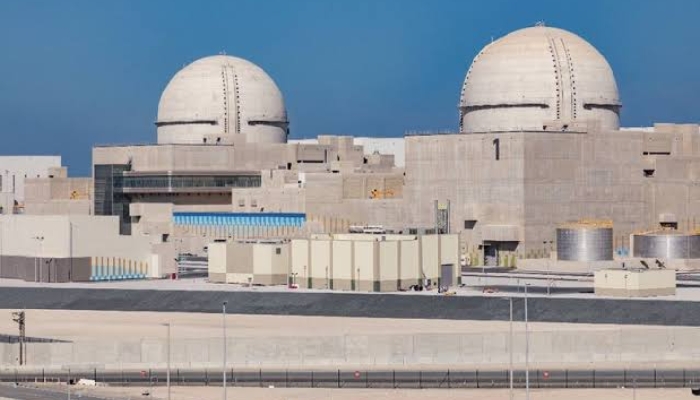
Dubai, Aug 2: The United Arab Emirates (UAE) announced on Saturday that it has started operations in the first of four reactors at the Barakah nuclear power station - the first nuclear power plant in the Arab world.

Emirates Nuclear Energy Corporation (ENEC), which is building and operating the plant with Korea Electric Power Corporation (KEPCO) said in a press release that its subsidiary Nawah Energy Company "has successfully started up Unit 1 of the Barakah Nuclear Energy Plant, located in the Al Dhafrah Region of Abu Dhabi".

That signals that Unit 1, which had fuel rods loaded in March, has achieved "criticality" - a sustained fission chain reaction.

"The start-up of Unit 1 marks the first time that the reactor safely produces heat, which is used to create steam, turning a turbine to generate electricity," said ENEC.

Barakah, which was originally scheduled to open in 2017, has been dogged by delays and is billions of dollars over budget. It has also raised myriad concerns among nuclear energy veterans who are concerned about the potential risks Barakah could visit upon the Arabian Peninsula, from an environmental catastrophe to a nuclear arms race.

Paul Dorfman, an honorary senior research fellow at the Energy Institute, University College London and founder and chair of the Nuclear Consulting Group, has criticised the Barakah reactors' "cheap and cheerful" design that he says cuts corners on safety.

Dorfman authored a report (PDF) last year detailing key safety features Barakah's reactors lack, such as a "core catcher" to literally stop the core of a reactor from breaching the containment building in the event of a meltdown. The reactors are also missing so-called Generation III Defence-In-Depth reinforcements to the containment building to shield against a radiological release resulting from a missile or fighter jet attack.

Both of these engineering features are standard on new reactors built in Europe, says Dorfman.

There have been at least 13 aerial attacks on nuclear facilities in the Middle East - more than any other region on earth.

The vulnerability of critical infrastructure in the Arabian Peninsula was further laid bare last year after Saudi Arabia's oil facilities at Abqaiq and Khurais were attacked by 18 drones and seven cruise missiles - an assault that temporarily knocked out more than half of the kingdom's oil production.

On Saturday, Dorfman reiterated his concern that there is no regional protocol in place to determine liability should an accident or incident at Barakah result in radioactive contamination spreading from the UAE to its neighbours. 

"Given Barakah has started up, because of all the well-rehearsed nuclear safety and security problems, it may be critically important that the Gulf states collectively evolve a Nuclear Accident Liability Convention, so that if anything does go wrong, victim states may have some sort of redress," Dorfman told Al Jazeera. 

The UAE has substantial oil and gas reserves, but it has made huge investments in developing alternative energy sources, including nuclear and solar.

Experts though have questioned why the UAE - which is bathed in sunlight and wind - has pushed ahead with nuclear energy - a far more expensive and riskier option than renewable energy sources.

When the UAE first announced Barakah in 2009, nuclear power was cheaper than solar and wind. But by 2012 - when the Emirates started breaking ground to build the reactors - solar and wind costs had plummeted dramatically.

Between 2009 and 2019, utility-scale average solar photovoltaic costs fell 89 percent and wind fell 43 percent, while nuclear jumped 26 percent, according to an analysis by the financial advisory and asset manager Lazard.

There are also concerns about the potential for Barakah to foment nuclear proliferation in the Middle East - a region rife with geopolitical fault lines and well-documented history of nuclear secrecy.

The UAE has sought to distance itself from the region's bad behaviour by agreeing not to enrich its own uranium or reprocess spent fuel. It has also signed up to the United Nation's nuclear watchdog's Additional Protocol, significantly enhancing inspection capabilities, and secured a 123 Agreement with the United States that allows bilateral civilian nuclear cooperation.


Comments

Add new comment

  • Coastaldigest.com reserves the right to delete or block any comments.
  • Coastaldigset.com is not responsible for its readers’ comments.
  • Comments that are abusive, incendiary or irrelevant are strictly prohibited.
  • Please use a genuine email ID and provide your name to avoid reject.
Agencies
May 26,2020

Dubai, May 26: An Indian expat, who recently recovered from COVID-19, fell to his death from a building in Dubai, police said.

The 26-year-old Indian national identified as Neelath Muhammed Firdous from Kerala, fell from the seventh floor balcony of his building where he stayed with six others including his uncle, Naushad Ali, 33.

A Dubai Police official confirmed the incident to Gulf News on Monday and said it had been a suicide.

"He was suffering from a mental disorder and there is no criminal suspicions behind his death," said the official.

"The incident happened on Sunday," the official confirmed.

The victim's relative said: "(He) awoke early to perform prayers and everyone was getting on with their daily morning chores when he walked to the balcony and jumped.

"He was suffering from a mental disorder and had been disturbed for some time. He thought everyone was out to attack him and had stopped eating his food as he thought people were feeding him poison. He was refusing to even take water from us."

The victim had tested positive for COVID-19 on April 10. On May 7, he was discharged from a Dubai hospital after clearing all tests.

The relative told Gulf News that he had registered the victim in the Department of Non-Resident Keralites Affairs (NORKA) last month in order to repatriate him, however he was unsuccessful in procuring a ticket.

Comments

Add new comment

  • Coastaldigest.com reserves the right to delete or block any comments.
  • Coastaldigset.com is not responsible for its readers’ comments.
  • Comments that are abusive, incendiary or irrelevant are strictly prohibited.
  • Please use a genuine email ID and provide your name to avoid reject.