


Saudi Arabia: Expats shocked by unfair sponsors’ tactics

May 19, 2016

Riyadh, May 19: Despite the many regulations put in place by the government with the aim of protecting expats, many continue to suffer at the hands of their Saudi sponsors and employers.
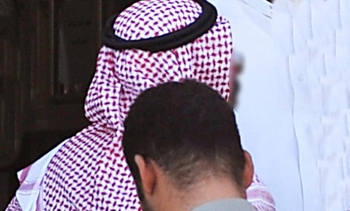
expatFor Ahmed Mahsoub, an Egyptian driver, the trouble started when he asked his sponsor, which happened to be an educational institute, for a salary certificate in order to buy a new car. As soon as he got the small family van, his sponsor asked him to use it to transport their students but he refused to do so since he had bought it for the use of his own family and not for work.

Mahsoub said they stopped him from working and suspended his salary until he handed over the car. One of his friends then advised him to lodge a complaint with the labor office.

Surprisingly, the labor office staff claimed that he would be deported because he had allegedly insulted some employees. Mahsoub noted that his current employers are not his original sponsor; therefore, he questioned how they could possibly force him to leave if he did not comply with their demands.

The case of Ahmad M., a Pakistani taxi driver, is equally shocking. He said that his sponsor asked him to pick up some luggage from the airport, but the flight with the luggage was delayed. Angered by the delay, his sponsor sent him an SMS containing information of a final exit visa for him.

He was deeply shocked and asked some friends to intervene in order to ask his sponsor to cancel the final exit visa. Despite all this, Ahmad says that the important issue here is that it is very easy for an employer to ruin someone’s life without considering that the person has a family to support.

A female expatriate, who requested anonymity, faced a similar ordeal. When she and her daughter who both worked for the same sponsor told the employer that they wanted to leave their positions and that they would continue working until a suitable replacement is found. However, the sponsor would not agree to this and instead told them that if they left, he would have the woman’s daughter deported.

Comments

Muthhu
 - 
Thursday, 19 May 2016

This is not What our Prophet peace be upon him taught us in ISLAM .....but unfortunately this is happening in his own birth place

S.A.
 - 
Thursday, 19 May 2016

Same thing happened with me. I have many years experience in saudi arabia but when I went to saudi on a new visa to a new sponsor I suffered a lot. He is a Syrian national doing business in saudi arabia. I went to labour court also but no use since he is having contacts with big shots. Whoever comes to work with him suffers a lot. I to india on a vacation but dod not go back to saudi. Now I can not go there for three years. His name is Abu Sulaiman of Sony Mobile in king fahd street in al khobar 11th cross. He calls himself an engineer but he is an uneducated person. He submitted false documents to become an aramco contractor.

Add new comment

  • Coastaldigest.com reserves the right to delete or block any comments.
  • Coastaldigset.com is not responsible for its readers’ comments.
  • Comments that are abusive, incendiary or irrelevant are strictly prohibited.
  • Please use a genuine email ID and provide your name to avoid reject.
Agencies
March 23,2020

Riyadh, Mar 23: King Salman on Sunday issued an order imposing a curfew across Saudi Arabia from Monday evening to control the spread of the COVID-19 disease.

A royal court statement carried by the Saudi Press Agency (SPA) said the curfew will start at 7 p.m. until 6 a.m. every day for 21 days from the evening of 28 Rajab 1441 in the Hijri calendar, equivalent to March 23, 2020 in the Gregorian calendar.

King Salman's order followed an announcement by the Health Ministry of 119 new coronavirus cases on Sunday, raising the total number in the Kingdom to 511.

The order enjoins citizens and residents alike to stay in their homes during the curfew hours for their own safety.

The statement said the Ministry of Interior will undertake the necessary measures to implement the curfew, and all civil and military authorities are ordered to cooperate fully.

Exclusions

A subsequent statement issued by the Ministry of Interior and carried by SPA said those excluded from the curfew are workers from the following vital industries and government services:

• Food sector (points of sale) such as catering and supermarkets And poultry and vegetable shops, meat, bakeries, food factories and laboratories;

• Health sector, such as pharmacies and the like, medical clinics (dispensaries), hospitals, laboratories, factories, factories and materials and medical devices;

• Media sector in its various means;

• Transportation sector, such as those transporting goods, parcels, customs clearance, warehouses, warehouses, logistics services, supply chains for the health sector, the food sector, and port operations;

• E-commerce activities such as those working in the electronic procurement applications for the excluded activities and those working in the delivery applications of the excluded activities;

• Accommodation services activities such as hotels and furnished apartments;

• Energy sector such as gas stations and emergency services for the electric company;

• Financial services and insurance sector, such as direct accidents (Najm), urgent health insurance services (approvals), and other insurance services;

• Telecom sector as Internet and communication network operators;

• Water sector, such as the water company emergency services and home drinking water delivery service (graying).

Additional exclusions

The Interior Ministry statement also said movement during the curfew time will be allowed for security, military and health cars, government regulatory services vehicles, and activity vehicles excluded in the vital industries and services mentioned above. 

Delivery services through smart device applications (express delivery services) during the curfew will be allowed for food and drug needs and other essential goods and services that are excluded and delivered to homes. Excluded activities can be known by calling the toll-free number in all regions of the Kingdom 999, except for the Makkah Al-Mukarramah region, which is called at 911.

Muezzins will be allowed to access mosques to lift the call to prayer at the time of the curfew.

Workers in diplomatic missions and international organizations and the like residing in the Diplomatic Quarter will be allowed to move during the curfew period to and from their business headquarters in the neighborhood.

Comments

Add new comment

  • Coastaldigest.com reserves the right to delete or block any comments.
  • Coastaldigset.com is not responsible for its readers’ comments.
  • Comments that are abusive, incendiary or irrelevant are strictly prohibited.
  • Please use a genuine email ID and provide your name to avoid reject.
News Network
April 27,2020

Riyadh, Apr 27: The government of Saudi Arabia has signed a SR995 million (approx. Dh972m) contract with China to provide Covid-19 tests for nine million people in the Kingdom.

The Saudi Press Agency, SPA, reported that the decision came "as a result of a phone call made today (Sunday) between the Custodian of the Two Holy Mosques King Salman bin Abdulaziz Al Saud and Chinese President Xi Jinping."

The contract includes providing necessary equipment and supplies, making available of 500 Chinese specialists and technicians who are specialised in performing tests, establishing six large regional laboratories throughout the Kingdom; including a mobile laboratory with a capacity of performing 10,000 tests per day. Saudi cadres will also be trained to conduct daily tests and comprehensive field tests, under the new agreement

The contract was co-signed by the National Unified Procurement Company and Chinese company Huo-yan Laboratories by Dr. Abdullah Al Rabeeah, Advisor at the Royal Court, on behalf of the Government of Saudi Arabia, and Chinese Ambassador to the Kingdom Chen Weiqing, as a representative of the Chinese Government.

The contract is one of the largest contracts that will provide diagnostic tests for the novel Coronavirus.

Tests were also purchased from several other companies from the United States, Switzerland and South Korea, bringing the number of available tests to 14.5 million, covering around 40 percent of Saudi Arabia's population, SPA added.

Comments

Add new comment

  • Coastaldigest.com reserves the right to delete or block any comments.
  • Coastaldigset.com is not responsible for its readers’ comments.
  • Comments that are abusive, incendiary or irrelevant are strictly prohibited.
  • Please use a genuine email ID and provide your name to avoid reject.
News Network
July 23,2020

Beirut, Jul 23: The pandemic will exact a heavy toll on Arab countries, causing an economic contraction of 5.7% this year, pushing millions into poverty and compounding the suffering of those affected by armed conflict, a U.N. report said Thursday.

The U.N.'s Economic and Social Commission for Western Asia expects some Arab economies to shrink by up to 13%, amounting to an overall loss for the region of $152 billion.

Another 14.3 million people are expected to be pushed into poverty, raising the total number to 115 million — a quarter of the total Arab population, it said. More than 55 million people in the region relied on humanitarian aid before the COVID-19 crisis, including 26 million who were forcibly displaced.

Arab countries moved quickly to contain the virus in March by imposing stay-at-home orders, restricting travel and banning large gatherings, including religious pilgrimages.

Arab countries as a whole have reported more than 830,000 cases and at least 14,717 deaths. That equates to an infection rate of 1.9 per 1,000 people and 17.6 deaths per 1,000 cases, less than half the global average of 42.6 deaths, according to the U.N.

But the restrictions exacted a heavy economic toll, and authorities have been forced to ease them in recent weeks. That has led to a surge in cases in some countries, including Lebanon, Iraq and the Palestinian territories.

Wealthy Gulf countries were hit by the pandemic at a time of low oil prices, putting added strain on already overstretched budgets. Middle-income countries like Jordan and Egypt have seen tourism vanish overnight and a drop in remittances from citizens working abroad.

War-torn Libya and Syria have thus far reported relatively small outbreaks. But in Yemen, where five years of civil war had already generated the world's worst humanitarian crisis, the virus is running rampant in the government-controlled south while rebels in the north conceal its toll.

Rola Dashti, the head of the U.N. commission, said Arab countries need to “turn this crisis into an opportunity” and address longstanding issues, including weak public institutions, economic inequality and over-reliance on fossil fuels.

“We need to invest in survival, survival of people and survival of businesses,” she said.

Comments

Add new comment

  • Coastaldigest.com reserves the right to delete or block any comments.
  • Coastaldigset.com is not responsible for its readers’ comments.
  • Comments that are abusive, incendiary or irrelevant are strictly prohibited.
  • Please use a genuine email ID and provide your name to avoid reject.