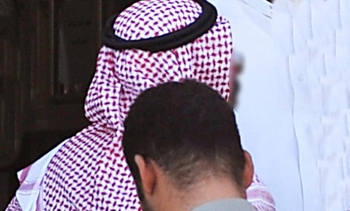
Saudi Arabia: Expats shocked by unfair sponsors’ tactics

May 19, 2016

Riyadh, May 19: Despite the many regulations put in place by the government with the aim of protecting expats, many continue to suffer at the hands of their Saudi sponsors and employers.

expatFor Ahmed Mahsoub, an Egyptian driver, the trouble started when he asked his sponsor, which happened to be an educational institute, for a salary certificate in order to buy a new car. As soon as he got the small family van, his sponsor asked him to use it to transport their students but he refused to do so since he had bought it for the use of his own family and not for work.

Mahsoub said they stopped him from working and suspended his salary until he handed over the car. One of his friends then advised him to lodge a complaint with the labor office.

Surprisingly, the labor office staff claimed that he would be deported because he had allegedly insulted some employees. Mahsoub noted that his current employers are not his original sponsor; therefore, he questioned how they could possibly force him to leave if he did not comply with their demands.

The case of Ahmad M., a Pakistani taxi driver, is equally shocking. He said that his sponsor asked him to pick up some luggage from the airport, but the flight with the luggage was delayed. Angered by the delay, his sponsor sent him an SMS containing information of a final exit visa for him.

He was deeply shocked and asked some friends to intervene in order to ask his sponsor to cancel the final exit visa. Despite all this, Ahmad says that the important issue here is that it is very easy for an employer to ruin someone’s life without considering that the person has a family to support.

A female expatriate, who requested anonymity, faced a similar ordeal. When she and her daughter who both worked for the same sponsor told the employer that they wanted to leave their positions and that they would continue working until a suitable replacement is found. However, the sponsor would not agree to this and instead told them that if they left, he would have the woman’s daughter deported.

Comments

Muthhu
 - 
Thursday, 19 May 2016

This is not What our Prophet peace be upon him taught us in ISLAM .....but unfortunately this is happening in his own birth place

S.A.
 - 
Thursday, 19 May 2016

Same thing happened with me. I have many years experience in saudi arabia but when I went to saudi on a new visa to a new sponsor I suffered a lot. He is a Syrian national doing business in saudi arabia. I went to labour court also but no use since he is having contacts with big shots. Whoever comes to work with him suffers a lot. I to india on a vacation but dod not go back to saudi. Now I can not go there for three years. His name is Abu Sulaiman of Sony Mobile in king fahd street in al khobar 11th cross. He calls himself an engineer but he is an uneducated person. He submitted false documents to become an aramco contractor.

Add new comment

  • Coastaldigest.com reserves the right to delete or block any comments.
  • Coastaldigset.com is not responsible for its readers’ comments.
  • Comments that are abusive, incendiary or irrelevant are strictly prohibited.
  • Please use a genuine email ID and provide your name to avoid reject.
News Network
April 24,2020

Apr 24: Dubai's Supreme Committee of Crisis and Disaster Management has announced partial easing of restrictions on public movement in the emirate starting from Friday amid the COVID-19 outbreak.

The announcement is in line with the decisions of the Ministry of Health and Prevention and the National Emergency Crisis and Disaster Management Authority (NCEMA), a statement released late on Thursday said.

The move, which coincides with the start of the fasting month of Ramzan, will allow increased freedom of movement while ensuring the continuation of strict precautionary and preventive measures, the statement said.

The Committee has also outlined a new set of guidelines on movement and a list of exempted commercial activities and vital sectors, it added.

The decision to reduce restrictions on movement in Dubai follows a careful assessment of the current situation and analysis of reports from various authorities working to combat the pandemic, the committee said.

Underlining the emirate’s success in countering the spread of the virus, it said that stringent measures undertaken over the last three weeks have significantly helped to mitigate the crisis.

It further stressed that despite the partial easing of restrictions on movement, people will not be allowed to hold public or private gatherings and those who breach the guidelines will face legal action.

The need to ensure the safety and wellbeing of the community cannot be underestimated, the Committee stressed.

"Despite the difficult circumstances the world is facing today, the UAE has set an example for dealing with the crisis. This was also made possible through the commitment of all individuals and institutions both in the private and public sector,” the committee said in the statement.

“All measures undertaken by the country have been driven by the objective of safeguarding everyone’s safety and wellbeing,” it added.

Public transport (bus and metro), restaurants and cafes (except for buffet and shisha), retail sector (malls, high-street outlets and souqs), wholesale sector and maintenance shops will be allowed to operate under certain conditions, it said.

Shopping malls, markets and commercial outlets will be open daily from 12 pm to 10 pm. Restaurants and shops are allowed to operate at a maximum of 30 per cent capacity at shopping malls, it said.

Malls and retail outlets are not allowed to hold entertainment events to avoid congestion and crowding, it added.

Restaurants and cafés too have been allowed to operate but are not permitted to serve shisha and buffet. Dine-in customers are allowed but should occupy only a maximum of 30 per cent of the outlet’s capacity and only single-use cutlery can be used at restaurants and cafes, it said.

However, family entertainment facilities, cinemas, changing rooms and prayer rooms will not be allowed to operate. Hotels will be allowed to operate without opening pools, gyms, sauna and massage parlours.

A maximum of 30 per cent of the workforce of all organisations will be allowed to work from their offices while the rest will be required to work from home.

As part of the first phase of easing of restrictions, the stringent curbs on public movement will now be limited to the period between 10 pm to 6 am. During this period, the public will be allowed to leave their homes only for medical emergencies.

Individuals will be able to leave their homes between 6 am and 10 pm without a permit.

The public will be required to strictly follow precautionary measures which include maintaining physical distance from others as per guidelines and wearing a face mask. Those who do not wear a mask will be subject to a fine of AED 1,000.

Members of the public have also been allowed to exercise outside their homes provided they do not leave their area of residence. They can undertake activities such as walking, running or cycling for 1-2 hours each time. Only a maximum of three people can exercise at the same time.

Permission has also been granted to allow visit first and second degree relatives as long as gatherings are restricted to not more than five people. However, visiting high-risk individuals (individuals above 60 years and those with underlying medical conditions) should be avoided.


Comments

Add new comment

  • Coastaldigest.com reserves the right to delete or block any comments.
  • Coastaldigset.com is not responsible for its readers’ comments.
  • Comments that are abusive, incendiary or irrelevant are strictly prohibited.
  • Please use a genuine email ID and provide your name to avoid reject.
Agencies
May 7,2020

A patient in hospital with Covid-19 has given birth to a healthy baby boy in Dubai.

The 25-year-old Indian was admitted to Al Zahra Hospital after testing positive on May 2.

Although the baby was not due to arrive until May 19, the woman went into labour three days later and delivered a healthy boy weighing 3.8kg.

The parents are yet to name the child, who has also been tested for the virus.

“When we first received the Covid-19 positive diagnosis, we were afraid for the health of both my wife and the baby,” said the boy’s father, who did not want to give his name.

“Thankfully with the help of the doctors and nurses at Al Zahra Hospital, my son was born with no complications and my wife remains in stable condition.

“We couldn’t be more grateful.”

Despite arriving two weeks early, both mother and child are doing well but will only be allowed to leave the hospital to return to their home in Dubai after they return three negative tests on the trot.

“The contractions started very suddenly and it all happened very quickly,” said Al Zahra Hospital nursing director Maysoon Yousef.

“The delivery took about 10 to 15 minutes which is something we do not see very often.

“There were no complications and both the mother and baby are in good condition.”

Strict measures are in place to ensure hygiene for those inside the hospital, as well as visitors.

The new mum and her son are in the same room as the baby needs to be nursed.

According to the Centres for Disease Control and Prevention, a US national public health institute, there is no evidence that suggests the virus can be transmitted through breastfeeding.

New mothers infected with the virus should wear a mask, wash their hands before and after touching the baby.

“We operate by the latest Covid-19 international and local guidelines when it comes to the management of our maternity patients and otherwise,” said Dr Ghassan Lutfi, head of obstetrics and gynaecology at the hospital.

“We take strict measures to guarantee that there is no risk of cross contamination and that all our patients are in safe hands.”

Comments

Add new comment

  • Coastaldigest.com reserves the right to delete or block any comments.
  • Coastaldigset.com is not responsible for its readers’ comments.
  • Comments that are abusive, incendiary or irrelevant are strictly prohibited.
  • Please use a genuine email ID and provide your name to avoid reject.
News Network
April 26,2020

Abu Dhabi, Apr 26: Indian Ambassador to the UAE Pavan Kapoor says he is appalled after the bodies of three Indians flown back to India were returned to Abu Dhabi on Friday.

The three deceased Indian nationals had died of non-coronavirus causes and were flown to Delhi on Thursday but were promptly returned by authorities there.

“We are appalled at what has happened,” Kapoor told Gulf News. “We do not know if the bodies were returned because of coronavirus-related restrictions, but we are obviously not sending the remains of people [who have passed away from COVID-19],” he added.

“[As we understand], it happened because of new protocols at the airport and we are trying to sort it out,” he said.

Sent back a few hours later

“The remains were not offloaded from the plane, and were sent back a few hours later,” Kapoor explained.

The deceased were Kamlesh Bhatt, who passed away on April 17, and Sanjeev Kumar and Jagsir Singh who both died on April 13.

According to reports in Indian media, Kamlesh Bhat was 23 years old, and hailed from Tehri Garhwal district. He allegedly died of cardiac arrest. Along with the remains Kumar and Singh, Bhatt’s body was initially repatriated on an Etihad Airways flight, then sent back, even though his relatives had been on their way to collect them.

Kapoor explained the procedure through which remains are normally returned to family members back home, saying that the worker’s employer typically makes arrangements with cargo companies to repatriate bodies on cargo aircraft.

The employer applies for a No Objection Certificate from the Indian Embassy, which is granted once the Embassy ensures that all local formalities have been completed. The cargo company then applies for airport clearance, and the airline obtains approvals from the receiving airport.

“If airport protocols have changed, it means cargo companies have to be more careful about the clearance they’re getting,” Kapoor advised.

Additional costs
The ambassador added there may eventually be additional costs to repatriate the bodies but that it is first necessary to sort out the concerns.

The global coronavirus outbreak has spawned difficulties in repatriating mortal remains as a result of the travel restrictions imposed by countries. Remains of people dying from COVID-19 are not being sent back, but the caution surrounding the handling of bodies often affects the repatriation of those who succumb to other causes.

As Gulf News reported, Kerala chief minister Pinarayi Vijayan reached out to Indian Prime Minister Narendra Modi on Friday for intervention in bringing back the bodies of Keralites who have died in the Gulf from non-COVID-19 causes.

“I would like to draw your attention to the grievances received from Non-resident Keralites Associations (NRKs) in the Gulf Cooperation Council (GCC) countries on the delay caused in bringing home the mortal remains of NRKs who had expired due to reasons other than the COVID-19 infection,” read the letter by the CM.

“It is learnt that a ‘clearance certificate’ from the Indian Embassies is required to process the application of bringing home the mortal remains of the dead. The Embassies are [further] insisting on the production of a no-objection certificate from the Ministry of Home Affairs (MHA), New Delhi. To enable to bring back the bodies of the NRIs whose deaths occurred due to reasons other than COVID-19 infection, without necessary procedural hassles, I request your kind intervention,” Vijayan has requested.

Comments

Add new comment

  • Coastaldigest.com reserves the right to delete or block any comments.
  • Coastaldigset.com is not responsible for its readers’ comments.
  • Comments that are abusive, incendiary or irrelevant are strictly prohibited.
  • Please use a genuine email ID and provide your name to avoid reject.