


Saudi Arabia: Expats shocked by unfair sponsors’ tactics

May 19, 2016

Riyadh, May 19: Despite the many regulations put in place by the government with the aim of protecting expats, many continue to suffer at the hands of their Saudi sponsors and employers.
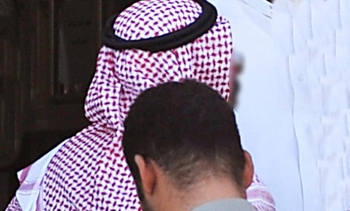
expatFor Ahmed Mahsoub, an Egyptian driver, the trouble started when he asked his sponsor, which happened to be an educational institute, for a salary certificate in order to buy a new car. As soon as he got the small family van, his sponsor asked him to use it to transport their students but he refused to do so since he had bought it for the use of his own family and not for work.

Mahsoub said they stopped him from working and suspended his salary until he handed over the car. One of his friends then advised him to lodge a complaint with the labor office.

Surprisingly, the labor office staff claimed that he would be deported because he had allegedly insulted some employees. Mahsoub noted that his current employers are not his original sponsor; therefore, he questioned how they could possibly force him to leave if he did not comply with their demands.

The case of Ahmad M., a Pakistani taxi driver, is equally shocking. He said that his sponsor asked him to pick up some luggage from the airport, but the flight with the luggage was delayed. Angered by the delay, his sponsor sent him an SMS containing information of a final exit visa for him.

He was deeply shocked and asked some friends to intervene in order to ask his sponsor to cancel the final exit visa. Despite all this, Ahmad says that the important issue here is that it is very easy for an employer to ruin someone’s life without considering that the person has a family to support.

A female expatriate, who requested anonymity, faced a similar ordeal. When she and her daughter who both worked for the same sponsor told the employer that they wanted to leave their positions and that they would continue working until a suitable replacement is found. However, the sponsor would not agree to this and instead told them that if they left, he would have the woman’s daughter deported.

Comments

Muthhu
 - 
Thursday, 19 May 2016

This is not What our Prophet peace be upon him taught us in ISLAM .....but unfortunately this is happening in his own birth place

S.A.
 - 
Thursday, 19 May 2016

Same thing happened with me. I have many years experience in saudi arabia but when I went to saudi on a new visa to a new sponsor I suffered a lot. He is a Syrian national doing business in saudi arabia. I went to labour court also but no use since he is having contacts with big shots. Whoever comes to work with him suffers a lot. I to india on a vacation but dod not go back to saudi. Now I can not go there for three years. His name is Abu Sulaiman of Sony Mobile in king fahd street in al khobar 11th cross. He calls himself an engineer but he is an uneducated person. He submitted false documents to become an aramco contractor.

Add new comment

  • Coastaldigest.com reserves the right to delete or block any comments.
  • Coastaldigset.com is not responsible for its readers’ comments.
  • Comments that are abusive, incendiary or irrelevant are strictly prohibited.
  • Please use a genuine email ID and provide your name to avoid reject.
Agencies
June 9,2020

Dubai, Jun 9: Dubai's Emirates airline has begun laying off employees to reduce cost and save cash as the carrier looks to rightsize its workforce.

"We at Emirates have been doing everything possible to retain the talented people that make up our workforce for as long as we can. However, given the significant impact that the pandemic has had on our business, we simply cannot sustain excess resources and have to rightsize our workforce in line with our reduced operations. After reviewing all scenarios and options, we deeply regret that we have to let some of our people go," the spokesperson said in the statement.

Citing sources, Reuters and Bloomberg earlier reported that a majority of those being made redundant are cabin crew workers as well as a minority of its engineers and pilots, including those flew the Airbus A380.

"This was a very difficult decision and not one that we took lightly. The company is doing everything possible to protect the workforce wherever we can. Where we are forced to take tough decisions we will treat people with fairness and respect. We will work with impacted employees to provide them with all possible support," said the statement.

The spokesperson, however, didn't disclose how many employees are being made redundant in this latest round of rightsizing the workforce.

Emirates on Sunday confirmed that it extended the period of reduced pay for its staff for another three months till September. It had previously reduced basic wages by 25 to 50 per cent for three months from April, with junior employees exempted.

The airline had employed around 60,000 people at the end of its 2019-20 financial year.

Saj Ahmad, chief analyst at StrategicAero Research, said the announced job cuts at Emirates will likely not be the last given the unprecedented damage that Covid-19 has had not just on air travel, but on the entire aviation industry as a whole.

"Emirates' massive international network means that job reductions were always a last resort option as the company staves off cash burn and expenses at a time when revenues are dried up. While Emirates SkyCargo is enjoying a resurgence in activities, the reality is that this income will never offset the lost money from passenger operations," he added.

"Whilst some salary reduction schemes have prevented bigger job cuts for now, the absence of a cure or medicinal suppressant of Covid-19 means that air travel is unlikely to even reach pre-9/11 levels within 3-5 years, let alone pre-Covid-19 levels in that same time period. For that reason, Emirates' reduction in headcount is necessary to stay competitive, agile and be ready for when air travel can resume with a degree of normalcy that we have been accustomed to for decades," said Ahmad.

Comments

Add new comment

  • Coastaldigest.com reserves the right to delete or block any comments.
  • Coastaldigset.com is not responsible for its readers’ comments.
  • Comments that are abusive, incendiary or irrelevant are strictly prohibited.
  • Please use a genuine email ID and provide your name to avoid reject.
News Network
May 7,2020

Dubai, May 7: Saudi Arabia will emerge as the victor of the oil price war that sent global crude markets into a spin last month, according to two experts in the energy industry.

Jason Bordoff, professor and founding director of the Center for Global Energy policy at New York’s Columbia University, said: “While 2020 will be remembered as a year of carnage for oil nations, at least one will most likely emerge from the pandemic stronger, both economically and geopolitically: Saudi Arabia.”

Writing in the American publication Foreign Policy, Bordoff said that the Kingdom’s finances can weather the storm from lower oil prices as a result of the drastically reduced demand for oil in economies under pandemic lockdowns, and that it will end up with higher oil revenues and a bigger share of the global market once it stabilizes.

Bordoff’s view was reinforced by Sir Mark Moody-Stuart, former chairman of Royal Dutch Shell and one of the longest-standing directors of Saudi Aramco. In an interview with the Gulf Intelligence energy consultancy, he said that low-cost oil producers such as Saudi Arabia would emerge from the pandemic with increased market share.

“Oil is the only commodity where the lowest-cost producers have contained their production and allowed high-cost producers to benefit. When demand recovers this year or next, we will emerge from it with the lowest-cost producers having increased their market share,” Moody-Stuart said.

Bordfoff said that it would take years for the high-cost American shale industry to recover to pre-pandemic levels of output. “Depending on how long oil demand remains depressed, US oil production is projected to decline from its pre-coronavirus peak of around 13 million barrels per day.

“Shale's heady growth in recent years (with production growing by about 1 million to 1.5 million barrels per day each year) also reflected irrational exuberance in financial markets. Many US companies struggling with uneconomical production only managed to stay afloat with infusions of cheap debt. One quarter of US shale oil production may have been uneconomic even before prices crashed,” he said.

Moody-Stuart said that recent statements about cuts to the Saudi Arabian budget as a result of falling oil revenues were “an important step to wean the population of the Kingdom off an entitlement feeling. It means that everybody is joining in it.”

The former Shell boss said that other big oil companies would follow Shell’s recent decision to cut its dividend for the first time in more than 70 years. But he added that Aramco would stick by its commitment to pay $75 billion of dividends this year.

“When a company looks at its forecasts it looks ahead for one year, so for this year it (the dividend) is fine,” he said.

Bordoff added that Saudi Arabia’s action in cutting oil production in response to the pandemic would improve its global position.

“Saudi Arabia has improved its standing in Washington. Following intense pressure from the White House and powerful senators, the Kingdom’s willingness to oblige by cutting production will reverse some of the damage done when it was blamed for the oil crash after it surged production in March,” he said.

“Only a few weeks ago, the outlook for Saudi Arabia seemed bleak. But looking out a few years, it’s difficult to see the Kingdom in anything other than a strengthened position,” Bordoff said.

Comments

Add new comment

  • Coastaldigest.com reserves the right to delete or block any comments.
  • Coastaldigset.com is not responsible for its readers’ comments.
  • Comments that are abusive, incendiary or irrelevant are strictly prohibited.
  • Please use a genuine email ID and provide your name to avoid reject.
Arab News
March 9,2020

Dubai, Mar 9: The eyes of the world will be on the oil markets when the big trading hubs in Europe and North America open following the end of the deal between Saudi Arabia and Russia that has helped to sustain crude at relatively high levels for the past three years.

There were big falls on Friday when ministers from the Organization of the Petroleum Exporting Countries (OPEC) failed to get a deal with non-OPEC members — the so-called OPEC+ — to extend output agreements. Brent oil was down nearly 10 percent at $45.27 going into the western weekend.

Saudi Aramco took immediate action to cut prices after the OPEC+ collapse, offering big discounts for crude deliveries from next month, when the current output restrictions end.

According to a notification sent to customers by Saudi Aramco, seen by Arab News, the Kingdom’s oil giant will cut between $4 and $8 per barrel, with the biggest discounts being offered to buyers in northwest Europe and the US.

Roger Diwan, an oil analyst at consultancy IHS Market, said: “We are likely to see the lowest oil prices of the past 20 years in the next quarter.”

West Texas Intermediate, the US oil benchmark, fell to $28.27 in November 2001.

The move raises the possibility of a “crude war” between the three biggest oil blocs — the US, Russia and the Arabian Gulf. Some analysts believe the American shale industry is more vulnerable to low prices than either the Russians or the Saudis.

Robin Mills, head of the Qamar consultancy, told Arab News: “I don’t think this was premeditated but Saudi Arabia has clearly swung quickly into action to put the Russians under pressure. But the Russians, with low debt and a flexible exchange rate, can cope with a few months of low prices.”

The boom in US shale has made the country the biggest oil producer in the world, but with high financing costs. Lower global prices would put a lot of shale companies out of business.

On the other hand, American motorists, and President Donald Trump, would be pleased to see lower fuel prices in an election year.

In Moscow, one prominent financier with ties to the Kingdom played down the long-term significance of the Vienna fallout.

Kirill Dmitriev, chief executive of the Russian Direct Investment Fund, told Arab News: “Saudi Arabia is our strategic partner, and cooperation between our two countries will continue in all areas. We will also continue to work within the framework of the Russia-Saudi Economic Council.”

One Russian official, who asked not to be named, added: “There is a good relationship between Alexander Novak, Russian energy minister, and his Saudi counterpart Prince Abdul Aziz bin Salman, and I am sure they will continue talking to each other less formally.”

Comments

Add new comment

  • Coastaldigest.com reserves the right to delete or block any comments.
  • Coastaldigset.com is not responsible for its readers’ comments.
  • Comments that are abusive, incendiary or irrelevant are strictly prohibited.
  • Please use a genuine email ID and provide your name to avoid reject.