


DRDO ties up with Ramdev to market supplements, food products

August 24, 2015

Leh(JK), Aug 24: India's premier defence research organisation DRDO has now roped in yoga guru Ramdev's Patanjali Ayurveda Limited to manufacture and market in the country and abroad some herbal supplements and food products developed by it.RAMDEV
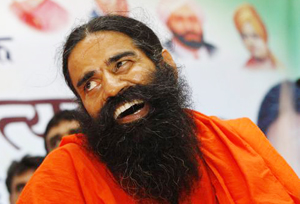
DRDO today entered into licensing agreements with Ramdev's company for transfer of Seabuckthorn technology based products developed by Defence Institute of High Altitude Research (DIHAR).

The technology has been transferred under the DRDO FICCI ATAC (Accelerated Technology Assessment&Commercialisation) programme that has been established to identify spin-off technologies for commercial markets within India and abroad, with a special focus on social benefit technologies, an official statement said.

DIHAR, a frontier laboratory of DRDO which is located in Leh with detachments in the strategic Siachen sector has pioneered cold arid-agro animal technologies for augmenting local availability of fresh food in the region.

The laboratory, through its translational laboratory to land approach, develops technologies for fresh food cultivation, poultry, goat and dairy farming and green house cultivation which are disseminated to the local farmers.

Speaking on the occasion, Defence Minister Manohar Parrikar said seabuckthorn is a unique product. "Apart from what has been commercialised, there are many more applications which Patanjali Ayurveda could explore to exploit the full potential of Seabuckthorn," he said.

Parrikar wanted Patanjali Ayurveda to bring many more health products to exploit the full potential of the technologies beyond what DIHAR has found out.

He added that DRDO in collaboration with FICCI under DRDO FICCI ATAC programme is striving to commercialise more and more spin off technologies for the benefit of society at large.

DRDO Chief S Cristopher mentioned that DIHAR has been relentlessly working for development of products which in addition to their usefulness for Armed Forces has tremendous commercial potential in India and abroad.

"The benefits of the research done by DIHAR will help the local population to derive the economic benefits," he said.

While giving an overview, Bhuvnesh Kumar, Director, DIHAR said that the farmers adopt the technologies developed by his scientists and sell their produce to the army.

"This unique approach not only results in local availability of fresh food but also results in socio-economic development of Ladakh and stronger civil-military cooperation in this strategically important region," the statement quoted him as saying.

Comments

Abe
 - 
Friday, 17 Jun 2016

This iis the reaso why smokers are trying to
find a way to stop smoking- at least. Technological advancements
today have led to the creation of the new electronic cigarette, a device that aims to help
even the most seemingly hopleless smoker to quit. When you opt
to make a purchase online, you will bbe able to review different
variieties to find the electronic cigarettes and accessories that are suitable tto you and
are within youur budget.

Taake a look at my web blog - elektronik sigara ovale: http://www.samuraiweapons.org/go.php?url=http://www.pusha.se/excellent-…

Jackson
 - 
Thursday, 19 May 2016

It is a conhstant process in each moment tto focus your thoughts and subsequent actionss into happiness, juyst like itt is a process in each moment to fokcus your thoughtts and subsequent actions to be in line with
enlightenment. It uses the excess fat from oour body
as a source of fuel and manages appetite and excessive food cravings.
this is by far the most common beneftit people know about green coffee bean extracts.

Here is my web-site ... yesil kahve kullananlar: http://www.tederojones.com/?option=com_k2&view=itemlist&task=user&id=45…

Add new comment

  • Coastaldigest.com reserves the right to delete or block any comments.
  • Coastaldigset.com is not responsible for its readers’ comments.
  • Comments that are abusive, incendiary or irrelevant are strictly prohibited.
  • Please use a genuine email ID and provide your name to avoid reject.
News Network
February 18,2020

Bengaluru, Feb 18: Deputy chief minister Laxman Savadi was elected to the legislative council on Monday and although it was a done deal that he would win, a vote from across the aisle spiced up the election.

Counting was conducted soon after ballots were cast and Savadi polled 113 of the 120 votes cast, including the vote of disgruntled JD(S) legislator GT Devegowda. Seven votes were declared invalid. Members of the two opposition parties — Congress and JD(S) — abstained from voting.

The election was necessitated following the resignation of Rizwan Arshad of the Congress. Rizwan resigned after he was elected to the legislative assembly from the Shivajinagar constituency in the assembly bypolls held for 15 seats in December last year.

BR Anil Kumar, who was initially promised the support of both Congress and JD(S) was supposed to contest as an independent candidate. However, as both parties refused to support him at the last minute, he withdrew, paving the way for Savadi’s victory.

The BJP has 117 members in the 225-member assembly, but N Mahesh of the BSP and two independents, H Nagesh and Sharath Bachchegowda, besides GT Devegowda also voted, taking the total electorate to 120 (including the speaker). BJP’s SA Ramadas did not turn up because of health reasons.

“I would like to thank all those who were responsible for my victory. Special thanks to leaders of my party and chief minister BS Yediyurappa, who gave me the opportunity to be the BJP candidate,” said Savadi.

Winning this council election was crucial for Savadi to retain his ministry as he was not an elected member of either of the houses. Rules mandate that a non-member must get elected either to the assembly or council within six months after taking over as minister. February 20 was the deadline for Savadi, who had lost 2018 assembly polls from Athani, to get elected.

Officials in the assembly secretariat said seven votes were invalid because voters had wrongly marked their choices on ballot paper. According to norms, a voter has to mark numerical one, two and three against the names of the candidates in order of preference. Marking only numerical one is allowed. However, six ballots had a tick mark, while a voter had registered a cross mark. Since it was a secret ballot, it was not known who the MLAs were whose votes were invalid.

“The ballot papers bear serial numbers and they are randomly distributed. It is virtually impossible to say who a voter cast his or her vote for,” said assembly secretary MK Vishalakashi, the retuning officer for the bypoll.

Comments

Add new comment

  • Coastaldigest.com reserves the right to delete or block any comments.
  • Coastaldigset.com is not responsible for its readers’ comments.
  • Comments that are abusive, incendiary or irrelevant are strictly prohibited.
  • Please use a genuine email ID and provide your name to avoid reject.
News Network
April 5,2020

Mangaluru, Apr 5: As the number of Covid 19 cases continue to spike across Karnataka, there are patients who are recovering from this deadly virus as well. The first case of Covid 19 detected in Mangaluru has fully recovered and all set to return home.

The first case of corona infection was reported on March 22 in Dakshina Kannada district. 

A 22-year-old youth hailing from Bhatkal had landed at Mangaluru International Airport on March 19. 

As he was suffering from mild fever and cold, he was quarantined in Mangaluru. He had come from Dubai.

His throat swabs were sent for testing on the same day and on March 22 he was tested positive for coronavirus. 

He has undergone 14-day long treatment at the Wenlock Hospital, Mangaluru. 

On April 2 and 3, his throat swabs were sent for testing again. Both times he was tested negative for coronavirus. He is expected to be discharged on April 6.

So far a dozen coronavirus positive cases have been confirmed in Dakshina Kannada. With the recovery of one patient, there are 11 active cases in the district.

Comments

Add new comment

  • Coastaldigest.com reserves the right to delete or block any comments.
  • Coastaldigset.com is not responsible for its readers’ comments.
  • Comments that are abusive, incendiary or irrelevant are strictly prohibited.
  • Please use a genuine email ID and provide your name to avoid reject.
News Network
April 2,2020

The current physical distancing guidelines provided by the World Health Organisation (WHO) and by the US Centers for Disease Control and Prevention (CDC) may not be adequate to curb the coronavirus spread, according to a research which says the gas cloud from a cough or sneeze may help virus particles travel up to 8 metres. The research, published in the Journal of the American Medical Association, noted that the the current guidelines issued by the WHO and CDC are based on outdated models from the 1930s of how gas clouds from a cough, sneeze, or exhalation spread.

Study author, MIT associate professor Lydia Bourouiba, warned that droplets of all sizes can travel 23 to 27 feet, or 7-8 metres, carrying the pathogen.

According to Bourouiba, the current guidelines are based on "arbitrary" assumptions of droplet size, "overly simplified", and "may limit the effectiveness of the proposed interventions" against the deadly pandemic.

 She explained that the old guidelines assume droplets to be one of two categories, small or large, taking short-range semi-ballistic trajectories when a person exhales, coughs, or sneezes.

However based on more recent discoveries, the MIT scientist said, sneezes and coughs are made of a puff cloud that carries ambient air, transporting within it clusters of droplets of a wide range of sizes.

Bourouiba warned that this puff cloud, with ambient air entrapped in it, can offer the droplets moisture and warmth that can prevent it from evaporation in the outer environment.

"The locally moist and warm atmosphere within the turbulent gas cloud allows the contained droplets to evade evaporation for much longer than occurs with isolated droplets," she said.

"Under these conditions, the lifetime of a droplet could be considerably extended by a factor of up to 1000, from a fraction of a second to minutes," the researcher explained in the study.

The MIT scientist, who has researched the dynamics of coughs and sneezes for years, added that these droplets settle along the trajectory of a cough or sneeze contaminating surfaces, with their residues staying suspended in the air for hours.

"Even when maximum containment policies were enforced, the rapid international spread of COVID-19 suggests that using arbitrary droplet size cutoffs may not accurately reflect what actually occurs with respiratory emissions, possibly contributing to the ineffectiveness of some procedures used to limit the spread of respiratory disease," Bourouiba wrote in the study

Comments

Add new comment

  • Coastaldigest.com reserves the right to delete or block any comments.
  • Coastaldigset.com is not responsible for its readers’ comments.
  • Comments that are abusive, incendiary or irrelevant are strictly prohibited.
  • Please use a genuine email ID and provide your name to avoid reject.