


Another 13 new smart cities announced; Mangaluru continues to wait its turn

[email protected] (News Network)
May 25, 2016

New Delhi, May 25: The Union government on Tuesday announced the names of 13 more cities that will be developed under the Centre's “Smart City Mission.” Lucknow in poll-bound Uttar Pradesh tops the list, followed by Warangal in Telangana and Dharamshala in Himachal Pradesh.
smartcity3

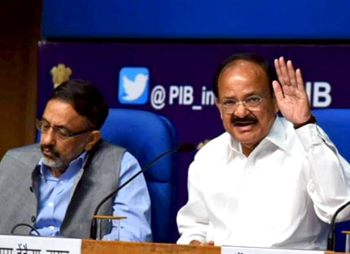
These cities were chosen from the 23 that failed to get representation in the first round of a competition held in January, and participated in the “fast-track competition.” The results were announced by Urban Development Minister M. Venkaiah Naidu on Tuesday.

Other cities on the list are Chandigarh, Raipur (Chhattisgarh), New Town Kolkata, Bhagalpur (Bihar), Panaji (Goa), Port Blair (Andaman and Nicobar Islands), Imphal (Manipur), Ranchi (Jharkhand), Agartala (Tripura) and Faridabad (Haryana). “The 13 cities selected in the competition have proposed a total investment of Rs. 30,229 crore. With this, the investment proposed by 33 cities [20 cities made the cut in January] under the smart city plans is now Rs. 80,789 crore,” Mr. Naidu told the media.
smartcity2

Karnataka's coastal city of Mangaluru does not figure in the list of 13 smart cities. In fact the local elected representatives in Mangaluru had made all possible efforts to make it in the first list of 20 smart cities announced in January this year. The wait continued.

Next round

Seven cities — Patna (Bihar), Shimla (Himachal Pradesh), Naya Raipur (Chhattisgarh), Itanagar (Arunachal Pradesh), Amaravati (Andhra Pradesh), Bengaluru (Karnataka) and Thiruvananthapuram (Kerala) — that were not among the 100 shortlisted for the competition will be able to participate in the next round, the Minister added.

Of the 13 cities that qualified for the project, four are from BJP-ruled States (Chhattisgarh, Goa, Jharkhand and Haryana) while two are from Congress-governed States (Himachal Pradesh and Manipur). Lucknow is in Samajwadi Party-ruled Uttar Pradesh, while Bhagalpur is in Bihar, where the JD(U), the RJD and the Congress are ruling coalition partners. Warangal is in Telangana, which is ruled by the Telangana Rashtra Samithi.Apart from these, The Union Territories of Chandigarh and Port Blair in Andaman and Nicobar Islands were also among the winners of this round.

Ten cities that failed to make the cut are: Pasighat (Arunachal Pradesh), Shillong (Meghalaya), Namchi (Sikkim), Diu (Daman & Diu), Oulgaret (Puducherry), Silvassa (Dadra and Nagar Haveli), Kohima (Nagaland), Aizawl (Mizoram), Kavaratti (Lakshadweep) and Dehradun (Uttarakhand). They will be able to participate in the next round with other cities.

Highlights of project

Assured water and power supply, sanitation and solid waste management systems, efficient urban mobility and public transportation, IT connectivity, e-governance and citizen participation are some of the highlights of the smart city project.

It aims to transform 100 cities by 2019-20, with the Union government providing financial support of Rs. 48,000 crore over five years.

Central assistance

Each city will receive Central assistance of Rs. 200 crore in the first year and Rs. 100. crore over the three subsequent financial years. State governments and respective urban local bodies will also match the Centre's contribution. While 20 cities were selected in 2015-16 as per the Mission's guidelines, another 40 (including the 13)will be selected this year. The remaining will be chosen in the next financial year.

What are smart cities?

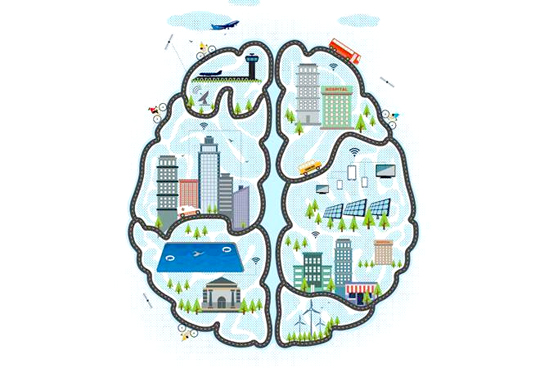
A 'smart city' is an urban region that is highly advanced in terms of overall infrastructure, sustainable real estate, communications and market viability. It is a city where information technology is the principal infrastructure and the basis for providing essential services to residents. There are many technological platforms involved, including but not limited to automated sensor networks and data centres.

According to the documents released on the Smart Cities website, the core infrastructure in a smart city would include:

— Adequate water supply

— Assured electricity supply

— Sanitation, including solid waste management

— Efficient urban mobility and public transport

— Affordable housing, especially for the poor

— Robust IT connectivity and digitalisation

— Good governance, especially e-Governance and citizen participation

— Sustainable environment

— Safety and security of citizens, particularly women, children and the elderly

— Health and education

Also Read : Bengaluru, six other state capitals to compete for Smart Cities Mission

Comments

satyameva jayate
 - 
Wednesday, 25 May 2016

Mangalore....wow...and smart city... Political Drama only..
No communal harmony..
No Water ...
No proper roads..Still incomplete, pentagonal and hexagonal shaped flyovers..
Sewage flowing all over also connected to the rain water canals through middle of the city...
No parking in the city.
Whole city looks like a bus stand .....
Trees moved without any plan....
I dont see any hope for the coming 10 years also, may be to go worst whoever rules....God save our DK...

Zahoor Ahmed
 - 
Wednesday, 25 May 2016

Ram Bhat ask Modi and sankayya to add Mangalore in smart city list. Thanks to Nalin for doing nothing for Mangalore city. Mr. Moily bring money from ONGC to build new building for Lady Goshen but Smart Mangalorean reject him and now Lady Goshen building waiting for Nalin action but Nalin is busy making money instead of developments in the city.

Add new comment

  • Coastaldigest.com reserves the right to delete or block any comments.
  • Coastaldigset.com is not responsible for its readers’ comments.
  • Comments that are abusive, incendiary or irrelevant are strictly prohibited.
  • Please use a genuine email ID and provide your name to avoid reject.
Ram Puniyani
January 14,2020

In the beginning of January 2020 two very disturbing events were reported from Pakistan. One was the attack on Nankana Sahib, the holy shrine where Sant Guru Nanak was born. While one report said that the place has been desecrated, the other stated that it was a fight between two Muslim groups. Prime Minister of Pakistan Imran Khan condemned the incident and the main accused Imran Chisti was arrested. The matter related to abduction and conversion of a Sikh girl Jagjit Kaur, daughter of Pathi (One who reads Holy Guru Granth Sahib in Gurudwara) of the Gurudwara. In another incident one Sikh youth Ravinder Singh, who was out on shopping for his marriage, was shot dead in Peshawar.

While these condemnable attacks took place on the Sikh minority in Pakistan, BJP was quick enough to jump to state that it is events like this which justify the Citizenship Amendment Act (CAA). Incidentally CAA is the Act which is discriminatory and relates to citizenship with Religion, which is not as per the norms of Indian constitution. There are constant debates and propaganda that population of Hindus has come down drastically in Pakistan and Bangla Desh. Amit Shah, the Home minister stated that in Pakistan the population of Hindus has come down from 23% at the time of partition to 3.7% at present. And in Bangla Desh it has come down from 22% to present 8%.

While not denying the fact that the religious minorities are getting a rough deal in both these countries, the figures which are presented are totally off the mark. These figures don’t take into consideration the painful migrations, which took place at the time of partition and formation of Bangla Desh later. Pakistan census figures tell a different tale. Their first census was held in 1951. As per this census the overall percentage of Non Muslim in Pakistan (East and West together) was 14.2%, of this in West Pakistan (Now Pakistan) it was 3.44 and in Eat Pakistan it was 23.2. In the census held in Pakistan 1998 it became 3.72%. As far as Bangla Desh is concerned the share of Non Muslims has gone down from 23.2 (1951) to 9.6% in 2011.

The largest minority of Pakistan is Ahmadis, (https://minorityrights.org/country/pakistan/) who are close to 4 Million and are not recognised as Muslims in Pakistan. In Bangla Desh the major migrations of Hindus from Bangla Desh took place in the backdrop of Pakistan army’s atrocities in the then East Pakistan.

As far as UN data on refugees in India it went up by 17% between 2016-2019 and largest numbers were from Tibet and Sri Lanka.  (https://www.un.org/en/development/desa/population/migration/publication…)

The state of minorities is in a way the index of strength of democracy. Most South Asian Countries have not been able to sustain democratic values properly. In Pakistan, the Republic began with Jinnah’s classic speech where secularism was to be central credo of Pakistan. This 11th August speech was in a way what the state policy should be, as per which people of all faiths are free to practice their religion. Soon enough the logic of ‘Two Nation theory” and formation of Pakistan, a separate state for Muslim took over. Army stepped in and dictatorship was to reign there intermittently. Democratic elements were suppressed and the worst came when Zia Ul Haq Islamized the state in collusion with Maulanas. The army was already a strong presence in Pakistan. The popular formulation for Pakistan was that it is ruled by three A’s, Army, America and Allah (Mullah).

Bangla Desh had a different trajectory. Its very formation was a nail in the coffin of ‘two nation theory’; that religion can be the basis of a state. Bangla Desh did begin as a secular republic but communal forces and secular forces kept struggling for their dominance and in 1988 it also became Islamic republic. At another level Myanmar, in the grip of military dictatorship, with democratic elements trying to retain their presence is also seeing a hard battle. Democracy or not, the army and Sanghas (Buddhist Sang has) are strong, in Myanmar as well. The most visible result is persecution of Rohingya Muslims.

Similar phenomenon is dominating in Sri Lanka also where Budhhist Sanghas and army have strong say in the political affairs, irrespective of which Government is ruling. Muslim and Christian minorities are a big victim there, while Tamils (Hindus, Christians etc.) suffered the biggest damage as ethnic and religious minorities. India had the best prospect of democracy, pluralism and secularism flourishing here. The secular constitution, the outcome of India’s freedom struggle, the leadership of Gandhi and Nehru did ensure the rooting of democracy and secularism in a strong way.

India so far had best democratic credentials amongst all the south Asian countries. Despite that though the population of minorities rose mainly due to poverty and illiteracy, their overall marginalisation was order of the day, it went on worsening with the rise of communal forces, with communal forces resorting to identity issues, and indulging in propaganda against minorities.

While other South Asian countries should had followed India to focus more on infrastructure and political culture of liberalism, today India is following the footsteps of Pakistan. The retrograde march of India is most visible in the issues which have dominated the political space during last few years. Issues like Ram Temple, Ghar Wapasi, Love Jihad, Beef-Cow are now finding their peak in CAA.

India’s reversal towards a polity with religion’s identity dominating the political scene was nicely presented by the late Pakistani poetess Fahmida Riaz in her poem, Tum bhi Hum Jaise Nikle (You also turned out to be like us). While trying to resist communal forces has been an arduous task, it is becoming more difficult by the day. This phenomenon has been variously called, Fundamentalism, Communalism or religious nationalism among others. Surely it has nothing to do with the religion as practiced by the great Saint and Sufi traditions of India; it resorts mainly to political mobilization by using religion as a tool.

Comments

Ashi
 - 
Tuesday, 14 Jan 2020

If Malaysia implement similar NRC/CAA, India and China are the loser.

Add new comment

  • Coastaldigest.com reserves the right to delete or block any comments.
  • Coastaldigset.com is not responsible for its readers’ comments.
  • Comments that are abusive, incendiary or irrelevant are strictly prohibited.
  • Please use a genuine email ID and provide your name to avoid reject.
News Network
March 28,2020

Bengaluru, Mar 28: The Karnataka government on Saturday said that the state run Indira Canteens would provide food packets free of cost to the poor and needy in the wake of the lockdown, the government said here on Saturday.

The canteens would operate in three schedules -from 7:30 AM to 10 AM, 12:30 PM to 3 PM and 7:30 PM to 9 PM, the government said in a public announcement

During the scheduled hours, street side vendors, labourers and poor would be provided food free of cost.

After the cabinet meeting on Friday, Chief Minister B S Yediyurappa had said food packets would be provided to the poor and needy with the help of some organisations through the Canteens and had sought the help of everyone in this regard.

The State-sponsored, subsidised 'Indira Canteens' as of now serves breakfast at Rs five and lunch and dinner at Rs 10.

The government asked people availing the facility to maintain cleanliness at the canteen and staff who serve food to compulsorily use masks and hand gloves.

It also said soaps and sanitizers should be made available at the canteens.

The government also asked people to maintain a minimum distance of one metre while standing in queue and take all precautionary measures.

Earlier, a day after announcing that food would be provided free of cost through the canteens for daily wagers, Yediyurappa on March 24 had said it has been decided that the canteens will not be opened, after realizing that it was leading to crowding, which drew criticism.

Comments

Add new comment

  • Coastaldigest.com reserves the right to delete or block any comments.
  • Coastaldigset.com is not responsible for its readers’ comments.
  • Comments that are abusive, incendiary or irrelevant are strictly prohibited.
  • Please use a genuine email ID and provide your name to avoid reject.
coastaldigest.com news network
July 20,2020

Mangaluru/ Udupi, Jul 20: Dakshina Kannada has recorded 89 new covid-19 cases and five deaths whereas as Udupi recorded 98 cases in past 24 hours. 

Dakshina Kannada 

With five new deaths, the covid-19 death toll in the district mounted to 82. Among the five deceased, two are from Mangaluru taluk, one from Beltangady taluk, one from Bantwal taluk and one from Chikkamangaluru district. The deceased include a 2 month old child (from Bantwal). 

Out of the 89 cases, eleven persons had contracted the disease from primary contacts. Two persons had returned from the Gulf. Forty-five persons are suffering from influenza-like illness (ILI), and sixteen persons are suffering from Severe Acute Respiratory Infection (SARI). The health officials are tracing the contacts of fifteen others.

Meanwhile, 57 persons were also discharged from the hospital after complete recovery.

Udupi

With 98 new covid-19 cases, the total number of cases in the district today mounted to 2,321. Among them only 661 are currently active. 

1650 patients have been discharged from the hospital after complete recovery, and 11 persons have succumbed to COVID-19 in the district.

As of now, 213 throat swab samples are pending for results, 54 samples were sent for testing on July 20. On Sunday, July 20, 251 samples have tested negative. As of now, a total of 22357 swab samples out of the 24891 have tested negative for the coronavirus.

Comments

Add new comment

  • Coastaldigest.com reserves the right to delete or block any comments.
  • Coastaldigset.com is not responsible for its readers’ comments.
  • Comments that are abusive, incendiary or irrelevant are strictly prohibited.
  • Please use a genuine email ID and provide your name to avoid reject.