


Another 13 new smart cities announced; Mangaluru continues to wait its turn

[email protected] (News Network)
May 25, 2016

New Delhi, May 25: The Union government on Tuesday announced the names of 13 more cities that will be developed under the Centre's “Smart City Mission.” Lucknow in poll-bound Uttar Pradesh tops the list, followed by Warangal in Telangana and Dharamshala in Himachal Pradesh.
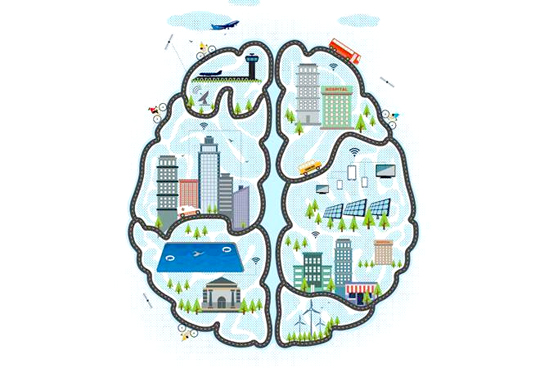
smartcity3

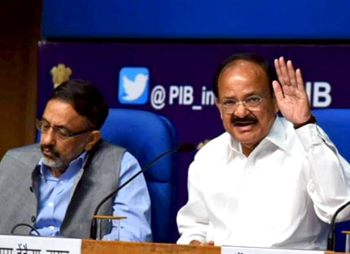
These cities were chosen from the 23 that failed to get representation in the first round of a competition held in January, and participated in the “fast-track competition.” The results were announced by Urban Development Minister M. Venkaiah Naidu on Tuesday.

Other cities on the list are Chandigarh, Raipur (Chhattisgarh), New Town Kolkata, Bhagalpur (Bihar), Panaji (Goa), Port Blair (Andaman and Nicobar Islands), Imphal (Manipur), Ranchi (Jharkhand), Agartala (Tripura) and Faridabad (Haryana). “The 13 cities selected in the competition have proposed a total investment of Rs. 30,229 crore. With this, the investment proposed by 33 cities [20 cities made the cut in January] under the smart city plans is now Rs. 80,789 crore,” Mr. Naidu told the media.
smartcity2

Karnataka's coastal city of Mangaluru does not figure in the list of 13 smart cities. In fact the local elected representatives in Mangaluru had made all possible efforts to make it in the first list of 20 smart cities announced in January this year. The wait continued.

Next round

Seven cities — Patna (Bihar), Shimla (Himachal Pradesh), Naya Raipur (Chhattisgarh), Itanagar (Arunachal Pradesh), Amaravati (Andhra Pradesh), Bengaluru (Karnataka) and Thiruvananthapuram (Kerala) — that were not among the 100 shortlisted for the competition will be able to participate in the next round, the Minister added.

Of the 13 cities that qualified for the project, four are from BJP-ruled States (Chhattisgarh, Goa, Jharkhand and Haryana) while two are from Congress-governed States (Himachal Pradesh and Manipur). Lucknow is in Samajwadi Party-ruled Uttar Pradesh, while Bhagalpur is in Bihar, where the JD(U), the RJD and the Congress are ruling coalition partners. Warangal is in Telangana, which is ruled by the Telangana Rashtra Samithi.Apart from these, The Union Territories of Chandigarh and Port Blair in Andaman and Nicobar Islands were also among the winners of this round.

Ten cities that failed to make the cut are: Pasighat (Arunachal Pradesh), Shillong (Meghalaya), Namchi (Sikkim), Diu (Daman & Diu), Oulgaret (Puducherry), Silvassa (Dadra and Nagar Haveli), Kohima (Nagaland), Aizawl (Mizoram), Kavaratti (Lakshadweep) and Dehradun (Uttarakhand). They will be able to participate in the next round with other cities.

Highlights of project

Assured water and power supply, sanitation and solid waste management systems, efficient urban mobility and public transportation, IT connectivity, e-governance and citizen participation are some of the highlights of the smart city project.

It aims to transform 100 cities by 2019-20, with the Union government providing financial support of Rs. 48,000 crore over five years.

Central assistance

Each city will receive Central assistance of Rs. 200 crore in the first year and Rs. 100. crore over the three subsequent financial years. State governments and respective urban local bodies will also match the Centre's contribution. While 20 cities were selected in 2015-16 as per the Mission's guidelines, another 40 (including the 13)will be selected this year. The remaining will be chosen in the next financial year.

What are smart cities?

A 'smart city' is an urban region that is highly advanced in terms of overall infrastructure, sustainable real estate, communications and market viability. It is a city where information technology is the principal infrastructure and the basis for providing essential services to residents. There are many technological platforms involved, including but not limited to automated sensor networks and data centres.

According to the documents released on the Smart Cities website, the core infrastructure in a smart city would include:

— Adequate water supply

— Assured electricity supply

— Sanitation, including solid waste management

— Efficient urban mobility and public transport

— Affordable housing, especially for the poor

— Robust IT connectivity and digitalisation

— Good governance, especially e-Governance and citizen participation

— Sustainable environment

— Safety and security of citizens, particularly women, children and the elderly

— Health and education

Also Read : Bengaluru, six other state capitals to compete for Smart Cities Mission

Comments

satyameva jayate
 - 
Wednesday, 25 May 2016

Mangalore....wow...and smart city... Political Drama only..
No communal harmony..
No Water ...
No proper roads..Still incomplete, pentagonal and hexagonal shaped flyovers..
Sewage flowing all over also connected to the rain water canals through middle of the city...
No parking in the city.
Whole city looks like a bus stand .....
Trees moved without any plan....
I dont see any hope for the coming 10 years also, may be to go worst whoever rules....God save our DK...

Zahoor Ahmed
 - 
Wednesday, 25 May 2016

Ram Bhat ask Modi and sankayya to add Mangalore in smart city list. Thanks to Nalin for doing nothing for Mangalore city. Mr. Moily bring money from ONGC to build new building for Lady Goshen but Smart Mangalorean reject him and now Lady Goshen building waiting for Nalin action but Nalin is busy making money instead of developments in the city.

Add new comment

  • Coastaldigest.com reserves the right to delete or block any comments.
  • Coastaldigset.com is not responsible for its readers’ comments.
  • Comments that are abusive, incendiary or irrelevant are strictly prohibited.
  • Please use a genuine email ID and provide your name to avoid reject.
Ram Puniyani
February 10,2020

Noam Chomsky is one of the leading peace workers in the world. In the wake of America’s attack on Vietnam, he brought out his classic formulation, ‘manufacturing consent’. The phrase explains the state manipulating public opinion to have the public approve of it policies—in this case, the attack of the American state on Vietnam, which was then struggling to free itself from French colonial rule.

In India, we are witness to manufactured hate against religious minorities. This hatred serves to enhance polarisation in society, which undermines India’s democracy and Constitution and promotes support for a Hindu nation. Hate is being manufactured through multiple mechanisms. For example, it manifests in violence against religious minorities. Some recent ghastly expressions of this manufactured hate was the massive communal violence witnessed in Mumbai (1992-93), Gujarat (2002), Kandhamal (2008) and Muzaffarnagar (2013). Its other manifestation was in the form of lynching of those accused of having killed a cow or consumed beef. A parallel phenomenon is the brutal flogging, often to death, of Dalits who deal with animal carcasses or leather.

Yet another form of this was seen when Shambhulal Regar, indoctrinated by the propaganda of Hindu nationalists, burned alive Afrazul Khan and shot the video of the heinous act. For his brutality, he was praised by many. Regar was incited into the act by the propaganda around love jihad. Lately, we have the same phenomenon of manufactured hate taking on even more dastardly proportions as youth related to Hindu nationalist organisations have been caught using pistols, while police authorities look on.

Anurag Thakur, a BJP minster in the central government recently incited a crowd in Delhi to complete his chant of what should happen to ‘traitors of the country...” with a “they should be shot”. Just two days later, a youth brought a pistol to the site of a protest at Jamia Millia Islamia university and shouted “take Azaadi!” and fired it. One bullet hit a student of Jamia. This happened on 30 January, the day Nathuram Godse had shot Mahatma Gandhi in 1948. A few days later, another youth fired near the site of protests against the CAA and NRC at Shaheen Bagh. Soon after, he said that in India, “only Hindus will rule”.

What is very obvious is that the shootings by those associated with Hindu nationalist organisations are the culmination of a long campaign of spreading hate against religious minorities in India in general and against Muslims in particular. The present phase is the outcome of a long and sustained hate campaign, the beginning of which lies in nationalism in the name of religion; Muslim nationalism and Hindu nationalism. This sectarian nationalism picked up the communal view of history and the communal historiography which the British introduced in order to pursue their ‘divide and rule’ policy.

In India what became part of “social common sense” was that Muslim kings had destroyed Hindu temples, that Islam was spread by force, and that it is a foreign religion, and so on. Campaigns, such as the one for a temple dedicated to the Hindu god Rama to be built at the site where the Babri masjid once stood, further deepened the idea of a Muslim as a “temple-destroyer”. Aurangzeb, Tipu Sultan and other Muslim kings were tarnished as the ones who spread Islam by force in the subcontinent. The tragic Partition, which was primarily due to British policies, and was well-supported by communal streams also, was entirely attributed to Muslims. The Kashmir conflict, which is the outcome of regional, ethnic and other historical issues, coupled with the American policy of supporting Pakistan’s ambitions of regional hegemony, (which also fostered the birth of Al-Qaeda), was also attributed to the Muslims.

With recurring incidents of communal violence, these falsehoods went on going deeper into the social thinking. Violence itself led to ghettoisation of Muslims and further broke inter-community social bonds. On the one hand, a ghettoised community is cut off from others and on the other hand the victims come to be presented as culprits. The percolation of this hate through word-of-mouth propaganda, media and re-writing of school curricula, had a strong impact on social attitudes towards the minorities.

In the last couple of decades, the process of manufacturing hate has been intensified by the social media platforms which are being cleverly used by the communal forces. Swati Chaturvedi’s book, I Am a Troll: Inside the Secret World of the BJP’s Digital Army, tells us how the BJP used social media to spread hate. Whatapp University became the source of understanding for large sections of society and hate for the ‘Other’, went up by leaps and bounds. To add on to this process, the phenomenon of fake news was shrewdly deployed to intensify divisiveness.

Currently, the Shaheen Bagh movement is a big uniting force for the country; but it is being demonised as a gathering of ‘anti-nationals’. Another BJP leader has said that these protesters will indulge in crimes like rape. This has intensified the prevalent hate.

While there is a general dominance of hate, the likes of Shambhulal Regar and the Jamia shooter do get taken in by the incitement and act out the violence that is constantly hinted at. The deeper issue involved is the prevalence of hate, misconceptions and biases, which have become the part of social thinking.

These misconceptions are undoing the amity between different religious communities which was built during the freedom movement. They are undoing the fraternity which emerged with the process of India as a nation in the making. The processes which brought these communities together broadly drew from Gandhi, Bhagat Singh and Ambedkar. It is these values which need to be rooted again in the society. The communal forces have resorted to false propaganda against the minorities, and that needs to be undone with sincerity.

Combating those foundational misconceptions which create hatred is a massive task which needs to be taken up by the social organisations and political parties which have faith in the Indian Constitution and values of freedom movement. It needs to be done right away as a priority issue in with a focus on cultivating Indian fraternity yet again.

Comments

Add new comment

  • Coastaldigest.com reserves the right to delete or block any comments.
  • Coastaldigset.com is not responsible for its readers’ comments.
  • Comments that are abusive, incendiary or irrelevant are strictly prohibited.
  • Please use a genuine email ID and provide your name to avoid reject.
News Network
January 19,2020

Mysuru, Jan 19: Karnataka Rural Development and Panchyat Raj Minister K S Eshwarappa on Sunday claimed that Popular Front of India and Social Democratic Party of India have been indulging in anti-national activities.

Talking to media persons here, he said the government is mulling to ban and take action against PFI and its political arm SDPI.

It was recommended even during the previous government, but it was not taken seriously, he added.

He said that the BJP will ensure that all the MLAs who were instrumental in the party coming to power (the then-disqualified MLAs who joined BJP from Congress and JDS recently and won the bypoll subsequently) will not be let down and be given suitable posts in the government.

Comments

Sharief
 - 
Sunday, 19 Jan 2020

RSS will be banned and wipedout from the planet.

Now USA declared RSS as the worst terrorists. So Indian government is terrorist.


This is the limit of their brain.


Add new comment

  • Coastaldigest.com reserves the right to delete or block any comments.
  • Coastaldigset.com is not responsible for its readers’ comments.
  • Comments that are abusive, incendiary or irrelevant are strictly prohibited.
  • Please use a genuine email ID and provide your name to avoid reject.
News Network
April 16,2020

Mangaluru, Apr 16: An old refrigerator has been turned into a "disinfection chamber" by researchers who are striving to come up with solutions to tackle the spread of coronavirus.

Dr Arun M Isloor, head of Chemistry Department, National Institute of Technology Karnataka (NITK), Surathkal, along with research scholar Syed Ibrahim has come up with the device which can disinfect items kept inside it.

"We have named this as ZERO-COV," Dr Isloor said.

He says the device ensures 99.9 per cent destruction of microorganisms present on the surface of items.

"We can keep items like vegetables, currency notes, books or envelopes inside the chamber. Switching on the chamber for 15 minutes ensures 99.9 per cent destruction of microorganisms present in the surface of the items," Dr Isloor added.

Comments

Add new comment

  • Coastaldigest.com reserves the right to delete or block any comments.
  • Coastaldigset.com is not responsible for its readers’ comments.
  • Comments that are abusive, incendiary or irrelevant are strictly prohibited.
  • Please use a genuine email ID and provide your name to avoid reject.