


Another 13 new smart cities announced; Mangaluru continues to wait its turn

[email protected] (News Network)
May 25, 2016

New Delhi, May 25: The Union government on Tuesday announced the names of 13 more cities that will be developed under the Centre's “Smart City Mission.” Lucknow in poll-bound Uttar Pradesh tops the list, followed by Warangal in Telangana and Dharamshala in Himachal Pradesh.

smartcity3

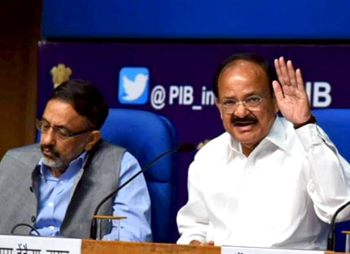
These cities were chosen from the 23 that failed to get representation in the first round of a competition held in January, and participated in the “fast-track competition.” The results were announced by Urban Development Minister M. Venkaiah Naidu on Tuesday.

Other cities on the list are Chandigarh, Raipur (Chhattisgarh), New Town Kolkata, Bhagalpur (Bihar), Panaji (Goa), Port Blair (Andaman and Nicobar Islands), Imphal (Manipur), Ranchi (Jharkhand), Agartala (Tripura) and Faridabad (Haryana). “The 13 cities selected in the competition have proposed a total investment of Rs. 30,229 crore. With this, the investment proposed by 33 cities [20 cities made the cut in January] under the smart city plans is now Rs. 80,789 crore,” Mr. Naidu told the media.
smartcity2

Karnataka's coastal city of Mangaluru does not figure in the list of 13 smart cities. In fact the local elected representatives in Mangaluru had made all possible efforts to make it in the first list of 20 smart cities announced in January this year. The wait continued.

Next round

Seven cities — Patna (Bihar), Shimla (Himachal Pradesh), Naya Raipur (Chhattisgarh), Itanagar (Arunachal Pradesh), Amaravati (Andhra Pradesh), Bengaluru (Karnataka) and Thiruvananthapuram (Kerala) — that were not among the 100 shortlisted for the competition will be able to participate in the next round, the Minister added.

Of the 13 cities that qualified for the project, four are from BJP-ruled States (Chhattisgarh, Goa, Jharkhand and Haryana) while two are from Congress-governed States (Himachal Pradesh and Manipur). Lucknow is in Samajwadi Party-ruled Uttar Pradesh, while Bhagalpur is in Bihar, where the JD(U), the RJD and the Congress are ruling coalition partners. Warangal is in Telangana, which is ruled by the Telangana Rashtra Samithi.Apart from these, The Union Territories of Chandigarh and Port Blair in Andaman and Nicobar Islands were also among the winners of this round.

Ten cities that failed to make the cut are: Pasighat (Arunachal Pradesh), Shillong (Meghalaya), Namchi (Sikkim), Diu (Daman & Diu), Oulgaret (Puducherry), Silvassa (Dadra and Nagar Haveli), Kohima (Nagaland), Aizawl (Mizoram), Kavaratti (Lakshadweep) and Dehradun (Uttarakhand). They will be able to participate in the next round with other cities.

Highlights of project

Assured water and power supply, sanitation and solid waste management systems, efficient urban mobility and public transportation, IT connectivity, e-governance and citizen participation are some of the highlights of the smart city project.

It aims to transform 100 cities by 2019-20, with the Union government providing financial support of Rs. 48,000 crore over five years.

Central assistance

Each city will receive Central assistance of Rs. 200 crore in the first year and Rs. 100. crore over the three subsequent financial years. State governments and respective urban local bodies will also match the Centre's contribution. While 20 cities were selected in 2015-16 as per the Mission's guidelines, another 40 (including the 13)will be selected this year. The remaining will be chosen in the next financial year.

What are smart cities?

A 'smart city' is an urban region that is highly advanced in terms of overall infrastructure, sustainable real estate, communications and market viability. It is a city where information technology is the principal infrastructure and the basis for providing essential services to residents. There are many technological platforms involved, including but not limited to automated sensor networks and data centres.

According to the documents released on the Smart Cities website, the core infrastructure in a smart city would include:

— Adequate water supply

— Assured electricity supply

— Sanitation, including solid waste management

— Efficient urban mobility and public transport

— Affordable housing, especially for the poor

— Robust IT connectivity and digitalisation

— Good governance, especially e-Governance and citizen participation

— Sustainable environment

— Safety and security of citizens, particularly women, children and the elderly

— Health and education

Also Read : Bengaluru, six other state capitals to compete for Smart Cities Mission

Comments

satyameva jayate
 - 
Wednesday, 25 May 2016

Mangalore....wow...and smart city... Political Drama only..
No communal harmony..
No Water ...
No proper roads..Still incomplete, pentagonal and hexagonal shaped flyovers..
Sewage flowing all over also connected to the rain water canals through middle of the city...
No parking in the city.
Whole city looks like a bus stand .....
Trees moved without any plan....
I dont see any hope for the coming 10 years also, may be to go worst whoever rules....God save our DK...

Zahoor Ahmed
 - 
Wednesday, 25 May 2016

Ram Bhat ask Modi and sankayya to add Mangalore in smart city list. Thanks to Nalin for doing nothing for Mangalore city. Mr. Moily bring money from ONGC to build new building for Lady Goshen but Smart Mangalorean reject him and now Lady Goshen building waiting for Nalin action but Nalin is busy making money instead of developments in the city.

Add new comment

  • Coastaldigest.com reserves the right to delete or block any comments.
  • Coastaldigset.com is not responsible for its readers’ comments.
  • Comments that are abusive, incendiary or irrelevant are strictly prohibited.
  • Please use a genuine email ID and provide your name to avoid reject.
News Network
May 15,2020

Bengaluru, May 15: With lockdown-3 coming to an end in a couple of days, Karnataka Chief Minister B S Yediyurappa on Friday expressed confidence about the Centre announcing relaxation to "many things" after May 17.

"After May 17, the government of India is going to relax so many things, let us wait for it," he said in response to a question from reporters here. "According to me they (centre) will relax everything.... maybe for things like five-star hotels and others they may not give permission for the time being, but for other things they are going to give permission. Let's wait and see."

The nationwide lockdown was initially imposed from March 25 to April 14, then extended to May 3 and again to May 17 to prevent the spread of the novel coronavirus. Karnataka Tourism Minister C T Ravi on Wednesday had hinted at the state government permitting the opening of gyms, fitness centres and golf courses, also certain hotels for local tourism purpose after May 17, when the third phase of the COVID-19 induced lockdown comes to an end.

The Muzrai department (in charge of the administration of temples) was also planning to have a Standard Operating Procedure (SOP) in place, that needs to be followed at temples once they are opened for the public, officials have said. They said the opening of temples for the public is however subject to the MHA (Ministry of Home Affairs) guidelines.

During the recent video conferencing Prime Minister Narendra Modi had with Chief Ministers of various states, Yediyurappa had proposed doing away with district wise colour-coding and instead advocated strict cordoning of containment zones to control the spread of the pandemic.

He had pitched for resuming all economic activities in stand-alone establishments while continuing the restrictions on malls, cinema halls, dining facilities and establishments with centrally controlled air-conditioning. The CM had suggested that 50 to 100 meters around known clusters be declared as containment zones and commercial activities, including public transport, to be allowed in non- containment zones.

Comments

MR
 - 
Sunday, 17 May 2020

Please don't go out until May 31st.

Remember the Politicians and their famiies will stay inside  until May 31'st to protect their families.

If you go out and fall sick your whole family will suffer. So be smart and stay home.

Add new comment

  • Coastaldigest.com reserves the right to delete or block any comments.
  • Coastaldigset.com is not responsible for its readers’ comments.
  • Comments that are abusive, incendiary or irrelevant are strictly prohibited.
  • Please use a genuine email ID and provide your name to avoid reject.
coastaldigest.com news network
May 31,2020

Mangaluru, May 31:  Even as the worst locust attack on India in recent years raised concerns over its impact on crops, swarms of locusts have triggered panic in Karnataka’s Dakshina Kannada too. 

Farmers in the coastal district were taken aback when they found the swarms of locusts, which they feared as the arrival of desert locusts in the region.

According to reports, Renjalady village under the limits of Nuji Baltila Gramp Panchayats in Kadaba taluk and Shirlalu village in Belthangady taluk witnessed locust attacks in last couple of days. 

“Locust swarms were seen in many areas. We have also alerted agriculture department. Already insects have destroyed crops of many farmers,” said a farmer in Shirlalu village.  

Joint director of Dakshina Kannada district agriculture department MC Seetha confirmed that officials have received information from villagers about the locust scare and entemologists have already visited the place to collect more information.

Not Desert Locusts?

“We contacted entemologists and forwarded the pictures that farmers sent to us. Looking at the picture, entemologists have opined that it may be calotropis locust or colour grasshopper. Desert locusts usually arrive in lakhs,” said Ms Seetha. Desert locusts that are destroying crops in other parts of India may not come to Dakshina Kannada, she added.

Comments

Add new comment

  • Coastaldigest.com reserves the right to delete or block any comments.
  • Coastaldigset.com is not responsible for its readers’ comments.
  • Comments that are abusive, incendiary or irrelevant are strictly prohibited.
  • Please use a genuine email ID and provide your name to avoid reject.
News Network
April 2,2020

The current physical distancing guidelines provided by the World Health Organisation (WHO) and by the US Centers for Disease Control and Prevention (CDC) may not be adequate to curb the coronavirus spread, according to a research which says the gas cloud from a cough or sneeze may help virus particles travel up to 8 metres. The research, published in the Journal of the American Medical Association, noted that the the current guidelines issued by the WHO and CDC are based on outdated models from the 1930s of how gas clouds from a cough, sneeze, or exhalation spread.

Study author, MIT associate professor Lydia Bourouiba, warned that droplets of all sizes can travel 23 to 27 feet, or 7-8 metres, carrying the pathogen.

According to Bourouiba, the current guidelines are based on "arbitrary" assumptions of droplet size, "overly simplified", and "may limit the effectiveness of the proposed interventions" against the deadly pandemic.

 She explained that the old guidelines assume droplets to be one of two categories, small or large, taking short-range semi-ballistic trajectories when a person exhales, coughs, or sneezes.

However based on more recent discoveries, the MIT scientist said, sneezes and coughs are made of a puff cloud that carries ambient air, transporting within it clusters of droplets of a wide range of sizes.

Bourouiba warned that this puff cloud, with ambient air entrapped in it, can offer the droplets moisture and warmth that can prevent it from evaporation in the outer environment.

"The locally moist and warm atmosphere within the turbulent gas cloud allows the contained droplets to evade evaporation for much longer than occurs with isolated droplets," she said.

"Under these conditions, the lifetime of a droplet could be considerably extended by a factor of up to 1000, from a fraction of a second to minutes," the researcher explained in the study.

The MIT scientist, who has researched the dynamics of coughs and sneezes for years, added that these droplets settle along the trajectory of a cough or sneeze contaminating surfaces, with their residues staying suspended in the air for hours.

"Even when maximum containment policies were enforced, the rapid international spread of COVID-19 suggests that using arbitrary droplet size cutoffs may not accurately reflect what actually occurs with respiratory emissions, possibly contributing to the ineffectiveness of some procedures used to limit the spread of respiratory disease," Bourouiba wrote in the study

Comments

Add new comment

  • Coastaldigest.com reserves the right to delete or block any comments.
  • Coastaldigset.com is not responsible for its readers’ comments.
  • Comments that are abusive, incendiary or irrelevant are strictly prohibited.
  • Please use a genuine email ID and provide your name to avoid reject.