



Another 13 new smart cities announced; Mangaluru continues to wait its turn

[email protected] (News Network)
May 25, 2016

New Delhi, May 25: The Union government on Tuesday announced the names of 13 more cities that will be developed under the Centre's “Smart City Mission.” Lucknow in poll-bound Uttar Pradesh tops the list, followed by Warangal in Telangana and Dharamshala in Himachal Pradesh.

smartcity3

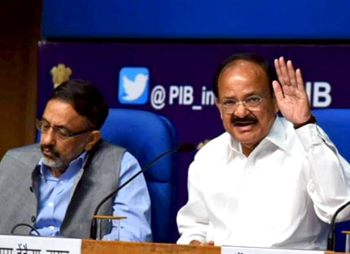
These cities were chosen from the 23 that failed to get representation in the first round of a competition held in January, and participated in the “fast-track competition.” The results were announced by Urban Development Minister M. Venkaiah Naidu on Tuesday.

Other cities on the list are Chandigarh, Raipur (Chhattisgarh), New Town Kolkata, Bhagalpur (Bihar), Panaji (Goa), Port Blair (Andaman and Nicobar Islands), Imphal (Manipur), Ranchi (Jharkhand), Agartala (Tripura) and Faridabad (Haryana). “The 13 cities selected in the competition have proposed a total investment of Rs. 30,229 crore. With this, the investment proposed by 33 cities [20 cities made the cut in January] under the smart city plans is now Rs. 80,789 crore,” Mr. Naidu told the media.
smartcity2

Karnataka's coastal city of Mangaluru does not figure in the list of 13 smart cities. In fact the local elected representatives in Mangaluru had made all possible efforts to make it in the first list of 20 smart cities announced in January this year. The wait continued.

Next round

Seven cities — Patna (Bihar), Shimla (Himachal Pradesh), Naya Raipur (Chhattisgarh), Itanagar (Arunachal Pradesh), Amaravati (Andhra Pradesh), Bengaluru (Karnataka) and Thiruvananthapuram (Kerala) — that were not among the 100 shortlisted for the competition will be able to participate in the next round, the Minister added.

Of the 13 cities that qualified for the project, four are from BJP-ruled States (Chhattisgarh, Goa, Jharkhand and Haryana) while two are from Congress-governed States (Himachal Pradesh and Manipur). Lucknow is in Samajwadi Party-ruled Uttar Pradesh, while Bhagalpur is in Bihar, where the JD(U), the RJD and the Congress are ruling coalition partners. Warangal is in Telangana, which is ruled by the Telangana Rashtra Samithi.Apart from these, The Union Territories of Chandigarh and Port Blair in Andaman and Nicobar Islands were also among the winners of this round.

Ten cities that failed to make the cut are: Pasighat (Arunachal Pradesh), Shillong (Meghalaya), Namchi (Sikkim), Diu (Daman & Diu), Oulgaret (Puducherry), Silvassa (Dadra and Nagar Haveli), Kohima (Nagaland), Aizawl (Mizoram), Kavaratti (Lakshadweep) and Dehradun (Uttarakhand). They will be able to participate in the next round with other cities.

Highlights of project

Assured water and power supply, sanitation and solid waste management systems, efficient urban mobility and public transportation, IT connectivity, e-governance and citizen participation are some of the highlights of the smart city project.

It aims to transform 100 cities by 2019-20, with the Union government providing financial support of Rs. 48,000 crore over five years.

Central assistance

Each city will receive Central assistance of Rs. 200 crore in the first year and Rs. 100. crore over the three subsequent financial years. State governments and respective urban local bodies will also match the Centre's contribution. While 20 cities were selected in 2015-16 as per the Mission's guidelines, another 40 (including the 13)will be selected this year. The remaining will be chosen in the next financial year.

What are smart cities?

A 'smart city' is an urban region that is highly advanced in terms of overall infrastructure, sustainable real estate, communications and market viability. It is a city where information technology is the principal infrastructure and the basis for providing essential services to residents. There are many technological platforms involved, including but not limited to automated sensor networks and data centres.

According to the documents released on the Smart Cities website, the core infrastructure in a smart city would include:

— Adequate water supply

— Assured electricity supply

— Sanitation, including solid waste management

— Efficient urban mobility and public transport

— Affordable housing, especially for the poor

— Robust IT connectivity and digitalisation

— Good governance, especially e-Governance and citizen participation

— Sustainable environment

— Safety and security of citizens, particularly women, children and the elderly

— Health and education

Also Read : Bengaluru, six other state capitals to compete for Smart Cities Mission

Comments

satyameva jayate
 - 
Wednesday, 25 May 2016

Mangalore....wow...and smart city... Political Drama only..
No communal harmony..
No Water ...
No proper roads..Still incomplete, pentagonal and hexagonal shaped flyovers..
Sewage flowing all over also connected to the rain water canals through middle of the city...
No parking in the city.
Whole city looks like a bus stand .....
Trees moved without any plan....
I dont see any hope for the coming 10 years also, may be to go worst whoever rules....God save our DK...

Zahoor Ahmed
 - 
Wednesday, 25 May 2016

Ram Bhat ask Modi and sankayya to add Mangalore in smart city list. Thanks to Nalin for doing nothing for Mangalore city. Mr. Moily bring money from ONGC to build new building for Lady Goshen but Smart Mangalorean reject him and now Lady Goshen building waiting for Nalin action but Nalin is busy making money instead of developments in the city.

Add new comment

  • Coastaldigest.com reserves the right to delete or block any comments.
  • Coastaldigset.com is not responsible for its readers’ comments.
  • Comments that are abusive, incendiary or irrelevant are strictly prohibited.
  • Please use a genuine email ID and provide your name to avoid reject.
coastaldigest.com news network
February 3,2020

A motley group of as many as 150 birders ‘walked the chirp’ in search of their feathered friends in and around the countryside of Manipal. The occasion was the 10th Edition of Manipal Bird Day organised by Manipal Birders Group on Sunday, February 2nd, 2020.

The day began ‘Bird Walk’ from Hotel Sheela Sagar (Opposite MIT campus) at 6:30 a.m. The birders divided themselves in smaller groups of 10-12 members and followed 13 different trails which took them through different terrains like hills, plains, paddy fields and wetlands. The idea was to sight as many birds as possible and record their presence in the region.

When the walk ended at about 10:00 a.m., the different groups have recorded a total of 125 species of birds, which was a bit lesser than the sighting of the yester years. “The 10th edition this year has seen a very good growth of interest among people. At the same time a decline has been seen in the bird species sighted compared to previous years,” said one of the organisers. Some of the rare birds sighted were Indian Pitta, Oriental Turtle Dove, Fork-Tailed Drongo Cuckoo, Orange Breasted Green Pigeon, Eurasian Marsh Harrier and Malabar Pied Hornbill.

The bird walk was followed with an interaction session at KMC Food Court and MAHE Vice Chancellor Dr. H. Vinod Bhat presided over the function. He felicitated six people who actively participated recently in a rescue mission of abandoned birds in Manipal.

A program then continued with a talk on ‘Ethical Photography’ by Dhruvam Desai, final year student of MIT, Manipal. This was followed by ‘Backyard Birding’ with Shubha Bhat from IISc Bangalore. She spoke on different ways to feed the birds with water using different materials for bird baths. “I have recorded 120 species of birds from bird baths in my garden,” she said. She encouraged the participants to have bird baths in their gardens or flats which will help quench the thirst of these little winged wonders during summer.

The participants involved themselves actively in the interaction sessions. The event was accompanied with an art exhibition titled ‘Feathered Jewels’ by Aditya Bhat. He presented around 18 paintings all from his memory of birding encounters.

Participation in Manipal Bird Day was open to all and entry was free.

MANIPAL BIRD DAY

Manipal Bird Day is an annual event dedicated to celebrating birds in Manipal. This day long event brings together a large number of birders from Manipal, Udupi, Mangalore, Mysore, Bangalore, Davangere and other places. Around 150-200 people gather and are split into different teams. They visit the assigned regions and count as many birds as possible. This non competitive event focuses on spreading awareness regarding the diverse avifauna around us. Turn out for this event has been increasing from 3 people to 200 in last 10 years. This is the 10th edition of Manipal Bird Day.

MANIPAL BIRDERS CLUB

Manipal Birders Club started as a Facebook group after the release of the first edition of “A Birders Handbook to Manipal” to share information about the latest sightings. It is now a formal group of over 500 like-minded members that meets at least once a week to go on bird walks. It is now a large birders community and a medium to organize events, bird walks and discussions about birds and sightings.

The next step would be to involve a higher number of local and young birders who will dictate the change in environment around the town in the coming years. With the co operation of Zoology and natural sciences students and other nature enthusiasts and faculty of different colleges weekly birding sessions have been conducted to involve and encourage more and more people to bird and get connected to the nature and to try to understand the changes happening around us, the media release issued by the group said.


Comments

Add new comment

  • Coastaldigest.com reserves the right to delete or block any comments.
  • Coastaldigset.com is not responsible for its readers’ comments.
  • Comments that are abusive, incendiary or irrelevant are strictly prohibited.
  • Please use a genuine email ID and provide your name to avoid reject.
News Network
May 3,2020

Bengaluru, May 3: Undergraduate and postgraduate students skipping online classes held by their universities run the risk of being debarred from writing their exams. 

State universities, which are monitoring the attendance of online classes, are asking their affiliate colleges to send the monthly online attendance details and this would reflect in their regular attendance. This would apply to those studying professional courses like medicine and engineering. 

State medical education minister Dr K Sudhakar has asked all medical colleges to regularly send attendance details to the Rajiv Gandhi University of Health Sciences (RGUHS).

RGUHS vice-chancellor Dr Sachidanand confirmed to DH that the varsity is indeed monitoring the attendance of students. “Online classes are equal to classroom teaching. (Such method of conducting classes) are necessary during the Covid-19 pandemic and the nationwide lockdown,” he said.

According to the Supreme Court directions, students should have 75% attendance to be eligible to appear for the final exams. There could be relaxations if they have health issues. If students are bunking online classes, it would reflect on their minimum attendance necessary to appear for the exams, the vice-chancellors of state-run varsities said.

Bangalore University vice-chancellor Prof K R Venugopal said most of the students are attending online classes and teachers are messaging the parents of those who are irregular. “(Of course) if they fall short of the minimum attendance, they won’t be allowed to appear for the exams,” he said.

Bengaluru North University vice-chancellor Prof T D Kemparaju said the administration has asked its teachers to record details of students attending online classes and update the university.

Mixed signals 

Meanwhile, the University Grants Commission (UGC) on Wednesday issued guidelines directing all universities to treat the lockdown period as “deemed as attended” for students and research scholars. Experts pointed out that the order would prompt students not to take the online classes seriously.

“Arrangements have been made at the state varsities to make students attend online classes compulsorily and students are also serious about it. Now, because of the UGC guidelines, they may bunk classes,” said the vice-chancellor of a state-run university.

Comments

Add new comment

  • Coastaldigest.com reserves the right to delete or block any comments.
  • Coastaldigset.com is not responsible for its readers’ comments.
  • Comments that are abusive, incendiary or irrelevant are strictly prohibited.
  • Please use a genuine email ID and provide your name to avoid reject.
Agencies
February 20,2020

India ranked 77th on a sustainability index that takes into account per capita carbon emissions and ability of children in a nation to live healthy lives and secures 131st spot on a flourishing ranking that measures the best chance at survival and well-being for children, according to a UN-backed report.

The report was released on Wednesday by a commission of over 40 child and adolescent health experts from around the world. It was commissioned by the World Health Organization (WHO), UN Children's Fund (UNICEF) and The Lancet medical journal.

In the report assessing the capacity of 180 countries to ensure that their youngsters can survive and thrive, India ranks 77th on the Sustainability Index and 131 on the Flourishing Index, it said.

Flourishing is the geometric mean of Surviving and Thriving. For Surviving, the authors selected maternal survival, survival in children younger than 5 years old, suicide, access to maternal and child health services, basic hygiene and sanitation, and lack of extreme poverty.

For Thriving, the domains were educational achievement, growth and nutrition, reproductive freedom, and protection from violence.

Under the Sustainability Index, the authors noted that promoting today's national conditions for children to survive and thrive must not come at the cost of eroding future global conditions for children's ability to flourish.

The Sustainability Index ranks countries on excess carbon emissions compared with the 2030 target. This provides a convenient and available proxy for a country's contribution to sustainability in future.

The report noted that under realistic assumptions about possible trajectories towards sustainable greenhouse gas emissions, models predict that global carbon emissions need to be reduced from 39·7 giga­ tonnes to 22·8 gigatonnes per year by 2030 to maintain even a 66 per cent chance of keeping global warming below 1·5°C.

It said that the world's survival depended on children being able to flourish, but no country is doing enough to give them a sustainable future.

"No country in the world is currently providing the conditions we need to support every child to grow up and have a healthy future," said Anthony Costello, Professor of Global Health and Sustainability at University College London, one of the lead authors of the report.

"Especially, they're under immediate threat from climate change and from commercial marketing, which has grown hugely in the last decade," said Costello – former WHO Director of Mother, Child and Adolescent health.

Norway leads the table for survival, health, education and nutrition rates - followed by South Korea and the Netherlands. Central African Republic, Chad and Somalia come at the bottom.

However, when taking into account per capita CO2 emissions, these top countries trail behind, with Norway 156th, the Republic of Korea 166th and the Netherlands 160th.

Each of the three emits 210 per cent more CO2 per capita than their 2030 target, the data shows, while the US, Australia, and Saudi Arabia are among the 10 worst emitters. The lowest emitters are Burundi, Chad and Somalia.

According to the report, the only countries on track to beat CO2 emission per capita targets by 2030, while also performing fairly – within the top 70 – on child flourishing measures are: Albania, Armenia, Grenada, Jordan, Moldova, Sri Lanka, Tunisia, Uruguay and Vietnam.

"More than 2 billion people live in countries where development is hampered by humanitarian crises, conflicts, and natural disasters, problems increasingly linked with climate change," said Minister Awa Coll-Seck from Senegal, Co-Chair of the commission.

The report also highlights the distinct threat posed to children from harmful marketing.

Evidence suggests that children in some countries see as many as 30,000 advertisements on television alone in a single year, while youth exposure to vaping (e-cigarettes) advertisements increased by more than 250 per cent in the US over two years, reaching more than 24 million young people.

Studies in Australia, Canada, Mexico, New Zealand and the US – among many others – have shown that self-regulation has not hampered commercial ability to advertise to children.

Children's exposure to commercial marketing of junk food and sugary beverages is associated with purchase of unhealthy foods and overweight and obesity, linking predatory marketing to the alarming rise in childhood obesity, it said.

The number of obese children and adolescents increased from 11 million in 1975 to 124 million in 2016 – an 11-fold increase, with dire individual and societal costs, the report said.

To protect children, the authors call for a new global movement driven by and for children.

Specific recommendations include stopping CO2 emissions with the utmost urgency, to ensure children have a future on this planet; placing children and adolescents at the centre of global efforts to achieve sustainable development, the report said.

New policies and investment in all sectors to work towards child health and rights; incorporating children's voices into policy decisions and tightening national regulation of harmful commercial marketing, supported by a new Optional Protocol to the UN Convention on the Rights of the Child, it said.

Comments

Add new comment

  • Coastaldigest.com reserves the right to delete or block any comments.
  • Coastaldigset.com is not responsible for its readers’ comments.
  • Comments that are abusive, incendiary or irrelevant are strictly prohibited.
  • Please use a genuine email ID and provide your name to avoid reject.