


India tops global slavery index with 18.35 mn people enslaved

May 31, 2016

Melbourne, May 31: India has the dubious distinction of having the highest number of people in the world trapped in modern slavery with 18.35 million victims of forced labour, ranging from prostitution and begging, according to a new report, which estimated that nearly 46 million people are enslaved globally.
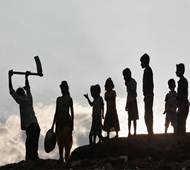
slavery copy copyAccording to the 2016 Global Slavery Index released by Australia-based human rights group Walk Free Foundation today, an estimated 45.8 million people, including women and children, are subject to some form of modern slavery in the world, compared to 35.8 million in 2014.

The report said India has the highest absolute numbers of people trapped in slavery with 18.35 million slaves among its 1.3 billion population while North Korea has the highest incidence (4.37 per cent of the population) and the weakest government response to deal with it.

In the last report in 2014, India had nearly 14.3 million people enslaved.
Incidences of slavery were found in all 167 countries in the index, with Asian countries occupy the top five for people trapped in slavery.

Behind India was China (3.39 million), Pakistan (2.13 million), Bangladesh (1.53 million) and Uzbekistan (1.23 million).

The index said that these five countries combined accounted for almost 58 per cent of the world's enslaved, or 26.6 million people.

The Index presents a ranking of 167 countries based on the proportion of the population that is estimated to be in modern slavery.

Modern slavery refers to situations of exploitation that a person cannot leave because of threats, violence, coercion, abuse of power or deception.

The research included over 42,000 interviews conducted in 53 languages across 25 countries, including 15 state-level surveys in India. These representative surveys covered 44 per cent of the global population.

The countries with the highest estimated prevalence of modern slavery by the proportion of their population are North Korea, Uzbekistan, Cambodia, Cambodia, India, and Qatar.

The countries with the lowest estimated prevalence of modern slavery by the proportion of their population are Luxembourg, Ireland, Norway, Denmark, Switzerland, Austria, Sweden and Belgium, the United States and Canada, and Australia and New Zealand.

The study also tracked the government actions and responses to the modern slavery and of the 161 assessed, 124 nations had criminalised human trafficking in line with the UN trafficking Protocol and 96 nations had developed national action plans to coordinate government response.

It noted that while India had more people enslaved than any other country, it had made significant progress in introducing measures to tackle the problem.

"It has criminalised trafficking, slavery, forced labour, child prostitution and forced marriage. The Indian government is currently tightening legislation against human trafficking, with tougher punishment for repeat offenders. It will offer victims protection and recovery support," it said.

It said that in addition to economic growth in India, ambitious programmes of legal and social reform are being undertaken right across the board, from regulation of labour relations to systems of social insurance for the most vulnerable.

Those governments taking the least action to combat modern slavery are North Korea, Iran, Eritrea, Equatorial Guinea, Hong Kong, Central African Republic, Papua New Guinea, Guinea, the Democratic Republic of the Congo and South Sudan.

The governments that have the strongest response to modern slavery are The Netherlands, the United States of America, the United Kingdom, Sweden, Australia, Portugal, Croatia, Spain, Belgium and Norway.

Seeking strong laws to abolish slavery, Andrew Forrest, Chairman and Founder of Walk Free Foundation, said eradicating slavery makes sense, morally, politically, logically and economically, and called on the governments of the world's leading economies to provide an example to others by enacting and implementing robust anti-slavery measures.

"We call on governments of the top 10 economies of the world to enact laws, at least as strong as the UK Modern Slavery Act 2015, with a budget and capability to ensure organisations are held to account for modern slavery in their supply chains, and to empower independent oversight."

Forrest said leaders of the world's major economies must bring the power of business to this issue, by requiring a focus on supply chain transparency.

"I believe in the critical role of leaders in government, business and civil society. Through our responsible use of power, strength of conviction, determination and collective will, we all can lead the world to end slavery," he said.

Forrest emphasised the key role that business needs to play in eradicating slavery.

"Businesses that don't actively look for forced labour within their supply chains are standing on a burning platform. Business leaders who refuse to look into the realities of their own supply chains are misguided and irresponsible," he said.

Comments

SK
 - 
Thursday, 2 Jun 2016

Since India is facing slavery, Naren has run away to Singapore to enjoy snake/ dog/cat/beef dishes......

Naren kotian
 - 
Tuesday, 31 May 2016

In that mostly 75% are from Muslim community as they enslave women as per their cult following .they have not changed since 6th century ...che papa ...ummah gang ge pitta netti geriruthe ..feku Anthe kumda ...for Muslims he might be feku ..but for nationalist Indians he is true hero who is transforming India .

Add new comment

  • Coastaldigest.com reserves the right to delete or block any comments.
  • Coastaldigset.com is not responsible for its readers’ comments.
  • Comments that are abusive, incendiary or irrelevant are strictly prohibited.
  • Please use a genuine email ID and provide your name to avoid reject.
News Network
February 8,2020

Bengaluru, Feb 8: The BJP on Saturday drew flak on Twitter for taking a swipe at Muslim women who appear to be standing in a line to vote in Delhi's assembly polls. ""Kaagaz Nahi Dikayenge Hum" ! ! ! Keep the documents safe, you will need to show them again during NPR exercise (sic)," the party's Karnataka Twitter handle posted using the hashtag #DelhiPolls2020. 

The video, which appears to have been taken from one of the polling booths in Delhi on Saturday, shows burqa-clad women flashing their voter ID cards. While the threatening tone of the tweet is unmissable, the tweet contradicts the government's statement that no person needs to submit any documents during the house-to-house survey for updating the National Population Register (NPR) and that information provided by individuals would be accepted and recorded. 

The tweet has added to the prevailing confusion regarding the NPR exercise in the country. 

The NPR is a list of "usual residents" of the country. In 2010, the data for NPR was collected along with the house-listing phase of the Census of India 2011. The data was updated in 2015 by conducting a door-to-door survey.

Currently, it has been decided to update the NPR along with the house-listing phase of Census 2021 during April to September 2020 in all the states/union territories except Assam.

Most of the opposition parties see NPR as a prelude to the contentious National Register of Citizens (NRC), which has been opposed by even NDA allies like the JD(U). The NPR questionnaire asked details like the birthplace of parents. In combination with the recently amended citizenship law, protesters fear that the registry might be eventually used for NRC. 

As a result, people, predominantly Muslims, have hit the streets as India witnesses one of the most widespread civilian unrest of recent times.

Comments

Add new comment

  • Coastaldigest.com reserves the right to delete or block any comments.
  • Coastaldigset.com is not responsible for its readers’ comments.
  • Comments that are abusive, incendiary or irrelevant are strictly prohibited.
  • Please use a genuine email ID and provide your name to avoid reject.
News Network
June 6,2020

Bengaluru, Jun 6: Karnataka Chief Minister B S Yediyurappa on Saturday said hotels and restaurants would be allowed to re-open, but the precautionary measures laid down by the Centre against coronavirus were mandatory.

The Chief Minister on Friday held a meeting with the tourism and transport department, also stakeholders, regarding revival of tourism in the state.

Hotels associations and transport companies have said they would follow the guidelines issued by the government, an official press release said here.

The Karnataka government had said it would go by the Centre's direction on opening religious places of worship, shopping malls, hotels, restaurants and other hospitality services on June 8.

Buses, hotels and taxi owners association placed some demands at the meeting, the release said, adding that Yediyurappa informed them that he would examine their demands and take appropriate decisions.

The Chief Minister also released a handout regarding the guidelines that need to be followed as the tourism department is opening hotels, guest houses and tourist destinations.

Deputy Chief Minister Laxman Savadi, Tourism Minister C T Ravi and senior officials of the department participated in the meeting.

The government had, on Thursday, said safaris, trekking, jungle lodges and resorts in areas that fall outside the COVID-19 containment zones can re-open provided they adhere to social distancing, hygiene as issued by the governments.

Comments

Add new comment

  • Coastaldigest.com reserves the right to delete or block any comments.
  • Coastaldigset.com is not responsible for its readers’ comments.
  • Comments that are abusive, incendiary or irrelevant are strictly prohibited.
  • Please use a genuine email ID and provide your name to avoid reject.
News Network
June 22,2020

Bengaluru, Jun 22: Concerned over the increase in COVID-19 cases in the city, Karnataka Chief Minister B S Yediyurappa on Monday directed officials to implement lockdown measures strictly in the clusters which have reported more infections.

Yediyurappa held a meeting with Ministers and senior officials regarding containing COVID-19 in Bengaluru and said it can be achieved only if preventive measures are implemented strictly and asked the officials to work in this direction.

"Lockdown shall be implemented strictly in the clusters which reported more cases, especially, K.R. Market and surrounding areas such as Siddapura, VV Puram, Kalasipalya etc. It was decided to seal the adjoining streets, where the cases are reported, a release from the Chief Minister's office said. Stringent action would be taken against those who violate quarantine norms and FIR would be filed if necessary, it said.

Till Sunday evening, the state capital has reported 1,272 cases of COVID-19, including 64 deaths and 411 discharges. On Sunday, as many as 196 fresh cases were recorded. Officers were directed to ensure hygiene and provide other basic amenities to the people who were quarantined in the social welfare department's hostels and other government institutions.

"COVID-19 should be contained without affecting the economic activities in Bengaluru, which resumed recently," the Chief Minister said.

Noting that booth-level officers and volunteers were working to trace contacts and monitor quarantined persons, he said the COVID war room shall have real-time information on the availability of beds in various designated hospitals and facilitate treatment to the infected without loss of time.

A bulletin from the Bruhat Bengaluru Mahanagara Palike (BBMP), the city civic body, said there were 298 active containment zones in the city. BBMP Commissioner B H Anil Kumar along with the Chamarajpet Congress MLA B Z Zameer Ahmed Khan visited a few slum areas in the city to take stock of the COVID-19 situation, officials said.

Comments

Add new comment

  • Coastaldigest.com reserves the right to delete or block any comments.
  • Coastaldigset.com is not responsible for its readers’ comments.
  • Comments that are abusive, incendiary or irrelevant are strictly prohibited.
  • Please use a genuine email ID and provide your name to avoid reject.