


India tops global slavery index with 18.35 mn people enslaved

May 31, 2016

Melbourne, May 31: India has the dubious distinction of having the highest number of people in the world trapped in modern slavery with 18.35 million victims of forced labour, ranging from prostitution and begging, according to a new report, which estimated that nearly 46 million people are enslaved globally.
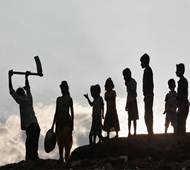
slavery copy copyAccording to the 2016 Global Slavery Index released by Australia-based human rights group Walk Free Foundation today, an estimated 45.8 million people, including women and children, are subject to some form of modern slavery in the world, compared to 35.8 million in 2014.

The report said India has the highest absolute numbers of people trapped in slavery with 18.35 million slaves among its 1.3 billion population while North Korea has the highest incidence (4.37 per cent of the population) and the weakest government response to deal with it.

In the last report in 2014, India had nearly 14.3 million people enslaved.
Incidences of slavery were found in all 167 countries in the index, with Asian countries occupy the top five for people trapped in slavery.

Behind India was China (3.39 million), Pakistan (2.13 million), Bangladesh (1.53 million) and Uzbekistan (1.23 million).

The index said that these five countries combined accounted for almost 58 per cent of the world's enslaved, or 26.6 million people.

The Index presents a ranking of 167 countries based on the proportion of the population that is estimated to be in modern slavery.

Modern slavery refers to situations of exploitation that a person cannot leave because of threats, violence, coercion, abuse of power or deception.

The research included over 42,000 interviews conducted in 53 languages across 25 countries, including 15 state-level surveys in India. These representative surveys covered 44 per cent of the global population.

The countries with the highest estimated prevalence of modern slavery by the proportion of their population are North Korea, Uzbekistan, Cambodia, Cambodia, India, and Qatar.

The countries with the lowest estimated prevalence of modern slavery by the proportion of their population are Luxembourg, Ireland, Norway, Denmark, Switzerland, Austria, Sweden and Belgium, the United States and Canada, and Australia and New Zealand.

The study also tracked the government actions and responses to the modern slavery and of the 161 assessed, 124 nations had criminalised human trafficking in line with the UN trafficking Protocol and 96 nations had developed national action plans to coordinate government response.

It noted that while India had more people enslaved than any other country, it had made significant progress in introducing measures to tackle the problem.

"It has criminalised trafficking, slavery, forced labour, child prostitution and forced marriage. The Indian government is currently tightening legislation against human trafficking, with tougher punishment for repeat offenders. It will offer victims protection and recovery support," it said.

It said that in addition to economic growth in India, ambitious programmes of legal and social reform are being undertaken right across the board, from regulation of labour relations to systems of social insurance for the most vulnerable.

Those governments taking the least action to combat modern slavery are North Korea, Iran, Eritrea, Equatorial Guinea, Hong Kong, Central African Republic, Papua New Guinea, Guinea, the Democratic Republic of the Congo and South Sudan.

The governments that have the strongest response to modern slavery are The Netherlands, the United States of America, the United Kingdom, Sweden, Australia, Portugal, Croatia, Spain, Belgium and Norway.

Seeking strong laws to abolish slavery, Andrew Forrest, Chairman and Founder of Walk Free Foundation, said eradicating slavery makes sense, morally, politically, logically and economically, and called on the governments of the world's leading economies to provide an example to others by enacting and implementing robust anti-slavery measures.

"We call on governments of the top 10 economies of the world to enact laws, at least as strong as the UK Modern Slavery Act 2015, with a budget and capability to ensure organisations are held to account for modern slavery in their supply chains, and to empower independent oversight."

Forrest said leaders of the world's major economies must bring the power of business to this issue, by requiring a focus on supply chain transparency.

"I believe in the critical role of leaders in government, business and civil society. Through our responsible use of power, strength of conviction, determination and collective will, we all can lead the world to end slavery," he said.

Forrest emphasised the key role that business needs to play in eradicating slavery.

"Businesses that don't actively look for forced labour within their supply chains are standing on a burning platform. Business leaders who refuse to look into the realities of their own supply chains are misguided and irresponsible," he said.

Comments

SK
 - 
Thursday, 2 Jun 2016

Since India is facing slavery, Naren has run away to Singapore to enjoy snake/ dog/cat/beef dishes......

Naren kotian
 - 
Tuesday, 31 May 2016

In that mostly 75% are from Muslim community as they enslave women as per their cult following .they have not changed since 6th century ...che papa ...ummah gang ge pitta netti geriruthe ..feku Anthe kumda ...for Muslims he might be feku ..but for nationalist Indians he is true hero who is transforming India .

Add new comment

  • Coastaldigest.com reserves the right to delete or block any comments.
  • Coastaldigset.com is not responsible for its readers’ comments.
  • Comments that are abusive, incendiary or irrelevant are strictly prohibited.
  • Please use a genuine email ID and provide your name to avoid reject.
News Network
April 19,2020

Indian Overseas Congress (IOC) Chaiman Dr Sam Pitroda held video conference with senior IOC office bearers across Middle Eastern countries on 14th April 2020 to review the impact of COVID-19 pandemic among Indians residing in the region. Almost all speakers appreciated the efforts initiated and  implemented by  respective governments to contain spread of the deadly virus as well as measures taken towards welfare of the people affected by the lockdown. 

IOC Presidents, Mohammed Mansour - Bahrain, Abdullah Manjeri - Saudi Arabia, Dr J Ratan kunar - Oman and Girish kumar - Qatar, highlighted the quality treatment of patients and finacial aid provided by governments and other authorities. Bahrain IOC president Mansour , also  apprised about the 'Food for Needy' drive in Association with KHK Heroes foundation, initiated by HH Sheikh Khalid Bin Hamad Al Khalifa and quality treatments as well as financial aid to local and expat residents.

Anura Mathai, IOC  Global Event Coordinator, spoke about certain problems of Indians in the UAE. IOC Middle East Convener, Mansoor Palloor, emphasised and requested IOC Chairman to urge Indian government to arrange immediate repatriation of indians stranded in Gulf countries. AICC Secretary, Himanshu Vyas, IOC Secretary Dr Arathi Krishna, Dr Arshi Malik (Abha), Mohiuddin Sirajudeen (Jeddah), Advocate Joseph Palathara (Dammam) Prasad Kodru, Jayati Maitra Ziyad Ahmed (Qatar) and Khursheed Alam (Gen Secretary- Bahrain) also apprised the participants about various issues relevant to the pandemic and suggested further initiatives to be undertaken. 

Dr Sam Pitroda briefed about sustained and consolidated efforts by all IOC members  during this unprecedented situation facing the world and assured that he would convey IOC  concerns to the government and try his best to ensure all possible help is made available to all needy Indians.

Comments

Add new comment

  • Coastaldigest.com reserves the right to delete or block any comments.
  • Coastaldigset.com is not responsible for its readers’ comments.
  • Comments that are abusive, incendiary or irrelevant are strictly prohibited.
  • Please use a genuine email ID and provide your name to avoid reject.
News Network
April 11,2020

Bengaluru, Apr 11: The coronavirus-driven lockdown will continue for another 15 days, but relaxations will be allowed in a graded manner, Karnataka Chief Minister B S Yediyurappa said after a four-hour-long video conference with Prime Minister Narendra Modi on Saturday.

“Agriculture and industrial sectors will be given relaxation. Government offices will be allowed to work with partial strength. But the PM said detailed guidelines will be issued in two days,” Yediyurappa said, briefing reporters. 

“Importantly, the lockdown for the next two weeks will be different than how it was in the past three weeks. The Centre, keeping in mind economic activities, especially agriculture, industry and employment of labourers, the Centre will tell us what needs to be done,” the CM said.
 
According to Yediyurappa, PM Modi told all chief ministers that the next 2-3 weeks will be critical. “The next few weeks will decide whether or not we have succeeded. If the situation worsens, we have to face the crisis,” Yediyurappa said, quoting Modi. 

Apparently, Modi sought details on the COVID-19 situation from 12-13 states where the situation is grave. “He did not take a report from Karnataka,” Yediyurappa said. “This morning, seven new cases were reported in the state, taking our tally to 214. Nationally, we were in the third place; we’re now 11th,” he said, hailing the efforts of officials involved in fighting the pandemic. 

The CM said it was “inevitable” to continue the lockdown for another 15 days. “But for citizens to get essential supplies, there’s no bar on them going by walk alone. Also, we will see to it that agricultural activities are not affected anywhere,” Yediyurappa said.

Comments

Add new comment

  • Coastaldigest.com reserves the right to delete or block any comments.
  • Coastaldigset.com is not responsible for its readers’ comments.
  • Comments that are abusive, incendiary or irrelevant are strictly prohibited.
  • Please use a genuine email ID and provide your name to avoid reject.
coastaldigest.com news network
January 22,2020

Mangaluru, Jan 22: Eminent industrialist Dr Mohammed Yusuf has been elected the chairperson of the Karnataka State Board of Auqaf. 

10 members of the Board cast their votes in the election held to the top post today at its office in the city. While Dr Yusuf, who was backed by the Congress, secured six votes, K N M Shafi Sa’adi, who was backed by the BJP, secured only 4 votes.

Addressing reporters, Dr Yusuf said that there was 1.32 lakh acres of Wakf land at the time of Independence. A large number of the properties were lost under various laws, including the Inam Land Abolition Act.

Flanked by Congress MLA Tanveer Sait and Minorities Welfare Dept secretary A B Ibrahim, Dr Yusuf vowed to strive hard to make the Board an example for the entire country. 

74-year-old Dr Yusuf had held the post more than once in the past. A veterinarian, Dr Yusuf had quit the government job and set up business in Bengaluru and Dubai decades ago and has earned considerable success.

Comments

Add new comment

  • Coastaldigest.com reserves the right to delete or block any comments.
  • Coastaldigset.com is not responsible for its readers’ comments.
  • Comments that are abusive, incendiary or irrelevant are strictly prohibited.
  • Please use a genuine email ID and provide your name to avoid reject.