


DRDO ties up with Ramdev to market supplements, food products

August 24, 2015

Leh(JK), Aug 24: India's premier defence research organisation DRDO has now roped in yoga guru Ramdev's Patanjali Ayurveda Limited to manufacture and market in the country and abroad some herbal supplements and food products developed by it.RAMDEV
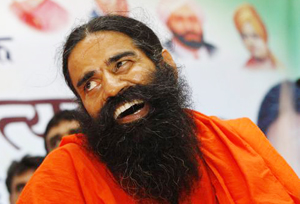
DRDO today entered into licensing agreements with Ramdev's company for transfer of Seabuckthorn technology based products developed by Defence Institute of High Altitude Research (DIHAR).

The technology has been transferred under the DRDO FICCI ATAC (Accelerated Technology Assessment&Commercialisation) programme that has been established to identify spin-off technologies for commercial markets within India and abroad, with a special focus on social benefit technologies, an official statement said.

DIHAR, a frontier laboratory of DRDO which is located in Leh with detachments in the strategic Siachen sector has pioneered cold arid-agro animal technologies for augmenting local availability of fresh food in the region.

The laboratory, through its translational laboratory to land approach, develops technologies for fresh food cultivation, poultry, goat and dairy farming and green house cultivation which are disseminated to the local farmers.

Speaking on the occasion, Defence Minister Manohar Parrikar said seabuckthorn is a unique product. "Apart from what has been commercialised, there are many more applications which Patanjali Ayurveda could explore to exploit the full potential of Seabuckthorn," he said.

Parrikar wanted Patanjali Ayurveda to bring many more health products to exploit the full potential of the technologies beyond what DIHAR has found out.

He added that DRDO in collaboration with FICCI under DRDO FICCI ATAC programme is striving to commercialise more and more spin off technologies for the benefit of society at large.

DRDO Chief S Cristopher mentioned that DIHAR has been relentlessly working for development of products which in addition to their usefulness for Armed Forces has tremendous commercial potential in India and abroad.

"The benefits of the research done by DIHAR will help the local population to derive the economic benefits," he said.

While giving an overview, Bhuvnesh Kumar, Director, DIHAR said that the farmers adopt the technologies developed by his scientists and sell their produce to the army.

"This unique approach not only results in local availability of fresh food but also results in socio-economic development of Ladakh and stronger civil-military cooperation in this strategically important region," the statement quoted him as saying.

Comments

Abe
 - 
Friday, 17 Jun 2016

This iis the reaso why smokers are trying to
find a way to stop smoking- at least. Technological advancements
today have led to the creation of the new electronic cigarette, a device that aims to help
even the most seemingly hopleless smoker to quit. When you opt
to make a purchase online, you will bbe able to review different
variieties to find the electronic cigarettes and accessories that are suitable tto you and
are within youur budget.

Taake a look at my web blog - elektronik sigara ovale: http://www.samuraiweapons.org/go.php?url=http://www.pusha.se/excellent-…

Jackson
 - 
Thursday, 19 May 2016

It is a conhstant process in each moment tto focus your thoughts and subsequent actionss into happiness, juyst like itt is a process in each moment to fokcus your thoughtts and subsequent actions to be in line with
enlightenment. It uses the excess fat from oour body
as a source of fuel and manages appetite and excessive food cravings.
this is by far the most common beneftit people know about green coffee bean extracts.

Here is my web-site ... yesil kahve kullananlar: http://www.tederojones.com/?option=com_k2&view=itemlist&task=user&id=45…

Add new comment

  • Coastaldigest.com reserves the right to delete or block any comments.
  • Coastaldigset.com is not responsible for its readers’ comments.
  • Comments that are abusive, incendiary or irrelevant are strictly prohibited.
  • Please use a genuine email ID and provide your name to avoid reject.
News Network
February 28,2020

Bengaluru, Feb 28: Historian S. Shettar, 85, breathed his last early on February 28 in Bengaluru. He was suffering from respiratory problems and was hospitalised for over a week.

Shettar was known for his multi-disciplinary work, encompassing linguistics, epigraphy, anthropology, the study of religions and art history. He had extensively worked on the Jain practice of ritual death in Karnataka and Asoka edicts. He had studied and compiled early edicts in Kannada and worked extensively on the growth of Kannada language down the ages.

Born in 1935 at Hampasagara, Ballari district, he went on to study at Cambridge University and started his career as a Professor of History at Karnatak University, Dharwad, his alma mater. He later headed the National Museum Institute of the History of Art, Conservation and Museology in 1978 and Indian Council for Historical Research in 1996. He was also a visiting professor at the National Institute of Advanced Studies, Bengaluru.

He was a bilingual historian who wrote in English for most of his career, but started writing in Kannada in later years. In the last two decades, he developed a keen interest in linguistics and wrote multiple books on classical Kannada and Prakrit. His 2007 book “Shangam Tamilagam” is considered a seminal work in the study of the early period of Dravidian languages. It won him Bhasha Samman from Central Sahitya Akademi. He later wrote two works on Halegannada, classical Kannada. His most recent work was “Prakrita Jagadvalaya” in 2018.

Comments

Add new comment

  • Coastaldigest.com reserves the right to delete or block any comments.
  • Coastaldigset.com is not responsible for its readers’ comments.
  • Comments that are abusive, incendiary or irrelevant are strictly prohibited.
  • Please use a genuine email ID and provide your name to avoid reject.
News Network
January 16,2020

Davanagere, Jan 16: Congress leader D K Shivakumar on Thursday turned down all the recent media reports of him aspiring for the coveted Karnataka Pradesh Congress Committe (KPCC) president post.

Terming all the news, doing rounds, as baseless, Shivakumar said that he never made any attempt to become KPCC president. "All I want to do is work for my people and party", he asserted.

Referring to Chief Minister B S Yediyurappa's visit to Harihar's 'Our Lady of Health Minor Basilica' programme, Shivakumar said."I'm not concerned about what others are doing, everyone is free to take part in the programmes."

Comments

Add new comment

  • Coastaldigest.com reserves the right to delete or block any comments.
  • Coastaldigset.com is not responsible for its readers’ comments.
  • Comments that are abusive, incendiary or irrelevant are strictly prohibited.
  • Please use a genuine email ID and provide your name to avoid reject.
News Network
May 29,2020

New Delhi, May 29: Opining that there is no harm in importing ideas from abroad Swadeshi Jagran Manch, an affiliate of Rashtriya Swayamsevak Sangh, has suggested that India should take a cue from Pakistan and turn the “locust threat” into “chicken feed.

In an interview, Ashwani Mahajan, national co-convener of Swadeshi Jagran Manch (SJM) said: “I saw an article which shows that Pakistan has turned the locust threat into an opportunity by converting it into chicken feed”

“If there is a good idea originating from anywhere, we should be open to exploring such ideas. We should adopt good ideas. There is no harm in that,” he added.

He also shared the article on Twitter and wrote: “Pakistan turns locust threat into chicken feed. Need to understand the idea and replicate it in India.”

The article stated “an innovative pilot project in Pakistan’s Okara district offers a sustainable solution in which farmers earn money by trapping locusts that are turned into high-protein chicken feed by animal feed mills”.

“It was the brainchild of Muhammad Khurshid, a civil servant in the Ministry of National Food Security and Research, and Johar Ali, a bio-technologist from the Pakistan Agricultural Research Council,” according to the article.

Both Pakistan and India have been hit by locust attacks. These are desert locusts, which is one of the 12 species of short-horned grasshoppers. Swarms can comprise billions and travel up to 130 km in a day.

India has been battling the locust attacks with moderate success since December. However, the onset of monsoon could bring more trouble.

Comments

Add new comment

  • Coastaldigest.com reserves the right to delete or block any comments.
  • Coastaldigset.com is not responsible for its readers’ comments.
  • Comments that are abusive, incendiary or irrelevant are strictly prohibited.
  • Please use a genuine email ID and provide your name to avoid reject.