


Karnataka's new anti-superstition Bill proposes to ban 23 ugly practices

July 9, 2016

Bengaluru, Jul 9: The new version of an anti-superstition Bill?proposes to ban 23 practices, including human torture in the name of rituals and display of miracles' to earn money.
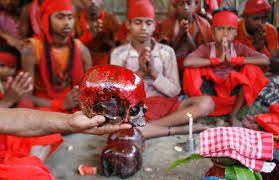
1uglyThe draft Karnataka Prevention and Eradication of Human Sacrifices and other Inhuman Evil and Aghori Practices and Black Magic Bill-2016 is a modified version of the Karnataka Prevention of Superstitious Practices Bill-2013.

The copy of the Bill was circulated at the state Cabinet meeting on Friday.

The Bill will be debated in the next Cabinet meeting, too, and introduced in the ongoing legislature session, according to Law Minister T?B Jayachandra.

The 2013 Bill had met with resistance from various quarters as it proposed to ban numerology, astrology among others, and was referred to the scrutiny committee for modification. The 2016 Bill is yet to be made public.

According to sources, it lists out practices which are proposed to be banned and those which will not apply under the provisions of the Bill. (See chart) Besides social evils like human sacrifice and Aghori, the Bill proposes to ban made snana', the practice of people rolling over leftovers after Brahmins have partaken food in temples; and fire-walking, the act of walking barefoot on redhot embers, which is a common practice in Karnataka.

Unhealthy rituals

Human sacrifice; propagation of human sacrifice

Practices like made snana', fire-walking, banamati', bettale seve'

Torture in the name of exorcism

Display of miracles to earn money or terrorise people

Inhuman, evil and Aghori practices which endanger life

Practice of black magic in search of precious things

Creating fear in others by claiming to have supernatural powers

Creating panic by threatening to invoke ghosts

It won't apply to...

Worship

Teaching of ancient and traditional learning

Performance of prayers

All religious celebrations

Piercing of ears, nose in accordance with religious rituals

Advice of vastu shastra', astrology and advice with regard to source of groundwater

Comments

Rajesh Sequira
 - 
Saturday, 9 Jul 2016

How can they pass this bill? Hindu religion is based on superstitions and the brahmins are preying upon the fears created on the lower classes.

Ahmed Ali K
 - 
Saturday, 9 Jul 2016

Please also add in the ban list - worshipping dead.

Add new comment

  • Coastaldigest.com reserves the right to delete or block any comments.
  • Coastaldigset.com is not responsible for its readers’ comments.
  • Comments that are abusive, incendiary or irrelevant are strictly prohibited.
  • Please use a genuine email ID and provide your name to avoid reject.
News Network
February 28,2020

Bengaluru, Feb 28: Historian S. Shettar, 85, breathed his last early on February 28 in Bengaluru. He was suffering from respiratory problems and was hospitalised for over a week.

Shettar was known for his multi-disciplinary work, encompassing linguistics, epigraphy, anthropology, the study of religions and art history. He had extensively worked on the Jain practice of ritual death in Karnataka and Asoka edicts. He had studied and compiled early edicts in Kannada and worked extensively on the growth of Kannada language down the ages.

Born in 1935 at Hampasagara, Ballari district, he went on to study at Cambridge University and started his career as a Professor of History at Karnatak University, Dharwad, his alma mater. He later headed the National Museum Institute of the History of Art, Conservation and Museology in 1978 and Indian Council for Historical Research in 1996. He was also a visiting professor at the National Institute of Advanced Studies, Bengaluru.

He was a bilingual historian who wrote in English for most of his career, but started writing in Kannada in later years. In the last two decades, he developed a keen interest in linguistics and wrote multiple books on classical Kannada and Prakrit. His 2007 book “Shangam Tamilagam” is considered a seminal work in the study of the early period of Dravidian languages. It won him Bhasha Samman from Central Sahitya Akademi. He later wrote two works on Halegannada, classical Kannada. His most recent work was “Prakrita Jagadvalaya” in 2018.

Comments

Add new comment

  • Coastaldigest.com reserves the right to delete or block any comments.
  • Coastaldigset.com is not responsible for its readers’ comments.
  • Comments that are abusive, incendiary or irrelevant are strictly prohibited.
  • Please use a genuine email ID and provide your name to avoid reject.
News Network
April 3,2020

Bengaluru, April 3: Messages have been displayed outside mosques in Shivajinagar requesting people to offer Friday prayers at home during the lockdown imposed in the wake of the COVID-19 threat.

In light of the coronavirus outbreak, several Muslim organisations and mosques across various states have temporarily halted the congregational prayers.

The usually bustling Jama Masjid area, today, wore a deserted look.

One new positive case of COVID-19 was reported in Karnataka on Friday.

The patient is a 75-year-old man from Bagalkot and has been isolated at a designated hospital in Bagalkot, the state government said.

"Till date, 125 COVID-19 cases have been confirmed in the state, this includes three deaths and 11 discharges," it added.

The total number of coronavirus positive cases rose to 2301 in India on Friday, including 156 cured/discharged, 56 deaths and 1 migrated, as per the data provided by the Ministry of Health and Family Welfare.

Comments

Add new comment

  • Coastaldigest.com reserves the right to delete or block any comments.
  • Coastaldigset.com is not responsible for its readers’ comments.
  • Comments that are abusive, incendiary or irrelevant are strictly prohibited.
  • Please use a genuine email ID and provide your name to avoid reject.
Agencies
January 19,2020

New Delhi, Jan 19: Senior Congress leader Kapil Sibal on Sunday asserted that every state assembly has the constitutional right to pass a resolution and seek the amended Citizenship Act's withdrawal, but if the law is declared constitutional by the Supreme Court then it will be problematic to oppose it.

His remarks came a day after he had said there is no way a state can deny the implementation of the Citizenship Amendment Act (CAA) when it is already passed by the Parliament.

"I believe the CAA is unconstitutional. Every State Assembly has the constitutional right to pass a resolution and seek its withdrawal. When and if the law is declared to be constitutional by the Supreme Court then it will be problematic to oppose it. The fight must go on!" Sibal said in a tweet.

His remarks on the CAA at the Kerala Literature Festival (KLF) on Saturday had caused a flutter as several non-BJP governments, including Kerala, Rajasthan, Madhya Pradesh, West Bengal and Maharashtra, have voiced their disagreement with the CAA as well as National Register of Citizens (NRC) and National Population Register (NPR).

"If the CAA is passed no state can say 'I will not implement it'. It is not possible and is unconstitutional. You can oppose it, you can pass a resolution in the Assembly and ask the central government to withdraw it.

"But constitutionally saying that I won't implement, it is going to be problematic and going to create more difficulties," said the former minister of law and justice.

Comments

Add new comment

  • Coastaldigest.com reserves the right to delete or block any comments.
  • Coastaldigset.com is not responsible for its readers’ comments.
  • Comments that are abusive, incendiary or irrelevant are strictly prohibited.
  • Please use a genuine email ID and provide your name to avoid reject.