


Karnataka's new anti-superstition Bill proposes to ban 23 ugly practices

July 9, 2016

Bengaluru, Jul 9: The new version of an anti-superstition Bill?proposes to ban 23 practices, including human torture in the name of rituals and display of miracles' to earn money.
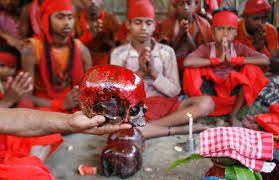
1uglyThe draft Karnataka Prevention and Eradication of Human Sacrifices and other Inhuman Evil and Aghori Practices and Black Magic Bill-2016 is a modified version of the Karnataka Prevention of Superstitious Practices Bill-2013.

The copy of the Bill was circulated at the state Cabinet meeting on Friday.

The Bill will be debated in the next Cabinet meeting, too, and introduced in the ongoing legislature session, according to Law Minister T?B Jayachandra.

The 2013 Bill had met with resistance from various quarters as it proposed to ban numerology, astrology among others, and was referred to the scrutiny committee for modification. The 2016 Bill is yet to be made public.

According to sources, it lists out practices which are proposed to be banned and those which will not apply under the provisions of the Bill. (See chart) Besides social evils like human sacrifice and Aghori, the Bill proposes to ban made snana', the practice of people rolling over leftovers after Brahmins have partaken food in temples; and fire-walking, the act of walking barefoot on redhot embers, which is a common practice in Karnataka.

Unhealthy rituals

Human sacrifice; propagation of human sacrifice

Practices like made snana', fire-walking, banamati', bettale seve'

Torture in the name of exorcism

Display of miracles to earn money or terrorise people

Inhuman, evil and Aghori practices which endanger life

Practice of black magic in search of precious things

Creating fear in others by claiming to have supernatural powers

Creating panic by threatening to invoke ghosts

It won't apply to...

Worship

Teaching of ancient and traditional learning

Performance of prayers

All religious celebrations

Piercing of ears, nose in accordance with religious rituals

Advice of vastu shastra', astrology and advice with regard to source of groundwater

Comments

Rajesh Sequira
 - 
Saturday, 9 Jul 2016

How can they pass this bill? Hindu religion is based on superstitions and the brahmins are preying upon the fears created on the lower classes.

Ahmed Ali K
 - 
Saturday, 9 Jul 2016

Please also add in the ban list - worshipping dead.

Add new comment

  • Coastaldigest.com reserves the right to delete or block any comments.
  • Coastaldigset.com is not responsible for its readers’ comments.
  • Comments that are abusive, incendiary or irrelevant are strictly prohibited.
  • Please use a genuine email ID and provide your name to avoid reject.
News Network
February 28,2020

The Karnataka BJP, which faced action on Twitter earlier this month over incendiary tweets, this time has passed the blame of Sangh Parivar sponsored Delhi violence to the victims.

In an insensitive tweet on Friday, it dubbed the protests against the notorious Citizenship Amendment Act (CAA) as "fake" and added that the violence that followed was "the most well-planned assault on the Idea of India," in an apparent attempt to portray the victims as villains.

The handle, notorious for tweets targeting Muslims, blamed the clashes that erupted in Delhi between people demonstrating for and against the CAA on "so called 'Peacefuls'" - a known right-wing slur for Muslims.

Many people on social media called out the tweet for misleading people and covering up the role of Delhi BJP leader Kapil Mishra's provocative speech for triggering the violence or the failure of the Delhi Police, which reports to the former BJP chief and Union Home Minister Amit Shah, in controlling the riots.

Earlier this month, the Karnataka BJP had tweeted a video of Muslim women standing in queue to vote in the Delhi elections, showing their voter ID cards, with the snarky caption: "Keep the documents safe, you will need to show them again during NPR (National Population Register) exercise."

Soon after, the party unit's Twitter handle was blocked by the social media platform for 24 hours after many accused it of encouraging Islamophobia.

NPR has been widely criticised by opposition parties as a precursor to the government's planned NRC or National Register of Citizens which intends to make Indians prove their citizenship with documents that many poor or illiterate do not possess.

Many fear that combined with the already imposed CAA - which promises citizenship to only non-Muslim refugees from Pakistan, Afghanistan and Bangladesh - the NRC can be used to make millions of Muslims stateless.

The government has denied the allegation and said the CAA only intends to help those who have faced religious persecution. In recent weeks, it has gone back on its rhetoric on the NRC which was announced by Amit Shah in parliament as "it will certainly happen".

The CAA, which was cleared by parliament in December, has triggered deadly protests in the country which left at least 25 dead till Sunday. Since then, at least 42 more people have been killed as large-scale violence erupted in northeast Delhi and hundreds of homes and shops have been burned to the ground.

Comments

Add new comment

  • Coastaldigest.com reserves the right to delete or block any comments.
  • Coastaldigset.com is not responsible for its readers’ comments.
  • Comments that are abusive, incendiary or irrelevant are strictly prohibited.
  • Please use a genuine email ID and provide your name to avoid reject.
News Network
March 27,2020

Mangaluru, Mar 27: In the wake of mounting number of coronavirus positive cases in Dakshina Kannada and surrounding areas, the government has decided to fully shut down the coastal district on Saturday, March 28.

Announcing this today, district in charge minister Kota Srinivas Poojary urged the people not to step out their homes at any cost for any reason as nothing would be available outside except the deadly coronavirus.

All grocery stores, food outlets and markets also are likely to remain closed. For last few days grocery shops remained open till noon. 

Dakshina Kannada today reported two fresh cases of Covid-19. So far the district witnessed seven positive cases and none of them are fully cured. Shockingly neighboring district of Kasargod today reported 34 new coronavirus positive cases on a single day.

Comments

Add new comment

  • Coastaldigest.com reserves the right to delete or block any comments.
  • Coastaldigset.com is not responsible for its readers’ comments.
  • Comments that are abusive, incendiary or irrelevant are strictly prohibited.
  • Please use a genuine email ID and provide your name to avoid reject.
News Network
February 23,2020

The euphoria over the claim that around 3,000 tonnes of gold reserves, worth Rs 12 trillion, have been discovered in Uttar Pradesh’s Sonbhadra district could not last even 24 hours, with the Geological Survey of India (GSI) clarifying on Saturday there had been no such discovery.

The GSI, headquartered in Kolkata, rebutted the claims of the Uttar Pradesh Directorate of Geology and Mining (UPDGM), and said “miscommunication” must have led to the wrong reporting of facts.

M Sridhar, director general of the GSI, said nobody in the agency gave any such data. He said 52,806 tonnes of gold ore was found in Sonbhadra district during the exploration work in 1998-2000. From this reserve, only 160 kg of gold can be extracted.

“There must have been some miscommunication of facts because of which the gold ore deposits have been overestimated. We have written a letter to Uttar Pradesh (UPDGM), stating the facts. The GSI has not estimated such kind of vast resource of gold deposits in Sonbhadra,” Sridhar said.

ALSO READ: 2,900-tonne gold mine found in Sonbhadra, 4 times that of India's reserves

The UPDGM had said on Friday that gold deposits were found in Son Pahadi and Hardi areas of the district. Sridhar said while gold ore was found in the area during the GSI’s exploration work in 1998-2000, it had told the state government about the discovery in November last year.

Under the new regulation, which came into effect from 2015, the GSI has to inform the state government when ore deposits are discovered. Earlier, no such action was mandatory. In its report, the GSI estimated that only 3.03 gm of gold can be extracted from a tonne of ore. It also clarified that even the extraction amount was tentative and could not be established for certain.

Moreover, Sridhar said the deposits were spread across only 0.5 sq km in forest land, which made the mining of ore economically unviable. “When there are several mines nearby, we can club it into a block and then it makes sense to mine the ore. But in this case, the deposits are too small to make it viable for any company to mine it,” he said. The GSI usually prioritises its exploration work based on the needs of the Centre. While strategic minerals like tin, cobalt, lithium, beryllium, germanium, gallium, indium, tantalum, niobium, selenium, and bismuth are atop the list in GSI exploration, gold is another commodity on its priority list.

According to the World Gold Council, India has reserves of 630 tonnes of gold.

Comments

Add new comment

  • Coastaldigest.com reserves the right to delete or block any comments.
  • Coastaldigset.com is not responsible for its readers’ comments.
  • Comments that are abusive, incendiary or irrelevant are strictly prohibited.
  • Please use a genuine email ID and provide your name to avoid reject.