Former supermodel wins 53m pounds in divorce from Saudi billionaire

July 9, 2016

London, Jul 9: A British court has awarded a 53 million pounds( USD 69 million) divorce settlement to a former model who had demanded 196 million pounds from her Saudi billionaire husband -- including 1 million pounds a year just for clothes.

modelLawyers for US national Christina Estrada, 54, said the total settlement amounted to 75 million pounds, including the value of her existing assets.

She had asked for 196 million pounds from 61-year-old husband Sheikh Walid Juffali but thanked the court after the ruling.

"I am fully aware that the spectacular life Walid and I led was immensely fortunate and rarefied. And I fully understand how this can be perceived in the wider world," she said in a statement.

In hearings during which she was cross-examined on her material needs she told the court: "I was a top international model. I have lived this life. This is what I am accustomed to".

She said she needed 60 million pounds for a home in London, 4.4 million pounds for a country house in Henley-on-Thames as well as 495,000 poumds for five cars.

Her clothing budget included an annual 40,000 pounds for fur coats, 109,000 pounds for haute couture dresses and 21,000 pounds for shoes.

Juffali is terminally ill with cancer and undergoing treatment in Switzerland. He divorced Estrada under Islamic law without her knowledge and married a 25-year-old Lebanese model in 2012.

London is known as the divorce capital of the world and is particularly attractive for wives because awards are higher than in other parts of the world.

Thousands of wealthy Chinese, Russians, Americans and Europeans, many of whom work in the City of London financial district or own property in Britain, now end their marriages before English judges.

Late Russian oligarch Boris Berezovsky reportedly paid up to 220 million pounds to his ex-wife Galina Besharova in 2011.

Jamie Cooper-Hohn, the estranged wife of a London financier, was awarded 337 million pounds in 2014.

Comments

suleman beary
 - 
Saturday, 9 Jul 2016

Honey is so sweet and precious.

Add new comment

  • Coastaldigest.com reserves the right to delete or block any comments.
  • Coastaldigset.com is not responsible for its readers’ comments.
  • Comments that are abusive, incendiary or irrelevant are strictly prohibited.
  • Please use a genuine email ID and provide your name to avoid reject.
News Network
March 9,2020

Riyadh, Mar 9: Schools and universities will be closed in Saudi Arabia from Monday to control the spread of coronavirus.

The Saudi Ministry of Education said the “preventive and precautionary” measures were recommended by the health authorities and are designed to protect students and staff.

The decision covers all educational institutions, including public and private schools, and technical and vocational training institutions.

“The Minister of Education directed that virtual schools and distance education be activated while the schools are closed to ensure that the educational process continues in an effective and quality manner,” the ministry said.

The Kingdom's Education Minister, Hamad bin Mohammed Al-Asheikh, confirmed that the decision was a precautionary step and said that they are conducting daily and weekly evaluations before returning to school.

Meanwhile, the Minister of Health, Tawfiq Al-Rabiah, confirmed that there have been no coronavirus cases in any educational facility in the Kingdom.

“Thank God, the situation is reassuring, and there has been no case in any educational facility. However, the increasing cases in countries have made us keen to enhance the safety of our sons and daughters. So we coordinated with the Ministry of Education to close the schools temporarily,” he said in a tweet on Sunday.

The education ministry has set up supervision offices to help coordinate the distance learning, and respond to parents’ inquiries.

A new committee set up by the ministry will also ensure the virtual schools are functioning through the distance learning methods provided by the ministry.

These include the virtual school platform (Vschool.sa) and mwterials available from the Apple and Android stores.

It will also provide lessons through the “Ain” TV channeland as well as on YouTube via this link: www.youtube.com/dorosien.

The General Presidency for the Affairs of the Grand Mosque and the Prophet’s Mosque also said on Sunday that it will suspend the visitation programs in its external facilities as part of recommended precautions to prevent the spread of the coronavirus and ensure the safety of visitors.

The facilities include the King Abdulaziz Complex for the Covering of the Holy Kaaba, the Gallery of the Two Holy Mosques, and the Library of the Holy Mosque of Makkah.

“The presidency has taken a series of precautionary measures to prevent the spread of the virus, by intensifying sterilization work that is taking place around the clock, and has been keen on coordination and joint cooperation with all relevant government sectors,” it said in a statement issued on SPA.

It added that these preventive efforts come within the procedures that are being implemented by the Saudi government seeking to combat the spread of the new virus, to protect the people of the Two Holy Mosques in particular, and citizens and residents in the Kingdom in general.

Comments

Add new comment

  • Coastaldigest.com reserves the right to delete or block any comments.
  • Coastaldigset.com is not responsible for its readers’ comments.
  • Comments that are abusive, incendiary or irrelevant are strictly prohibited.
  • Please use a genuine email ID and provide your name to avoid reject.
Agencies
August 2,2020

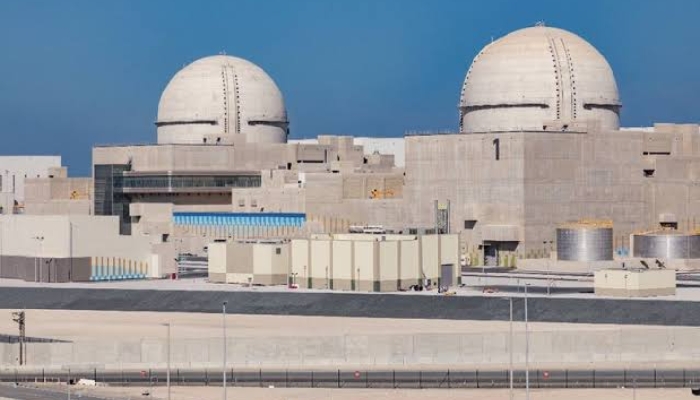
Dubai, Aug 2: The United Arab Emirates (UAE) announced on Saturday that it has started operations in the first of four reactors at the Barakah nuclear power station - the first nuclear power plant in the Arab world.

Emirates Nuclear Energy Corporation (ENEC), which is building and operating the plant with Korea Electric Power Corporation (KEPCO) said in a press release that its subsidiary Nawah Energy Company "has successfully started up Unit 1 of the Barakah Nuclear Energy Plant, located in the Al Dhafrah Region of Abu Dhabi".

That signals that Unit 1, which had fuel rods loaded in March, has achieved "criticality" - a sustained fission chain reaction.

"The start-up of Unit 1 marks the first time that the reactor safely produces heat, which is used to create steam, turning a turbine to generate electricity," said ENEC.

Barakah, which was originally scheduled to open in 2017, has been dogged by delays and is billions of dollars over budget. It has also raised myriad concerns among nuclear energy veterans who are concerned about the potential risks Barakah could visit upon the Arabian Peninsula, from an environmental catastrophe to a nuclear arms race.

Paul Dorfman, an honorary senior research fellow at the Energy Institute, University College London and founder and chair of the Nuclear Consulting Group, has criticised the Barakah reactors' "cheap and cheerful" design that he says cuts corners on safety.

Dorfman authored a report (PDF) last year detailing key safety features Barakah's reactors lack, such as a "core catcher" to literally stop the core of a reactor from breaching the containment building in the event of a meltdown. The reactors are also missing so-called Generation III Defence-In-Depth reinforcements to the containment building to shield against a radiological release resulting from a missile or fighter jet attack.

Both of these engineering features are standard on new reactors built in Europe, says Dorfman.

There have been at least 13 aerial attacks on nuclear facilities in the Middle East - more than any other region on earth.

The vulnerability of critical infrastructure in the Arabian Peninsula was further laid bare last year after Saudi Arabia's oil facilities at Abqaiq and Khurais were attacked by 18 drones and seven cruise missiles - an assault that temporarily knocked out more than half of the kingdom's oil production.

On Saturday, Dorfman reiterated his concern that there is no regional protocol in place to determine liability should an accident or incident at Barakah result in radioactive contamination spreading from the UAE to its neighbours. 

"Given Barakah has started up, because of all the well-rehearsed nuclear safety and security problems, it may be critically important that the Gulf states collectively evolve a Nuclear Accident Liability Convention, so that if anything does go wrong, victim states may have some sort of redress," Dorfman told Al Jazeera. 

The UAE has substantial oil and gas reserves, but it has made huge investments in developing alternative energy sources, including nuclear and solar.

Experts though have questioned why the UAE - which is bathed in sunlight and wind - has pushed ahead with nuclear energy - a far more expensive and riskier option than renewable energy sources.

When the UAE first announced Barakah in 2009, nuclear power was cheaper than solar and wind. But by 2012 - when the Emirates started breaking ground to build the reactors - solar and wind costs had plummeted dramatically.

Between 2009 and 2019, utility-scale average solar photovoltaic costs fell 89 percent and wind fell 43 percent, while nuclear jumped 26 percent, according to an analysis by the financial advisory and asset manager Lazard.

There are also concerns about the potential for Barakah to foment nuclear proliferation in the Middle East - a region rife with geopolitical fault lines and well-documented history of nuclear secrecy.

The UAE has sought to distance itself from the region's bad behaviour by agreeing not to enrich its own uranium or reprocess spent fuel. It has also signed up to the United Nation's nuclear watchdog's Additional Protocol, significantly enhancing inspection capabilities, and secured a 123 Agreement with the United States that allows bilateral civilian nuclear cooperation.


Comments

Add new comment

  • Coastaldigest.com reserves the right to delete or block any comments.
  • Coastaldigset.com is not responsible for its readers’ comments.
  • Comments that are abusive, incendiary or irrelevant are strictly prohibited.
  • Please use a genuine email ID and provide your name to avoid reject.
Agencies
June 28,2020

Kuwait, Jun 28: Measures imposed to curb the spread of the novel coronavirus in Kuwait are believed to have increased suicide cases in the country, according to a media report.

Forty suicide cases and 15 failed attempts, mainly among Asian expatriates, have been recorded in Kuwait since late February, Gulf News quoted the Al Qabas newspaper report, citing sources as saying on Saturday.

Investigations into the majority of cases have revealed that those who committed suicide had experienced psychological and economic troubles due to dire financial circumstances after their employers stopped to pay them as a result of economic fallout from the coronavirus-related measures.

In one case, an expat livestreamed his suicide while chatting with his fiancee on a social networking platform, the newspaper report said.

Suicide cases have increased by around 40 per cent since the start of the COVID-19 crisis, according to the sources.

Some 70 to 80 suicide cases are recorded annually in Kuwait. Last year, they reached 80 suicides against 77 in 2018.

"Suicide cases have started to go up in Kuwait during the coronavirus pandemic due to fear, anxiety, isolation and instability experienced by people and absence of daily aims that could help the person to spend time regularly as before," the newspaper quoted social psychology consultant Samira Al Dosari as saying.

Uncertainty for some expatriates, whose countries have refused to take them in, is another motive for attempting suicide, according to Jamil Al Muri, a sociology professor at the Kuwait University.

"This is in addition to greed of the iqamat traders, who have brought into the country workers in names of phantom companies and abandoned them on the streets," he added.

Starting from Tuesday, Kuwait will embark on the second phase of a stepwise plan to bring life to normal, Gulf News reportd.

According to Phase 2, a nationwide night-time curfew will be reduced by one hour to run daily from 8 p.m. until 5 a.m. for three weeks.

Kuwait has so far reported 44,391 COVID-19 cases, with 344 deaths.

Comments

Angry indian
 - 
Tuesday, 30 Jun 2020

YA ALLah save all dispressed people in the earth..

Add new comment

  • Coastaldigest.com reserves the right to delete or block any comments.
  • Coastaldigset.com is not responsible for its readers’ comments.
  • Comments that are abusive, incendiary or irrelevant are strictly prohibited.
  • Please use a genuine email ID and provide your name to avoid reject.

