


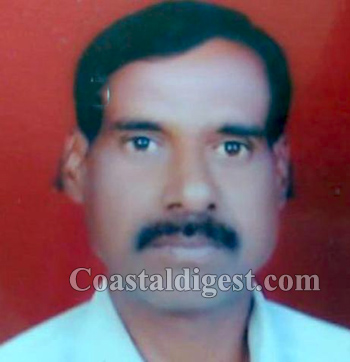
Cops suicide spree continues; transfer drives head constable to kill self

July 22, 2016

KarnatakaBengaluru, Jul 22: The spate of suicides involving police staff has continued in Karnataka with a constable allegedly taking his life this morning in Kalaburgi owing to issues relating to his transfer.

Annarao Saibanna Gamaga (48), a head constable with the Indian Reserve Battalion (IRB), was found hanging from the ceiling at his staff quarters in Sultanpur in Kalaburgi. Though he was taken to a nearby hospital, he did not survive.

According to his relatives, Annarao, who was working for the Karnataka State Reserve Police (KSRP), was transferred to the IRB a year ago. Owing to poor health, he requested to be transferred back to the KSRP. However, it is alleged that his superiors demanded money to transfer him back to the KSRP. Annarao was reportedly under great stress and may have committed suicide because of the issue, his relatives alleged.

This is the fifth suicide case involving police staff in the last two weeks in Karnataka. The police have registered a case and probing the circumstances leading to Annarao's suicide.

Comments

Rikaz
 - 
Friday, 22 Jul 2016

No one can stop corruption....no political parties....????

Add new comment

  • Coastaldigest.com reserves the right to delete or block any comments.
  • Coastaldigset.com is not responsible for its readers’ comments.
  • Comments that are abusive, incendiary or irrelevant are strictly prohibited.
  • Please use a genuine email ID and provide your name to avoid reject.
News Network
July 5,2020

Bengaluru, Jul 5: A total number of 32 SSLC students, who took exams between June 25 and July 3 have tested positive for the coronavirus.

Eighty other students are in home quarantine. As per a press release from the Karnataka government here as of July 3, more than 7.60 lakh students wrote the exam, with 14,745 absentees. The report from the government stated that 3,911 students did not attend the exams as they were in a containment zone. A total of 863 students had not attended the exams as they were unwell.

Last week, a Class 10 student from Hassan had tested coronavirus positive. The student reportedly wrote an exam on June 25, despite having taken the coronavirus test. His positive result reportedly came shortly after he finished writing the exam.

Comments

Add new comment

  • Coastaldigest.com reserves the right to delete or block any comments.
  • Coastaldigset.com is not responsible for its readers’ comments.
  • Comments that are abusive, incendiary or irrelevant are strictly prohibited.
  • Please use a genuine email ID and provide your name to avoid reject.
News Network
April 14,2020

Thiruvananthapuram, Apr 14: Amid Covid-19 lockdown,

Keralites celebrated a low key "Vishu" ,the Malayalam new year, on Tuesday, hoping that days of plenty, prosperity and peace will return.

People woke up in the early hours to see the auspicious "Vishu kani", symbolising hope, promise and fine prospects they wish to have in the year ahead.

The ritual comprises arranging on platters auspicious articles like seasonal fruits, vegetables, flower, gold and clothes which together form the first sight when the family members wake up on the Vishu day.

Normally, Keralites dressed in their traditional attire throng temples across the state.

However, this year due to the lockdown restrictions, temple visits were given a go by.

The famed Sri Krishna temple at Guruvayur and the Lord Ayyappa shrine at Sabarimala witnesses heavy rush of devotees during the vishu day.

But pilgrims were not allowed inside and only temple officials and security personnel were present for the"Vishu kani".

Rehaman, a small time trader, said very few people have come out for vishu purchases due to the restricitons.

It is fine as it is for a good cause, while Radha, a young woman said she could not celebrate the festival.

"We have no money, no job. With whatever little we have, we are celebrating the festival", she said.

87-year-old Vilasini Nambiar, a retired college professor, said vishu has visited the state during a most bewildering time.

"It should however remind us that every mountain must have its valley, desert its oasis, every storm cloud its rainbow, every night its day.

We are prepared to believe that we will overcome this misfortune", she said.

President Ram Nath Kovind, Prime Minister, Narendra Modi, Home minister, Amit Shah, Kerala Governor, Arif Mohammed Khan and Chief Minister, Pinarayi Vijayan, were among those who greeted people on the occasion of Vishu.

Comments

Add new comment

  • Coastaldigest.com reserves the right to delete or block any comments.
  • Coastaldigset.com is not responsible for its readers’ comments.
  • Comments that are abusive, incendiary or irrelevant are strictly prohibited.
  • Please use a genuine email ID and provide your name to avoid reject.
News Network
February 28,2020

Bengaluru, Feb 28: Historian S. Shettar, 85, breathed his last early on February 28 in Bengaluru. He was suffering from respiratory problems and was hospitalised for over a week.

Shettar was known for his multi-disciplinary work, encompassing linguistics, epigraphy, anthropology, the study of religions and art history. He had extensively worked on the Jain practice of ritual death in Karnataka and Asoka edicts. He had studied and compiled early edicts in Kannada and worked extensively on the growth of Kannada language down the ages.

Born in 1935 at Hampasagara, Ballari district, he went on to study at Cambridge University and started his career as a Professor of History at Karnatak University, Dharwad, his alma mater. He later headed the National Museum Institute of the History of Art, Conservation and Museology in 1978 and Indian Council for Historical Research in 1996. He was also a visiting professor at the National Institute of Advanced Studies, Bengaluru.

He was a bilingual historian who wrote in English for most of his career, but started writing in Kannada in later years. In the last two decades, he developed a keen interest in linguistics and wrote multiple books on classical Kannada and Prakrit. His 2007 book “Shangam Tamilagam” is considered a seminal work in the study of the early period of Dravidian languages. It won him Bhasha Samman from Central Sahitya Akademi. He later wrote two works on Halegannada, classical Kannada. His most recent work was “Prakrita Jagadvalaya” in 2018.

Comments

Add new comment

  • Coastaldigest.com reserves the right to delete or block any comments.
  • Coastaldigset.com is not responsible for its readers’ comments.
  • Comments that are abusive, incendiary or irrelevant are strictly prohibited.
  • Please use a genuine email ID and provide your name to avoid reject.