



Missing Malaysian flight MH 370: Computer sent plane off flight path

March 18, 2014

Flight_MH_370Washington, Mar 18: The first turn to the west that diverted the missing Malaysia Airlines plane from its planned flight path from Kuala Lumpur to Beijing was carried out through a computer system that was most likely programmed by someone in the plane's cockpit who was knowledgeable about airplane systems, according to senior US officials.

Instead of manually operating the plane's controls, whoever altered flight 370's path typed seven or eight keystrokes into a computer on a knee-high pedestal between the captain and the first officer, according to officials. The Flight Management System, as the computer is known, directs the plane from point to point specified in the flight plan submitted before each flight. It is not clear whether the plane's path was reprogrammed before or after it took off.

The fact that the turn away from Beijing was programmed into the computer has reinforced the belief of investigators — first voiced by Malaysian officials — that the plane was deliberately diverted and that foul play was involved. It has also increased their focus on the plane's captain and first officer.

Prime Minister Najib Razak of Malaysia told reporters on Saturday that his government believed the plane had been diverted, because its transponder and other communications devices had been manually turned off several minutes apart. US officials were told of the new information over the weekend.

But Malaysian authorities on Monday reversed themselves on the sequence of events they believe took place on the plane in the crucial minutes before ground controllers lost contact with it early March 8. They said it was the plane's first officer — the co-pilot — who was the last person in the cockpit to speak to ground control. And they withdrew their assertion that another automated system on the plane called Aircraft Communications Addressing and Reporting System, or ACARS, had been disabled when the co-pilot spoke.

Flight 370's Flight Management System reported its status to ACARS, which in turn transmitted information back to a maintenance base, according to a US official. This shows that the reprogramming happened before ACARS stopped working. ACARS ceased to function about the same time oral radio contact was lost and the airplane's transponder also stopped, fuelling suspicions that foul play was involved in the plane's disappearance.

Investigators are scrutinizing radar tapes from when the plane first departed Kuala Lumpur because they believe the tapes would show that after the plane first changed its course, it passed through several pre-established "waypoints," which are like virtual mile markers in the sky. That would suggest that the plane was under control of a knowledgeable pilot, because passing through those points without using the computer would have been unlikely.

According to investigators, it appears that a waypoint was added to the planned route. Pilots do that in the ordinary course of flying if air traffic controllers tell them to take a different route, to avoid weather or traffic. But in this case, the waypoint was far off the path to Beijing.

Whoever changed the plane's course would have had to be familiar with Boeing aircraft, though not necessarily the 777 — the type of plane that disappeared. US officials and aviation experts said it was far-fetched to believe that a passenger could have reprogrammed the Flight Management System.

Normal procedure is to key in a five-letter code — gibberish to non-aviators — that is the name of a waypoint. A normal flight plan consists of a series of such waypoints, ending in the destination airport. For an ordinary flight, waypoints can be entered manually or uploaded into the FMS by the airline.

One of the pilots' keys in a waypoint on a separate screen known as a scratchpad, and after confirming that it has no typographical errors, pushes another button to move it into the sequence in the flight plan. Normal practice is to orally confirm the waypoint with the other pilot, then push another button to instruct the airplane to go there. With the change in course, the plane would bank at a comfortable angle, around 20 degrees, and make the turn. Passengers would not feel anything unusual.

ABC News reported on Sunday that the programmed turn had led investigators to believe that it was being controlled by the pilot or hijackers.

One US safety expert, John Cox, a former airline union safety official, said someone taking such pains to divert the plane does not fit the pattern of past cases when pilots intentionally crashed and killed everyone on board.

"There's an inconsistency in what we've seen historically," he said, comparing the disappearance of Flight 370 with two murder-suicides, of an Egyptair flight off Nantucket Island in 1999 and a SilkAir jet in

Indonesia in 1997. In those crashes, he said, the pilot involved simply pushed the nose of the plane down and flew into the water.

The authorities searched the homes of the pilots in Kuala Lumpur on Saturday, seizing a flight simulator that one of them had in his home.

In an effort to determine whether the pilot had practiced taking down the plane, the authorities have reassembled the simulator for experts to examine. US investigators would like access to the flight simulator and any other electronic information seized from the pilots, but as of Monday night they had not been given access to those materials.

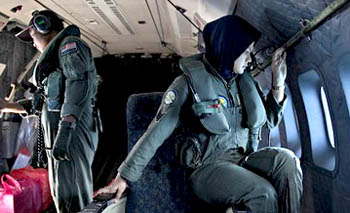
Meanwhile, as the search for the missing Boeing 777 jet stretched into a 10th day, two of the nations helping in the hunt, Australia and Indonesia, agreed to divide between them a vast area of the southeastern Indian Ocean, with Indonesia focusing on equatorial waters and Australia beginning to search farther south for traces of the aircraft. To the north, China and Kazakhstan checked their radar records and tried to figure out whether the jet could have landed somewhere on their soil.

Comments

Marisol
 - 
Sunday, 24 Jul 2016

I see your blog needs some fresh & unique content. Writing manually is time consuming, there is tool for this task.
Just search in gogle for; Fejlando's tips

Here is my homepage ... ReneeBarffed: http://twitter.com/Nila

Add new comment

  • Coastaldigest.com reserves the right to delete or block any comments.
  • Coastaldigset.com is not responsible for its readers’ comments.
  • Comments that are abusive, incendiary or irrelevant are strictly prohibited.
  • Please use a genuine email ID and provide your name to avoid reject.
News Network
February 24,2020

Beijing, Feb 24: The lockdown of Guo Jing's neighbourhood in Wuhan -- the city at the heart of China's new coronavirus epidemic -- came suddenly and without warning.

Unable to go out, the 29-year-old is now sealed inside her compound where she has to depend on online group-buying services to get food.

"Living for at least another month isn't an issue," Guo told news agency, explaining that she had her own stash of pickled vegetables and salted eggs.

But what scares her most is the lack of control -- first, the entire city was sealed off, and then residents were limited to exiting their compound once every three days.

Now even that has been taken away.

Guo is among some 11 million residents in Wuhan, a city in central Hubei province that has been under effective quarantine since January 23 as Chinese authorities race to contain the epidemic.

Since then, its people have faced a number of tightening controls over daily life as the death toll from the virus swelled to over 2,500 in China alone.

But the new rules this month barring residents from leaving their neighbourhoods are the most restrictive yet -- and for some, threaten their livelihoods.

"I still don't know where to buy things once we've finished eating what we have at home," said Pan Hongsheng, who lives with his wife and two children.

Some neighbourhoods have organised group-buying services, where supermarkets deliver orders in bulk.

But in Pan's community, "no one cares".

"The three-year-old doesn't even have any milk powder left," Pan told news agency, adding that he has been unable to send medicine to his in-laws -- both in their eighties -- as they live in a different area.

"I feel like a refugee."

The "closed management of neighbourhoods is bound to bring some inconvenience to the lives of the people", Qian Yuankun, vice secretary of Hubei's Communist Party committee, said at a press briefing last week.

Authorities on Monday allowed healthy non-residents of the city to leave if they never had contact with patients, but restrictions remained on those who live in Wuhan.

Demand for group-buying food delivery services has rocketed with the new restrictions, with supermarkets and neighbourhood committees scrambling to fill orders.

Most group-buying services operate through Chinese messaging app WeChat, which has ad-hoc chat groups for meat, vegetables, milk -- even "hot dry noodles", a famous Wuhan dish.

More sophisticated shops and compounds have their own mini-app inside WeChat, where residents can choose packages priced by weight before orders are sent in bulk to grocery stores.

In Guo's neighbourhood, for instance, a 6.5-kilogramme (14.3-pound) set of five vegetables, including potatoes and baby cabbage, costs 50 yuan ($7.11).

"You have no way to choose what you like to eat," Guo said. "You cannot have personal preferences anymore."

The group-buying model is also more difficult for smaller communities to adopt, as supermarkets have minimum order requirements for delivery.

"To be honest, there's nothing we can do," said Yang Nan, manager of Lao Cun Zhang supermarket, which requires a minimum of 30 orders.

"We only have four cars," she said, explaining that the store did not have the staff to handle smaller orders.

Another supermarket told AFP it capped its daily delivery load to 1,000 orders per day.

"Hiring staff is difficult," said Wang Xiuwen, who works at the store's logistics division, adding that they are wary about hiring too many outsiders for fear of infection.

Closing off communities has split the city into silos, with different neighbourhoods rolling out controls of varying intensity.

In some compounds, residents have easier access to food -- albeit a smaller selection than normal -- and one woman said her family pays delivery drivers to run grocery errands.

Her compound has not been sealed off either, the 24-year-old told AFP under condition of anonymity, though they are limited to one person leaving at a time.

Some districts have implemented their own rules, such as prohibiting supermarkets from selling to individuals, forcing neighbourhoods to buy in bulk or not at all.

"In the neighbourhood where I live, the reality is really terrible," said David Dai, who is based on the outskirts of Wuhan.

Though his apartment complex has organised group-buying, Dai said residents were unhappy with price and quality.

"A lot of tomatoes, a lot of onions -- they were already rotten," he told , estimating over a third of the food had to be thrown away.

His family must "totally depend" on themselves, added the 49-year-old, who has resorted to saving and drying turnip skins to add nutrients to future meals.

The uncertainty of not knowing when the controls will be lifted is also frustrating, said Ma Chen, a man in his 30s who lives alone.

"I have no way of knowing how much (food) I should buy."

Comments

Add new comment

  • Coastaldigest.com reserves the right to delete or block any comments.
  • Coastaldigset.com is not responsible for its readers’ comments.
  • Comments that are abusive, incendiary or irrelevant are strictly prohibited.
  • Please use a genuine email ID and provide your name to avoid reject.
News Network
February 19,2020

London, Feb 19: UK Home Secretary Priti Patel today announced the launch of the Britain's new points-based visa system, aimed at attracting the "brightest and the best" from the world, including from India, and cutting down numbers of cheap, low-skilled workers coming to the country.

The new system will come into force from January 1, 2021 at the end of the transition period after the UK's exit from the European Union (EU) last month, which will formally end free movement of people within the economic bloc for the UK as a non-member.

The new post-Brexit system, which will apply equally to the EU and non-EU countries like India, is based on assigning points for specific skills, qualifications, salaries and professions, with visas only awarded to those who gain enough points.

"Today is a historic moment for the whole country. We're ending free movement, taking back control of our borders and delivering on the people's priorities by introducing a new UK points-based immigration system, which will bring overall migration numbers down," said Ms Patel, the senior-most Indian-origin Cabinet minister.

"We will attract the brightest and the best from around the globe, boosting the economy and our communities, and unleash this country's full potential," Ms Patel, in charge of the UK's visa and immigration system, said.

The UK Home Office said the new system is a direct response to the 2016 referendum in favour of Brexit, which was seen as a vote to end the country's reliance on cheap migrant labour and reduce overall levels of migration with tighter security.

"The new single global system will treat the EU and non-EU citizens equally. It will give top priority to those with the highest skills and the greatest talents, including scientists, engineers and academics," the Home Office said.

The Global Talent Scheme, a fast-track visa to be in operation from Friday, will also apply to the EU citizens from next year to allow highly-skilled scientists and researchers to come to the UK without a job offer.

Professor Alice Gast, President of Imperial College London, said: "British science is global. The new post-study work and Global Talent visas will help us to attract the world's brightest students and researchers, wherever they come from."

"From the race to develop a coronavirus vaccine to clean energy, British science's international collaborations drive innovation and excellence."

The government said the points threshold for the new system will be carefully set to attract the talent the UK needs. Skilled workers will need to meet a number of relevant criteria, including specific skills and the ability to speak English, to be able to work in the UK. All applicants will be required to have a job offer and, in line with the Migration Advisory Committee''s (MAC) recommendations, the minimum salary threshold will be set at 25,600 pounds - lower than the previous 30,000 pounds level for Tier 2 work visas.

The new points-based system will also expand the skills threshold for skilled workers.

Those looking to live and work in the UK will need to be qualified up to A-level or equivalent, rather than degree-level under the current system. This will provide greater flexibility and ensure UK business has access to a wide pool of skilled workers, the Home Office said.

In line with the British Prime Minister Boris Johnson's manifesto commitment in the December 2019 General Election, there will be no specific route for low-skilled workers.

"It is estimated 70 per cent of the existing EU workforce would not meet the requirements of the skilled worker route, which will help to bring overall numbers down in future," the Home Office said.

Student visa routes will also be points-based and be opened up to EU citizens from next year.

Those wishing to study in the UK will need to demonstrate that they have an offer from an approved educational institution, that they can support themselves financially and that they speak English.

To address the specific labour concerns of the agricultural sector reliant on seasonal workers from the EU, the Seasonal Workers Pilot will be expanded in time for the 2020 harvest from 2,500 to 10,000 places.

EU citizens and other non-visa nationals will not require a visa to enter the UK when visiting the UK for up to six months.

However, the use of national identity cards will be phased out for travel to the UK and the Home Office highlighted that as part of its post-Brexit offer, those EU citizens resident in the UK by December 31 2020 can still apply to settle in the UK through the EU Settlement Scheme until June 2021.

Comments

Add new comment

  • Coastaldigest.com reserves the right to delete or block any comments.
  • Coastaldigset.com is not responsible for its readers’ comments.
  • Comments that are abusive, incendiary or irrelevant are strictly prohibited.
  • Please use a genuine email ID and provide your name to avoid reject.
News Network
June 4,2020

Jun 4: Mahatma Gandhi’s statue outside the Indian Embassy in Washington DC was vandalised with graffiti and spray painting by unknown persons allegedly involved in the ongoing protests in the US against the custodial killing of African-American George Floyd.

This has prompted the mission officials to register a complaint with the local law enforcement agencies.

The incident is reported to have taken place on the intervening night of June 2 and 3 in Washington DC.

The Indian embassy has informed the State Department and registered a complaint with local law enforcement agencies, which are now conducting an investigation into the incident.

On Wednesday, a team of officials from Metropolitan Police in consultation with the Diplomatic Security Service and National Park Police visited the site and are conducting inquiries.

Efforts are on to clean up the site at the earliest.

Vandalism of the statue of the apostle of peace comes during the week of nationwide protests against the custodial killing of African-American George Floyd in Minneapolis on May 25.

Several of these protests have turned violent which many times has resulted in damage of some of the most prestigious and sacred American monuments.

In Washington DC, protestors this week burnt a historic church and damaged some of the prime properties and historic places like the national monument and Lincoln Memorial.

One of the few statues of a foreign leader on a federal land in Washington DC, the statue of Mahatma Gandhi was dedicated by the then Prime Minister Atal Bihari Vajpayee, in the presence of the then US president Bill Clinton on September 16, 2000, during his state visit to the US.

In October 1998, the US Congress had authorised the government of India to establish and maintain a memorial “to honour Mahatma Gandhi on Federal land in the District of Columbia."

According to the Indian Embassy website, the sculpture of Mahatma Gandhi is cast in bronze as a statue to a height of 8 feet 8 inches. It shows Gandhi in stride, as a leader and man of action evoking memories of his 1930 protest march against salt-tax, and the many padyatras (long marches) he undertook throughout the length and breadth of the Indian sub-continent.

The statue, the design of which was created by Gautam Pal, is a gift from the Indian Council for Cultural Relations (ICCR). The pedestal for the statue of Mahatma Gandhi is a block of new Imperial Red also known as Ruby Red a block originally weighing 25 tonnes reduced to a size of 9'x7'x3'4". It now weighs 16 tonnes.

Comments

Add new comment

  • Coastaldigest.com reserves the right to delete or block any comments.
  • Coastaldigset.com is not responsible for its readers’ comments.
  • Comments that are abusive, incendiary or irrelevant are strictly prohibited.
  • Please use a genuine email ID and provide your name to avoid reject.