



Missing Malaysian flight MH 370: Computer sent plane off flight path

March 18, 2014

Flight_MH_370Washington, Mar 18: The first turn to the west that diverted the missing Malaysia Airlines plane from its planned flight path from Kuala Lumpur to Beijing was carried out through a computer system that was most likely programmed by someone in the plane's cockpit who was knowledgeable about airplane systems, according to senior US officials.

Instead of manually operating the plane's controls, whoever altered flight 370's path typed seven or eight keystrokes into a computer on a knee-high pedestal between the captain and the first officer, according to officials. The Flight Management System, as the computer is known, directs the plane from point to point specified in the flight plan submitted before each flight. It is not clear whether the plane's path was reprogrammed before or after it took off.

The fact that the turn away from Beijing was programmed into the computer has reinforced the belief of investigators — first voiced by Malaysian officials — that the plane was deliberately diverted and that foul play was involved. It has also increased their focus on the plane's captain and first officer.

Prime Minister Najib Razak of Malaysia told reporters on Saturday that his government believed the plane had been diverted, because its transponder and other communications devices had been manually turned off several minutes apart. US officials were told of the new information over the weekend.

But Malaysian authorities on Monday reversed themselves on the sequence of events they believe took place on the plane in the crucial minutes before ground controllers lost contact with it early March 8. They said it was the plane's first officer — the co-pilot — who was the last person in the cockpit to speak to ground control. And they withdrew their assertion that another automated system on the plane called Aircraft Communications Addressing and Reporting System, or ACARS, had been disabled when the co-pilot spoke.

Flight 370's Flight Management System reported its status to ACARS, which in turn transmitted information back to a maintenance base, according to a US official. This shows that the reprogramming happened before ACARS stopped working. ACARS ceased to function about the same time oral radio contact was lost and the airplane's transponder also stopped, fuelling suspicions that foul play was involved in the plane's disappearance.

Investigators are scrutinizing radar tapes from when the plane first departed Kuala Lumpur because they believe the tapes would show that after the plane first changed its course, it passed through several pre-established "waypoints," which are like virtual mile markers in the sky. That would suggest that the plane was under control of a knowledgeable pilot, because passing through those points without using the computer would have been unlikely.

According to investigators, it appears that a waypoint was added to the planned route. Pilots do that in the ordinary course of flying if air traffic controllers tell them to take a different route, to avoid weather or traffic. But in this case, the waypoint was far off the path to Beijing.

Whoever changed the plane's course would have had to be familiar with Boeing aircraft, though not necessarily the 777 — the type of plane that disappeared. US officials and aviation experts said it was far-fetched to believe that a passenger could have reprogrammed the Flight Management System.

Normal procedure is to key in a five-letter code — gibberish to non-aviators — that is the name of a waypoint. A normal flight plan consists of a series of such waypoints, ending in the destination airport. For an ordinary flight, waypoints can be entered manually or uploaded into the FMS by the airline.

One of the pilots' keys in a waypoint on a separate screen known as a scratchpad, and after confirming that it has no typographical errors, pushes another button to move it into the sequence in the flight plan. Normal practice is to orally confirm the waypoint with the other pilot, then push another button to instruct the airplane to go there. With the change in course, the plane would bank at a comfortable angle, around 20 degrees, and make the turn. Passengers would not feel anything unusual.

ABC News reported on Sunday that the programmed turn had led investigators to believe that it was being controlled by the pilot or hijackers.

One US safety expert, John Cox, a former airline union safety official, said someone taking such pains to divert the plane does not fit the pattern of past cases when pilots intentionally crashed and killed everyone on board.

"There's an inconsistency in what we've seen historically," he said, comparing the disappearance of Flight 370 with two murder-suicides, of an Egyptair flight off Nantucket Island in 1999 and a SilkAir jet in

Indonesia in 1997. In those crashes, he said, the pilot involved simply pushed the nose of the plane down and flew into the water.

The authorities searched the homes of the pilots in Kuala Lumpur on Saturday, seizing a flight simulator that one of them had in his home.

In an effort to determine whether the pilot had practiced taking down the plane, the authorities have reassembled the simulator for experts to examine. US investigators would like access to the flight simulator and any other electronic information seized from the pilots, but as of Monday night they had not been given access to those materials.

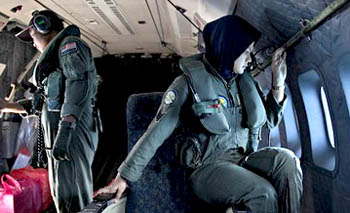
Meanwhile, as the search for the missing Boeing 777 jet stretched into a 10th day, two of the nations helping in the hunt, Australia and Indonesia, agreed to divide between them a vast area of the southeastern Indian Ocean, with Indonesia focusing on equatorial waters and Australia beginning to search farther south for traces of the aircraft. To the north, China and Kazakhstan checked their radar records and tried to figure out whether the jet could have landed somewhere on their soil.

Comments

Marisol
 - 
Sunday, 24 Jul 2016

I see your blog needs some fresh & unique content. Writing manually is time consuming, there is tool for this task.
Just search in gogle for; Fejlando's tips

Here is my homepage ... ReneeBarffed: http://twitter.com/Nila

Add new comment

  • Coastaldigest.com reserves the right to delete or block any comments.
  • Coastaldigset.com is not responsible for its readers’ comments.
  • Comments that are abusive, incendiary or irrelevant are strictly prohibited.
  • Please use a genuine email ID and provide your name to avoid reject.
Agencies
February 29,2020

Doha, Feb 29: The United States signed a landmark deal with the Taliban on Saturday, laying out a timetable for a full troop withdrawal from Afghanistan within 14 months as it seeks an exit from its longest-ever war.

President Donald Trump urged the Afghan people to embrace the chance for a new future, saying the deal held out the possibility of ending the 18-year conflict.

"If the Taliban and the government of Afghanistan live up to these commitments, we will have a powerful path forward to end the war in Afghanistan and bring our troops home," he said on the eve of the event in Doha.

Secretary of State Mike Pompeo arrived in the Qatari capital to witness the signing of the accord, while Defence Secretary Mark Esper was in Kabul for a separate joint declaration with the Afghan government.

The agreement is expected to lead to a dialogue between the Kabul government and the Taliban that, if successful, could ultimately see the Afghan war wind down.

But the position of the Afghan government, which has been excluded from direct US-Taliban talks, remains unclear and the country is gripped by a fresh political crisis amid contested election results.

The United States and its allies will withdraw all their forces from Afghanistan within 14 months if the Taliban abide by the Doha agreement, Washington and Kabul said in a joint statement.

After an initial reduction of troops to 8,600 within 135 days of Saturday's signing, the US and its partners "will complete the withdrawal of their remaining forces from Afghanistan within 14 months... and will withdraw all their forces from remaining bases", the declaration stated.

The Doha accord was drafted over a tempestuous year of dialogue marked by the abrupt cancellation of the effort by Trump in September.

The signing comes after a week-long, partial truce that has mostly held across Afghanistan, aimed at building confidence between the warring parties and showing the Taliban can control their forces.

NATO Secretary General Jens Stoltenberg heralded the agreement as a "first step to lasting peace".

"The way to peace is long and hard. We have to be prepared for setbacks, spoilers, there is no easy way to peace but this is an important first step," the Norwegian former prime minister told reporters in Kabul.

Since the US-led invasion that ousted the Taliban after the September 11, 2001 attacks, America has spent more than $1 trillion in fighting and rebuilding in Afghanistan.

About 2,400 US soldiers have been killed, along with unknown tens of thousands of Afghan troops, Taliban fighters and Afghan civilians.

The insurgents said they had halted all hostilities Saturday in honour of the agreement.

"Since the deal is being signed today, and our people are happy and celebrating it, we have halted all our military operations across the country," Taliban spokesman Zabihullah Mujahid told AFP.

Close to 30 nations were represented at Saturday's signing in the Qatari capital.

While Kabul will not be represented at the Doha ceremony, set for 1245 GMT, it will send a six-person taskforce to the Qatari capital to make initial contact with the Taliban political office, established in 2013.

Any insurgent pledge to guarantee Afghanistan is never again used by jihadist movements such as Al-Qaeda and the Islamic State group to plot attacks abroad will be key to the deal's viability.

The Taliban's sheltering of Al-Qaeda was the main reason for the US invasion following the 9/11 attacks.

The group, which had risen to power in the 1990s in the chaos of civil war, suffered a swift defeat at the hands of the US and its allies. They retreated before re-emerging to lead a deadly insurgency against the new government in Kabul.

After the NATO combat mission ended in December 2014, the bulk of Western forces withdrew from the country, leaving it in an increasingly precarious position.

While Afghans are eager to see an end to the violence, experts say any prospective peace will depend on the outcome of talks between the Taliban and the Kabul government.

But with President Ashraf Ghani and rival Abdullah Abdullah at loggerheads over contested election results, few expect the pair to present a united front, unlike the Taliban, who would then be in a position to take the upper hand in negotiations.

Comments

Add new comment

  • Coastaldigest.com reserves the right to delete or block any comments.
  • Coastaldigset.com is not responsible for its readers’ comments.
  • Comments that are abusive, incendiary or irrelevant are strictly prohibited.
  • Please use a genuine email ID and provide your name to avoid reject.
News Network
July 2,2020

Geneva, Jul 2: The World Health Organization (WHO) has estimated the overall number of coronavirus cases globally at 10,357,662, with 508,055 people having died from the disease.

The UN health agency said in the situation report published on late Wednesday that 163,939 new cases had been recorded in the past day, while further 4,188 patients had died.

Americas continue to lead the count with over 5.2 million cases, followed by Europe with more than 2.7 million.

The WHO declared the COVID-19 outbreak a pandemic on March 11.

Comments

Add new comment

  • Coastaldigest.com reserves the right to delete or block any comments.
  • Coastaldigset.com is not responsible for its readers’ comments.
  • Comments that are abusive, incendiary or irrelevant are strictly prohibited.
  • Please use a genuine email ID and provide your name to avoid reject.
Agencies
January 21,2020

Fifty-six journalists were killed in 2019 and most of them died outside conflict zones, a United Nations spokesperson said.

The number dropped by nearly half from the year 2018, but perpetrators enjoyed almost total impunity, Xinhua news agency quoted Stephane Dujarric, spokesperson for UN Secretary-General Antonio Guterres, as saying on Monday citing Unesco figures.

The figure was published in the 'Unesco Observatory of Killed Journalists' on Monday.

In total, Unesco recorded 894 journalist killings in the decade from 2010 to 2019, an average of almost 90 per year. The number in 2019 was 99.

Journalists were murdered in all regions of the world, with Latin America and the Caribbean recording 22 killings, the highest number, followed by 15 in Asia-Pacific, and 10 in Arab States.

"The figures show that journalists not only suffer extreme risks when covering violent conflict, but that they are also targeted when reporting on local politics, corruption and crime - often in their hometowns," the Unesco said.

Almost two thirds (61 per cent) of the cases in 2019 occurred in countries not experiencing armed conflict, a notable spike in a wider trend in recent years, and a reversal of the situation of 2014, when this figure was one third.

More than 90 per cent of cases recorded in 2019 concerned local journalists, consistent with previous years, it added.

In response to these figures, Audrey Azoulay, the Director-General of Unesco, said: "Unesco remains deeply troubled by the hostility and violence directed at all too many journalists around the world.

"As long as this situation lasts, it will undermine democratic debate."

Comments

Add new comment

  • Coastaldigest.com reserves the right to delete or block any comments.
  • Coastaldigset.com is not responsible for its readers’ comments.
  • Comments that are abusive, incendiary or irrelevant are strictly prohibited.
  • Please use a genuine email ID and provide your name to avoid reject.