Washington D.C., May 8: The prime time for brain development in a child's life is the first year, where the infant spends most of the time asleep. It is the time when neural connections form and sensory memories are encoded.
However, when sleep is disrupted, as occurs more often among children with autism, brain development may be affected, too.
New research led by the University of Washington finds that sleep problems in a baby's first 12 months may not only precede an autism diagnosis but also may be associated with altered growth trajectory in a key part of the brain, the hippocampus.
The study, which was published in the American Journal of Psychiatry, researchers report that in a sample of more than 400 taken of 6- to 12-month-old infants, those who were later diagnosed with autism were more likely to have had difficulty falling asleep.
It also states that this sleep difficulty was associated with altered growth trajectories in the hippocampus.
"The hippocampus is critical for learning and memory, and changes in the size of the hippocampus have been associated with poor sleep in adults and older children.
As many as 80 per cent of the children with autism spectrum disorder have sleep problems," said Annette Estes, director of the UW Autism Center and senior author of the study.
"In our clinical experience, parents have a lot of concerns about their children's sleep, and in our work on early autism intervention, we observed that sleep problems were holding children and families back," added Estes, who is also a UW professor of speech and hearing sciences.
"It could be that altered sleep is part-and-parcel of autism for some children. One clue is that behavioural interventions to improve sleep don't work for all children with autism, even when their parents are doing everything just right. This suggests that there may be a biological component to sleep problems for some children with autism," said Estes.
To consider links among sleep, brain development, and autism, researchers at the IBIS Network looked at MRI scans of 432 infants, surveyed parents about sleep patterns, and measured cognitive functioning using a standardized assessment.
At the outset of the study, infants were classified according to their risk for developing autism: Those who were at higher risk of developing autism -- about two-thirds of the study sample -- had an older sibling who had already been diagnosed.
Infant siblings of children with autism have a 20 per cent chance of developing autism spectrum disorder -- a much higher risk than children in the general population.
In the current study, 127 of the 432 infants were identified as "low risk" at the time the MRI scans were taken because they had no family history of autism.
They later evaluated all the participants at 24 months of age to determine whether they had developed autism. Of the roughly 300 children originally considered "high familial risk," 71 were diagnosed with autism spectrum disorder at that age.
Problems with sleep were more common among the infants later diagnosed with an autism spectrum disorder, as were larger hippocampi. No other subcortical brain structures were affected, including the amygdala, which is responsible for certain emotions and aspects of memory, or the thalamus, a signal transmitter from the spinal cord to the cerebral cortex.
The authors note that while parents reported more sleep difficulties among infants who developed autism compared to those who did not, the differences were very subtle and only observed when looking at group averages across hundreds of infants.
Sleep patterns in the first years of life change rapidly as infants transition from sleeping around the clock to a more adult-like sleep/wake cycle. Until further research is completed, Estes said, it is not possible to interpret challenges with sleep as an early sign of increased risk for autism.



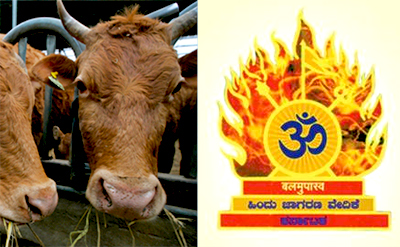 Gurumurthy, one among the five Dalits attacked on July 10 in Shantipura colony, was in fact one of the founders of Hindu Jagarana Vedike's branch in Kunduru village near here. Four years ago, he conducted an event in the village organising all Dalits.
Comments
Once the cow became sacred and the Broken Men continued to eat beef, there was no other fate left for the Broken Men except to be treated unfit for association, i.e., as Untouchables. There was a time when the ancestors of the present day Untouchables were not Untouchables vis-a-vis the villagers but were merely Broken Men, no more and no less, and the only difference between them and the villagers was that they belonged to differ
Naren and Viren.....if you dont like the journalism of CD why waste your time here....Go and read any RSS note books...you can learn more hatred....and Burn your GAaf........and then Use Itch Guard...
Hey has keep there women in burkha ha ha
Days to come (In-Shaa Allah) all the LIES and Deceptions of Hindutuva terrorist will come out.
The Dalit should not fear in exposing their Discriminations... cheddis hold outs are getting fired from the bottom... and they already started feeling the burn when muslims started to oppose their discrimination. We Muslims & Dalits should unite to fight their discrimination agenda... We Muslims know their hatred propaganda.. but WE believe ALLAH will take care of their evil agenda. Till now we know many things are exposed. When it is out of their hands they resort to acts like Cowards like killing.
ya ya .. CD digest journo ( i dont think he has passed journalism course ) has seen and was seeing Beeef eating of HJV ... cmon guys .. right sensible articles ...
may be this cow has got married to bull
The same Gujarat dalit was used against Muslims in Godhra communal riots. Big fishes supplied all the weapons to Dalit prior riots and Dalits used that opportunity more than big Fish's expectations. Thousands of lives irrespective women, child, old age, youths, teens burned everywhere and thousands of rapes, loot since law and order tied up by Gujarat CM.
World beef exports - Ranking of countries.............
1. India
2. Australia
3. Brazil
4. USA
I think it is better change their religion to Islam....where they would get desired respect and dignity....there is no upper and lower caste in it....Well come guys!
Add new comment