


Deendar Channabasaveshwara terror case: Beggar arrested after 16 years

[email protected] (CD Network)
August 10, 2016

Bengaluru, Aug 10: Sixteen years after Karnataka faced serial bombings by Deendar Channabasaveshwara Anjuman, the Criminal Investigation Department (CID) sleuths have arrested Sheikh Amir Ali, a beggar and prime suspect in the case.
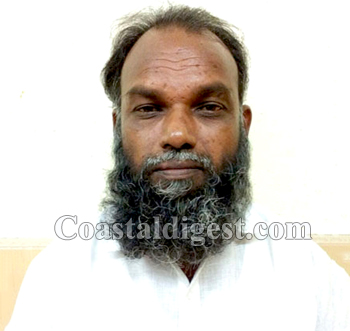
AmirAliPolice sources said that for the past couple of years, Ali had been living a mendicant's life and surviving on alms

The 50-year-old beggar is wanted in four blast cases in Karnataka and Maharashtra, police said. The Karnataka CID team picked him up from a hideout in Nalagonda, Andhra Pradesh.

The Ist Additional Chief Metropolitan Magistrate (ACMM) court in Bengaluru had issued a non-bailable warrant against Ali. The blasts were triggered by men owing allegiance to Deendar Channabasaveshwara Anjuman, a terror outfit banned in 1948.

The explosion in Bengaluru occurred in a church in JJ Nagar on the night of July 9, 2000, damaging it partly. Twenty-nine persons were arrested and the court convicted 23 of them. Eleven convicts were awarded death sentence, while 12 were sentenced to life imprisonment.

Similar blasts were triggered in Hubballi and Wadi around the same time and investigations proved the involvement of Ali and others. Of the seven fugitives, five are settled in Pakistan and one is absconding.

According to police sources, Ali had supplied explosive material to Hashim Ali from Andhra Pradesh, who assembled it to prepare the bombs.

Deendar Anjuman

Deendar Anjuman or Deendar Channabasaveshwara Anjuman was founded by Hazrath Moulana Siddique - alias Deendar Channabasaveshwara - at Bellampet, Gulbarga district, in 1924. Its head office was at Asif Nagar, Hyderabad. Though the organisation operated behind the façade of establishing religious equality, it had a hidden terror agenda, which is widely condemned by Muslims.

Terror track

1. On June 8, 2000, two crude bombs were set off at Saint Anne's Church in Wadi, Gulbarga District. The church was damaged and two persons were injured.

2. On July 9, 2000, bombs were set off at St Peter Paul Church in Jagajeevanaramnagar, Bengaluru.

3. On July 8, 2000, the group triggered off bombs blasts at the St John Luthern Church in Hubli. Sixteen persons faced trial in the case.

4. The final blast occurred when a bomb went off accidentally while the terrorists were transporting them in a Maruti van on July 9.

Comments

Satyameva jayate
 - 
Thursday, 11 Aug 2016

Viren go helpGO maataas dying.....and stinking....will God's stink after dying an need human help to be buried.....

Zakir
 - 
Wednesday, 10 Aug 2016

Muslims should know what exactly Holy Quran & Authentic Hadees says. Rather start following WRONG religious leaders though their life style or preaching against Quran & Hadees. Eventually innocent people loose their life and muslim community name gets spoiled bcoz of some BLACK SHEEP in the community.

Viren Kotian
 - 
Wednesday, 10 Aug 2016

Looks like CD editor's desperate bid to give saffron tinge to Muslim terror. poor fellow.

Add new comment

  • Coastaldigest.com reserves the right to delete or block any comments.
  • Coastaldigset.com is not responsible for its readers’ comments.
  • Comments that are abusive, incendiary or irrelevant are strictly prohibited.
  • Please use a genuine email ID and provide your name to avoid reject.
Agencies
May 1,2020

New Delhi, May 1: The Ministry of Home Affairs (MHA) on Friday issued an order under the Disaster Management Act, 2005 to further extend the lockdown for a further period of two weeks beyond May 4.

The current lockdown period is scheduled to end on May 3.

"After a comprehensive review and in view of the lockdown measures having led to significant gains, the COVID-19 situation in the country, Ministry of Home Affairs issued an order under the Disaster Management Act, 2005, today, to further extend the lockdown for a further period of two weeks beyond May 4, 2020," read the order of the Home Ministry.

In red zones and outside containment zones, certain activities including plying of cycle rickshaws and auto-rickshaws, taxis and cab aggregators, intra-district and inter-district plying of buses and barber shops, spas and salons will be prohibited in addition to those prohibited throughout India.

A limited number of activities will remain prohibited across the country, irrespective of the zone, including travel by air, rail, metro and inter-state movement by road, running of schools, colleges, and other educational and training/coaching institutions, the order said.

This came after Prime Minister Narendra Modi's meeting with chief ministers of several states last month where some of them suggested extension of lockdown.

Comments

Add new comment

  • Coastaldigest.com reserves the right to delete or block any comments.
  • Coastaldigset.com is not responsible for its readers’ comments.
  • Comments that are abusive, incendiary or irrelevant are strictly prohibited.
  • Please use a genuine email ID and provide your name to avoid reject.
coastaldigest.com news network
May 22,2020

It has been 33 years since the night of 22 May, 1987 when nearly 50 Muslim men from Hashimpura, a settlement in Meerut were rounded up and packed into the rear of a truck of the Provincial Armed Constabulary (PAC), an armed police of Uttar Pradesh. It was the blessed month of Ramadan and all the Muslims were fasting.

That night 42 of those on board the truck were killed in two massacres in neighbouring Ghaziabad district. One along the Upper Ganga canal near Muradnagar, the other along the Hindon canal in Makanpur, on the border with Delhi.

The cops had returned home after dumping the dead bodies into the canal. A few days later, the dead bodies were found floating in the canal and a case of murder was registered. 

Vir Bahadur Singh was the chief minister of Uttar Pradesh and Rajiv Gandhi was the prime minister of India when this incident took place. 

Not much has changed for the survivors and the relatives of the victims even today. The wounds are still fresh. Hashimpura remains devoid of basic municipal amenities, the erring silence on the narrow lanes of the locality amid the activities of a daily life speaks of the horror of the fateful day in 1987.

The massacre was the result of one among the many outcomes of the decision taken by the Rajiv Gandhi government to open the locks of Babri Masjid. After a month of rioting, the situation was tense in various parts of Meerut, and a lot spilled over in the nearby areas.

Timeline

May 22, 1987

Nearly 50 Muslims picked up by the PAC personnel from Hashimpura village in Meerut, Uttar Pradesh.
Victims later shot and bodies thrown into a canal. 42 persons declared dead.

1988

UP government orders CB-CID probe in the case.

February 1994

CB-CID submits inquiry report indicting over 60 PAC and police personnel of all ranks.

May 20, 1996

Charge sheet filed against 19 accused before Chief Judicial Magistrate, Ghaziabad by CB-CID of Uttar Pradesh police. 161 people listed as witnesses.

September 2002

Case transferred to Delhi by the Supreme Court on a petition by the families of victims and survivors.

July 2006

Delhi court frames charges of murder, attempt to murder, tampering with evidence and conspiracy under the IPC against 17 accused.

March 8, 2013

Trial court dismisses Subramanian Swamy's plea seeking probe into the alleged role of P Chidambaram, then Minister of State for Home, in the matter.

January 22, 2015

Trial court reserves judgement.

March 21, 2015

Court acquits 16 surviving accused giving them benefit of doubt regarding their identity.

May 18, 2015

Trial court decision challenged in the Delhi HC by the victims' families and eyewitnesses who survived the incident.

May 29, 2015

HC issues notice to the 16 PAC personnel on Uttar Pradesh government's appeal against the trial court verdict.

December 2015

National Human Rights Commission is impleaded in the matter. NHRC also seeks further probe into the massacre.

February 17, 2016

HC tags Swamy's appeal with the other petitions in the matter.

September 6, 2018

Delhi HC reserves verdict in the case.

October 31, 2018

Delhi HC convicts 16 former PAC personnel for life after finding them guilty of the murder of 42 people.

Comments

Add new comment

  • Coastaldigest.com reserves the right to delete or block any comments.
  • Coastaldigset.com is not responsible for its readers’ comments.
  • Comments that are abusive, incendiary or irrelevant are strictly prohibited.
  • Please use a genuine email ID and provide your name to avoid reject.
News Network
March 31,2020

Hubballi, Mar 31: In a bid to increase the country's capacity for isolation facilities, the Railways is converting sleeper class coaches into isolation wards by modifying the coaches as per prototype issued by Railway Board to make them suitable to act as quarantine hubs. On South Western Railway (SWR) a total of 312 coaches will be converted for isolation/quarantine wards.

"The coaches will be equipped with basic facilities needed as per medical guidelines. Provision is being made for charging points of mobiles and laptops. Mosquito nets with space for paramedics etc are also being made available. Each coach will provide 8 berth cabin for isolation facility.

Zonal Railways have been advised to prepare coaches as per isolation cabin prototype to meet the needs of the patients by Railway Board," a press statement of SWR reads.

The efforts of Indian Railways have been aimed not only to supplement the present health infrastructure of the nation but also to contribute to national efforts to fight the coronavirus.

According to the Union Ministry of Health and Family Welfare, the total number of coronavirus cases in the country stand at 1,251.

Comments

Add new comment

  • Coastaldigest.com reserves the right to delete or block any comments.
  • Coastaldigset.com is not responsible for its readers’ comments.
  • Comments that are abusive, incendiary or irrelevant are strictly prohibited.
  • Please use a genuine email ID and provide your name to avoid reject.