


HC allows women's entry in Haji Ali dargah, order stayed for 6 weeks

August 26, 2016

New Delhi, Aug 26: In a significant judgement, the Bombay High Court today lifted the ban imposed on women from entering the sanctum sanctorum of Haji Ali dargah here, saying it contravenes the fundamental rights of a person.
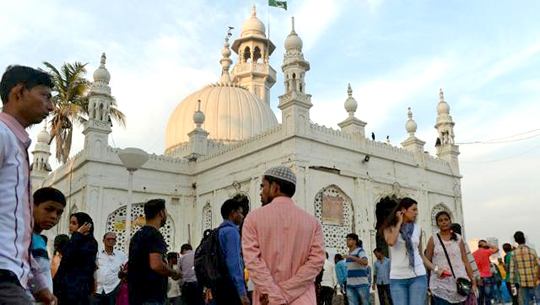
Haji1

The court has, however, stayed its order for six weeks following a plea by Haji Ali Dargah Trust, which wants to challenge it in the Supreme Court.

"The ban imposed on women from entering the Haji Ali dargah is contrary to Articles 14, 15, 19 and 25 of the Constitution of India. Women should be permitted to enter the dargah on par with men," a division bench of Justices V M Kanade and Revati Mohite Dere said.

Under the said Articles, a person is guaranteed equality before law and has the fundamental right to practice any religion he or she wants. They prohibit discrimination on grounds of religion, gender and so on, and provide freedom of conscience and free profession, practice and propagation of religion.

The bench allowed a PIL filed by two women, Zakia Soman and Noorjehan Niaz, challenging the ban on women's entry in the sanctum sanctorum of the dargah.

"The state government and the Haji Ali Dargah Trust will have to take proper steps to ensure safety and security of women entering the dargah," the court said.

The high court had in June this year reserved its verdict on the petition.

The PIL states that gender justice is inherent in Quran and the decision contravenes the Hadith, which proves that there is no prohibition on women visiting graves.

The Maharashtra government had earlier told the court that women should be barred from entering the inner sanctorum of Haji Ali dargah only if it is so enshrined in the Quran.

The ban on women's entry cannot be justified if it is on the basis of an expert's interpretation of the Quran, the then Maharashtra Advocate General Shrihari Aney had argued.

The dargah trust had defended its stand saying that it is referred in Quran that allowing women close proximity to the dargah of a male saint is a grievous sin.

Advocate Shoaib Memon, appearing for the trust had earlier said, "Women are not allowed inside mosques in Saudi Arabia. They are given a separate place to pray. We (trust) have not barred women. It is simply regulated for their safety. The trust not only administers the dargah but also manages the affairs of religion."
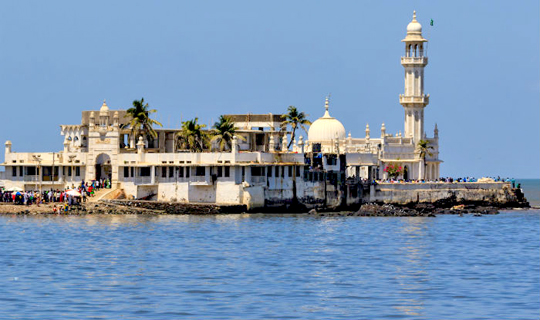

haji2

Comments

Rashid
 - 
Friday, 26 Aug 2016

Building structure on graves is prohibited in Islam, visiting such places by men or women both discouraged... It is a grave sin , invoke on graves...In islam it is permitted to men & women to visit graves of their relatives with proper dress with intention to pray for people of graves is permitted and even praying in masjid also permitted..

Mohammed
 - 
Friday, 26 Aug 2016

As a muslim to visit a dargah and pray is shirkh and I request all my muslim brothers and sisters to refrain from doing so as committing shirkh is the biggest sin in Islam. As for Rony`s comments as muslm`s did not support in independence it is high time you refresh your social studies subject. We all know how many muslim countries are supporting non-muslim brothers and sisters by giving them job in their countries in turn which helps them in survival and is this not much greater support from the muslims. This is Independence to live and survive. People grow up and be thankful for the number of muslim countries who have not objected to non-muslims working in their country and you have the audacity to talk against muslims without thinking once about the millions of non-muslim expats.

mohammad.n
 - 
Friday, 26 Aug 2016

Why HC and SC needed here? Our prophet muhammad already said that no grave must be built high, if u find one then u must level it to the ground. Thats it case closed already 1400+ years ago . Then why waste time of court and people who comment on such news? Check the whole quran and hadees you will never find something called darga in it.

Mohammed
 - 
Friday, 26 Aug 2016

To my non-muslim friends kindly note that in Masjid al haram (Makkah) both men and women pray together and for Ganesh Kamath Muslim women are allowed inside mosques and have a separate covered place from where they can pray behind the Imam. Kindly refrain from posting things which you do not have knowledge of and stick to only praying part of it and not compare it with women are not allowed to drive etc.

Add new comment

  • Coastaldigest.com reserves the right to delete or block any comments.
  • Coastaldigset.com is not responsible for its readers’ comments.
  • Comments that are abusive, incendiary or irrelevant are strictly prohibited.
  • Please use a genuine email ID and provide your name to avoid reject.
News Network
June 23,2020

Bengaluru, June 23: A head constable from Karnataka State Reserve Police (KSRP) committed suicide on board a bus after testing positive for COVID-19 in the city.

As per sources, the 50-year-old head constable had tested positive for coronavirus last evening and today he was being taken to a hospital in KSRP bus.

It is learned that he hanged himself to death inside the bus as there was no one else.

Comments

Add new comment

  • Coastaldigest.com reserves the right to delete or block any comments.
  • Coastaldigset.com is not responsible for its readers’ comments.
  • Comments that are abusive, incendiary or irrelevant are strictly prohibited.
  • Please use a genuine email ID and provide your name to avoid reject.
Ram Puniyani
February 22,2020

This January 2020, it is thirty years since the Kashmiri Pundits’ exodus from the Kashmir valley took place. They had suffered grave injustices, violence and humiliation prior to the migration away from the place of their social and cultural roots in Kashmir Valley. The phenomenon of this exodus had been due to the communalization of militancy in Kashmir in the decade of 1980s. While no ruling Government has applied itself enough to ‘solve’ this uprooting of pundits from their roots, there are communal elements who have been aggressively using ‘what about Kashmiri Pundits?’, every time liberal, human rights defenders talk about the plight of Muslim minority in India. This minority is now facing an overall erosion of their citizenship rights.

Time and over again in the aftermath of communal violence in particular, the human rights groups have been trying to put forward the demands for justice and rehabilitation of the victim minority. Instead of being listened to those particularly from Hindu nationalist combine, as a matter of routine shout back, where were you when Kashmiri Pundits were driven away from the Valley? In a way the tragedy being heaped on one minority is being justified in the name of suffering of Pundits and in the process violence is being normalized. This sounds as if two wrongs make a right, as if the suffering Muslim minority or those who are trying to talk in defense of minority rights have been responsible for the pain of Kashmiri Pundits.

During these three, many political formations have come to power, including BJP, Congress, third front and what have you. To begin with when the exodus took place Kashmir was under President’s rule and V. P. Singh Government was in power at the center. This Government had the external support of BJP at that time. Later BJP led NDA came to power for close to six years from 1998, under the leadership of Atal Bihari Vajpayee. Then from 2014 it is BJP, with Narerda Modi as PM, with BJP brute majority is in power. Other components of NDA are there to enjoy some spoils of power without any say in the policies being pursued by the Government. Modi is having absolute power with Amit Shah occasionally presenting Modi’s viewpoints.

Those blurting, ‘what about Kashmiri Pundits?’ are using it as a mere rhetoric to hide their communal color. The matters of Kashmir are very disturbing and cannot be attributed to be the making of Indian Muslims as it is being projected in an overt and subtle manner. Today, of course the steps taken by the Modi Government, that of abrogation of Article 370, abolition of clause 35 A, downgrading the status of Kashmir from a state to union territory have created a situation where the return of Kashmiri Pundits may have become more difficult, as the local atmosphere is more stifling and the leaders with democratic potential have been slapped with Public Safety Act, where they can be interned for long time without any answerability to the Courts. The internet had been suspended, communication being stifled in an atmosphere where democratic freedoms are curtailed which makes solution of any problem more difficult.

Kashmir has been a vexed issue where the suppression of the clause of autonomy, leading to alienation led to rise of militancy. This was duly supported by Pakistan. The entry of Al Qaeda elements, who having played their role against Russian army in 1980s entered into Kashmir and communalized the situation in Kashmir. The initial Kashmir militancy was on the grounds of Kashmiriyat. Kashmiriyat is not Islam, it is synthesis of teachings of Buddha, values of Vedant and preaching’s of Sufi Islam. The tormenting of Kashmiri Pundits begins with these elements entering Kashmir.

Also the pundits, who have been the integral part of Kashmir Valley, were urged upon by Goodwill mission to stay on, with local Muslims promising to counter the anti Pundit atmosphere. Jagmohan, the Governor, who later became a minister in NDA Government, instead of providing security to the Pundits thought, is fit to provide facilities for their mass migration. He could have intensified counter militancy and protected the vulnerable Pundit community. Why this was not done?

Today, ‘What about Kashmiri Pundits?’ needs to be given a serious thought away from the blame game or using it as a hammer to beat the ‘Muslims of India’ or human rights defenders? The previous NDA regime (2014) had thought of setting up enclosures of Pundits in the Valley. Is that a solution? Solution lies in giving justice to them. There is a need for judicial commission to identify the culprits and legal measures to reassure the Pundit community. Will they like to return if the high handed stifling atmosphere, with large number of military being present in the area? The cultural and religious spaces of Pundits need to be revived and Kashmiryat has to be made the base of any reconciliation process.

Surely, the Al Qaeda type elements do not represent the alienation of local Kashmiris, who need to be drawn into the process of dialogue for a peaceful Kashmir, which is the best guarantee for progress in this ex-state, now a Union territory. Communal amity, the hallmark of Kashmir cannot be brought in by changing the demographic composition by settling outsiders in the Valley. A true introspection is needed for this troubled area. Democracy is the only path for solving the emigration of Pundits and also of large numbers of Muslims, who also had to leave the valley due to the intimidating militancy and presence of armed forces in large numbers. One recalls Times of India report of 5th February 1992 which states that militants killed 1585 people from January 1990 to October 1992 out of which 982 were Muslims and 218 Hindus.

We have been taking a path where democratic norms are being stifled, and the promises of autonomy which were part of treaty of accession being ignored. Can it solve the problem of Pundits?

Comments

Add new comment

  • Coastaldigest.com reserves the right to delete or block any comments.
  • Coastaldigset.com is not responsible for its readers’ comments.
  • Comments that are abusive, incendiary or irrelevant are strictly prohibited.
  • Please use a genuine email ID and provide your name to avoid reject.
News Network
April 22,2020

Bengaluru, Apr 22: The Karnataka government has announced partial relaxation of COVID-19 lockdown norms in the state allowing certain construction activities, manufacturing of packaging materials, courier services, among others, from April 23.

The activities will be permitted only outside the COVID-19 containment zones identified by the government.

Service provided by self-employed people like electrician, IT repair, plumbers, motor mechanics, and carpenters in local areas have also been given exemption.

Tea, coffee and rubber plantation have been allowed to work with 50 per cent workforce, and a similar exemption have been given to processing, packaging, sale and marketing of these produce.

“To mitigate hardship to the public, select additional activities have been allowed,which will come into effect from 00.00 hours of April 23,” Chief Secretary TM Vijay Bhaskar said in an order on Wednesday.

However, these additional activities will be operationalised by District Administrations and BBMP (city corporation in the case of Bengaluru city) based on strict compliance to the guidelines on lockdown measures, it said.

Before operating these relaxations, district administrations and BBMP (city corporation) shall ensure that all the preparatory arrangements on social distancing in offices, work place establishments as also sectoral requirements are in place, it said, adding that relaxations will not apply in containment zones.

Facing a financial crunch, the state government has been eager to kick-start economic activities in the state that had come to halt due to the coronavirus lockdown.

While hospitality services, bars, malls, theatres, shopping complexes, religious and places of worship among others will continue to remain shut, relaxation of norms has been for activities that are linked to essential services such as health, infrastructure and agriculture.

As per the order, while, public transportation will continue to remain suspended till May 3,private vehicles with passes for emergency services and personnel commuting with passes to places of work and back will be allowed.

Activities permitted include construction of roads, irrigation projects, buildings and all kinds of industrial projects, including MSMEs, in rural areas and all kinds of projects in industrial estates, where workers are available on site and no one is required to be brought in from outside.

Also permitted to function are manufacturing units of essential goods – drugs, pharmaceuticals, medical devices, their raw materials and intermediates;

food processing industries in rural areas, coal production (mines and mineral production and activities incidental to mining) besides manufacturing units of packaging materials.

Comments

Add new comment

  • Coastaldigest.com reserves the right to delete or block any comments.
  • Coastaldigset.com is not responsible for its readers’ comments.
  • Comments that are abusive, incendiary or irrelevant are strictly prohibited.
  • Please use a genuine email ID and provide your name to avoid reject.