


NIA court convicts 13 Muslim youths in 2012 terror module case

September 16, 2016

Bengaluru, Sep 16: A National Investigation Agency (NIA) special court here on Thursdayconvicted 13 persons accused in the Karnataka terror module case, wherein several educated Muslim youths were arrested from their houses and rented rooms in Bengaluru, Hubballi and other places four years ago.
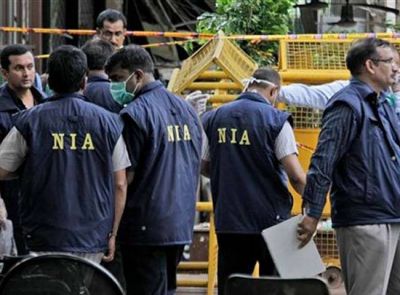
niaSources in the NIA said that this was the first time the accused have pleaded guilty in a terror case. Special court judge Muralidhar Pai adjourned the case to Friday, when he will pronounce the quantum of punishment.

The charge was that the youths had planned to assassinate several prominent personalities including BJP leaders and pro-BJP journalists. Later, a couple of the arrested youths had got clean chit in the case. Some of the accused are still absconding, according to the NIA. The arrest spree started on August 29, 2012 when a team of the Central Crime Branch of the Bengaluru City police nabbed two bike-borne youths in Basaveshwaranagar police limits.

The convicted are: Syed Tanzeem Ahmed of Ben galuru, Dr Imran Ahmed of Bengaluru, Dr Nayeem Siddiqui of Davanagere, Ubaid Ur Rehman of Hyderabad, Shoaib Ahmed Mirza alias Chotu of Hubballi, Abdul Hakeem Jamdar of Hubballi, Riyaz Ahmed Byahatti of Hubballi, Zafar Iqbal Sholapur of Hubb alli, Moha mmed Sa diq Lashkar of Hubballi, Mehaboob Bagalkot of Hubballi, Baba alias Mehboob Bagalkot and Wahid Hussain alias Saahil.

Public prosecutor Arjun Ambalapatta said, the conviction was made mainly under IPC sections 120B (criminal conspiracy), 153A (promoting enmity between different groups on grounds of religion), 307 (attempt to murder) and Section 38 of the Unlawful Activities Prevention Act and Arms Act, and Section 3 read with 25 of the Arms Act, 1959. The sections invoked entail prison terms of up to 10 years.

Police said the suspects were linked to Lashkar-e-Taiba and Harkat-ul-Jehad-al-Islami, and were being directed by handlers in Saudi Arabia to eliminate prominent personalities, including a newspaper editor, a newspaper columnist who is now a BJP MP representing Mysuru-Kodagu constituency, and right-wing leaders.

The case was later transferred to the National Investigation Agency. Six months after the arrests, NIA released two of the suspects, saying there was no prosecutable evidence against them, while a court released on bail a third suspect after the agency failed to file a chargesheet within the stipulated six months of the arrest.

Pleaded guilty in the hope of early release'

The Federation of Muslim NGOs has regretted that the 13 accused pleaded guilty because they were unable to bear the torture of remaining in prison.

"It is a sad reflection of the way investigations are being conducted in terror-related cases. Hundreds of witnesses are cited and a chargesheet running into several thousand pages is filed. The trial takes several years to complete. The draconian Unlawful Activities Prohibition Act ensures no bail is granted and the accused, even if innocent, have to spend several years in jail," read the statement.

"We further call upon the government to ensure the trials are expedited and the Act is amended to ensure bail is granted when proof is not convincing .... Call upon to form an independent review committee comprising a HC judge ... to review the evidence collected before granting sanction for prosecution to ensure innocents are not harassed," read the statement.

"Police say they have ample material evidence against our children. They have been in jail for too long now and have not got bail. Instead of dragging the case, our children agreed to plead guilty as they have already spent four years in jail, and undergo punishment. At least now they can look at an early release after they complete their terms," a family member said, on condition of anonymity.

Only 32 Of 260 gave evidence

The 13 accused stood motionless as NIA special court judge Muralidhar Pai held them guilty, while some of their family members let out exclamations of disappointment.

Around 10.30am Thursday, the men were brought in police vans, each accompanied by a policeman, as they walked to court hall 54 on the third floor of the City Civil Court complex. The judge said he would pronounce the judgment by 3pm. The men were taken out for lunch in the van and brought back to the hall by 2.30pm.

The 13 accused had been denied bail and were in jail during the course of the trial, where only 32 of the 260 witnesses turned up to give evidence.

Comments

Bopanna
 - 
Friday, 16 Sep 2016

\Educated Muslim youth \" ?
Madrassa education ????? Get ready to go meet your 72 virgins"

Bopanna
 - 
Friday, 16 Sep 2016

Terror has only one religion = Islam

Abdullah
 - 
Friday, 16 Sep 2016

The namo naresh who killed baliga was given bail.
The educated Muslim youths who didn't do any crime are convicted.
Wah re wah incredible RSS ruling India.

Deepak D
 - 
Friday, 16 Sep 2016

Who said terror does not have any religion. Anything or nothing can become a terror act if the arrested are Muslims. and any terror act can become nothing if the arrested are Sangh Parivar activists.

observer
 - 
Friday, 16 Sep 2016

Judge Murlidhar Pai a pakka RSS man.

Althaf
 - 
Friday, 16 Sep 2016

really injustice to the youths, how their family must be feeling about the injustice of india.

Nazir
 - 
Friday, 16 Sep 2016

Seriously shameful to our court. hoping of early release they accepted the guilty, for everything we should answer one day, that day will come soon to everyone.

Narain
 - 
Friday, 16 Sep 2016

this terrorists produced by Muslim's NGO's itself, they have to protect them from all the side. in every case this happens. their plan is to take compensation from govt. so they are pushing the case to so many years, in this 60% goes to this NGO's for protecting them, but in this case they failed to protect their children.

Mohan
 - 
Friday, 16 Sep 2016

this Muslim NGO's main job is this only first our court should punish this fellows for arguing against court decision.

Pran Kumar
 - 
Friday, 16 Sep 2016

Why naming Muslim youths? Terror dont have any religion.

Add new comment

  • Coastaldigest.com reserves the right to delete or block any comments.
  • Coastaldigset.com is not responsible for its readers’ comments.
  • Comments that are abusive, incendiary or irrelevant are strictly prohibited.
  • Please use a genuine email ID and provide your name to avoid reject.
News Network
June 20,2020

Bengaluru, Jun 20: The Karnataka Health Department has issued guidelines on the admission of COVID-19 patients in private hospitals after clinical assessment, mandating that the district surveillance officer (DSO) should be first informed to initiate further procedures, an official said on Friday.

"A health team sent by the DSO should visit the home or hospital where the patient is staying. The team should conduct a rapid assessment of his or her health condition," said Karnataka's Additional Chief Secretary Jawaid Akhtar.

In the rapid health condition assessment, the team should first check the patient's body temperature, followed by SpO2 (oxygen saturation) level and confirm if there are any comorbidities such as hypertension, diabetes, tuberculosis, HIV, cancer, stroke etc.

Depending on the health condition of patients, Akhtar said, two categories have been made.

"Those who have body temperature greater than 37.5 degrees Celsius, SpO2 level below 94 percent, elderly (above 60 years) and suffering from known comorbid conditions should be taken to a dedicated Covid hospital (DCH)," he said.

"All other patients, even if older but not suffering from co-morbidities, those below 60 and suffering from co-morbidities and asymptomatic cases should be taken to a dedicated Covid health centre (DCHC) or a private hospital as opted by the patient," he added.

Private hospitals have been asked to pitch in due to the rising number of cases in Karnataka. Currently, there are 2943 active cases in the state after 337 cases were reported on Friday.

"The patients are assessed clinically and evaluated at DCHCs or private hospitals with appropriate diagnostic tests. After evaluation, if the patients are asymptomatic, they are shifted to a COVID Care Centre (CCC) for further management," said Akhtar.

CCCs are expected to be equipped with ventilated rooms, pulse oximeters, handheld thermal scanners and blood pressure apparatus.

A nurse has to be present round the clock for every 50 patients and should visit each patient twice a day for assessment whereas the medical officer has to visit the CCC once a day. He should also be available on call in case of an emergency.

Staff serving food and others should wear personal protective equipment and an N-95 mask. Explaining the procedures at DCHCs, Akhtar said general examinations for medical conditions like body temperature, BP, pulse, oxygen saturation and urine output should be in place.

Investigations such as complete blood count, fasting blood sugar, random blood sugar, liver function tests, renal function tests, ECG and chest X-ray facilities should be available.

"DCHCs should ensure that above examinations are over in an orderly timeline of 24 hours and depending on the examination, the patient is continued to be lodged at the DCHC or sent to DCH or CCC," said the senior officer.

Likewise, the discharge policy should be done as per the protocols issued by the Health Department from time to time.

The Karnataka government is yet to fix an upper limit on the cost of treating COVID-19 patients in private hospitals. While reports indicated that this could be capped at Rs 5200 per day, health officials are yet to specify this is the case. Private hospitals in the state have asked the government to take a collaborative approach in deciding the fixed cap on treatment cost.

Comments

Add new comment

  • Coastaldigest.com reserves the right to delete or block any comments.
  • Coastaldigset.com is not responsible for its readers’ comments.
  • Comments that are abusive, incendiary or irrelevant are strictly prohibited.
  • Please use a genuine email ID and provide your name to avoid reject.
coastaldigest.com news network
June 21,2020

Udupi, June 21: A graduation student, who had attempted suicide two weeks ago under depression following the postponement of examinations due to covid-19, breathed his last at a private hospital yesterday. 

The deceased has been identified as Shakuntala, a final year degree student of First Grade College, Muniyal. She was a resident of Mathibettu near Vagranga in Hebri taluk. 

According to sources, she had studied hard to clear the examinations. The postponement of examinations led her to depression.  

She consumed poison at her house on June 8. She was immediately rushed to Manipal hospital where she breathed her last on June 20. A case has been registered in Hebri Police Station. 

Comments

Add new comment

  • Coastaldigest.com reserves the right to delete or block any comments.
  • Coastaldigset.com is not responsible for its readers’ comments.
  • Comments that are abusive, incendiary or irrelevant are strictly prohibited.
  • Please use a genuine email ID and provide your name to avoid reject.
News Network
April 23,2020

Bengaluru, Apr 23: The Karnataka government on Wednesday promulgated 'The Karnataka Epidemic Diseases Ordinance 2020' that provides the state with a power to seal borders, restrict essential services and punish those attacking public servants and damaging public property.

The Ordinance comes after violence in Padarayanapura when the police and BBMP officials were attacked while they tried to take some secondary contacts of a deceased COVID-19 patient into quarantine on April 19.

The Ordinance, which was promulgated after the Centre's guidelines in this regard, said, "The offender shall be liable for a penalty of twice the value of public or private property damaged as determined by the Deputy Commissioner after an inquiry."

It further said that if the penalty is not paid by the offender, then the amount shall be recovered under provisions of the Karnataka Land Revenue Act, 1964. The Deputy Commissioner can even attach the property of such offender in due course.

Also, abetment of offence would attract imprisonment of up to two years and a penalty of Rs 10,000 or both.

"No person shall commit or attempt to commit or instigate, incite or otherwise abet the commission of offence to cause loss or damage to any public or private property in any area when restrictions and regulations are in force to contain any epidemic disease," the Ordinance said.

Whoever contravenes such provision shall be punished with imprisonment for a term which shall not be less than six months, but may extend to three years and with fine which may extend to Rs 50,000, it added.

On Wednesday, the Centre brought an Ordinance to end violence against health workers, making it a cognisable and non-bailable offence with imprisonment up to seven years for those found guilty.

"We have brought an Ordinance under which any attack on health workers will be a cognisable and non-bailable offence. In the case of grievous injuries, the accused can be sentenced from six months to seven years. They can be penalised from Rs 1 lakh to Rs 5 lakhs," Union Minister Prakash Javadekar briefed media after Cabinet meeting.

Javadekar said that an amendment will be made to the Epidemic Diseases Act, 1897 and ordinance will be implemented.
This comes amid nationwide lockdown in the wake of COVID-19.

Comments

Add new comment

  • Coastaldigest.com reserves the right to delete or block any comments.
  • Coastaldigset.com is not responsible for its readers’ comments.
  • Comments that are abusive, incendiary or irrelevant are strictly prohibited.
  • Please use a genuine email ID and provide your name to avoid reject.