



Saudi Arabia warns of 'disastrous consequences' over US 9/11 law

September 30, 2016

Riyadh, Sep 30: Saudi Arabia has warned of "disastrous consequences" from a United States law allowing 9/11 victims to sue the kingdom, in a major spike in tension between the longstanding allies.
twitpic-35The warning came yesterday after the US Congress voted overwhelmingly on Wednesday to override President Barack Obama's veto of the Justice Against Sponsors of Terrorism Act (JASTA) on relations between states.

JASTA allows attack survivors and relatives of terrorism victims to pursue cases against foreign governments in US federal court and to demand compensation if such governments are proven to bear some responsibility for attacks on US soil.

A Saudi foreign ministry source yesterday called on the US Congress "to take the necessary measures to counter the disastrous and dangerous consequences" of the law.

The unnamed spokesman, cited by the official Saudi Press Agency, said the law is "a source of great worry."

This law "weakens the immunity of states", and will have a negative impact on all countries "including the United States," the Saudi spokesman said, expressing hope that "wisdom will prevail."

In opposing the law, Obama said it would harm US interests by undermining the principle of sovereign immunity, opening up the US to private lawsuits over its military missions abroad.

The erosion of sovereign immunity is also a concern among the six-nation Gulf Cooperation Council, of which Saudi Arabia is the most powerful member. Saudi Arabia's Gulf allies have lined up beside Riyadh to criticise the law.

Analysts earlier yesterday warned that Saudi Arabia could reduce valuable security and intelligence cooperation with longstanding ally Washington after the Congressional "stab in the back."

Cutting such cooperation is among the options available to Riyadh, the analysts said.

"I'm afraid that this bill will have dire strategic implications" for the United States, Salman al-Ansari, head of the Saudi American Public Relation Affairs Committee (SAPRAC), told AFP.

"This partnership has helped provide US authorities with accurate intelligence information" that helped stopped attacks, said Ansari, whose committee is a private initiative to strengthen Saudi-US ties.

Riyadh and Washington have a decades-old relationship based on the exchange of American security for Saudi oil.

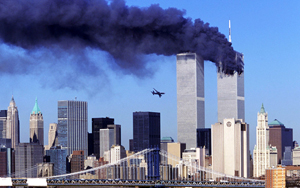
Saudi Arabia was home to 15 of the 19 Al-Qaeda hijackers who carried out the September 11, 2001 attacks on the United States which killed nearly 3,000 people.

Riyadh denies any ties to the plotters. Ties between Riyadh and Washington became increasingly frayed under Obama, but analysts said security cooperation and intelligence sharing remained solid.

Comments

PONDER
 - 
Saturday, 1 Oct 2016

Naser , No doubt its clear the Js did it.

watch in YT
Firefighters, Architects & Engineers for 9-11 Truth\ - Richard Gage, AIA - April 6th, 2016"

NASER
 - 
Friday, 30 Sep 2016

Its law of jungle adapted by the united states. Its really laughable to accuse saudi arabia or any nation for some of the its citizen are accused . First of all still 911 incident is doubted as who has done it.

Add new comment

  • Coastaldigest.com reserves the right to delete or block any comments.
  • Coastaldigset.com is not responsible for its readers’ comments.
  • Comments that are abusive, incendiary or irrelevant are strictly prohibited.
  • Please use a genuine email ID and provide your name to avoid reject.
News Network
January 16,2020

Abu Dhabi, Jan 16: The number of people being killed by terrorism activities worldwide has decreased significantly over the recent years, according to the latest Global Terrorism Index.

The 2019 Global Terrorism Index, which was presented at a forum in Abu Dhabi on Wednesday also showed that the UAE improved its ranking in the index by coming down to 130th rank among the 163 countries. The terrorism impact in the UAE is categorised as 'very low'. In the UAE, only two terrorism incidents were reported over the past decade - one in 2010 and another in 2014 - and there were no casualties.

Commenting on the report, Mansour Al Mansouri, director of the UAE National Media Council (NMC) said: "These findings rightly show the UAE as one of the safest countries in the world in terms of terror threat."

The index showed that the total number of deaths from terrorism declined for the fourth consecutive year in 2018, falling by 15.2 per cent to 15,952 deaths. This represents a 53 per cent reduction since its peak in 2014 when 33,555 people were killed in terrorist attacks.

The index published for the seventh year in a row, ranks 163 countries across the globe according to the relative impact of terrorism. This takes into account the number of terrorist incidents, deaths caused by terror and total value of property damage.

The latest results saw three Middle East countries - Iraq, Syria and Yemen - continue in the top 10 positions of the index.

The findings also showed Taleban overtaking Daesh as the deadliest terrorist group in the world, accounting for 38 per cent of all terrorist deaths. This is an increase of 71 per cent. Afghanistan is the country most affected by terrorism in 2018 followed by Iraq, Nigeria, Syria and Pakistan, according to the report. The least impacted nations were Belarus, Guinea-Bissau, Oman, The Gambia and North Korea.

During his presentation of the key findings of the index at the Foreign Correspondent's Club of the UAE (FCC), Serge Stroobants, director of Europe and Mena at the Institute of Economics and Peace, said lesser people were now being killed in terrorism activities.

"There have been long-term trends in global terrorism, with deaths caused by terror down by 52 per cent compared to high point of 2014, which saw Daesh and Boko Haram at their peak," said Stroobants attributing the decrease in the deaths to the increase in security measures and cooperation among nations in the fight against terrorism.

In contrast to this, there has been a 320 per cent increase in far-right terrorist incidents in the West, with political ideology being the driving force behind an increased proportion of terror motivation.

"There has been an increase in far-right terrorism in Western Europe, North America and Oceania for the third consecutive year," said Stroobants.

Terrorism still remains a global security threat, according the index, with 71 countries recording more than one death - the second highest number of countries since 2002.

Stroobants said conflicts remain the main cause of terrorism with 90 per cent of terrorist incidents occurring in places where there are conflicts or insurgencies.

The report said the global economic impact of terrorism was $33 billion in 2018, a substantial decrease of 38 per cent from the previous year.

Boko Haram was responsible for 80 per cent of all female suicide attacks, said the terrorism index.

Global Terrorism Index: Most affected countries

>Afghanistan (7379 deaths)

>Iraq (1,054 deaths)

>Nigeria (2,040 deaths)

>Syria (662 deaths)

>Pakistan (537 deaths)

>Somalia (646 deaths)

>India (350 deaths)

>Yemen (301 deaths)

>The Philippines (297 deaths)

>Democratic Republic of the Congo (410 deaths)

Comments

Add new comment

  • Coastaldigest.com reserves the right to delete or block any comments.
  • Coastaldigset.com is not responsible for its readers’ comments.
  • Comments that are abusive, incendiary or irrelevant are strictly prohibited.
  • Please use a genuine email ID and provide your name to avoid reject.
News Network
July 20,2020

Abu Dhabi, Jul 20: The United Arab Emirates launched its first-ever interplanetary Hope Probe mission to Mars from Japan's Tanegashima Space Centre at 01:58 a.m. (local time) on Monday.

"United Arab Emirates (UAE) launches its first mission to Mars, the 'Hope Mars Mission' from Japan's Tanegashima Space Center," UAE Space Agency said on its Twitter page.

The spacecraft is expected to reach Mars orbit in about 200 days from now and then begin its mission to study the Red Planet's atmosphere, WAM news agency reported.

Once it enters Mars' orbit in the first quarter of 2021, the Hope probe will mark the UAE's 50th anniversary.

The probe will travel 493 million kilometres into space in a journey that will take seven months, and will orbit the Red Planet for one full Martian year of 687 days to provide the first truly global picture of the Martian atmosphere.

The Hope probe will be the first to study the Martian climate throughout daily and seasonal cycles. It will observe the weather phenomena on Mars such as the massive famous dust storms that have been known to engulf the Red Planet, as compared to the short and localised dust storms on Earth.

It will also examine the interaction between the upper and lower layers of the Martian atmosphere and causes of the Red Planet's surface corrosion, as well as study why Mars is losing its upper atmosphere.

Exploring connections between today's Martian weather and the ancient climate of the Red Planet will give deeper insights into the past and future of Earth as well as the potential of life on Mars and other distant planets.

The Hope Mars Mission is considered as the biggest strategic and scientific national initiative announced by UAE's President His Highness Sheikh Khalifa bin Zayed Al Nahyan and His Highness Sheikh Mohammed bin Rashid Al Maktoum in 2014. The UAE will be the first Arab nation to embark on a space mission to the Red Planet in a journey that contributes to the international science community as a service to human knowledge.

The interplanetary mission is the first by any West Asian, Arab or Muslim majority country.

Comments

Add new comment

  • Coastaldigest.com reserves the right to delete or block any comments.
  • Coastaldigset.com is not responsible for its readers’ comments.
  • Comments that are abusive, incendiary or irrelevant are strictly prohibited.
  • Please use a genuine email ID and provide your name to avoid reject.
News Network
February 5,2020

The Organisation of Islamic Cooperation (OIC) has said it rejects US President  Donald Trump 's recently unveiled Middle East plan.

The 57-member body, which held a summit on Monday  to discuss the plan in Saudi Arabia's Jeddah, said in a statement that it "calls on all member states not to engage with this plan or to cooperate with the US administration in implementing it in any form".

Requested by the Palestinian leadership, the meeting of the body came two days after the Arab League rejected Trump's so-called "deal of the century", saying: "It does not meet the minimum rights and aspirations of Palestinian people."

Addressing a pro-Israel audience at the White House with Israeli Prime Minister Benjamin Netanyahu by his side, Trump on Tuesday described his long-delayed plan for resolving the Israeli-Palestinian conflict as a "win-win solution" for both sides.

The US president said his proposed deal would ensure the establishment of a two-state solution, promising Palestinians a state of their own with a new capital in Abu Dis, a suburb just outside Jerusalem. Trump also said Jerusalem would be the "undivided capital" of Israel. The Palestinians want both occupied East Jerusalem and the West Bank to be part of a future state.

Palestinian leaders, who were absent during the announcement and had rejected the proposal even before its release, denounced the plan as "a new Balfour Declaration" that heavily favoured Israel and would deny them a viable independent state.

The OIC said in a statement on Twitter on Sunday that its "open-ended executive committee meeting" at the level of foreign ministers would "discuss the organisation's position after the US administration announced its peace plan".

With member states from four continents, the OIC is the second-largest intergovernmental organisation in the world after the United Nations, with a collective population reaching more than 1.8 billion.

The majority of its member states are Muslim-majority countries, while others have significant Muslim populations, including several African and South American countries. While the 22 members of the Arab League are also part of the OIC, the organisation has several significant non-Arab member states, including Turkey, Iran and Pakistan. It also has five observer members, including Russia and Thailand.

Iran 'barred'

Meanwhile, Iran on Monday accused its regional rival Saudi Arabia of blocking its officials from attending the OIC meeting.

"The government of Saudi Arabia has prevented the participation of the Iranian delegation in the meeting to examine the 'deal of the century' plan at the headquarters of the Organization of Islamic Cooperation," Fars news agency quoted Abbas Mousavi, spokesman for Iran's foreign ministry, as saying.

Mousavi said Iran - one of the countries to strongly condemn Trump's plan - had filed a complaint with the OIC and accused its regional rival of misusing its position as the host for the organisation's headquarters.

There was no immediate comment from Saudi officials.

Following the unveiling of Trump's plan, the Saudi foreign ministry expressed appreciation for Trump's efforts and support for direct peace negotiations under Washington's auspices, while state media reported that King Salman had called Palestinian President Mahmoud Abbas to reassure him of Riyadh's unwavering commitment to the Palestinian cause.

The announcement of Trump's plan drew mixed responses from Arab states.

Observers said the reaction was indicative of the division among Arab countries and their inability to prioritise the Palestinian people's plight over domestic economic agendas and political calculations in relation to the Trump administration.

Comments

Add new comment

  • Coastaldigest.com reserves the right to delete or block any comments.
  • Coastaldigset.com is not responsible for its readers’ comments.
  • Comments that are abusive, incendiary or irrelevant are strictly prohibited.
  • Please use a genuine email ID and provide your name to avoid reject.