



Epic nuclear case: Island nation takes on India, Pak, Britain

October 5, 2016

Majuro/Marshall Islands, Oct 5: As the Marshall Islands awaits an international court ruling on Wednesday on whether its lawsuit against three nuclear powers can proceed, many in the western Pacific nation question the merit of the David-versus-Goliath legal battle.
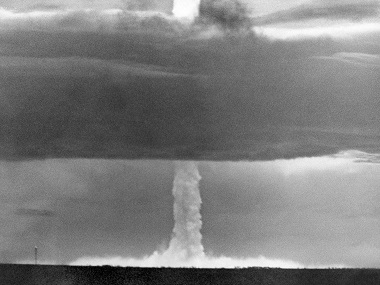
hydrogenThe country of 55,000 people is taking on India, Pakistan and Britain in the International Court of Justice (ICJ), arguing they have failed to comply with the 1968 nuclear Non-Proliferation Treaty.

Initially the lawsuit was even more ambitious — also including China, France, Israel, North Korea, Russia and the United States — none of which recognised the ICJ's jurisdiction on the matter.

The Marshalls has a long, bitter history with nuclear weapons, making it one of the few nations that can argue with credibility before the ICJ about their impact.

The island nation was ground zero for 67 American nuclear weapons tests from 1946-58 at Bikini and Enewetak atolls, when it was under US administration.

The tests included the 1954 "Bravo" hydrogen bomb, the most powerful ever detonated by the United States, about 1,000 times bigger than the atomic bomb dropped on Hiroshima.

They fed into an apocalyptic zeitgeist in Cold War popular culture, giving a name to the bikini swimsuit and leading to the development of Japan's Godzilla movie monster.

In "Godzilla", the creature is awakened by a hydrogen bomb test, rising from a roiling sea to destroy Tokyo, in a walking, radiation-breathing analogy for nuclear disaster.

'Sky turned blood red'

On the Marshall Islands, the impacts of the nuclear tests were all too real.

Numerous islanders were forcibly evacuated from ancestral lands and resettled, while thousands more were exposed to radioactive fallout.

"Several islands in my country were vaporised and others are estimated to remain uninhabitable for thousands of years," Tony deBrum, a former Marshall Islands foreign minister, told an ICJ hearing earlier this year.

He recalled witnessing the Bravo test as a nine-year-old while fishing with his grandfather in an atoll, some 200 kilometres (125 miles) from the blast's epicentre.

"The entire sky turned blood red," he said. "Many died, or suffered birth defects never before seen and cancers as a result of contamination."

DeBrum launched the Marshall's ICJ action in 2014 with cooperation from the California-based Nuclear Age Peace Foundation.

His actions prompted the International Peace Bureau to nominate him in January for the 2016 Nobel Peace Prize, which is yet to be awarded.

Yet critics argue the ICJ action is a distraction and the islanders' real fight is with Washington, which carried out the tests in their backyard.

They contend the case has no relationship to victims' claims for increased compensation, better health care and clean-ups to make sites habitable again.

Official criticism has been muted recently to avoid undermining deBrum's Nobel nomination.

But his successor as foreign minister, John Silk, made his views clear before an election last November when voters ousted 40 percent of the parliament, including deBrum.

Labelling the action "unauthorised" and "a publicity stunt", he said the focus should remain on petitioning the US Congress for increased compensation.

"What do these lawsuits have to do with resolving the legacy of the US nuclear testing programme?" he asked.

The Nuclear Age Peace Foundation argues that the Marshalls is taking a broader perspective in trying to re-start nuclear disarmament talks that have stalled over the past 20 years.

"The Republic of the Marshall Islands acts for the seven billion of us who live on this planet to end the nuclear weapons threat hanging over all humanity," its website says.

"Everyone has a stake in this."

The ICJ, the UN's top court, will decide on Wednesday whether it believes the case should go to a full hearing.

Comments

Ashwin
 - 
Wednesday, 5 Oct 2016

Haha. CD u are very slow. The UN Court has already rejected nuclear case against India. But you are very quick to post something about BJP

Add new comment

  • Coastaldigest.com reserves the right to delete or block any comments.
  • Coastaldigset.com is not responsible for its readers’ comments.
  • Comments that are abusive, incendiary or irrelevant are strictly prohibited.
  • Please use a genuine email ID and provide your name to avoid reject.
Agencies
July 1,2020

The ILO has warned that if another Covid-19 wave hits in the second half of 2020, there would be global working-hour loss of 11.9 percent - equivalent to the loss of 340 million full-time jobs.

According to the 5th edition of International Labour Organisation (ILO) Monitor: Covid-19 and the world of work, the recovery in the global labour market for the rest of the year will be uncertain and incomplete.

The report said that there was a 14 percent drop in global working hours during the second quarter of 2020, equivalent to the loss of 400 million full-time jobs.

The number of working hours lost across the world in the first half of 2020 was significantly worse than previously estimated. The highly uncertain recovery in the second half of the year will not be enough to go back to pre-pandemic levels even in the best scenario, the agency warned.

The baseline model – which assumes a rebound in economic activity in line with existing forecasts, the lifting of workplace restrictions and a recovery in consumption and investment – projects a decrease in working hours of 4.9 percent (equivalent to 140 million full-time jobs) compared to last quarter of 2019.

It says that in the pessimistic scenario, the situation in the second half of 2020 would remain almost as challenging as in the second quarter.

“Even if one assumes better-tailored policy responses – thanks to the lessons learned throughout the first half of the year – there would still be a global working-hour loss of 11.9 per cent at the end of 2020, or 340 million full-time jobs, relative to the fourth quarter of 2019,” it said.

The pessimistic scenario assumes a second pandemic wave and the return of restrictions that would significantly slow recovery. The optimistic scenario assumes that workers’ activities resume quickly, significantly boosting aggregate demand and job creation. With this exceptionally fast recovery, the global loss of working hours would fall to 1.2 per cent (34 million full-time jobs).

The agency said that under the three possible scenarios for recovery in the next six months, “none” sees the global job situation in better shape than it was before lockdown measures began.

“This is why we talk of an uncertain but incomplete recovery even in the best of scenarios for the second half of this year. So there is not going to be a simple or quick recovery,” ILO Director-General Guy Ryder said.

The new figures reflect the worsening situation in many regions over the past weeks, especially in developing economies. Regionally, working time losses for the second quarter were: Americas (18.3 percent), Europe and Central Asia (13.9 percent), Asia and the Pacific (13.5 percent), Arab States (13.2 percent), and Africa (12.1 percent).

The vast majority of the world’s workers (93 per cent) continue to live in countries with some sort of workplace closures, with the Americas experiencing the greatest restrictions.

During the first quarter of the year, an estimated 5.4 percent of global working hours (equivalent to 155 million full-time jobs) were lost relative to the fourth quarter of 2019. Working- hour losses for the second quarter of 2020 relative to the last quarter of 2019 are estimated to reach 14 per cent worldwide (equivalent to 400 million full-time jobs), with the largest reduction (18.3 per cent) occurring in the Americas.

The ILO Monitor also found that women workers have been disproportionately affected by the pandemic, creating a risk that some of the modest progress on gender equality made in recent decades will be lost, and that work-related gender inequality will be exacerbated.

The severe impact of Covid-19 on women workers relates to their over-representation in some of the economic sectors worst affected by the crisis, such as accommodation, food, sales and manufacturing.

Globally, almost 510 million or 40 percent of all employed women work in the four most affected sectors, compared to 36.6 percent of men, it said.

The report said that women also dominate in the domestic work and health and social care work sectors, where they are at greater risk of losing their income and of infection and transmission and are also less likely to have social protection.

The pre-pandemic unequal distribution of unpaid care work has also worsened during the crisis, exacerbated by the closure of schools and care services.

Even as countries have adopted policy measures with unprecedented speed and scope, the ILO Monitor highlights some key challenges ahead, including finding the right balance and sequencing of health, economic and social and policy interventions to produce optimal sustainable labour market outcomes; implementing and sustaining policy interventions at the necessary scale when resources are likely to be increasingly constrained and protecting and promoting the conditions of vulnerable, disadvantaged and hard-hit groups to make labour markets fairer and more equitable.

“The decisions we adopt now will echo in the years to come and beyond 2030. Although countries are at different stages of the pandemic and a lot has been done, we need to redouble our efforts if we want to come out of this crisis in a better shape than when it started,” Ryder said. 

Comments

Add new comment

  • Coastaldigest.com reserves the right to delete or block any comments.
  • Coastaldigset.com is not responsible for its readers’ comments.
  • Comments that are abusive, incendiary or irrelevant are strictly prohibited.
  • Please use a genuine email ID and provide your name to avoid reject.
News Network
January 8,2020

New Delhi, Jan 8: Iran will welcome any peace initiative by India for de-escalating its tensions with the US after the killing of Iranian military commander Qasem Soleimani, the Iranian envoy here said on Wednesday.

His comments come hours after Iran launched missile strikes against two US military bases in Iraq in retaliation to the killing of its top commander General Qassem Soleimani.

"India usually plays a very good role in (maintaining) peace in the world. At the same time, India belongs to this region. We welcome all initiatives from all countries, especially India as a good friend for us, to not allow escalation (of tensions)," Iranian Ambassador to India Ali Chegeni told reporters after a condolence meeting for Solemani at the country's embassy here.

"We are not for war, we are looking for peace and prosperity for everybody in this region. We welcome any Indian initiative or any project that can help peace and prosperity in this world," he said.

On the Iranian attack on US targets in Iraq, Chegeni said his country retaliated under its right to defend.

Amid spiralling US-Iran tensions over the killing of Soleimani, External Affairs Minister S Jaishankar on Sunday had a conversation with his Iranian counterpart Javad Zarif and US Secretary of State Mike Pompeo, voicing India's concerns over the escalation of tensions.

Comments

Add new comment

  • Coastaldigest.com reserves the right to delete or block any comments.
  • Coastaldigset.com is not responsible for its readers’ comments.
  • Comments that are abusive, incendiary or irrelevant are strictly prohibited.
  • Please use a genuine email ID and provide your name to avoid reject.
Agencies
May 30,2020

Washington, May 30: US President Donald Trump on Friday said that America is terminating its relationship with the World Health Organization as he blamed it and China for the deaths and destruction caused by the COVID-19 pandemic across the globe.

Stating that the funding of the WHO would now be diverted to other global public health organisations, Trump announced a series of decisions against China including issuing proclamation to deny entry to certain Chinese nationals and tightening of regulations against Chinese investments in America.

"Because they (WHO) have failed to make the requested and greatly needed reforms, we will be today terminating our relationship with the World Health Organization and redirecting those funds to other worldwide and deserving urgent global public health needs, Trump said.

Comments

Add new comment

  • Coastaldigest.com reserves the right to delete or block any comments.
  • Coastaldigset.com is not responsible for its readers’ comments.
  • Comments that are abusive, incendiary or irrelevant are strictly prohibited.
  • Please use a genuine email ID and provide your name to avoid reject.