


Nearly 14% Indians are mentally ill, reveals Nimhans study

[email protected] (CD Network)
October 12, 2016

Bengaluru, Oct 12: A nationwide study conducted by National Institute of Mental Health & Neurosciences (Nimhans) has revealed a shocking prevalence of mental illness in India. At least 13.7 per cent of India's general population has been projected to be suffering from a variety of mental illnesses; and 10.6 per cent of this requires immediate intervention.
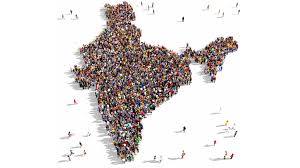
indiaIn all, nearly 150 million Indians are in a need of active medical intervention, according to the study, submitted by Nimhans to the Union ministry of health and family welfare on Monday.

Concerned over the growing problem of mental health in India, the ministry had appointed Nimhans to study the mental health status in the country in 2014 to come up with stronger mental health policies.

The aim of the survey was to study the magnitude of the problem in the country when Dr P Satish Chandra was the director of Nimhans.

India was one of the first countries to develop a national mental health programme in the early 1980s, but there was no proper study to understand the spread and estimate of mental illness in the state.

Although a mental health survey was conducted almost a decade ago, there were several fallacies in that report. The report stated that the estimates at the national and state levels were not possible due to methodological limitations.

The current study, starting from data collection, was initiated in 2014. Through computer-generated random selection, primary data was collected from 12 states with a sample size of 34,802 people.

A pilot study was done in Kolar in Karnataka. It covered all important aspects of mental illness that included substance abuse, alcohol use disorder, tobacco use disorder, severe mental illness, depression, anxiety, phobia, post-traumatic stress disorder, among others.

The prevalence of mental morbidity was found to be very high in the Indian urban centres with higher prevalence of schizophrenia, mood disorders and neurotic- or stress-related disorders.

Researchers have attributed the disturbing scenario to fast-paced lifestyles, stress, complexities of loving, breakdown of support systems and challenges of economic instability.

One of the biggest concerns emerging from the study is that despite three out of four persons experiencing severe mental disorders, huge treatment gaps exist.

Apart from epilepsy, the treatment gap for all mental health disorders is more than sixty per cent. In fact, the economic burden of mental disorders is so huge that affected families had to spend nearly Rs 1,000-1,500 a month mainly for treatment and to access care.

Due to the stigma attached with mental disorders, nearly 80 per cent of people suffering from mental disorders had not received any treatment despite being afflicted by the illness for over 12 months.

Poor implementation of programmes under the national mental health programme has been found to be the main culprit for this scenario.

They not only have a low priority in the public health agenda but the health information system itself does not prioritise mental health.

Not only is there a paucity of mental health specialists, the institutional care in India, too, has been found to be limited.

The researchers suggest that mental health financing needs to be streamlined. The other problems also include interrupted drug supply to treat mental illness.

Comments

Ahmed USA
 - 
Thursday, 13 Oct 2016

Sam ,u proved urself to be a student of madrasa .message board itself clearly says many have become mentally retards becoz of many reason ..one is triple talaq ..now they cannot escape from marriage after raping woman. Second ..surgical strike hit them most becoz many of them thought their relatives can do anything in Pakistan .but now their dreams are shattered .third point arrest of salafist linked Isis elements .4th point losing grip on central govt as iron man is ruling the central .mr sam .1.25 billion population yaar .have commonsense .max voters 65crores .in that Muslims didn't vote for bjp and 31% they have received .FYI how much your siddu got do u know ? .send ur kids at least to schools instead of salafist madrasas..at least they don't become like you .

Rikaz
 - 
Wednesday, 12 Oct 2016

Modi promised 15 lakhs and ache din and may be he is also one of them....

Ashwin
 - 
Wednesday, 12 Oct 2016

SAM, UAE
You are wrong, 14% of the people are those who voted for the Looters party inspite of their pro Pak, non stop looting, minority appeasing policy. This list includes Puppu, Mani, Khurshid, Diggy etc

Go Moothra
 - 
Wednesday, 12 Oct 2016

Those who changed clothes (Chaddi to trouser) .....recently ...but could not change their Minds.....

Shaad
 - 
Wednesday, 12 Oct 2016

We know 31% Indians who elected present Govt. are mentally ill, how come it reduced to 14%? May after 2 years some realised their mistakes..!

SAM
 - 
Wednesday, 12 Oct 2016

Don't understand why the NIMHANS spent so much to reveal that the number of people voted for NDA are mentally ill.

17 Cr out of 1.25 Billion voted for NDA which is 14%.

Surely Arnab Go & Swami are the on the top list who needs to be admitted to ICU.

Abdul Narayan Dsouza
 - 
Wednesday, 12 Oct 2016

Arnab Gobar swami and Naren Kothi will be in the list

Abbu Beary
 - 
Wednesday, 12 Oct 2016

Some saffron group activists all of a sudden become mentally ill if they were caught in terror case. I want to know whether they also included in this 14 per cent ?

Add new comment

  • Coastaldigest.com reserves the right to delete or block any comments.
  • Coastaldigset.com is not responsible for its readers’ comments.
  • Comments that are abusive, incendiary or irrelevant are strictly prohibited.
  • Please use a genuine email ID and provide your name to avoid reject.
News Network
February 16,2020

Mangaluru, Feb 16: An elderly woman from Tamil Nadu was on Saturday reunited with her daughter and son after 14 years at the Mangaluru's White Doves destitute home.

"Mary only knew her name when she came here 10 years ago. Recently, she told us about her home town," Corrine Rusquinha, founder of White Doves told media.
Mary had gone missing 14 years ago from her hometown Kortampet in Tamil Nadu.

"Ten years ago, she was spotted by Mangaluru police who brought her to White Doves home late one evening. Initially, she could only speak Tamil, so it was presumed she was from Tamil Nadu. She was on psychiatric treatment," Rusquinha said.

A few days back, a visiting priest at the White Doves home spoke to Mary in Tamil and asked about her hometown.

"Surprisingly, she could recall the name of her hometown, following which the visiting priest contacted the pastor at Kortampet. Mary's family, including her daughter Gnana Anthony, who is a paramedic student in Coimbatore, was informed about Mary," she said.

Soon after, Gnana and her elder brother came to Mangaluru to take their mother back to their home.

Mary's husband Jhonson, who worked as a cook, had died within a year of losing his wife.

Comments

Add new comment

  • Coastaldigest.com reserves the right to delete or block any comments.
  • Coastaldigset.com is not responsible for its readers’ comments.
  • Comments that are abusive, incendiary or irrelevant are strictly prohibited.
  • Please use a genuine email ID and provide your name to avoid reject.
News Network
June 7,2020

Bengaluru, Jun 7: An eminent scientist on Sunday suggested a shift system in schools to prevent spread of the coronavirus and continuing with online classes with focus on project-based learning in a big way to promote creativity.

Former Director General of the Defence Research and Development Organisation (DRDO) V K Saraswat supported the idea of online teaching in the absence of regular classes in view of closure of schools due to the COVID-19 pandemic.

But, he said it should be organised in far better and more interactive ways so that delivery of knowledge can be better. The NITI Aayog member stressed the need for schools to have a strategy when they reopen keeping in mind the safety of students.

May be they will have to organise shifts so that within the same space they can handle the students; May be they will have to employ more teachers, and they can run two shifts. "May be half the strength in a class can come in the morning and others in the afternoon.

Or students of first to sixth standard can come in the morning and seventh to tenth can come in the afternoon, Saraswat told PTI. Reopening strategy will have to be worked out by the education department, added the former Chief Scientific Advisor to the Defence Minister.

Along with normal classes, online education should be continued as a regular system in future, and promoted in a big way because that is the way technology is going to help delivery of knowledge, he added. Saraswat also raised the pitch for reforms in the education sector, saying India is facing the problem of rote learning.

Rote learning has to give way for more project-based teaching, he underlined. Children should be made to work on projects at home and that can be done online. That will also support the changeover from rote learning to creative learning.

I personally believe the education delivery system -- primary, secondary and college levels -- has to be completely changed because creativity in India is less and creativity would come only if we replace rote learning with project-based learning, Saraswat said.

On some academics holding the view that the marks-based model is killing the education system in India as it does not promote creativity, he said evaluation of any outcome is important. Even when we perform in our normal way, evaluation cannot be replaced.

Otherwise, you cant find out how much you have succeeded in delivery. Certainly evaluation cannot be dispensed with. He did not agree with some experts, who favoured a single, uniform system for school education in India by dispensing with CBSE, ICSE and state boards. I am not for normalising everything in life.

I personally believe variety should be there. This concept of one kind of a system is okay for a Communist society, society which was trying to drive everybody like a herd, he said.

Creativity comes with variety, and there is nothing wrong in having different kinds of education system, but one thing which is important is we have to integrate vocational training as part of the education curriculum," Saraswat said. Vocational part cannot be kept away from the education system, he added.

Comments

Add new comment

  • Coastaldigest.com reserves the right to delete or block any comments.
  • Coastaldigset.com is not responsible for its readers’ comments.
  • Comments that are abusive, incendiary or irrelevant are strictly prohibited.
  • Please use a genuine email ID and provide your name to avoid reject.
News Network
July 9,2020

Bengaluru,  Jul 9: Former Karnataka Chief Minister and Congress leader Siddaramaiah on Wednesday said that he was opposed to a tie-up with Janata Dal-Secular in the last Lok Sabha elections but the party high command did not listen to him.

"I had suggested that we should fight alone (in Lok Sabha elections) because JD-S votes would not have come to us and our votes would not have gone to JD-S," Siddaramaiah told reporters here.

Congress leader said that he was the only one to make the suggestion and he did not get support.

"I was the only one to raise a voice that's why it was not heard by (party) high command and I did not get support. We might have won over seven seats in parliament election if we had fought alone," he said.

After forming government in Karnataka in 2018 with support of JD-S, Congress had fought the 2019 general election in a pre-poll alliance with the party. Congress could only one seat of the 21 it contested and JD-S also won one seat of the seven it contested.

Comments

Add new comment

  • Coastaldigest.com reserves the right to delete or block any comments.
  • Coastaldigset.com is not responsible for its readers’ comments.
  • Comments that are abusive, incendiary or irrelevant are strictly prohibited.
  • Please use a genuine email ID and provide your name to avoid reject.