


Nearly 14% Indians are mentally ill, reveals Nimhans study

[email protected] (CD Network)
October 12, 2016

Bengaluru, Oct 12: A nationwide study conducted by National Institute of Mental Health & Neurosciences (Nimhans) has revealed a shocking prevalence of mental illness in India. At least 13.7 per cent of India's general population has been projected to be suffering from a variety of mental illnesses; and 10.6 per cent of this requires immediate intervention.
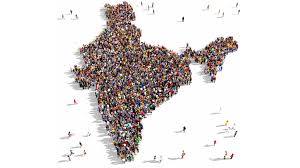
indiaIn all, nearly 150 million Indians are in a need of active medical intervention, according to the study, submitted by Nimhans to the Union ministry of health and family welfare on Monday.

Concerned over the growing problem of mental health in India, the ministry had appointed Nimhans to study the mental health status in the country in 2014 to come up with stronger mental health policies.

The aim of the survey was to study the magnitude of the problem in the country when Dr P Satish Chandra was the director of Nimhans.

India was one of the first countries to develop a national mental health programme in the early 1980s, but there was no proper study to understand the spread and estimate of mental illness in the state.

Although a mental health survey was conducted almost a decade ago, there were several fallacies in that report. The report stated that the estimates at the national and state levels were not possible due to methodological limitations.

The current study, starting from data collection, was initiated in 2014. Through computer-generated random selection, primary data was collected from 12 states with a sample size of 34,802 people.

A pilot study was done in Kolar in Karnataka. It covered all important aspects of mental illness that included substance abuse, alcohol use disorder, tobacco use disorder, severe mental illness, depression, anxiety, phobia, post-traumatic stress disorder, among others.

The prevalence of mental morbidity was found to be very high in the Indian urban centres with higher prevalence of schizophrenia, mood disorders and neurotic- or stress-related disorders.

Researchers have attributed the disturbing scenario to fast-paced lifestyles, stress, complexities of loving, breakdown of support systems and challenges of economic instability.

One of the biggest concerns emerging from the study is that despite three out of four persons experiencing severe mental disorders, huge treatment gaps exist.

Apart from epilepsy, the treatment gap for all mental health disorders is more than sixty per cent. In fact, the economic burden of mental disorders is so huge that affected families had to spend nearly Rs 1,000-1,500 a month mainly for treatment and to access care.

Due to the stigma attached with mental disorders, nearly 80 per cent of people suffering from mental disorders had not received any treatment despite being afflicted by the illness for over 12 months.

Poor implementation of programmes under the national mental health programme has been found to be the main culprit for this scenario.

They not only have a low priority in the public health agenda but the health information system itself does not prioritise mental health.

Not only is there a paucity of mental health specialists, the institutional care in India, too, has been found to be limited.

The researchers suggest that mental health financing needs to be streamlined. The other problems also include interrupted drug supply to treat mental illness.

Comments

Ahmed USA
 - 
Thursday, 13 Oct 2016

Sam ,u proved urself to be a student of madrasa .message board itself clearly says many have become mentally retards becoz of many reason ..one is triple talaq ..now they cannot escape from marriage after raping woman. Second ..surgical strike hit them most becoz many of them thought their relatives can do anything in Pakistan .but now their dreams are shattered .third point arrest of salafist linked Isis elements .4th point losing grip on central govt as iron man is ruling the central .mr sam .1.25 billion population yaar .have commonsense .max voters 65crores .in that Muslims didn't vote for bjp and 31% they have received .FYI how much your siddu got do u know ? .send ur kids at least to schools instead of salafist madrasas..at least they don't become like you .

Rikaz
 - 
Wednesday, 12 Oct 2016

Modi promised 15 lakhs and ache din and may be he is also one of them....

Ashwin
 - 
Wednesday, 12 Oct 2016

SAM, UAE
You are wrong, 14% of the people are those who voted for the Looters party inspite of their pro Pak, non stop looting, minority appeasing policy. This list includes Puppu, Mani, Khurshid, Diggy etc

Go Moothra
 - 
Wednesday, 12 Oct 2016

Those who changed clothes (Chaddi to trouser) .....recently ...but could not change their Minds.....

Shaad
 - 
Wednesday, 12 Oct 2016

We know 31% Indians who elected present Govt. are mentally ill, how come it reduced to 14%? May after 2 years some realised their mistakes..!

SAM
 - 
Wednesday, 12 Oct 2016

Don't understand why the NIMHANS spent so much to reveal that the number of people voted for NDA are mentally ill.

17 Cr out of 1.25 Billion voted for NDA which is 14%.

Surely Arnab Go & Swami are the on the top list who needs to be admitted to ICU.

Abdul Narayan Dsouza
 - 
Wednesday, 12 Oct 2016

Arnab Gobar swami and Naren Kothi will be in the list

Abbu Beary
 - 
Wednesday, 12 Oct 2016

Some saffron group activists all of a sudden become mentally ill if they were caught in terror case. I want to know whether they also included in this 14 per cent ?

Add new comment

  • Coastaldigest.com reserves the right to delete or block any comments.
  • Coastaldigset.com is not responsible for its readers’ comments.
  • Comments that are abusive, incendiary or irrelevant are strictly prohibited.
  • Please use a genuine email ID and provide your name to avoid reject.
News Network
July 14,2020

Mangaluru, July 14: In order to detect COVID-19 cases quickly in Dakshina Kannada, the government has commissioned a programme to administer rapid antigen tests.

The coastal district has already received 3,500 rapid antigen test kits, which can give results in 30 minutes, an official said, adding that tests will be conducted shortly and training is being imparted on the use of the kits.

The antigen tests will be conducted for emergency cases like delivery, surgery, persons with severe symptoms of Covid-19, multiple-organ failure and for those whose condition is critical. 

"If a symptomatic patient tests negative for Covid-19, then his throat swab sample would be sent for lab testing," the district health officer (DHO) said.

The rapid antigen tests is expected to help in increasing the number of tests and bring down the load of testing on labs, as antigen kits allow faster diagnosis.

It takes a minimum of eight hours to get the results via real-time polymerase chain reaction (RT-PCR) test. Antigen tests can provide results within half an hour.

Comments

Add new comment

  • Coastaldigest.com reserves the right to delete or block any comments.
  • Coastaldigset.com is not responsible for its readers’ comments.
  • Comments that are abusive, incendiary or irrelevant are strictly prohibited.
  • Please use a genuine email ID and provide your name to avoid reject.
News Network
August 7,2020

Bengaluru, Aug 7: Amid the rising number of COVID-19 cases in Karnataka, the state's health department issued fresh guidelines for the disposal of bodies of COVID patients.

"Although an increased risk of COVID infection from a dead body to health workers or family members who follow standard precautions while handling the body is unlikely, the lack of scientific data requires the utmost care to avoid the inadvertent spread of COVID-19 during these times," the statement from the health department's press release read, emphasising on the dignity of the dead and the religious and cultural tradition.

The 23-page press release elaborated on guidelines regarding testing, handling of dead bodies and other specificities in relation to the management of COVID-19 bodies.

"Testing should not be insisted in every case of death, but only when they have a recorded history of influenza-like symptoms. The body should be handed over to the family members/ relatives in a dignified manner immediately after swab collection and hospitals should provide handouts with a list of dos and don'ts in English and Kannada laying down relevant information," the statement said.

It added, "At the mortuary, health care workers, mortuary staff and the family of the deceased body shall not come in direct contact with the dead body and must wear full personal protective equipment (PPE). If the family or relative are for any reason unable to cremate or bury the body, the local health authority shall arrange for the dignified last rites as per the religious traditions of the family."

Regarding autopsies (post mortem) on COVID-19 bodies, the state department said that they should be avoided, except in necessary circumstances.

The statement also gave detailed guidelines regarding the appropriate recording of COVID-19 deaths in line with the Indian Council of Medical Research (ICMR) guidelines.

Additionally, the health department made a statement about the admission procedure for COVID positive patients referred by other district administrations saying, "It is now mandatory for all the referrals from the BBMP admission and discharge of COVID positive patients to be done through the online COVID Hospital Bed Management System (CHBMS)."

The state's count of coronavirus cases was 1,51,449 in the past 24 hours.

So far, a total of 2,804 people have died due to COVID-19 in the state, while the average recovery rate in Karnataka is 49.3 per cent.

Comments

Add new comment

  • Coastaldigest.com reserves the right to delete or block any comments.
  • Coastaldigset.com is not responsible for its readers’ comments.
  • Comments that are abusive, incendiary or irrelevant are strictly prohibited.
  • Please use a genuine email ID and provide your name to avoid reject.
Agencies
July 8,2020

The Central Board of Secondary Education (CBSE) has rationalised by up to 30 per cent the syllabus for classes 9 to 12 for the academic year 2020-21 to reduce course load on students amid the COVID-19 crisis, Union HRD Minister Ramesh Pokhriyal 'Nishank' announced on Tuesday.

The curriculum has been rationalised while retaining the core elements, the Human Resource Development said.

Among the chapters dropped after the rationalisation exercise are lessons on democracy and diversity, demonetisation, nationalism, secularism, India's relations with its neighbours and growth of local governments in India, among others.

"Looking at the extraordinary situation prevailing in the country and the world, CBSE was advised to revise the curriculum and reduce course load for the students of classes 9 to 12.

"To aid the decision, a few weeks back I also invited suggestions from all educationists on the reduction of syllabus for students and I am glad to share that we received more than 1.5K suggestions. Thank you, everyone, for the overwhelming response," Nishank tweeted.

"Considering the importance of learning achievement, it has been decided to rationalise syllabus up to 30 per cent by retaining the core concepts," he added.

The Union minister said the changes made in the syllabi have been finalised by the respective course committees with the approval of the curriculum committee and the Governing Body of the Board.

"The heads of schools and teachers have been advised by the board to ensure that the topics that have been reduced are also explained to the students to the extent required to connect different topics. However, the reduced syllabus will not be part of the topics for internal assessment and year-end board examination.

"Alternative academic calendar and inputs from the NCERT on transacting the curriculum using different strategies shall also be part of the teaching pedagogy in the affiliated schools," a senior official of the HRD ministry said.

For classes 1 to 8, the National Council of Education Research and Training (NCERT) has already notified an alternative calendar and learning outcomes.

According to the updated curriculum, among the chapters deleted from class 10 syllabus are-- democracy and diversity, gender, religion and caste, popular struggles and movement, challenges to democracy

For class 11, the deleted portions included chapters on federalism, citizenship, nationalism, secularism, growth of local governments in India.

Similarly, class 12 students will not be required to study chapters on India's relations with its neighbours, changing nature of India's economic development, social movements in India and demonetisation, among others.

Universities and schools across the country have been closed since March 16 when the central government announced a nationwide classroom shutdown as one of the measures to contain the COVID-19 outbreak.

A nationwide lockdown was announced on March 24, which came into effect the next day. While the government has eased several restrictions, schools and colleges continue to remain closed.

Comments

Add new comment

  • Coastaldigest.com reserves the right to delete or block any comments.
  • Coastaldigset.com is not responsible for its readers’ comments.
  • Comments that are abusive, incendiary or irrelevant are strictly prohibited.
  • Please use a genuine email ID and provide your name to avoid reject.