


Now, Karnataka citizens will get passport in 10 days

[email protected] (CD Network)
October 17, 2016

Bengaluru, Oct 17: Here's good news for passport applicants in Karnataka. The Regional Passport Office is taking all necessary steps to ensure that the applicants get the passports within 10 days.
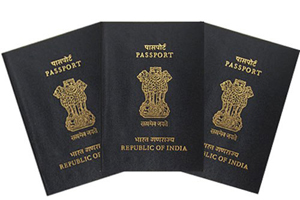
passport“From the time an applicant applies for a passport to passport delivery and completion of police verification, it should take about 10 days,” said P S Karthigeyan, regional passport officer-Karnataka.

"In September, we took an average of 13 days in Bengaluru and it was 25 days across the state. This is possible because of the mobile passport police app which was piloted first in Bengaluru with five police stations in May 2016. From August it has been extended to all police stations in Bengaluru," he said.

The app allows cops to download the digital copies of applications cleared by passport officers and upload the verification immediately from the field, thus reducing the time and paper use.

Karnataka has been second highest issuer of passports in 2015 after Lucknow—6.18 lakh passports issued in the calendar year. As on last Thursday, the RPO issued five lakh passports and hopes to issue 6.3 lakhs by the end of this year. Of the volume, Karthigeyan claims 45% applications come from Bengaluru alone.

"But we are not seeing a drastic increase in demand for passports as compared to 2013 and 2014. One of the reasons we think, may be, the penetration of passport holders in Karnataka is much higher than few other states like Lucknow," he added.

It has already reduced the wait period for one day for appointment slots, the officer claimed. Last year, it held 27 passport melas to expedite and resolve pending applications. This year, RPO Karnataka has already held seven camps and one more is being organised in Chitradurga on Saturday.

That is not it. Beginning October 13, the state RPO is also authorized to attest or apostille documents required for visa or other purposes by existing passport holders. The documents however, have to be submitted to four outsourced agencies—BLS International Services (Shivajinagar), VFS Global Services(Shivajinagar), IVS Global (Sheshadripuram) and Superb Enterprises (Infantry road).

"We have set up a attestation cell in the Koramangala headquarters of RPO where two senior passport officers will attest documents that must be originated and issued from Karnataka. Even if people living in other states have documents originating or issued from Karnataka, it will be attested. This will take two days," he said.

Ministry of external affairs has prescribed a fee of Rs 18 and Rs 20 for different types of documents and a fixed fee of Rs 150 to be paid to the outsourced agency.

Comments

Rikaz
 - 
Monday, 17 Oct 2016

Wow Karnataka citizens.....I wish its true....

Add new comment

  • Coastaldigest.com reserves the right to delete or block any comments.
  • Coastaldigset.com is not responsible for its readers’ comments.
  • Comments that are abusive, incendiary or irrelevant are strictly prohibited.
  • Please use a genuine email ID and provide your name to avoid reject.
News Network
July 10,2020

Bengaluru, Jul 10: The Karnataka cabinet gave its approval for "The Karnataka Contingency Fund (Amendment) Bill, 2020" to enhance the contingency fund limit to Rs 500 crore in the wake of the COVID-19 pandemic.

This will be an ordinance making one time enhancement in the limit as the government needs money to make payments immediately, Law and Parliamentary Affairs Minister JC Madhuswamy told reporters after a cabinet meeting.

Under the contingency fund, the government had room to spend up to Rs 80 crore without budget provision.

"...but this time due to COVID-19 as we had to give money to some sections that were in distress like barbers, flower and vegetable growers, taxi drivers, among others, we have decided to increase the limit to Rs 500 crore," Mr Madhuswamy said.

"As assembly was not in session and as we had to make payments to those in distress immediately, this decision has been taken," he added.

The cabinet today ratified the administrative approval given to carry out civil and electrical works to install medical gas pipeline with high flow oxygen system at district hospitals, taluk and community health centres coming under Health and Family welfare department in view of COVID-19.

The minister said about Rs 207 crore is being approved for this purpose.

It also ratified procurement of medical equipment and furniture for public healthcare institutions of the health and family welfare department worth Rs 81.99 crore.

According to the minister, the cabinet has decided to bring in an amendment to section 9 of the Lokayukta act, which mandates that the preliminary inquiry contemplated by Lokayukta or Upalokayuta should be completed in 90 days and charge sheeting should be completed within six months.

Noting that at the Agricultural Produce Market Committee (APMC) cess was being collected, he said as the government had brought in an amendment to the APMC act, there was demand to reduce the market cess. "So we have reduced it from 1.5 per cent to one per cent."

Approval has also been given by the cabinet to bring Karnataka Vidyuth Kharkane (KAVIKA) and Mysore Electrical Industries (MEI), which are presently under the control of Commerce and Industries department, under administrative control of the energy department.

Other decisions taken by the cabibinet include deployment and implementation of "e-procurement 2.0" project on PPP at a cost of Rs 184.37 crore and ratification of the action taken to issue orders on March 24 to release interest free loan of Rs 2,500 crore to ESCOMs for payment of outstanding power purchase dues to generating companies.

The cabinet also gave administrative approval for setting up of an Indian Institute of Information technology at Raichur.

"Under this, we are committed to provide Rs 44.8 crore in four years for infrastructure," the minister added.

Comments

Add new comment

  • Coastaldigest.com reserves the right to delete or block any comments.
  • Coastaldigset.com is not responsible for its readers’ comments.
  • Comments that are abusive, incendiary or irrelevant are strictly prohibited.
  • Please use a genuine email ID and provide your name to avoid reject.
News Network
April 27,2020

Bengaluru, Apr 27: Janata Dal-Secular leader and former Karnataka chief minister HD Kumaraswamy on Monday said that the government should work towards lowering the cost of living as the spending power of the consumer has weakened, and it should impose COVID cess on the ultra-rich.

"The economy won't bounce back within a very short period. It is important to lower the cost of living as the spending power of the consumer has depleted. The government must cut the petrol/diesel prices. The loss of revenue may be offset partially by imposing COVID cess on the ultra-rich," Kumaraswamy tweeted.

"According to RBI and international economic assessment agencies, the GDP growth rate of the country is expected to fall to a historic low. Such a dire situation calls for citizen-centric measures like full or partial waivers of EMIs, rents, school fees, and other levies," he added.

Kumaraswamy further said that the government must announce schemes to save the livelihoods of people, especially those in the unorganised sector.

"It is high time the government announced schemes to save livelihoods of people, especially those in the unorganised sector. The government must provide immediate relief to farmers, construction workers, cab and auto drivers, garment workers, etc," the former Karnataka CM tweeted.

The Confederation of Indian Industry (CII) had said on April 23 that India's economic growth is likely to hover between zero and 1.5 per cent in the current financial year as the extended COVID-19 lockdown slows down activity across most sectors.

India is under a nation-wide lockdown which was imposed on March 25 and later extended on April 14 to May 3 to stem the spread of coronavirus.

Comments

Add new comment

  • Coastaldigest.com reserves the right to delete or block any comments.
  • Coastaldigset.com is not responsible for its readers’ comments.
  • Comments that are abusive, incendiary or irrelevant are strictly prohibited.
  • Please use a genuine email ID and provide your name to avoid reject.
Agencies
February 20,2020

India ranked 77th on a sustainability index that takes into account per capita carbon emissions and ability of children in a nation to live healthy lives and secures 131st spot on a flourishing ranking that measures the best chance at survival and well-being for children, according to a UN-backed report.

The report was released on Wednesday by a commission of over 40 child and adolescent health experts from around the world. It was commissioned by the World Health Organization (WHO), UN Children's Fund (UNICEF) and The Lancet medical journal.

In the report assessing the capacity of 180 countries to ensure that their youngsters can survive and thrive, India ranks 77th on the Sustainability Index and 131 on the Flourishing Index, it said.

Flourishing is the geometric mean of Surviving and Thriving. For Surviving, the authors selected maternal survival, survival in children younger than 5 years old, suicide, access to maternal and child health services, basic hygiene and sanitation, and lack of extreme poverty.

For Thriving, the domains were educational achievement, growth and nutrition, reproductive freedom, and protection from violence.

Under the Sustainability Index, the authors noted that promoting today's national conditions for children to survive and thrive must not come at the cost of eroding future global conditions for children's ability to flourish.

The Sustainability Index ranks countries on excess carbon emissions compared with the 2030 target. This provides a convenient and available proxy for a country's contribution to sustainability in future.

The report noted that under realistic assumptions about possible trajectories towards sustainable greenhouse gas emissions, models predict that global carbon emissions need to be reduced from 39·7 giga­ tonnes to 22·8 gigatonnes per year by 2030 to maintain even a 66 per cent chance of keeping global warming below 1·5°C.

It said that the world's survival depended on children being able to flourish, but no country is doing enough to give them a sustainable future.

"No country in the world is currently providing the conditions we need to support every child to grow up and have a healthy future," said Anthony Costello, Professor of Global Health and Sustainability at University College London, one of the lead authors of the report.

"Especially, they're under immediate threat from climate change and from commercial marketing, which has grown hugely in the last decade," said Costello – former WHO Director of Mother, Child and Adolescent health.

Norway leads the table for survival, health, education and nutrition rates - followed by South Korea and the Netherlands. Central African Republic, Chad and Somalia come at the bottom.

However, when taking into account per capita CO2 emissions, these top countries trail behind, with Norway 156th, the Republic of Korea 166th and the Netherlands 160th.

Each of the three emits 210 per cent more CO2 per capita than their 2030 target, the data shows, while the US, Australia, and Saudi Arabia are among the 10 worst emitters. The lowest emitters are Burundi, Chad and Somalia.

According to the report, the only countries on track to beat CO2 emission per capita targets by 2030, while also performing fairly – within the top 70 – on child flourishing measures are: Albania, Armenia, Grenada, Jordan, Moldova, Sri Lanka, Tunisia, Uruguay and Vietnam.

"More than 2 billion people live in countries where development is hampered by humanitarian crises, conflicts, and natural disasters, problems increasingly linked with climate change," said Minister Awa Coll-Seck from Senegal, Co-Chair of the commission.

The report also highlights the distinct threat posed to children from harmful marketing.

Evidence suggests that children in some countries see as many as 30,000 advertisements on television alone in a single year, while youth exposure to vaping (e-cigarettes) advertisements increased by more than 250 per cent in the US over two years, reaching more than 24 million young people.

Studies in Australia, Canada, Mexico, New Zealand and the US – among many others – have shown that self-regulation has not hampered commercial ability to advertise to children.

Children's exposure to commercial marketing of junk food and sugary beverages is associated with purchase of unhealthy foods and overweight and obesity, linking predatory marketing to the alarming rise in childhood obesity, it said.

The number of obese children and adolescents increased from 11 million in 1975 to 124 million in 2016 – an 11-fold increase, with dire individual and societal costs, the report said.

To protect children, the authors call for a new global movement driven by and for children.

Specific recommendations include stopping CO2 emissions with the utmost urgency, to ensure children have a future on this planet; placing children and adolescents at the centre of global efforts to achieve sustainable development, the report said.

New policies and investment in all sectors to work towards child health and rights; incorporating children's voices into policy decisions and tightening national regulation of harmful commercial marketing, supported by a new Optional Protocol to the UN Convention on the Rights of the Child, it said.

Comments

Add new comment

  • Coastaldigest.com reserves the right to delete or block any comments.
  • Coastaldigset.com is not responsible for its readers’ comments.
  • Comments that are abusive, incendiary or irrelevant are strictly prohibited.
  • Please use a genuine email ID and provide your name to avoid reject.