Hearing Wellness Clinic

[email protected] (Business Desk)
October 9, 2012

HWC3


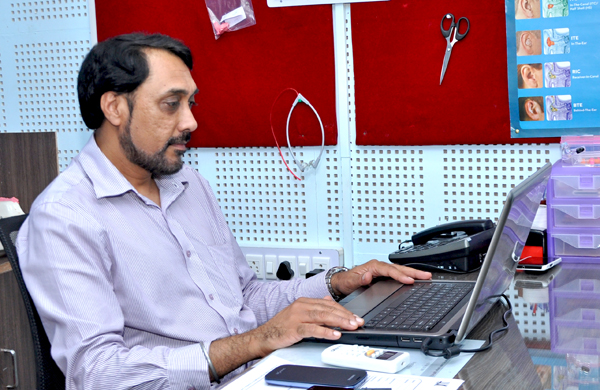
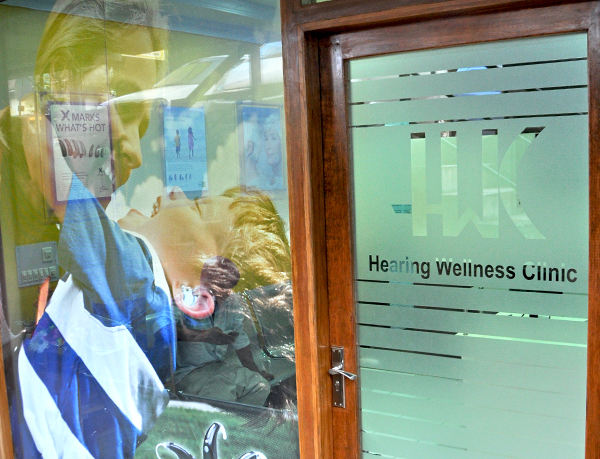
Established by Dr Kamaljeet Singh, 'Hearing Wellness Clinic' is a one-stop clinic for hearing assistance for partial or complete loss of hearing.

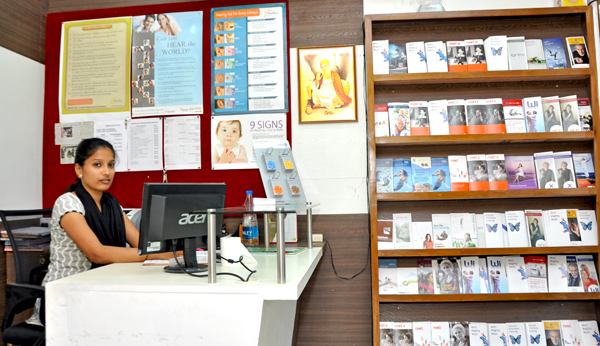
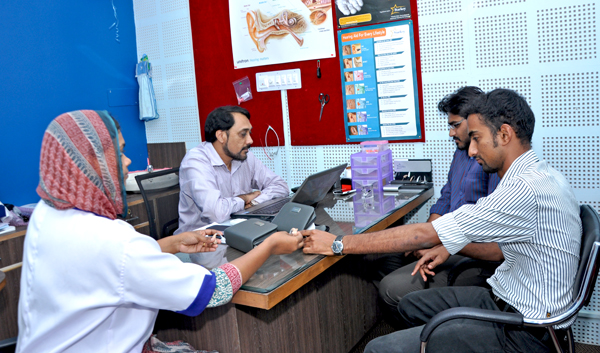
Recently inaugurated in the city, the hearing centre offers customised solutions to meet individual hearing problems, right from diagnosis to solution for hearing conducting hearing tests and providing hearing aids best suited to individual needs and requirements.

With the opening of the centre in Mangalore, HWC has 11 centres in India, including nine in the state and two in Hyderabad. HWC provides a wide range of products to mitigate an individual's suffering due to loss of hearing, says Mr Singh. He says that the hearing care clinic provides professional consultation and end-to-end solution to patients of hearing loss at every step.

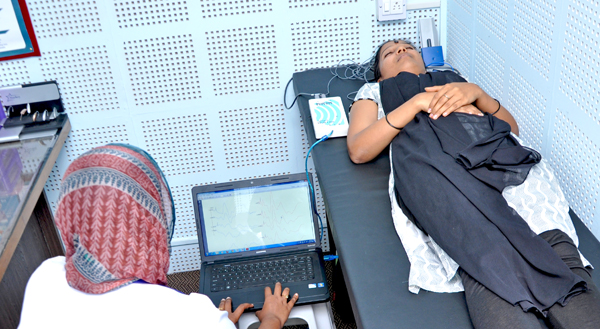
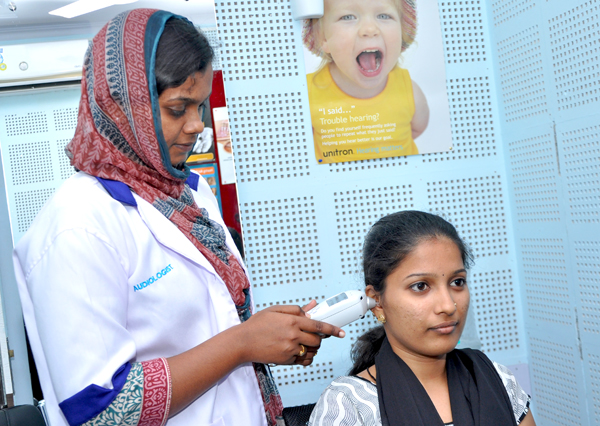
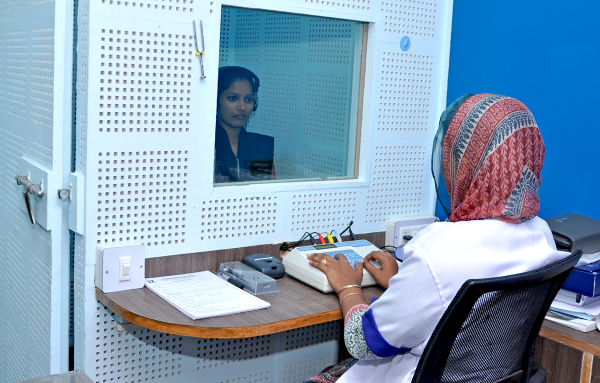
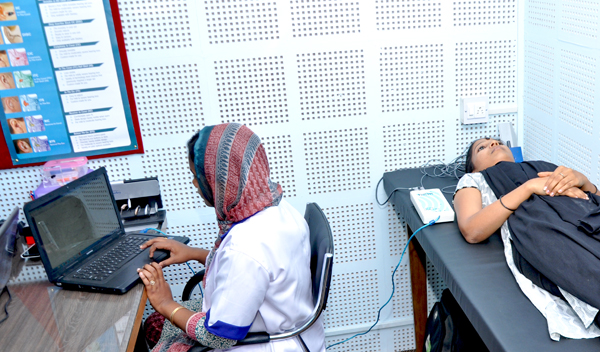
"We deal with those kinds of hearing losses that cannot be treated with medicines or surgery. We assist patients both paediatric and adults with all hearing tests like Pure Tone Audiometry and Impedance Audiometry, BSERA Test, OAE Test, Special Test and provide the best hearing aids and accessories those are available in the market today," says Rishu, partner and audiologist at HWC, Mangalore.

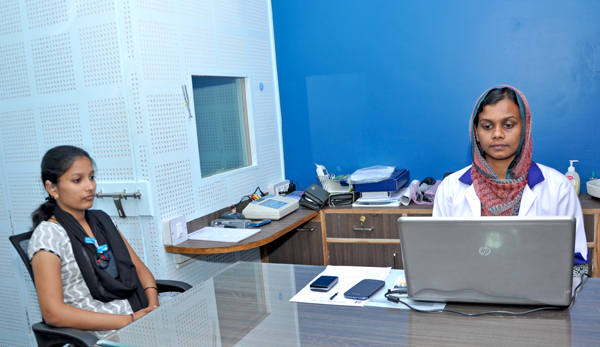
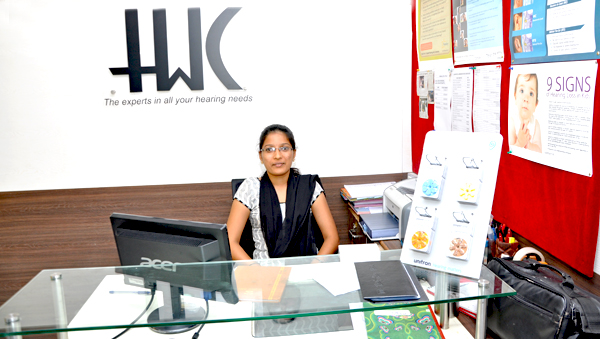
There are currently two audiologists at the centre, which is well-equipped with a sound-proof testing room. The centre also has tie-ups with major hospitals and ENTs in the city.

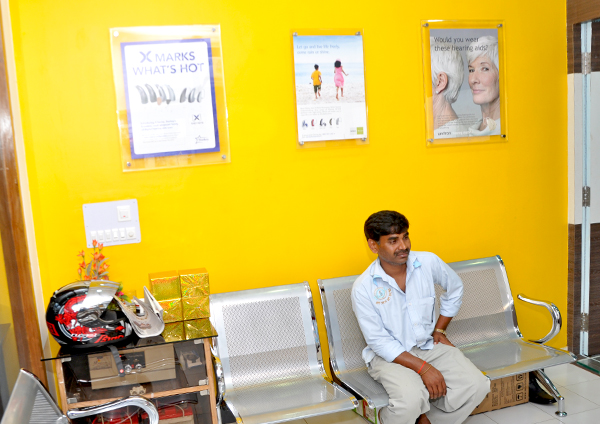
Hearing Wellness Clinic is located at Marz Chambers in Falnir Road, Mangalore. It is open for consultancy and testing from 9.30 am till 8 pm.

For more information on its facilities and services, log in to www.hearingwellness.in
 

HWC1

HWC4

HWC6

HWC5

HWC2

HWC8

HWC7

HWC9

HWC12

HWC11

HWC13


Comments

Add new comment

  • Coastaldigest.com reserves the right to delete or block any comments.
  • Coastaldigset.com is not responsible for its readers’ comments.
  • Comments that are abusive, incendiary or irrelevant are strictly prohibited.
  • Please use a genuine email ID and provide your name to avoid reject.
Charan Kumar | coastaldigest.com
June 24,2020

Bengaluru, June 24: City-based I Monetary Advisory (IMA), which duped thousands of families, mostly Muslims, in the name of halal investment, has become a bitter reality of "we were robbed by our own people". All the accused except its CEO Mohammad Mansoor Khan have been released on bail in this ponzi scam worth thousands of crores of rupees.

The scam has not only been investigated by SIT and CBI, but it has reverberated many times in the Assembly, corridors of power, and in the courts.

Around 80,000 investors are in trouble after the Monetary Advisory (IMA) scam came to light. Many investors have left this world, many families have split, many marriages have broken down and many have become unemployed, homeless, helpless and hapless. One of the senior IAS office, who had faced arrest in the scam, reportedly killed himself just a day ago.

It has been more than a year since this multi-billion scam came to light. But the affected families still do not see any ray of hope. The government, led by senior IAS officer Harsh Gupta, has set up a special competent authority to address investor grievances in the matter.

According to information provided by Harsh Gupta, investors have to be paid Rs 2,900 crore. But the value of the company's assets seized so far could be around Rs 450 crore. The process of auctioning the assets has not started yet. The authority has developed an online portal for submission of claim forms from investors. But the process of taking applications has not started yet. Syed Gulab, a social worker overseeing the case, says that after all the claim forms have been submitted, we will get a clear picture about the exact number of investors and the total amount of arrears. But this process may take a few more months to complete.

Senior journalist Maqbool Ahmed Siraj says that IMA has systematically deceived people in the name of halal investment through capital scheme. In 2006, Muhammad Mansoor Khan, a one-time small businessman, set up a company. He began to attract large number of investors by creating the greed for more profit among middle class and poor people.

By 2015, the company had received money from more than 12,000 investors and continued to pay monthly profits. By the time the company closed in 2019, 80,000 people had invested their hard-earned money here. In Bengaluru, the company expanded its reach by investing in two major gold showrooms, hospitals, schools, several medical stores, a publishing center, a supermarket, and real estate firm.

Mr Siraj says that Mansoor Khan and his team not only lured the poor and middle class to pursue their own interests but also created a favourable atmosphere for their so called business by winning the hearts of politicians, government officials, clerics, religious institutions and media.

Unsuspecting people invested their money in a bid to make more profit in less time. When the company stopped making profits and Mansoor Khan suddenly fled on June 9, 2019, the investors woke up the to the reality.

Apart from residents of Bengaluru and other parts of Karnataka, people from Tamil Nadu, Andhra Pradesh, Telangana, Maharashtra other states also have invested their money.

Comments

Add new comment

  • Coastaldigest.com reserves the right to delete or block any comments.
  • Coastaldigset.com is not responsible for its readers’ comments.
  • Comments that are abusive, incendiary or irrelevant are strictly prohibited.
  • Please use a genuine email ID and provide your name to avoid reject.
News Network
June 20,2020

Bengaluru,  Jun 19: Following the coronavirus outbreak, Bengaluru's Kempegowda International Airport has introduced ultraviolet treatment while scanning outbound baggage apart from other measures to enhance passenger and staff safety.

"Two custom-designed UV tunnels have been created to disinfect trolleys after every use. Two custom-designed UV tunnels have been created to disinfect trolleys after every use. These Tunnels are located at a cordoned-off area of the Terminal," according to a statement by the Bangalore International Airport Limited (BIAL).

The airport plans to use an ultra-low volume (ULV) spray treatment for check-in bags: all outbound passenger baggage is sanitised before dispatch to the aircraft

Authorities also plan to minimise use of additional trays for footwear by introducing specially designed trays; the trays that are in use are UV treated and sanitised manually after every use.

Officials are currently in the process of implementing silver nano-coating for frequently used touchpoints for self disinfection like check-in counters, Immigration counters, ATRS trays, etc. Currently, sanitisation of high-traffic areas and frequently touched surfaces continues to be done every thirty minutes manually without disrupting the flow of passengers.

All high-traffic areas are sanitised once every three hours by using ULV machines - eight times in 24 hours.

Washrooms across the Airport premises are sanitised on a regular basis with dedicated manpower, irrespective of the frequency of use. 456 units of tabletop hand sanitiser and 107 units of sensor-based hand sanitisers have been placed across the Terminal.

120 biowaste bins located across the Airport campus enable passengers and staff to dispose of their masks, gloves and other PPE conveniently and safely. This bio-waste is managed by a dedicated team and handed over to a Pollution Control Board-approved vendor and taken away for incineration.

The Airport said that the passenger feedback for the contactless process has been positive. "The objective of the process is to minimise physical contact and enhance passenger throughput," it said.

These sanitisation measures come in light of the highly infectious COVID-19 pandemic which spreads through person-to-person contact. Small droplets from the nose or mouth can spread the virus when they land on objects and surfaces around the person.

Comments

Add new comment

  • Coastaldigest.com reserves the right to delete or block any comments.
  • Coastaldigset.com is not responsible for its readers’ comments.
  • Comments that are abusive, incendiary or irrelevant are strictly prohibited.
  • Please use a genuine email ID and provide your name to avoid reject.
Agencies
June 13,2020

New Delhi, Jun 13: Loss of smell or taste has been added to the list of COVID-19 symptoms, according to the revised clinical management protocols released by the Union Health Ministry on Saturday.

The ministry said that coronavirus-infected patients reporting to various COVID-19 treatment facilities have been reporting symptoms like fever, cough, fatigue, shortness of breath, expectoration, myalgia, rhinorrhea, sore throat and diarrhea.

They have also complained of loss of smell (anosmia) or loss of taste (ageusia) preceding the onset of respiratory symptoms.

Older people and immune-suppressed patients in particular may present with atypical symptoms such as fatigue, reduced alertness, reduced mobility, diarrhoea, loss of appetite, delirium, and absence of fever, the ministry said.

Children might not have reported fever or cough as frequently as adults.

The US's national public health institute, the Centers for Disease Control and Prevention (CDC), had in early May incorporated "a new loss of taste or smell" in the list of COVID-19 symptoms.

According to the data from Integrated Health Information Platform and Integrated Disease Surveillance Programme, portal case investigation forms for COVID 19 (n=15,366), the details on the signs and symptoms reported are (as on June 11), fever (27 per cent), cough (21 pc), sore throat (10 pc), breathlessness (8 pc), Weakness (7 pc), running nose (3pc ) and others 24 pc.

According to the health ministry, people infected by the novel coronavirus are the main source of infection.

Direct person-to-person transmission occurs through close contact, mainly through respiratory droplets that are released when the infected person coughs, sneezes, or talks.

These droplets may also land on surfaces, where the virus remains viable. Infection can also occur if a person touches an infected surface and then touches his or her eyes, nose, or mouth.

The median incubation period is 5.1 days (range 2–14 days). The precise interval during which an individual with COVID-19 is infectious is uncertain.

As per the current evidence, the period of infectivity starts 2 days prior to onset of symptoms and lasts up to 8 days.

The extent and role played by pre-clinical/ asymptomatic infections in transmission still remain under investigation.

Comments

Add new comment

  • Coastaldigest.com reserves the right to delete or block any comments.
  • Coastaldigset.com is not responsible for its readers’ comments.
  • Comments that are abusive, incendiary or irrelevant are strictly prohibited.
  • Please use a genuine email ID and provide your name to avoid reject.