Section 144 clamped in Mangaluru; social media under scanner

[email protected] (CD Network)
November 13, 2016

Mangaluru, Nov 13: In the wake of recent untoward incidents in parts of Mangaluru taluk, the police has clamped prohibitory order Section 144 of the Criminal Procedure Code (CrPC) in the limits of city commissionerate.

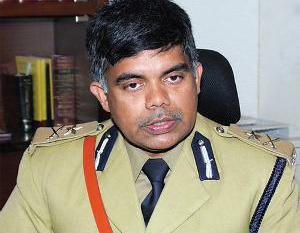
1commisCity police chief M Chandra Sekhar told media persons that the prohibitory orders that came into force at 2 p.m. on Sunday (Nov 13) will be there till 10 p.m. on Nov 16 throughout the commissionerate.

In fact Dakshina Kannada district administration had clamed prohibitory orders for four days from November 9 to 12 in order to maintain peace during Tipu Jayanti.

However, the city police chief had extended the ban orders under the limits of Ullal and Konate police stations in the wake of stabbing incidents.

Mr Chandra Sekhar, said that he had to expand the orders to the entire commissionerate to thwart the attempt of trouble mongers to disrupt the peace.

“There will be no permission for any public gathering or protest meets during the ban period,” he said adding that the police are keeping an eye on those who distribute pamphlets or share provocative posts on social media.

The top cop clarified that the prohibitory orders will not apply for wedding ceremonies and those who stand in queues in front of banks.

Comments

indian
 - 
Sunday, 13 Nov 2016

its novemnber not december

Add new comment

  • Coastaldigest.com reserves the right to delete or block any comments.
  • Coastaldigset.com is not responsible for its readers’ comments.
  • Comments that are abusive, incendiary or irrelevant are strictly prohibited.
  • Please use a genuine email ID and provide your name to avoid reject.
News Network
February 5,2020

Bengaluru, Feb 5: Karnataka Home Minister Basavaraj Bommai on Tuesday said that he has demanded a report on the Shaheen School incident after reports emerged that children were allegedly interrogated by the police for hours at a stretch, while not allowing parents to be present.

Terming the incident a very sensitive matter as it involves children, Basavaraj Bommai said, "I have asked for a report on the Shaheen School incident. As it is a very sensitive and serious issue, I have asked the police to handle it carefully."

"I have asked the police to take the help of the women and child protection committee at the district level. However, I have been told that the police had visited the area where the play was done and no interrogation of children in isolation took place. Nevertheless, I have asked the police to handle the issue with care and do everything within the law," Basavaraj added.

The matter pertains to a programme organised as a part of the Republic day celebrations where the children in Shaheen School in Bidar had staged a play against the Citizenship Amendment Act (CAA) and National Register of Citizens (NRC).

The Akhil Bharatiya Vidyarthi Parishad (ABVP) had protested alleging that the play at Shaheen School in Bidar was derogatory. In the play, the participants were shown staging an anti-CAA sequence where there were dialogues encouraging non-cooperation with anyone asking for documents. A case was registered against the school management.

Meanwhile, CEO of Shaheen Education Institute, Bidar, Tauseef Madikeri had said, "Police have invoked Sections 124A, 505 and 504 of the IPC against the institution, over a play staged against CAA and NRC. It is beyond anyone's imagination. Deputy SP visited the classroom and interrogated the students."

Karnataka police had sealed the offices of the school after its students participated in the play. Meanwhile, the police had questioned students of Shaheen School after a play against the CAA and NRC was staged during the Republic Day celebrations.

The child rights groups, teachers and educationists had issued a statement condemning the police interrogation in the incident.

Comments

Add new comment

  • Coastaldigest.com reserves the right to delete or block any comments.
  • Coastaldigset.com is not responsible for its readers’ comments.
  • Comments that are abusive, incendiary or irrelevant are strictly prohibited.
  • Please use a genuine email ID and provide your name to avoid reject.
News Network
February 25,2020

Feb 25: Two Customs Preventive officers allegedly involved in gold smuggling cases in Kerala were removed from service, a top official said in Kochi on Monday.

Sumit Kumar, Commissioner of Customs (Preventive), Kochi, said that he took action against Radhakrishnan B, Superintendent of Customs, and Rahul, Inspector of Customs, who were allegedly involved in gold smuggling cases in the state.

Radhakrishnan was involved in attempted smuggling of gold weighing 24998.61 grams having a market value of over Rs 8 crore through Thiruvananthapuram international airport on May 13, 2019, Kumar said.

Rahul was involved in attempted smuggling of gold weighing 11,035.54 grams valued at over Rs 4 crore through international airport on August 19, 2019, the Customs Commissioner added.

Radhakrishnan is currently lodged in Central prison, Thiruvananthapuram after the Central Economic Intelligence Bureau under the Union Finance Ministry issued detention order under COFEPOSA (Conservation of Foreign Exchange and Prevention of Smuggling Activities Act, 1974).

Rahul, against whom detention order under COFEPOSA was issued, is absconding.

"Two Customs officers of the Customs Preventive Commissionerate, Kochi, who were involved in gold smuggling cases were removed from service by Sumit Kumar, Commissioner of Customs (Preventive), Cochin," an official release said.

Kumar said that both the cases were booked and investigated by the Directorate of Revenue Intelligence and while show cause notice under Customs Act 1962 has been issued against Radhakrishnan, investigation is under progress in the other case.

"Both the officers were removed from service, after due process of law under Rule 19 of the Central Civil Services (Classification, Control and Appeal) Rules, 1965," the release said.

Comments

Add new comment

  • Coastaldigest.com reserves the right to delete or block any comments.
  • Coastaldigset.com is not responsible for its readers’ comments.
  • Comments that are abusive, incendiary or irrelevant are strictly prohibited.
  • Please use a genuine email ID and provide your name to avoid reject.
Media Release
February 14,2020

Veteran journalist P. Sainath has said that the nation is in a crisis. And this crisis is not limited to just the rural area. It has become a national crisis at various areas such as agriculture, education, economy, job creation etc.

He was delivering the endowment lecture on the topic ‘Indian democracy at the post-liberalization and post-truth era’ at Media Manthan 2020 organized by the PG department of journalism and mass communication at St Aloysius College (Autonomous). 

Mr Sainath said that the many policies adopted in the 90s led to India becoming unusually unequal. Referring to the speech Ambedkar had made at the Constituent Assembly while handing over the draft of the Constitution, Mr Sainath said, “Ambedkar had warned about the weakness of Indian democracy that liberty without equality allows the supremacy of a few over the multitude. Liberty, equality and fraternity must be kept together as we cannot have one without the other.” 

Mr Sainath stated that the agrarian crisis was no longer about the loss of productivity, employment or about farmer suicide; it was a societal, civilizational crisis. Commenting on the lopsided policies such as cow-slaughter ban, he explained how cow slaughter ban had adversely affected many industries due to their interdependency. While Muslims who slaughtered cows were rendered helpless, the cattle traders who were mostly OBCs lost their earnings as the cattle prices crashed. An important industry like Kolhapur sandals industry in Maharashtra went bankrupt as a result of the cow slaughter ban in Maharashtra. He said the policymakers had no idea how the rural industries were interconnected. Demonetisation too devastated the rural economy as 98 percent of rural transactions happen through cash. 

Mr Sainath also spoke about the crisis of inequality which affects the Dalits and the Adivasis far more than anyone else as 90 percent of the rural households take home less than Rs 10,000/- per month. “Women are yet another group whose labour is never counted in the gross domestic product. Women and girls globally do unpaid work which amounts to about 12.5 billion working hours per year. Monetarily speaking, this is worth 10.8 trillion dollars,” Mr Sainath added. 

Speaking about the crisis of jobs Mr Sainath said that major companies were laying off employees just to create more profits for the investors and the adoption of artificial intelligence in the industry would further destroy millions of jobs.

Rector of St Aloysius College Institutions Fr Dionysius Vaz SJ, Principal Dr (Fr) Praveen Martis SJ, HOD of Journalism and Mass Communication department Dr (Fr) Melwyn Pinto SJ were present.

‘Veerappan and Vijay Mallya’s business models are interesting!’

Addressing the gathering during his endowment lecture on Friday, Mr Sainath made an interesting comment on the so called ‘revenue model’. “Whenever I visit IIMs and IITs for lectures on my PARI project, the students there ask me what my revenue model for my project is. I tell them that I do not have a revenue model. In fact, journalism does not begin with a revenue model. Gandhiji, Ambedkar, Bhagat Singh were all great journalists. But they did not have a revenue model,” Mr Sainath said.

On a lighter note, he said that the best revenue model that he liked was that of forest brigand Veerappan and liquor baron Vijay Mallya. “Veerappan ruled the forest for forty years and from the top ministers to the villagers he could dictate terms and liver royally. Similarly, Mallya’s revenue model was to steal the banks and run away abroad and live like a king,” Mr Sainath added.

Journalism is not and can never be a business. It is a calling, he opined. While newspaper can be a business, television can be a business, journalism per se cannot be reduced to a business. “Unfortunately today, journalists are recruited on a contract basis and they have no bargaining power; and there are no unions to fight for their cause. Hence, they are at the mercy of the corporate media houses for their survival and are made to write stories that cannot be called journalism,” Mr Sainath said.

Answering a question as to the pressures he faced as a journalist, he said that external pressures from the government or others could be very well handled. It is the internal pressures from once own media house that journalists find it difficult to manage.


 

Comments

Add new comment

  • Coastaldigest.com reserves the right to delete or block any comments.
  • Coastaldigset.com is not responsible for its readers’ comments.
  • Comments that are abusive, incendiary or irrelevant are strictly prohibited.
  • Please use a genuine email ID and provide your name to avoid reject.