



Fidel Castro, who defied 10 US presidents in his 50 year rule, dies aged 90

November 26, 2016

Havana, Nov 26: Former President Fidel Castro, who led a rebel army to improbable victory in Cuba, embraced Soviet-style communism and defied the power of 10 US presidents during his half century rule, has died at age 90.
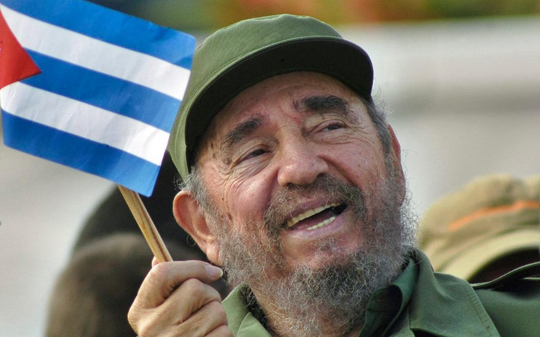
fc

With a shaking voice, his younger brother, Raul Castro, announced on state television that his brother died at 10:29 p.m. on Friday night.

Castro's reign over the island-nation 90 miles from Florida was marked by the US-backed Bay of Pigs invasion in 1961 and the Cuban Missile Crisis a year later that brought the world to the brink of nuclear war.

The bearded revolutionary, who survived a crippling US trade embargo as well as dozens, possibly hundreds, of assassination plots, died eight years after ill health forced him to formally hand power over to Raul.

Castro overcame imprisonment at the hands of dictator Fulgencio Batista, exile in Mexico and a disastrous start to his rebellion before triumphantly riding into Havana in January 1959 to become, at age 32, the youngest leader in Latin America. For decades, he served as an inspiration and source of support to revolutionaries from Latin America to Africa.

His commitment to socialism was unwavering, though his power finally began to fade in mid-2006 when a gastrointestinal ailment forced him to hand over the presidency to Raul in 2008, provisionally at first and then permanently.

His defiant image lingered long after he gave up his trademark Cohiba cigars for health reasons and his tall frame grew stooped. "Socialism or death" remained Castro's rallying cry even as Western-style democracy swept the globe and other communist regimes in China and Vietnam embraced capitalism, leaving this island of 11 million people an economically crippled Marxist curiosity.

He survived long enough to see Raul Castro negotiate an opening with US President Barack Obama on December 17, 2014, when Washington and Havana announced they would move to restore diplomatic ties for the first time since they were severed in 1961.

He cautiously blessed the historic deal with his lifelong enemy in a letter published after a month-long silence. "It's a tragedy," said Dayan Montalvo, a 22-year-old nurse. "We all grew up with him. I feel really hurt by the news that we just heard."

Fidel Castro Ruz was born August 13, 1926, in eastern Cuba's sugar country, where his Spanish immigrant father worked first recruiting labor for US sugar companies and later built up a prosperous plantation of his own.

Castro attended Jesuit schools, then the University of Havana, where he received law and social science degrees. His life as a rebel began in 1953 with a reckless attack on the Moncada military barracks in the eastern city of Santiago. Most of his comrades were killed and Fidel and his brother Raul went to prison.

Castro cobbled revolutionary groups together into the new Cuban Communist Party, with him as first secretary. Labor unions lost the right to strike. The Catholic Church and other religious institutions were harassed. Neighborhood "revolutionary defence committees" kept an eye on everyone.

Castro exported revolution to Latin American countries in the 1960s, and dispatched Cuban troops to Africa to fight Western-backed regimes in the 1970s. Over the decades, he sent Cuban doctors abroad to tend to the poor, and gave sanctuary to fugitive Black Panther leaders from the US.

But the collapse of the Soviet bloc ended billions in preferential trade and subsidies for Cuba, sending its economy into a tailspin. Castro briefly experimented with an opening to foreign capitalists and limited private enterprise.

As the end of the Cold War eased global tensions, many Latin American and European countries re-established relations with Cuba. In January 1998, Pope John Paul II visited a nation that had been officially atheist until the early 1990s.

Aided by a tourism boom, the economy slowly recovered and Castro steadily reasserted government control, stifling much of the limited free enterprise tolerated during harder times.

As flamboyant as he was in public, Castro tried to lead a discreet private life. He and his first wife, Mirta Diaz Balart, had one son before divorcing in 1956. Then, for more than four decades, Castro had a relationship with Dalia Soto del Valle. They had five sons together and were said to have married quietly in 1980.

By the time Castro resigned 49 years after his triumphant arrival in Havana, he was the world's longest ruling head of government, aside from monarchs. In retirement, Castro voiced unwavering support as Raul slowly but deliberately enacted sweeping changes to the Marxist system he had built.

His longevity allowed the younger brother to consolidate control, perhaps lengthening the revolution well past both men's lives. In February 2013, Raul announced that he would retire as president in 2018 and named newly minted Vice President Miguel Diaz-Canel as his successor.

"I'll be 90 years old soon," Castro said at an April 2016 communist party congress where he made his most extensive public appearance in years. "Soon I'll be like all the others.

The time will come for all of us, but the ideas of the Cuban Communists will remain as proof that on this planet, if one works with fervor and dignity, they can produce the material and cultural goods that human beings need and that need to be fought for without ever giving up."

Comments

Congi Shan
 - 
Saturday, 26 Nov 2016

The whole nation suffered because of this man. Not different from dictators Saddam, Gaddafi & Kim Kong Un

Fawad
 - 
Saturday, 26 Nov 2016

CIA tried 500 times to kill him .....Americans are real terrorists

Fedrick
 - 
Saturday, 26 Nov 2016

Red salute to fidel castro and his revolution!

karthik
 - 
Saturday, 26 Nov 2016

Indians can expect the biggest party in the world issuing membership to the expired revolutionary.

Kavya
 - 
Saturday, 26 Nov 2016

Real communism was followed by Karl Marx who envisaged an egalitarian society unlike the Ambanis and Mallyas of today.

Veerendra Hegde
 - 
Saturday, 26 Nov 2016

He kept an enviable and long record as the only leader who ruled a state for more than 50 years! He fought the mighty US and was recognised as one of the tall leaders in the world, with his demise, it is the end of an era! RIP comrade!

Jayaraj
 - 
Saturday, 26 Nov 2016

it is the end of a long innings.. made colorful by his continued anti US stance...... his cigar and the beard made him a recognizable figure who it is said has survived many number of attempts on his life ....MAY HIS SOUL REST IN PEACE......

Add new comment

  • Coastaldigest.com reserves the right to delete or block any comments.
  • Coastaldigset.com is not responsible for its readers’ comments.
  • Comments that are abusive, incendiary or irrelevant are strictly prohibited.
  • Please use a genuine email ID and provide your name to avoid reject.
News Network
June 19,2020

United Nations, Jun 19: Half of the world's children -- one billion every year -- are affected by physical, sexual or psychological violence, suffering injuries and death because countries have failed to follow established strategies to protect them, the first report of its kind from the UN has said, with experts noting that the coronavirus-related lockdowns have left far too many youngsters stuck with their abusers.

While nearly all countries (88 per cent) have laws in place to protect minors, less than half (47 per cent) say they strongly enforce them, said the Global Status Report on Preventing Violence Against Children 2020 launched on Thursday.

Because countries have failed to follow established strategies to protect children, about one billion are affected each year by physical, sexual or psychological violence, it said.

"There is never any excuse for violence against children," WHO Director-General Tedros Adhanom Ghebreyesus said.

"We have evidence-based tools to prevent it, which we urge all countries to implement. Protecting the health and well-being of children is central to protecting our collective health and well-being, now and for the future," he said.

The report -- launched by the World Health Organisation, the UNICEF, the UNESCO, the Special Representative of the UN Secretary-General on Violence against Children and the End Violence Partnership -- charted progress in 155 countries against the "INSPIRE" framework, a set of seven strategies for preventing and responding to violence against children.

The report signaled a clear need in all countries to scale up efforts to implement them. It included the first ever global homicide estimates specifically for children under 18 years of age -- previous estimates were based on data that included 18 to 19-year olds.

According to the findings, in 2017, around 40,000 children were victims of homicide.

"Violence against children has always been pervasive, and now things could be getting much worse," UNICEF Executive Director Henrietta Fore said.

"Lockdowns, school closures and movement restrictions have left far too many children stuck with their abusers, without the safe space that school would normally offer. It is urgent to scale up efforts to protect children during these times and beyond, including by designating social service workers as essential and strengthening child helplines," she said.

UNESCO Director-General Audrey Azoulay said during the COVID-19 pandemic, and the related school closures, "we have seen a rise in violence and hate online – and this includes bullying".

"Now, as schools begin to re-open, children are expressing their fears about going back to school. It is our collective responsibility to ensure that schools are safe environments for all children. We need to think and act collectively to stop violence at school and in our societies at large," Azoulay said.

Stay-at-home measures including school closures have limited the usual sources of support for families and individuals such as friends, extended family or professionals.

This further erodes victims’ ability to successfully cope with crises and the new routines of daily life. Spikes in calls to helplines for child abuse and intimate partner violence have been observed, the report said.

While online communities have become central to maintain many children's learning, support and play, an increase in harmful online behaviors including cyberbullying, risky online behavior and sexual exploitation have been identified.

“Whilst this report was being finalised, confinement measures and the disrupted provision of already limited child protection services exacerbated the vulnerability of children to various forms of violence," said Najat Maalla M’jid, Special Representative of the UN Secretary-General on Violence against Children.

Of the INSPIRE strategies, only access to schools through enrolment showed the most progress with 54 per cent of the countries reporting that a sufficient number of children in need were being reached in this way.

Between 32 per cent and 37 per cent of the countries considered that victims of violence could access support services, while 26 per cent of the countries provided programmes on parent and caregiver support; 21 per cent of the countries had programmes to change harmful norms; and 15 per cent of the countries had modifications to provide safe physical environments for children, the report said.

Although a majority of countries (83 per cent) have national data on violence against children, only 21 per cent used these to set baselines and national targets to prevent and respond to violence against children, it added.

The report said about 80 per cent of countries have national plans of action and policies but only one-fifth have plans that are fully funded or have measurable targets. A lack of funding combined with inadequate professional capacity are likely contributing factors and a reason why implementation has been slow.

"Ending violence against children is the right thing to do, a smart investment to make - and it's possible. We can and must create a world where every child can thrive," Howard Taylor of the End Violence Partnership said.

Comments

Add new comment

  • Coastaldigest.com reserves the right to delete or block any comments.
  • Coastaldigset.com is not responsible for its readers’ comments.
  • Comments that are abusive, incendiary or irrelevant are strictly prohibited.
  • Please use a genuine email ID and provide your name to avoid reject.
Agencies
February 23,2020

Wuhan, Feb 23: Ninety-seven more people died in China due to coronavirus, taking the death toll to 2,442, officials said on Sunday, as a team of WHO experts visited the worst-affected Wuhan city in Hubei province.

By the end of Saturday, a total of 2,442 people had died of the disease and 76,936 confirmed cases of novel coronavirus infection had been reported in 31 provincial-level regions, China's National Health Commission (NHC) said in its daily update on Sunday.

Ninety-six deaths were reported from Hubei province and one from Guangdong province on Saturday besides 648 new confirmed cases of coronavirus infections, it said.

Hubei province, where the virus first emerged in December last, reported 630 new confirmed cases, taking the total confirmed cases in the hard-hit province to 64,084, state-run Xinhua news agency reported.

The NHC also said China's daily number of newly cured and discharged novel coronavirus patients has surpassed that of new confirmed infections for the fifth consecutive day, indicating that cases of infections are coming down.

Saturday saw 2,230 people walk out of hospital after recovery, much higher than the number of the same day's new confirmed infections, which was 648, Xinhua reported.

A total of 22,888 patients infected with the novel coronavirus had been discharged from hospital after recovery by the end of Saturday, NHC said.

Meanwhile, a team of public health experts from the World Health Organisation (WHO) visited Wuhan on Saturday to conduct a detailed probe about the virus which reportedly originated from a seafood market in the city in December last year.

The NHC said WHO experts along with their Chinese counterparts who formed a joint investigation team have held talks with the local health authority in Wuhan and visited relevant healthcare institutions.

The UN team comprises specialists from the United States, Germany, Japan, Nigeria, Russia, Singapore and South Korea, Hong-Kong based South China Morning Post reported.

The 12-member team, which arrived in China on Monday, was initially designated to visit only Beijing, Guangdong and Sichuan provinces, while the worst-affected Hubei province and its capital Wuhan were missing from the list.

However, the team was finally given permission to visit Wuhan by the Chinese government.

Besides controlling the spread of the virus, a major task for the WHO team along with their Chinese counterparts was to come up with standard medicine to cure the disease.

The NHC said on Saturday that the team had met top Chinese respiratory disease expert Zhong Nanshan in Guangdong, and visited the centre for disease control and prevention in Guangdong and the city of Shenzhen, and Sichuan.

The specialists also discussed quarantine measures, the wild animal trade and community prevention measures with their Chinese counterparts, it said.

Comments

Add new comment

  • Coastaldigest.com reserves the right to delete or block any comments.
  • Coastaldigset.com is not responsible for its readers’ comments.
  • Comments that are abusive, incendiary or irrelevant are strictly prohibited.
  • Please use a genuine email ID and provide your name to avoid reject.
News Network
July 2,2020

Los Angeles, Jul 2: New daily coronavirus cases in the United States soared past 50,000 for the first time Wednesday, as the World Health Organization delivered a grave warning that the global pandemic is accelerating.

Restaurants, bars and beaches in the world's worst-hit nation closed from California to Florida, as states reeling from yet another surge in the deadly virus braced for Independence Day festivities.

Global infections have hit their highest level in the past week, WHO data showed, with chief Tedros Adhanom Ghebreyesus saying new cases topped "160,000 on every single day."

The grim milestone came as the European Union left the United States, Brazil and Russia off its final list of nations safe enough to allow residents to enter its borders.

With more than 52,000 new COVID-19 cases in the United States alone in the past 24 hours, according to a Johns Hopkins University tally, several US states imposed 14-day quarantines on visitors in the buildup to the long weekend's July 4 celebrations.

California suspended indoor dining at restaurants in Los Angeles and several counties, while New York scrapped plans to allow restaurants to seat customers inside from next week.

President Donald Trump reiterated his belief that the contagion will "at some point... sort of just disappear, I hope."

But the US leader who has yet to be seen in public wearing a face mask during the pandemic added he would have "no problem" doing so.

EU travel ban eased

The rollbacks came as the European Union reopened its borders to visitors from 15 countries.

The bloc hopes relaxing restrictions on countries from Algeria to Uruguay will breathe life into its tourism sector, choked by a ban on non-essential travel since mid-March.

Travelers from China, where the virus first emerged late last year, will be allowed to enter the EU only if Beijing reciprocates.

And Brazil -- which has suffered the most deaths globally for the last week, and is the second-worst affected country overall -- was excluded entirely.

It topped 60,000 total fatalities Wednesday, after suffering 1,000 deaths in just 24 hours.

However, with over 10 million known infections worldwide and more than 500,000 deaths, the pandemic is "not even close to being over", the WHO warned.

Data provided by the UN health agency for the seven days from June 25-July 1 showed the highest number of new daily cases ever recorded came on June 28, when over 189,500 new cases were registered worldwide.

'Dutch brothels reopen'

According to the United Nations, the coronavirus crisis could cost global tourism and related sectors from $1.2 to $3.3 trillion in lost revenue.

Greece, which has suffered fewer than 200 virus deaths, has seen its economy hit hard by lockdowns and travel restrictions -- all but ending its lucrative tourism season before it began.

Romanian Cojan Dragos was "the first tourist" in one Corfu hotel after driving there with his wife and daughter.

"We have the whole hotel just for us," he told news agency.

Separately, Spain and Portugal held a ceremony as they reopened their land border.

The Netherlands also confirmed the reopening Wednesday of another tourist draw -- its brothels and red-light districts.

"I'm totally booked," said sex worker Foxxy, adding that she had held a "little party" when she heard restrictions would be lifted.

Clusters spur new lockdowns

Russia did not make the EU's list of approved countries so its citizens will be absent from the bloc's tourist hot-spots.

The country, however, enjoyed a public holiday Wednesday as it voted in a referendum to approve constitutional changes allowing President Vladimir Putin to stay in power for another 16 years.

Putin was forced to postpone the vote in April as his government tackled an outbreak that has infected almost 650,000 people -- the third-highest in the world.

In other countries, clusters are still causing problems.

Parts of the Australian city of Melbourne suffered sharp rises in infections, spurring new stay-at-home measures.

The Palestinian Authority announced a five-day lockdown across the West Bank after a surge in confirmed cases.

And textile factories in the central British city of Leicester were suggested as the reason for a spike in infections that has prompted the reimposition of local restrictions.

Americas spike

In the United States, spikes across southern and western states are driving a surge in national infections.

Texas, which again smashed its daily COVID-19 record with over 8,000 new cases, joined Florida and California in closing some beaches for the upcoming holiday weekend.

Apple announced it would close another 30 US stores on Thursday, half of them in California.

A further 700 deaths nationwide took the US past 128,000 deaths in total.

The Pan American Health Organization warned that the death count in Latin America and the Caribbean could quadruple to more than 400,000 by October without stricter public health measures.

The US government announced this week it had bought 92 percent of all remdesivir production -- the first drug to be shown to be relatively effective in treating COVID-19.

Britain and Germany, however, said Wednesday they had sufficient stocks of the drug.

'Corona baby'

In Britain, some 1,500 acts from Ed Sheeran and Coldplay to Paul McCartney and The Rolling Stones urged the county's government to save the live music industry, which has been collapsing because of the coronavirus.

But while lockdown measures have been a disaster for many, some have welcomed the chance to spend more quality time with hard-working partners.

Comments

Add new comment

  • Coastaldigest.com reserves the right to delete or block any comments.
  • Coastaldigset.com is not responsible for its readers’ comments.
  • Comments that are abusive, incendiary or irrelevant are strictly prohibited.
  • Please use a genuine email ID and provide your name to avoid reject.