


Fidel Castro, who defied 10 US presidents in his 50 year rule, dies aged 90

November 26, 2016

Havana, Nov 26: Former President Fidel Castro, who led a rebel army to improbable victory in Cuba, embraced Soviet-style communism and defied the power of 10 US presidents during his half century rule, has died at age 90.
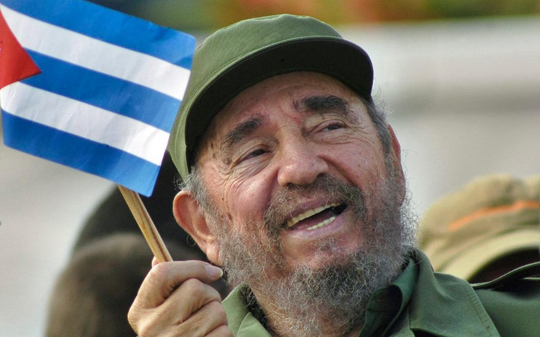
fc

With a shaking voice, his younger brother, Raul Castro, announced on state television that his brother died at 10:29 p.m. on Friday night.

Castro's reign over the island-nation 90 miles from Florida was marked by the US-backed Bay of Pigs invasion in 1961 and the Cuban Missile Crisis a year later that brought the world to the brink of nuclear war.

The bearded revolutionary, who survived a crippling US trade embargo as well as dozens, possibly hundreds, of assassination plots, died eight years after ill health forced him to formally hand power over to Raul.

Castro overcame imprisonment at the hands of dictator Fulgencio Batista, exile in Mexico and a disastrous start to his rebellion before triumphantly riding into Havana in January 1959 to become, at age 32, the youngest leader in Latin America. For decades, he served as an inspiration and source of support to revolutionaries from Latin America to Africa.

His commitment to socialism was unwavering, though his power finally began to fade in mid-2006 when a gastrointestinal ailment forced him to hand over the presidency to Raul in 2008, provisionally at first and then permanently.

His defiant image lingered long after he gave up his trademark Cohiba cigars for health reasons and his tall frame grew stooped. "Socialism or death" remained Castro's rallying cry even as Western-style democracy swept the globe and other communist regimes in China and Vietnam embraced capitalism, leaving this island of 11 million people an economically crippled Marxist curiosity.

He survived long enough to see Raul Castro negotiate an opening with US President Barack Obama on December 17, 2014, when Washington and Havana announced they would move to restore diplomatic ties for the first time since they were severed in 1961.

He cautiously blessed the historic deal with his lifelong enemy in a letter published after a month-long silence. "It's a tragedy," said Dayan Montalvo, a 22-year-old nurse. "We all grew up with him. I feel really hurt by the news that we just heard."

Fidel Castro Ruz was born August 13, 1926, in eastern Cuba's sugar country, where his Spanish immigrant father worked first recruiting labor for US sugar companies and later built up a prosperous plantation of his own.

Castro attended Jesuit schools, then the University of Havana, where he received law and social science degrees. His life as a rebel began in 1953 with a reckless attack on the Moncada military barracks in the eastern city of Santiago. Most of his comrades were killed and Fidel and his brother Raul went to prison.

Castro cobbled revolutionary groups together into the new Cuban Communist Party, with him as first secretary. Labor unions lost the right to strike. The Catholic Church and other religious institutions were harassed. Neighborhood "revolutionary defence committees" kept an eye on everyone.

Castro exported revolution to Latin American countries in the 1960s, and dispatched Cuban troops to Africa to fight Western-backed regimes in the 1970s. Over the decades, he sent Cuban doctors abroad to tend to the poor, and gave sanctuary to fugitive Black Panther leaders from the US.

But the collapse of the Soviet bloc ended billions in preferential trade and subsidies for Cuba, sending its economy into a tailspin. Castro briefly experimented with an opening to foreign capitalists and limited private enterprise.

As the end of the Cold War eased global tensions, many Latin American and European countries re-established relations with Cuba. In January 1998, Pope John Paul II visited a nation that had been officially atheist until the early 1990s.

Aided by a tourism boom, the economy slowly recovered and Castro steadily reasserted government control, stifling much of the limited free enterprise tolerated during harder times.

As flamboyant as he was in public, Castro tried to lead a discreet private life. He and his first wife, Mirta Diaz Balart, had one son before divorcing in 1956. Then, for more than four decades, Castro had a relationship with Dalia Soto del Valle. They had five sons together and were said to have married quietly in 1980.

By the time Castro resigned 49 years after his triumphant arrival in Havana, he was the world's longest ruling head of government, aside from monarchs. In retirement, Castro voiced unwavering support as Raul slowly but deliberately enacted sweeping changes to the Marxist system he had built.

His longevity allowed the younger brother to consolidate control, perhaps lengthening the revolution well past both men's lives. In February 2013, Raul announced that he would retire as president in 2018 and named newly minted Vice President Miguel Diaz-Canel as his successor.

"I'll be 90 years old soon," Castro said at an April 2016 communist party congress where he made his most extensive public appearance in years. "Soon I'll be like all the others.

The time will come for all of us, but the ideas of the Cuban Communists will remain as proof that on this planet, if one works with fervor and dignity, they can produce the material and cultural goods that human beings need and that need to be fought for without ever giving up."

Comments

Congi Shan
 - 
Saturday, 26 Nov 2016

The whole nation suffered because of this man. Not different from dictators Saddam, Gaddafi & Kim Kong Un

Fawad
 - 
Saturday, 26 Nov 2016

CIA tried 500 times to kill him .....Americans are real terrorists

Fedrick
 - 
Saturday, 26 Nov 2016

Red salute to fidel castro and his revolution!

karthik
 - 
Saturday, 26 Nov 2016

Indians can expect the biggest party in the world issuing membership to the expired revolutionary.

Kavya
 - 
Saturday, 26 Nov 2016

Real communism was followed by Karl Marx who envisaged an egalitarian society unlike the Ambanis and Mallyas of today.

Veerendra Hegde
 - 
Saturday, 26 Nov 2016

He kept an enviable and long record as the only leader who ruled a state for more than 50 years! He fought the mighty US and was recognised as one of the tall leaders in the world, with his demise, it is the end of an era! RIP comrade!

Jayaraj
 - 
Saturday, 26 Nov 2016

it is the end of a long innings.. made colorful by his continued anti US stance...... his cigar and the beard made him a recognizable figure who it is said has survived many number of attempts on his life ....MAY HIS SOUL REST IN PEACE......

Add new comment

  • Coastaldigest.com reserves the right to delete or block any comments.
  • Coastaldigset.com is not responsible for its readers’ comments.
  • Comments that are abusive, incendiary or irrelevant are strictly prohibited.
  • Please use a genuine email ID and provide your name to avoid reject.
News Network
January 25,2020

Beijing, Jan 25: The death toll due to the novel coronavirus (2019-nCoV) outbreak in China has soared to 41, while the number of infected persons were 1,287, the National Health Commission said on Saturday.

The Commission said that 444 fresh cases were reported since Friday, with 237 patients in serious conditions, while 38 had been cured and discharged from hospitals, reports Efe news.

Health authorities have carried out check-ups on 15,197 people who have come into close contact with the infected persons. Nearly 14,000 of them continue to be monitored for symptoms.

The others cases outside of China were reported in France (two), Australia (one), Thailand (four including two cured), Japan (two including one cured), South Korea (two), the US (two), Vietnam (two), Singapore (three), Nepal (one), Hong Kong (five), Macao (two) and Taiwan (three).

The symptoms of the new coronavirus, provisionally designated by the World Health Organization as 2019-nCoV, are similar to those of cold but may be accompanied by fever and fatigue, dry cough and dyspnea (shortness of breath).

The WHO has so far to declared the outbreak as an international health emergency.

Strict measures were being carried out in China, which include complete suspension of transport in around a dozen cities in Hubei province and also cancelling Chinese New Year celebrations.

Traditional events at Lama Temple and Ditan Park in Beijing were cancelled due to the risk of spreading the virus, authorities reported Friday, while the famous Forbidden City has also been closed indefinitely.

Wuhan, the capital of Hubei, where the virus was first reported, has been on lockdown since Thursday to prevent further spread of the virus and the city's authorities have begun to build a "special hospital" with 1,000 beds for infected patients.

"Construction of the special hospital with a capacity of 1,000 beds for patients with #nCoV2019 has begun in Wuhan," official China Daily said on Twitter.

The hospital in Wuhan will be based on the model of a similar facility that was built in just seven days in Beijing to deal with SARS in 2003.

Comments

Add new comment

  • Coastaldigest.com reserves the right to delete or block any comments.
  • Coastaldigset.com is not responsible for its readers’ comments.
  • Comments that are abusive, incendiary or irrelevant are strictly prohibited.
  • Please use a genuine email ID and provide your name to avoid reject.
News Network
May 20,2020

May 20: The novel coronavirus is behaving differently in patients in northeast China who have contracted it recently compared with early cases, indicating it is changing as it spreads, a prominent doctor said.

China, which has largely brought the virus under control, has found new clusters of infections in the northeastern border provinces of Jilin and Heilongjiang in recent weeks, raising concern about a second wave.

Qiu Haibo, an expert in critical care medicine who is part of a National Health Commission expert group, said the incubation period of the virus in patients in the northeast was longer than that of patients in Wuhan, the central city, where the virus emerged late last year.

COVID-19 Pandemic Tracker: 15 countries with the highest number of coronavirus cases, deaths

"This causes a problem, as they don't have any symptoms. So when they gather with their families they don't care about this issue and we see family cluster infections," Qiu told state broadcaster CCTV in a programme broadcast late on Tuesday.

Patients in the northeastern clusters were also carrying the virus for longer than earlier cases in Wuhan, and they were taking longer to recover, as defined by a negative nucleic acid test, he said.

Patients in the northeast also rarely exhibited fever and tended to suffer damage to the lungs rather than across multiple organs, he said.

He said the virus found in the northeastern clusters was probably imported from abroad, which could account for the differences.

He did not say where he though they might have come from but both Jilin and Heilongjiang border Russia.

China reported five new coronavirus cases on Wednesday, down from six a day earlier.

Four of the new cases were local transmissions and one was imported by a traveller coming from abroad, the commission said in a statement, compared with three imported cases reported the previous day.

China's total number of coronavirus infections stands at 82,965, while the death toll 4,634. 

Comments

Add new comment

  • Coastaldigest.com reserves the right to delete or block any comments.
  • Coastaldigset.com is not responsible for its readers’ comments.
  • Comments that are abusive, incendiary or irrelevant are strictly prohibited.
  • Please use a genuine email ID and provide your name to avoid reject.
News Network
March 28,2020

London: Italy on Friday recorded the most daily deaths of any country since the start of the coronavirus pandemic and Spain had its deadliest day, as British Prime Minister Boris Johnson became the first major world leader to test positive.

Italy reported 969 new deaths, Spain 769 and France 299 as Europe reeled from a crisis that has put millions at risk around the world and threatened a global economic meltdown.

In other grim milestones, AFP tallies showed a total of 300,000 cases now recorded in Europe with more than 26,000 deaths worldwide, and the United States overtook China as the country with the most infections.

Italy showed infection rates continuing a downward trend and Spain said its rate of new infections appeared to be slowing, but other countries were bracing to feel the full impact of the virus's spread.

The World Health Organization's regional director for Africa warned the continent faced a "dramatic evolution" of the pandemic, as South Africa became the latest nation to start life under lockdown and reported its first COVID-19 deaths.

Johnson, whose country has seen more than 14,000 declared coronavirus cases and 759 deaths, said he had developed mild symptoms over the previous 24 hours and was self-isolating after testing positive.

Britain's Health Secretary Matt Hancock also tested positive with mild symptoms.

Europe has suffered the brunt of the coronavirus crisis in recent weeks, with millions across the continent on lockdown and the streets of Paris, Rome and Madrid eerily empty.

In France — where nearly 2,000 people have died -- the government announced it was extending its stay-at-home order until at least April 15. While severe, the 299 new deaths it recorded on Friday was lower than the 365 reported the previous day.

The death of a 16-year-old girl from the virus has particularly shaken France, and shattered the belief of many young people that they are immune.

The girl's mother Sabine told AFP that Julie "just had a cough" at first but deteriorated quickly. She died on Wednesday, less than a week after showing her first symptoms.

"It's unbearable," Sabine said. "We were supposed to have a normal life."

Focus was also turning to the United States, where the number of known infections jumped by 18,000 on Friday, reaching more than 97,000 -- higher than both China and Italy. The US also recorded 345 deaths over the past 24 hours, with a total toll of 1,478.

In New York City, health workers are battling a surging toll of dead and infected at the US epicentre of the crisis, including an increasing number of younger patients.

"Now it's 50-year-olds, 40-year-olds, 30-year-olds," said one respiratory therapist at the Jewish Medical Center in Queens.

They "didn't listen about not going out or protecting themselves and washing their hands", he said.

- 'Afraid and lost' -

The coronavirus first emerged in China late last year before spreading globally, with more than half a million declared cases in 183 countries and territories.

Over the last six days, as many new cases have been diagnosed around the world as in the previous 80 days.

Beijing managed to contain its spread with lockdowns and quarantines and its epicentre Wuhan is in the process of easing severe movement restrictions in place for two months.

Three billion people around the world have been told to stay indoors.

In a historic first, Pope Francis performed the rarely recited "Urbi et Orbi" blessing to an empty Saint Peter's Square.

"Thick darkness has gathered over our squares, our streets and our cities; it has taken over our lives, filling everything with a deafening silence and a distressing void, that stops everything as it passes by," he said.

"We find ourselves afraid and lost," he said, describing the coronavirus as a "tempest".

Health care systems even in the most developed nations are stretched to breaking point and medical workers have been having to make difficult choices.

"If I've got five patients and only one bed, I have to choose who gets it," Sara Chinchilla, a paediatrician at a hospital near Madrid, told AFP.

The WHO's chief Tedros Adhanom Ghebreyesus said the dire lack of protective gear for frontline health workers was one of the most pressing problems in the fight to prevent deaths.

"The chronic global shortage of personal protective equipment is now one of the most urgent threats to our collective ability to save lives," he told a virtual news conference in Geneva.

Lockdowns and other measures are wreaking havoc on the global economy, with fears of a downturn worse than the Great Depression of the 1930s.

"It is clear that we have entered a recession" that will be worse than in 2009 following the global financial crisis, International Monetary Fund chief Kristalina Georgieva said Friday.

Unprecedented stimulus measures have helped markets bounce back after a brutal month, but people around the world are bracing for economic hardship.

The United States reported that 3.3 million people applied for unemployment benefits last week -- by far the highest number ever recorded.

Retail workers in particular have suffered as many countries shutter non-essential business, while airlines and the global tourism industry have been dealt devastating blows.

The fashion industry was the latest hit on Friday, with Paris men's fashion week and haute couture shows cancelled along with Milan men's fashion week.

- Armies of volunteers -

The World Tourism Organization said Friday it expected tourist arrivals to fall by 20-30 percent this year, with losses of $300 billion-450 billion in international tourism receipts.

But there have been rays of hope in the midst of the crisis.

Armed groups in Cameroon, the Philippines and Yemen have moved in recent days to reduce violence after UN Secretary General Antonio Guterres issued an appeal for ceasefires.

And armies of volunteers have emerged in many countries to bring help to the needy, with food deliveries for the elderly, free taxi rides, accommodation for health workers, and even home-sewn face masks.

Comments

Add new comment

  • Coastaldigest.com reserves the right to delete or block any comments.
  • Coastaldigset.com is not responsible for its readers’ comments.
  • Comments that are abusive, incendiary or irrelevant are strictly prohibited.
  • Please use a genuine email ID and provide your name to avoid reject.